La Respuesta Corta
Lo Que Realmente Cuesta Reparar el Granizo en Dallas–Fort Worth
Reparar el daño por granizo en DFW normalmente cuesta $750 a $1,500 para daño leve, $1,500 a $4,000 para daño moderado en varios paneles, y $4,000 a $10,000 o más para daño severo con abolladuras grandes, pintura agrietada o vidrios rotos. La mayoría de los reclamos completos de granizo que manejamos en nuestro taller de Lewisville quedan entre $2,500 y $8,000. Si tiene cobertura amplia (comprehensive), usted paga como máximo su deducible — y con asistencia de deducible en reclamos que califican, la mayoría de nuestros clientes de granizo pagan $0 de su bolsillo.
Esos rangos son amplios, y hay una razón: dos carros estacionados a diez pies de distancia en la misma tormenta pueden salir uno con una reparación de $900 y el otro con una de $9,000. El número de abolladuras, su profundidad, el material del panel, si hay que quitar molduras para alcanzar el daño y si la pintura se agrietó — todo mueve el número, muchas veces más que la marca y el modelo.
DG Collision Center ha reparado vehículos dañados por granizo en Lewisville desde 1978, a través de cada ciclo importante de granizo del norte de Texas. Esta guía es la conversación de precios que tenemos con los clientes cada primavera, puesta por escrito: rangos reales de costo por severidad, qué sube o baja el presupuesto, cómo se compara la reparación de abolladuras sin pintura (PDR) con la carrocería convencional, exactamente cómo funciona la cuenta del seguro y el deducible en Texas, y cómo detectar las operaciones ambulantes que inundan los estacionamientos de DFW después de cada tormenta grande.
Los precios de abajo reflejan rangos típicos del mercado DFW en 2026. Cada vehículo es diferente — una inspección gratis bajo iluminación PDR es la única manera de obtener un número real para su carro.
Costo por Severidad
DESGLOSE DE COSTOS DE REPARACIÓN DE GRANIZO
Lo que normalmente cuesta reparar el granizo en el mercado DFW, antes del seguro. Su deducible de cobertura amplia limita lo que usted realmente paga en un reclamo cubierto.
En un reclamo cubierto de cobertura amplia, estos números van a su aseguradora — no a usted. Su gasto de bolsillo se limita a su deducible (comúnmente $500 o $1,000 en Texas), y la asistencia de deducible en reclamos que califican significa que muchos clientes de DG no pagan nada.
¿QUIERE UN NÚMERO REAL PARA SU CARRO?
Los rangos son rangos. Una inspección de 10 minutos bajo iluminación PDR le da un presupuesto línea por línea — gratis, sin obligación, sin presión para presentar un reclamo.
Por Qué Varían los Presupuestos
6 COSAS QUE AFECTAN SU COSTO DE REPARACIÓN
Dos carros en la misma tormenta rara vez cuestan lo mismo de reparar. Estas son las variables que mueven el presupuesto.
Cantidad y Tamaño de Abolladuras
El factor más grande. Los presupuestos de granizo se arman contando abolladuras panel por panel bajo iluminación especializada — las abolladuras del tamaño de una moneda se cotizan diferente que las del tamaño de una pelota de golf, y 40 abolladuras en un techo cuestan mucho más que 8. Por eso las cotizaciones por teléfono son adivinanzas.
Ubicación y Material del Panel
Las abolladuras en líneas de carrocería, orillas de panel y áreas reforzadas toman más tiempo de trabajar. Los paneles de aluminio — cofres de F-150, carrocerías Tesla — son más rígidos y menos nobles que el acero, así que se cotizan en la parte alta del rango y requieren técnicos entrenados en aluminio.
Remoción de Molduras (R&I)
Alcanzar las abolladuras del techo y los pilares por detrás muchas veces significa quitar el techo interior, las molduras y las luces, y luego reinstalarlos. Esa mano de obra es dinero real — y es la línea que las cotizaciones baratas se saltan calladamente.
Pintura Agrietada o Descascarada
El PDR solo funciona cuando la pintura está intacta. Una vez que el granizo agrieta el barniz o descascara el acabado, ese panel necesita reparación convencional y repintado — lo que agrega materiales, mano de obra de pintura y días al trabajo.
Vidrios, Luces y Sensores
Las tormentas severas de DFW agrietan parabrisas, revientan quemacocos y rompen tapas de espejos y carcasas de luces. Los vehículos con antenas de techo o cámaras en el parabrisas también pueden necesitar recalibración ADAS después de cambiar el vidrio.
Demanda Después de la Tormenta
Después de una granizada fuerte en el metroplex, decenas de miles de vehículos necesitan reparación al mismo tiempo. Las refacciones, los carros de renta y los técnicos de PDR se escasean. Inspeccionar temprano en el ciclo protege tanto su agenda como la calidad de su presupuesto.
Dos Métodos de Reparación
PDR VS REPARACIÓN CONVENCIONAL
La reparación de abolladuras sin pintura saca las abolladuras masajeando el panel por detrás sin tocar la pintura de fábrica. La reparación convencional rellena, lija y repinta. Para granizo, el PDR gana siempre que la pintura sobrevivió.
La mayoría de los trabajos reales de granizo son una mezcla: PDR en los paneles donde la pintura sobrevivió, reparación convencional en los que no. Un buen presupuesto especifica qué método aplica a qué panel — línea por línea.
The Insurance Math
How Insurance & Deductibles Work On A Texas Hail Claim
Hail is covered by comprehensive coverage — sometimes labeled "other than collision" on your policy — not by collision coverage. If you carry comprehensive (most financed and leased vehicles are required to), hail damage is a covered, no-fault weather claim. If you carry liability only, hail repair is entirely out of pocket, and the cash ranges in the table above are your reality.
The math on a covered claim is simple: the insurer pays the repair cost minus your deductible. Say the estimate is $6,200 and your comprehensive deductible is $500 — the insurer pays $5,700 and your maximum out-of-pocket is $500. If hidden damage turns up once panels come off, the shop documents it and submits a supplement to the insurer; the supplement raises the insurer's share, not yours. Your deductible is your ceiling on a covered claim.
At DG Collision Center, deductible assistance on qualifying comprehensive hail claims means most hail customers pay $0 out of pocket — the shop absorbs the deductible from its own margin as a repair credit, with fully honest billing to your insurer. Typical out-of-pocket for our hail customers runs $0–$500. Details and qualifying terms are on our hail damage repair page.
Two things worth knowing before you file. First, rates: a single hail claim usually doesn't trigger the surcharge an at-fault accident does, because comprehensive claims are no-fault — though carriers often raise rates region-wide after big storm years whether you filed or not. Second, your right to choose the shop: under Texas Insurance Code §1952.301, your insurer cannot require you to use a shop from its preferred network. Drive-through catastrophe teams write fast, conservative estimates; the shop you choose is the one that finds every dent and fights for the supplement. Tell your adjuster which shop you've chosen — that one sentence settles it.
If your car was also in a collision this season, or you're staring down a total-loss decision, our Texas after-an-accident guide walks through the claim process, total-loss formula, and your legal rights step by step.
WORRIED ABOUT THE DEDUCTIBLE?
Ask us about deductible assistance on qualifying comprehensive hail claims — most DG hail customers pay $0 out of pocket. We'll tell you straight if your damage isn't worth a claim.
Why DFW Prices Are What They Are
Hail Season In North Texas — What Drivers Should Expect
Dallas–Fort Worth sits in the heart of the Texas hail corridor. Hail season typically runs March through June, peaking in April and May when spring supercells track across the metroplex — though damaging fall storms happen too. Texas routinely leads the nation in hail claims, and North Texas counties are consistently among the state's most hail-struck. That's not trivia; it shapes the market you're getting an estimate in.
It means three practical things. First, DFW shops see enormous hail volume, so an established local shop has deep PDR experience — and its estimate reflects a real dent count, not a drive-by guess. Second, after a major storm the repair economy tightens: catastrophe adjusters fly in, rental fleets empty, and repair queues stretch for weeks, which is why scheduling an inspection in the first days after a storm matters. Third, storm-chasing operators follow the hail — more on that below.
One more Texas-specific point: hail claims are handled under the same prompt-payment rules as any auto claim. Texas insurers must acknowledge, decide, and pay claims within statutory windows under the state's prompt-pay statute, so a hail claim with clear documentation typically moves in weeks, not months. If a storm was severe enough to make your vehicle a borderline total loss, get an independent repair estimate before accepting the insurer's number — the difference between "repairable" and "totaled" is often one shop's dent count.
Read Before You Sign Anything
STORM-CHASER WARNING SIGNS
After every big DFW hailstorm, pop-up repair tents and door-knockers flood the metroplex, collect insurance checks, and leave town before the first warranty claim. Six red flags we tell every customer to watch for.
No Permanent Local Address
Tent in a parking lot, out-of-state plates, a phone number but no shop you can drive to. When the supplement or warranty issue surfaces in six months, there's nobody to call.
Door-To-Door Solicitation Right After The Storm
Legitimate DFW shops are buried in scheduled work after a storm — they don't need to knock on doors. High-pressure "sign today, spots are filling" pitches are the classic storm-chaser open.
"We'll Eat Your Deductible" With A Wink
If the pitch involves inflating the estimate or billing your insurer for work not done so the deductible "disappears," that's insurance fraud — and you're the policyholder attached to it. Honest deductible assistance exists, but it comes from the shop's own margin with truthful billing, in writing.
Pressure To Sign Over Your Claim On The Spot
Assignment-of-benefits paperwork or a signed "work authorization" before you've seen a line-item estimate hands a stranger control of your insurance claim. Read everything; sleep on anything pushy.
No Dent Count Under Proper Lighting
Real hail estimates are written panel by panel under PDR lighting, against an industry matrix. A number quoted from five feet away in daylight is a guess — usually a low one that turns into a fight later.
No Written Warranty That Survives Their Departure
A warranty is only as good as the business standing behind it next year. Ask who honors it, where, and in writing. DG Collision Center has been at the same Lewisville location since 1978 — that's what a warranty address looks like.
Real Results
WHAT A TYPICAL DFW HAIL CLAIM LOOKS LIKE
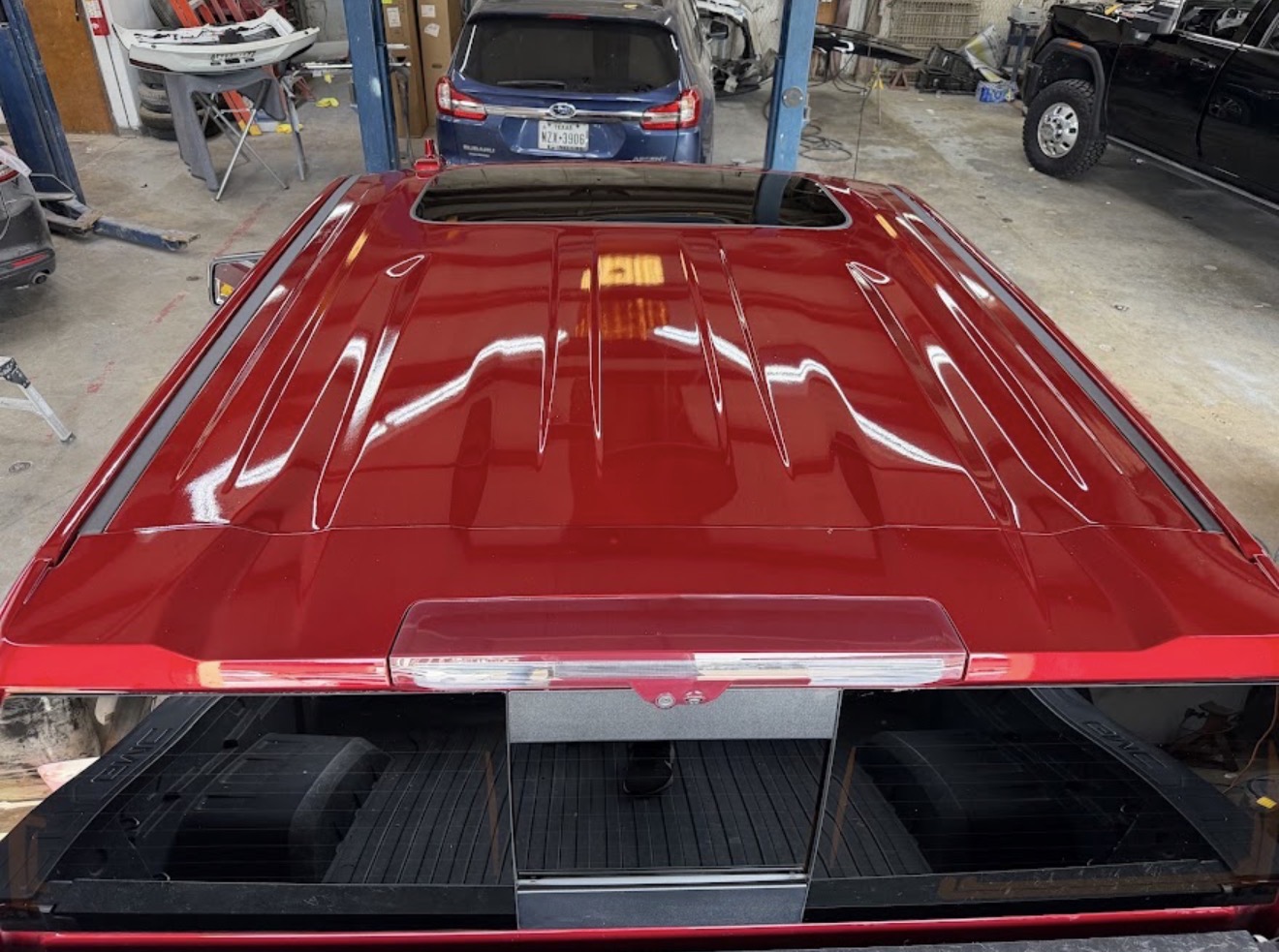
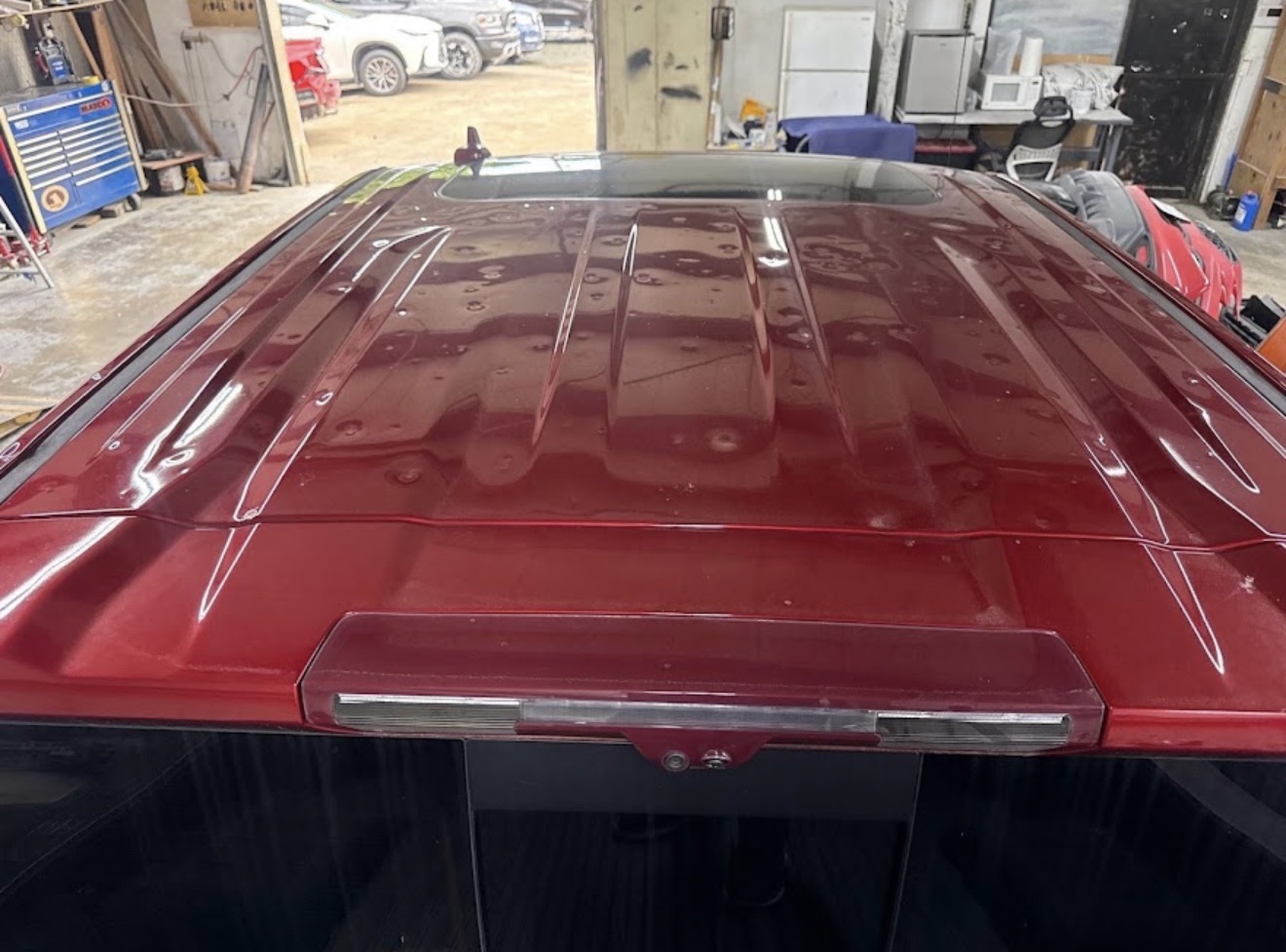
Drag the slider. This pickup roof took severe hail in a North Texas storm — repaired with paintless dent repair, factory finish preserved, in the $5,000–$12,000 range where most full-vehicle DFW claims land.
 Before
After
Before
After
Techo Con PDR — Granizo Severo
Techo completo restaurado sin repintar — historial limpio, pintura de fábrica intacta
HAIL DAMAGE LIKE THIS ON YOUR CAR?
Free inspection under PDR lighting, a line-item estimate, and straight answers on whether a claim makes sense. Most qualifying comprehensive claims: $0 out of pocket.
Hail Cost Questions
HAIL REPAIR COST FAQ
Free · No Obligation
GET YOUR FREE HAIL ESTIMATE
Tell us what you drive and how the hail hit it. We'll call you back lo más pronto posible with a real repair range and straight advice on whether a claim makes sense.
Prefer to talk now? Call (972) 219-0864 · or text us photos