CHEVROLET BODY SHOP LEWISVILLE, TX
Silverado, Tahoe, Suburban, Colorado, Equinox, Traverse, Camaro — repaired the way GM engineered them. Here’s the part most Silverado owners don’t know: since 2019 the hood, doors, and tailgate are aluminum while the cab and bed stay steel — a two-discipline truck that punishes one-discipline shops. GM procedures pulled per model and year, genuine GM parts pushed in writing, Chevy Safety Assist recalibrated through our calibration specialists, Tintcoat reds blended right. Free loaner, written lifetime warranty, direct billing to every carrier.
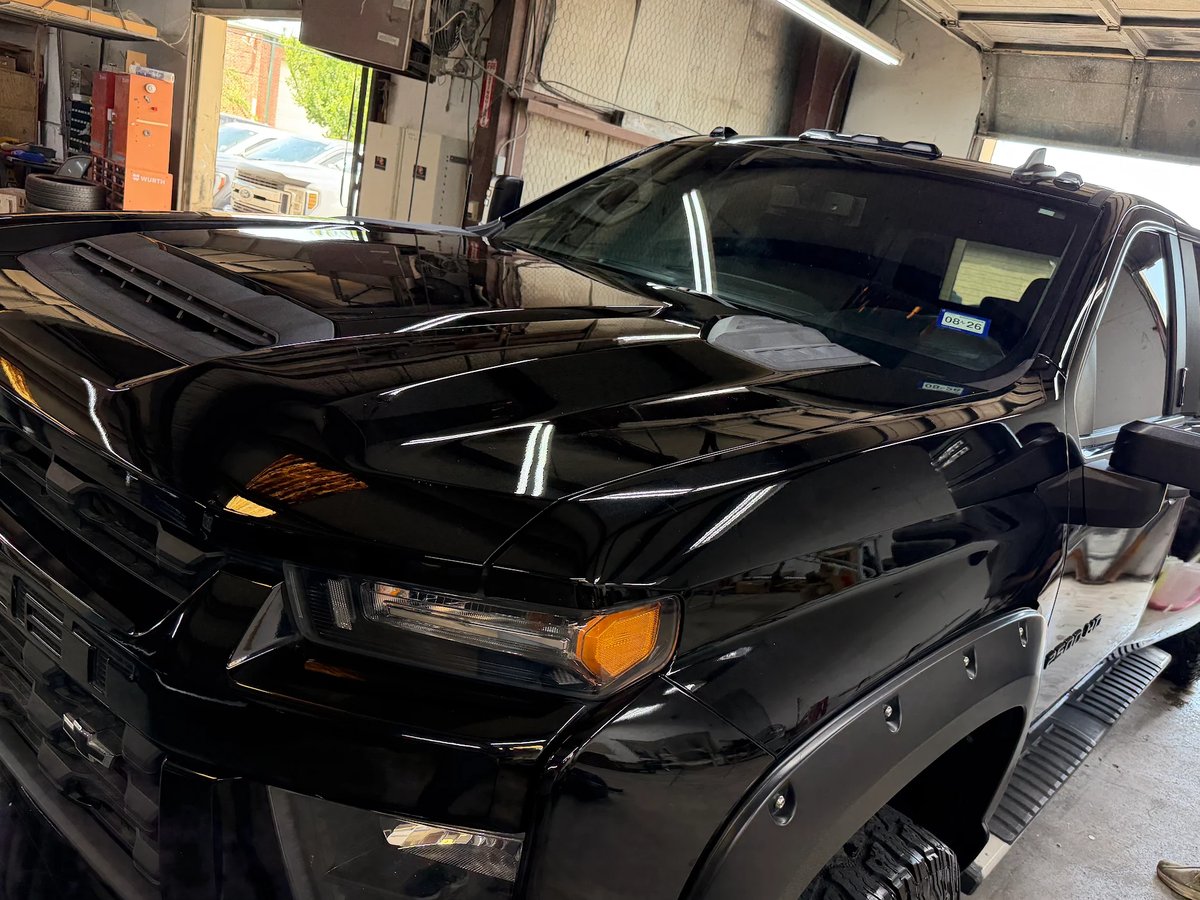
DG Collision Center repairs Chevrolets to GM’s published procedures — and on the 2019+ Silverado that takes two disciplines in one truck: the hood, doors, and tailgate are aluminum (repaired in our dedicated isolated aluminum bay) while the bed, roof, fenders, and a cab cage built from seven grades of steel get conventional structural repair. Genuine GM parts get argued for in writing, Chevy Safety Assist gets recalibrated through our calibration specialists with pre- and post-repair scans on GM’s GDS2 platform, and Tintcoat reds and Tricoat pearls get real blend panels. Direct billing to every carrier; your out-of-pocket is typically your deductible, once.
- The Silverado is a two-discipline truck — aluminum where you touch it (hood, doors, tailgate, ~450 lbs saved), steel where it works (bed, roof, cab). One repair can cross both bays.
- Tahoe and Suburban are body-on-frame — DFW’s family armada goes to the frame bench after a hard hit, measured within 1mm of factory spec.
- GM names its hard paint honestly — “Tintcoat” reds carry color in a tinted clear layer; “Tricoat” pearls are three-stage. Both demand blend panels.
- Summit White WA8624 has been GM’s fleet white for four decades — age drift makes even the easy white a blend judgment on older trucks.
- Chevy Safety Assist rides the windshield camera — glass replacement is a guaranteed calibration event; rear-corner radar makes bumper work one too.
- OEM parts have legal backup — Texas Insurance Code §1952.301 bars insurers from dictating parts by brand, type, or condition. We make that argument for you.
The Bowtie Brigade — And Its Split Personality
Count vehicles in any DFW school pickup line or church parking lot and the bowtie shows up everywhere: Silverados working and commuting, Tahoes and Suburbans hauling entire youth sports teams, Equinoxes and Traverses doing the daily grind. What that fleet brings through our doors is the full damage catalog — parking-lot door hits on the family SUVs, trailer and job-site scrapes on the trucks, tollway rear-enders on all of them, and every spring, hail across some of the broadest hoods and roofs in the business — the truck-specific playbook lives on our Silverado & Sierra hail page.
The repair story most Chevy owners have never heard: the modern Silverado is two trucks in one skin. Since 2019, the hood, doors, and tailgate — inners and outers — are aluminum, saving about 450 pounds, while the bed, roof, and fenders stay steel and the cab cage underneath uses seven different grades of it, each chosen for its crash role. Done right, one collision repair can route panels to our isolated aluminum bay while the structure gets conventional steel repair next door — and GM’s sectioning calls on that seven-grade cage get honored to the letter, because substituting the wrong steel in the wrong place changes how the cab protects you. The big SUVs add their own discipline: Tahoe and Suburban are body-on-frame, so a hard hit means the frame bench, measured within 1mm of factory spec.
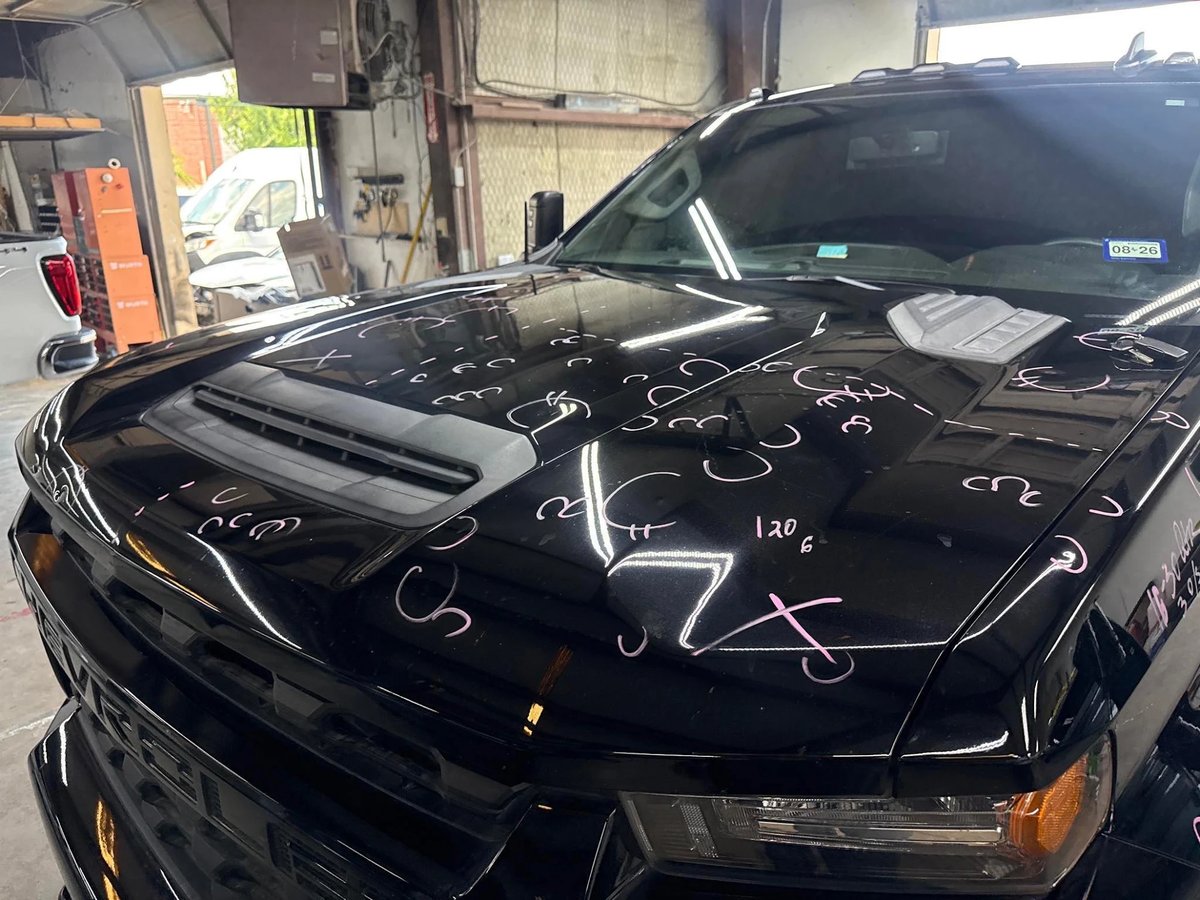
Round it out with Chevy Safety Assist calibration — much of the front suite lives in the windshield camera — Tintcoat paint that names its own difficulty, and GM’s EV wave arriving with high-voltage rules, and you have the case for a Chevy-literate shop. And the hail repair pictured below is a customer’s Chevy Silverado — marked dent-by-dent under PDR lighting at our shop, the documentation standard every claim here gets.
The Lineup
EVERY CHEVY, AND ITS QUIRKS
Eight models cover most of what DFW drives — each with its own repair personality.
Silverado 1500
The two-discipline truck: aluminum hood, doors, and tailgate on a steel bed and seven-grade cab cage. Door and tailgate hits go to the aluminum bay; structure stays conventional. EV version adds high-voltage steps.
Silverado HD 2500 / 3500
The gooseneck-and-jobsite workhorse — bed-side creases, backing hits, mirror strikes. After a hard pull, the frame goes on the bench and gets measured, not eyeballed.
Tahoe
DFW’s default family hauler — and body-on-frame, which most owners forget until a hard hit. Door edges and quarters take the parking-lot abuse; the frame bench handles the rest.
Suburban
The airport-run and road-trip flagship — longest in the lot, first to get clipped in it. Liftgate and rear-corner repairs mean blind-zone radar calibration before delivery.
Colorado
The right-sized steel-bodied truck, with ZR2 trims adding trail rash and rocker hits to the usual catalog. Conventional repairs done to GM’s procedures, same documentation discipline.
Equinox
The commuter crossover we see year-round — tollway rear-enders and parking damage. The Equinox EV brings GM’s under-floor battery, so HV disable comes before structure work.
Traverse
Three rows of school-run duty — door dings, quarter panels, liftgates. Three rows of passengers is also three rows of reasons the safety systems get verified by scan before delivery.
Camaro
Out of production now, which makes clean examples worth repairing right — quarter panels and rear bumpers from spirited exits, matched panel gaps, and paint that has to disappear into the original.
Chevy Paint, By The Code
GM prints the WA paint code on the service parts identification sticker — usually in the glovebox — and it’s where every refinish starts. Give GM credit for naming its hard colors honestly: a “Tintcoat” red carries its color in a tinted translucent layer over the base, so film thickness literally decides the shade, and a “Tricoat” pearl is a three-stage system where the mid-coat makes or breaks the match. The name on your window sticker is the warning label.
Whatever the code says, the process is the same spectrophotometer-and-sprayout discipline — read the actual panel, prove the mix on a card, and blend into the adjacent panel so there’s no edge for the Texas sun to find.
The Chevy Repair, By The Book
Five steps, none optional — and on a Silverado, step two is the one that separates shops:
1 — GM’s Procedures Come First
Every repair starts in GM’s published collision procedures for your exact model and year. The Silverado’s cab cage uses seven different grades of steel, each chosen for its crash role — which is exactly why sectioning and replace-only calls get honored to the letter, not eyeballed.
2 — Two Materials, Two Disciplines, One Truck
Aluminum hood, doors, and tailgate go to the dedicated aluminum bay — aluminum can’t share tools or airspace with steel work — while the steel bed, roof, and cab get conventional repair. One job, routed correctly, instead of one discipline forced onto the wrong metal.
3 — Blueprint At Teardown
Full disassembly of the damaged area, every hidden finding photographed and itemized into one documented supplement. A drive-by estimate prices what a camera can see; a blueprint prices the actual repair — and the difference is paid by the carrier through the supplement process, not by you.
4 — Genuine GM Parts, Argued In Writing
On structural and safety components we push genuine GM parts and put the argument to the adjuster in writing. Texas Insurance Code §1952.301 bars insurers from limiting coverage by the brand, type, kind, age, vendor, supplier, or condition of parts — that fight is ours to have, not yours.
5 — Chevy Safety Assist Calibration And Scans, Through Our Calibration Specialists
Pre- and post-repair scans run on GM’s GDS2 platform, and Chevy Safety Assist components get recalibrated through our calibration specialists — much of the front suite lives in the windshield camera, making glass replacement a guaranteed calibration event, and the blind-zone radar in the rear corners makes bumper work one too. Documentation goes in your delivery file.
Real Results
SILVERADO HAIL, COUNTED AND DELIVERED
Drag the slider. A customer’s Silverado hood after a North Texas hail event — every dent circled under PDR lighting before the first pull, repaired without repainting, billed direct to the carrier. Exactly the badge this page is about, and the count-everything documentation standard is the point.
 Before
After
Before
After
Silverado Hood PDR — Hail Claim
Every dent circled before the first pull — the count is the estimate, and the carrier pays what’s documented
Chevy Hit? Hailed On? Send Photos.
Text a few photos with your year and model — we’ll answer with a realistic range, usually within minutes during shop hours. Claim filed or not, no obligation.
Common Questions
CHEVROLET REPAIR FAQ
Free · No Obligation
START YOUR CHEVY REPAIR
Tell us which Chevy you drive and what happened — we’ll call back with the real number and next steps.
Prefer to talk now? Call (972) 219-0864 · or text us photos
Chevrolet, Silverado, Tahoe, Suburban, Colorado, Equinox, Traverse, Camaro, Blazer, and Chevy Safety Assist are trademarks of General Motors LLC. DG Collision Center is an independent repair facility and is not affiliated with, sponsored by, or endorsed by General Motors or its dealers. References are for factual identification only.