SILVERADO & SIERRA HAIL REPAIR: TWO METALS, ONE STORM
Here’s what most estimates miss: a 2019-or-newer Silverado or Sierra is two different trucks to a hailstorm. The hood, doors, and tailgate are aluminum — metal that work-hardens around every strike and demands slow, warm, patient PDR. The roof, fenders, and bed sides are steel — metal with memory, where classic paintless dent repair does its best work. One storm, two techniques — and your estimate should know which panel is which before anyone touches the truck.
Hail repair on a 2019-or-newer Chevy Silverado or GMC Sierra is a two-metal job: the hood, doors, and tailgate are aluminum (GM saved roughly 450 pounds there) while the roof, fenders, and bed sides stay steel over a cab structure mixing seven steel grades. Steel takes classic PDR — the metal remembers its shape. Aluminum is stiffer, has less memory, and work-hardens around every strike, so it needs the slow-and-warm technique the storm-chaser tents skip — which is why a hood done wrong ends up worse than the storm left it. Cost runs on our published hail tiers: light damage $750–$1,500, a typical full-truck claim $5,000–$12,000, severe multi-panel storms $8,000–$15,000+, with aluminum-panel work landing in the upper half of a range for the same dent count. Hail is a comprehensive claim — it can’t total your no-claims discount by itself under Texas’s weather-claim protections — and on qualifying claims we cover the first $1,000 of your deductible, which makes most Silverado and Sierra hail repairs $0 out of pocket. Typical PDR timeline: 3–7 days, free loaner the whole way. Sierra Denali and AT4 owners with the CarbonPro composite bed: your bed likely shrugged the storm off — and we’ll tell you so instead of billing for it.
One Truck, Two Metals
When GM redesigned these trucks for 2019, it made a materials decision that quietly rewrote how they take hail: the swing panels — hood, doors, tailgate — went aluminum, inners and outers, saving roughly 450 pounds, while the roof, fenders, and bed sides stayed steel, over a cab structure that mixes seven different grades of the stuff. (The full materials story lives on our Chevrolet page, and the Sierra’s own hardware on the GMC page.)
Hail doesn’t care about any of that — it lands where it lands. But repair has to care, because the two metals behave like different trucks under a PDR tool. Steel has memory: a shallow dent with intact paint wants to return to shape, which is why the roof — the panel that takes the most hail — is also the panel where classic paintless dent repair does its cleanest work. Aluminum has less memory and work-hardens as it’s pushed: every stroke stiffens the metal a little more, so the technique that flies on a steel roof will leave an aluminum hood lumpy, cracked at the paint, or stretched past saving. Aluminum wants slow, warm, patient work — gentle heat to relax the panel, lighter pushes, more of them. It’s the same discipline our aluminum bay runs on all-aluminum F-150s, applied panel-selectively here, because on these trucks only some of the skin is aluminum.
This is also the honest explanation of why storm-chaser tents underprice hail work after every DFW storm: flat-rate, high-volume PDR is a steel-panel business model. An aluminum hood punished at steel-panel speed doesn’t show its damage until the tent is three states away. A Silverado or Sierra estimate that doesn’t distinguish the two metals isn’t an estimate — it’s a guess with your hood as the collateral. The rest of the tent playbook is in our hail scam guide.
Where These Trucks Take Hail, Panel By Panel
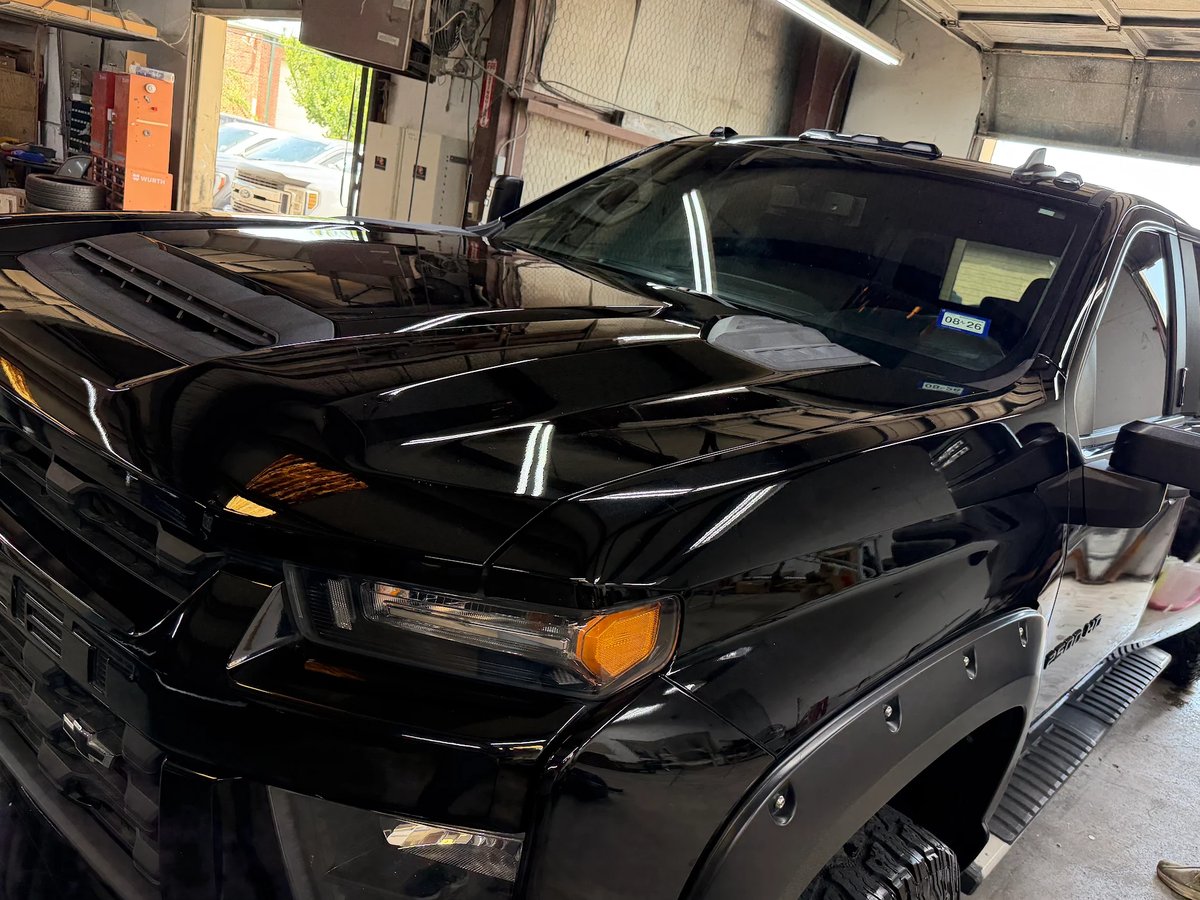
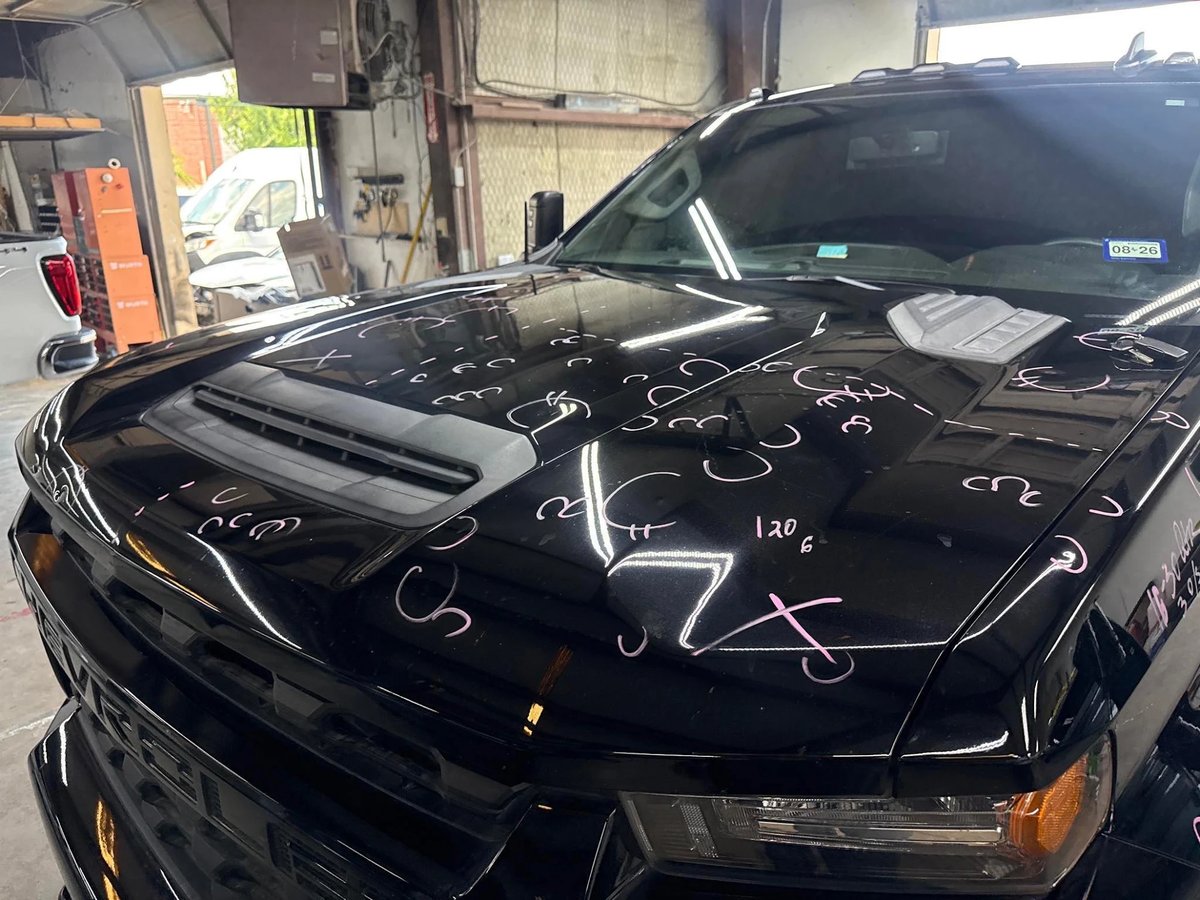
The walk-around that starts your estimate maps every panel to its metal before pricing anything — under PDR reading lights, dent by dent, the same count-and-mark discipline you can see on the marked hood in the gallery. That map is also what your adjuster gets: a panel-by-panel, metal-by-metal document instead of a guess.
Storm Just Hit? Photos First.
Text a few shots of your truck in open shade — hood, roof, and one wide angle. You’ll get an honest read on which metals took the hit, what tier it prices in, and whether a claim even makes sense.
What Silverado & Sierra Hail Repair Costs
Same tiers we publish for every vehicle on the hail cost guide — one price list, everywhere. The truck-specific honesty: aluminum-panel work lands in the upper half of a range for the same dent count — slow-and-warm technique is more labor, and we’d rather say that here than surprise you at the estimate. Steel panels price like any steel PDR. A single parking-lot ding instead of a storm? That’s per-dent pricing on our dent repair page. And if the count climbs toward the truck’s value, the honest math lives in will hail total my car.
The Hail Claim, Honestly
Hail is a comprehensive claim — not collision — and that changes the math in your favor twice. First, Texas regulation (28 TAC §5.7016) bars insurers from non-renewing you over weather claims alone, so a hail claim doesn’t carry the rate-panic people fear; the honest detail lives in our rates guide. Second, on qualifying claims — qualifying just means real hail damage on the truck — we cover the first $1,000 of your deductible, with honest billing and the mechanism in writing, which is what makes most of these repairs $0 out of pocket. Above $1,000, we work it case by case and usually find a way.
The mechanics are the ones we run on every carrier: you file the comprehensive claim, hand us the claim number, and we bill direct — the panel-by-panel metal map goes to your adjuster, supplements cover what teardown finds, and your out-of-pocket is typically your deductible minus our assistance, once. Every carrier’s texture lives on its own page in our insurance hub — and if your truck carries GM Insurance paper, there’s a satisfying symmetry: our supplements cite GM’s own repair procedures to GM’s own carrier. One warning, every storm: the tents that follow DFW hail want your claim check, not your truck’s aluminum — Texas Penal Code §35.02 makes deductible games fraud, and our hail claim guide shows the tells. A free loaner from our 50+ fleet carries you the whole repair, no day limit.
Two-Metal Hail Repair, Start To Finish
Real Results
REAL CUSTOMER TRUCKS, BOTH METALS
Drag the sliders. A steel roof, an aluminum hood, and a full Sierra Denali — every photo a customer’s truck on this floor, not a stock image.
 Before
After
Before
After
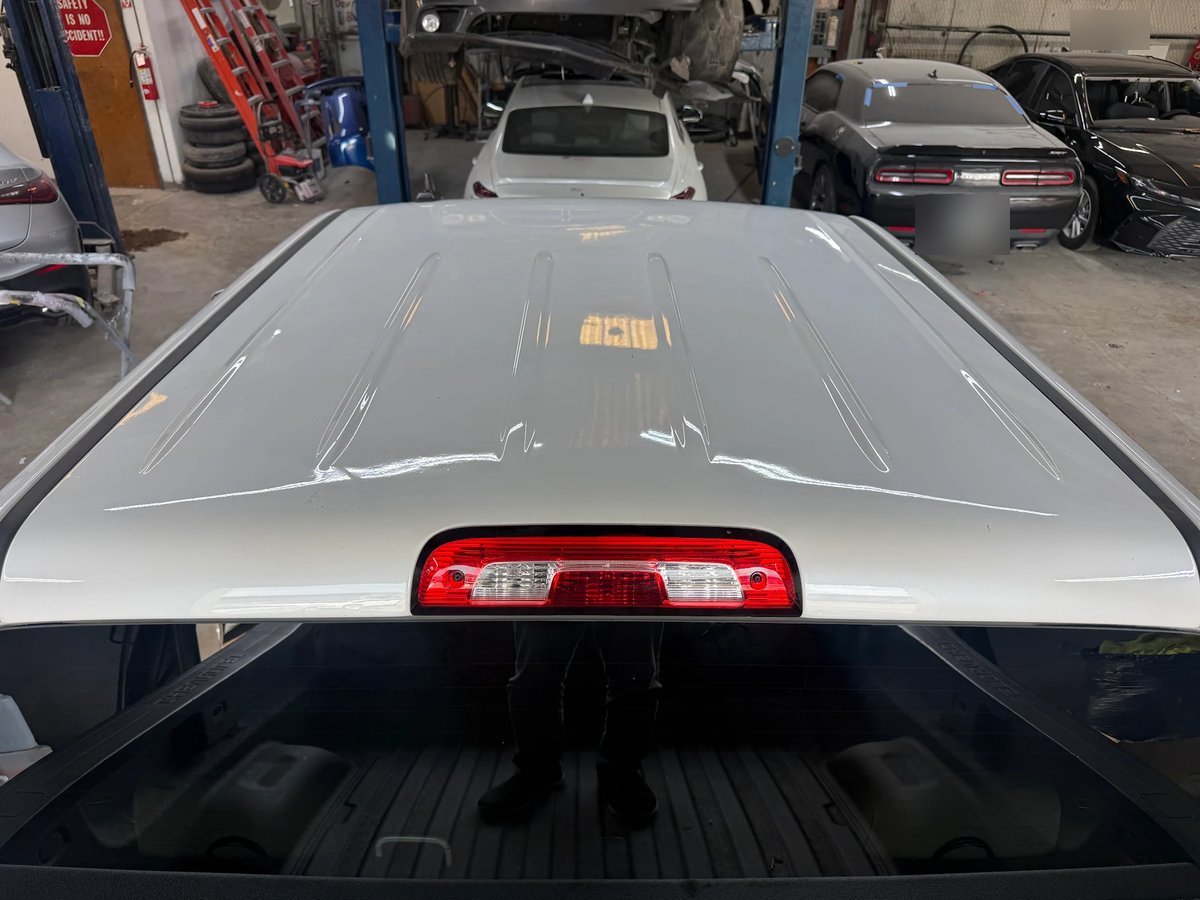
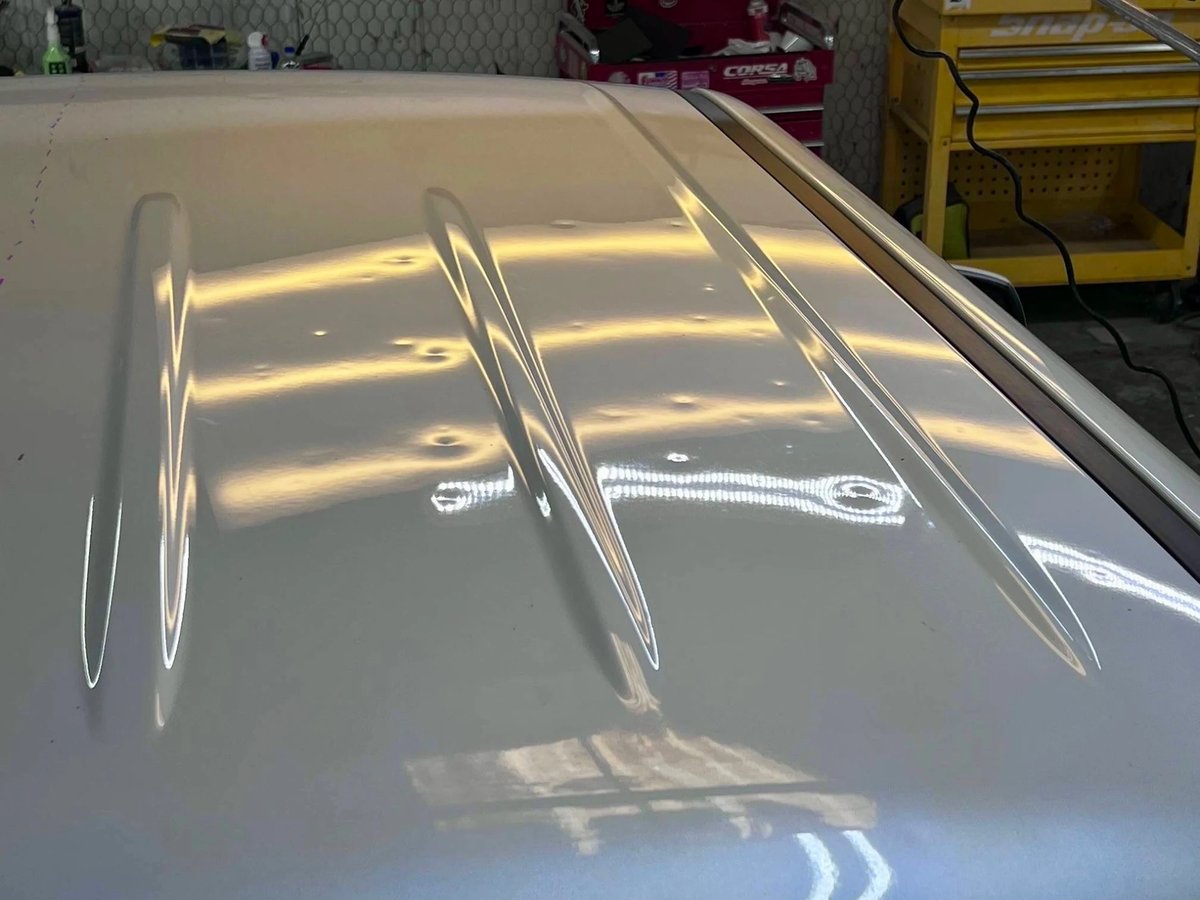
The Steel Roof — Classic PDR
Pictured: a customer’s white Silverado roof — the panel that takes the most hail, worked from behind with the metal’s own memory, factory paint untouched
 Before
After
Before
After
The Hood — Counted, Marked, Worked Slow
Pictured: a customer’s black Silverado hood, every dent marked under the lights before the slow-and-warm work began — the discipline aluminum-family panels demand
 Before
After
Before
After
The Whole Truck — A Sierra Denali, Delivered
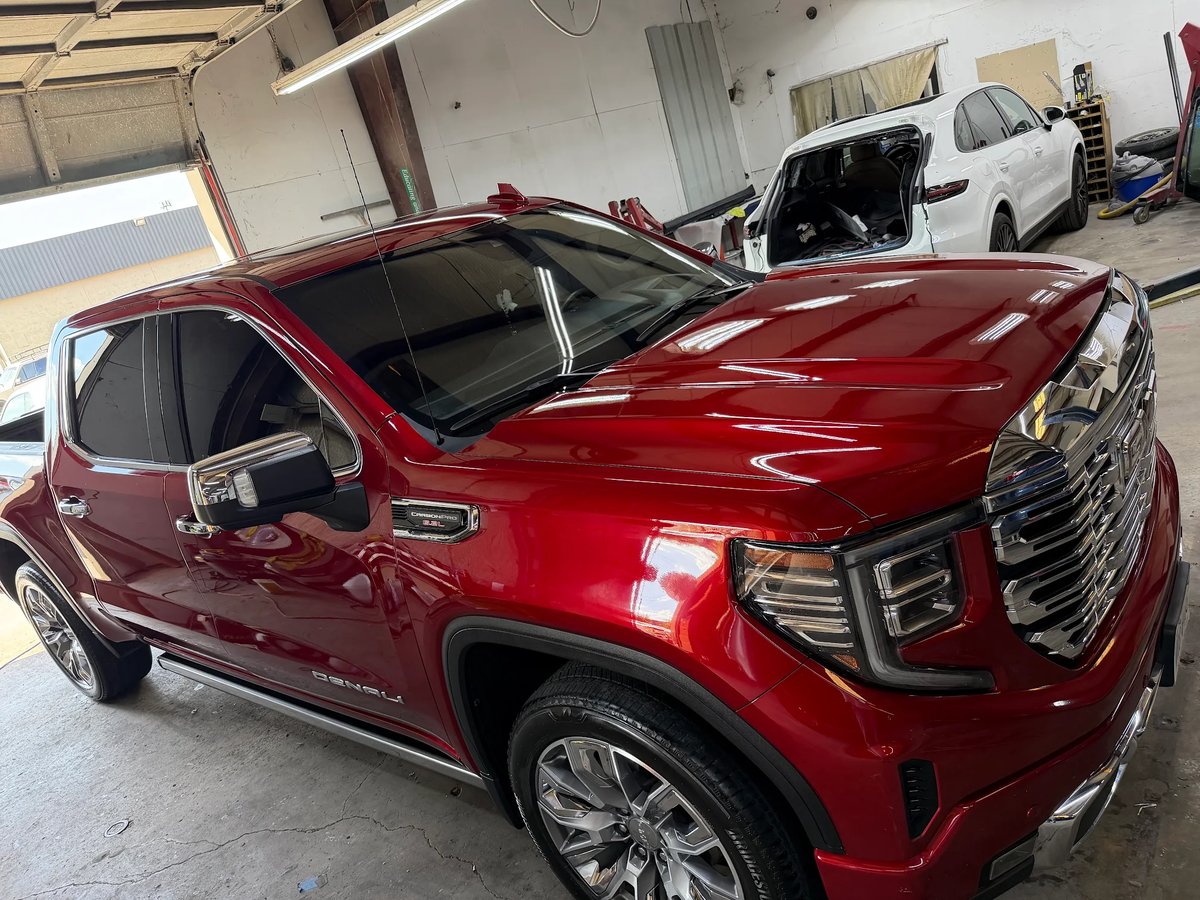
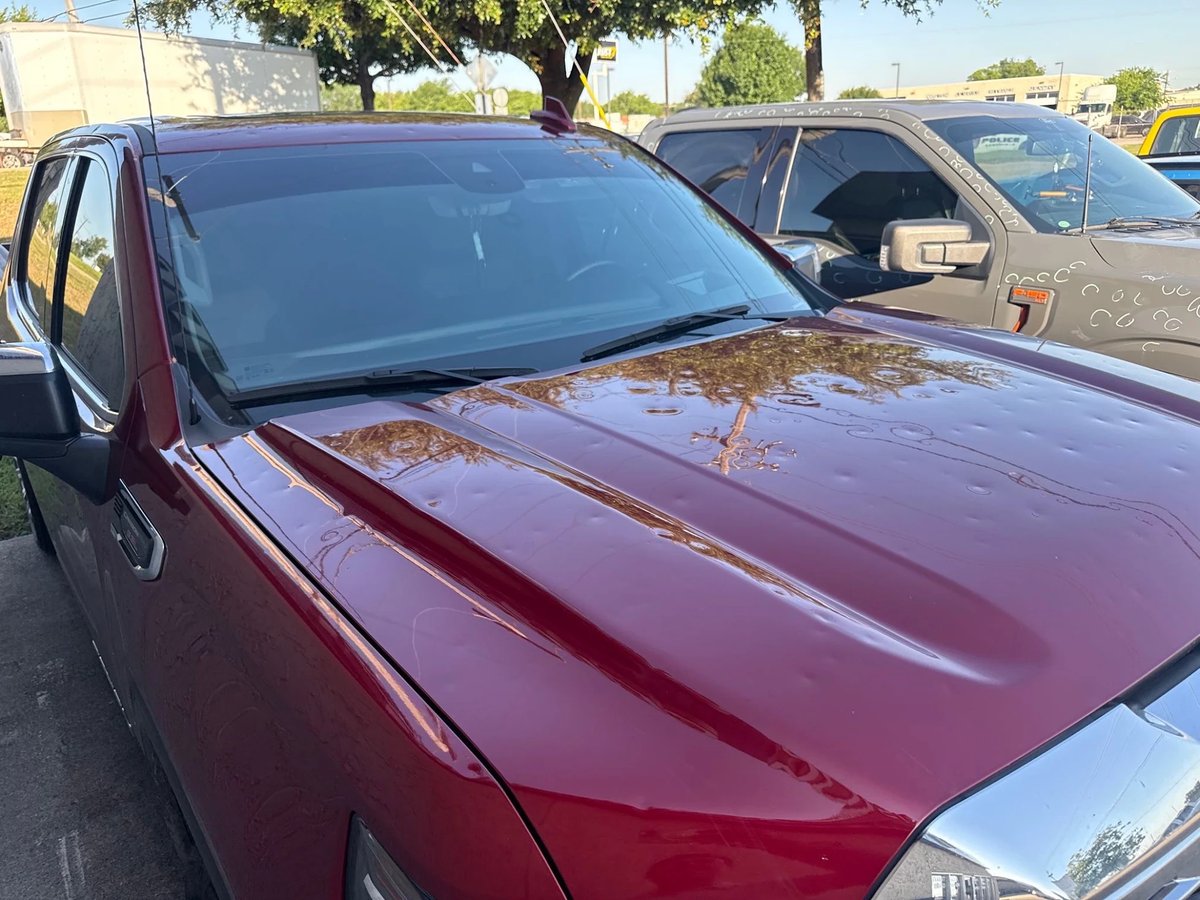
Pictured: a customer’s red Sierra Denali — both metals repaired on one claim, Denali trim priced from the Denali parts sheet, billed direct to the carrier
Common Questions