AUDI BODY SHOP LEWISVILLE, TX
A3 through A8, Q3 through Q8, S, RS, e-tron — the badge that gets judged by its edges. Audi’s whole design language is precision: razor shutlines, flush surfaces, light strips that run uninterrupted across the tail — and that’s exactly where a repair gets graded. A panel gap a millimeter proud, a blend edge on a flat Nardo panel, a light signature that doesn’t draw quite right: an Audi tells on a careless shop at the edges first. We repair to them — Space Frame aluminum discipline from the company that taught the industry aluminum, gap and flush set to factory measurement, digital OLED lighting replaced genuine and verified, camera and radar calibrated through our calibration specialists. Free loaner, written lifetime warranty, direct billing.
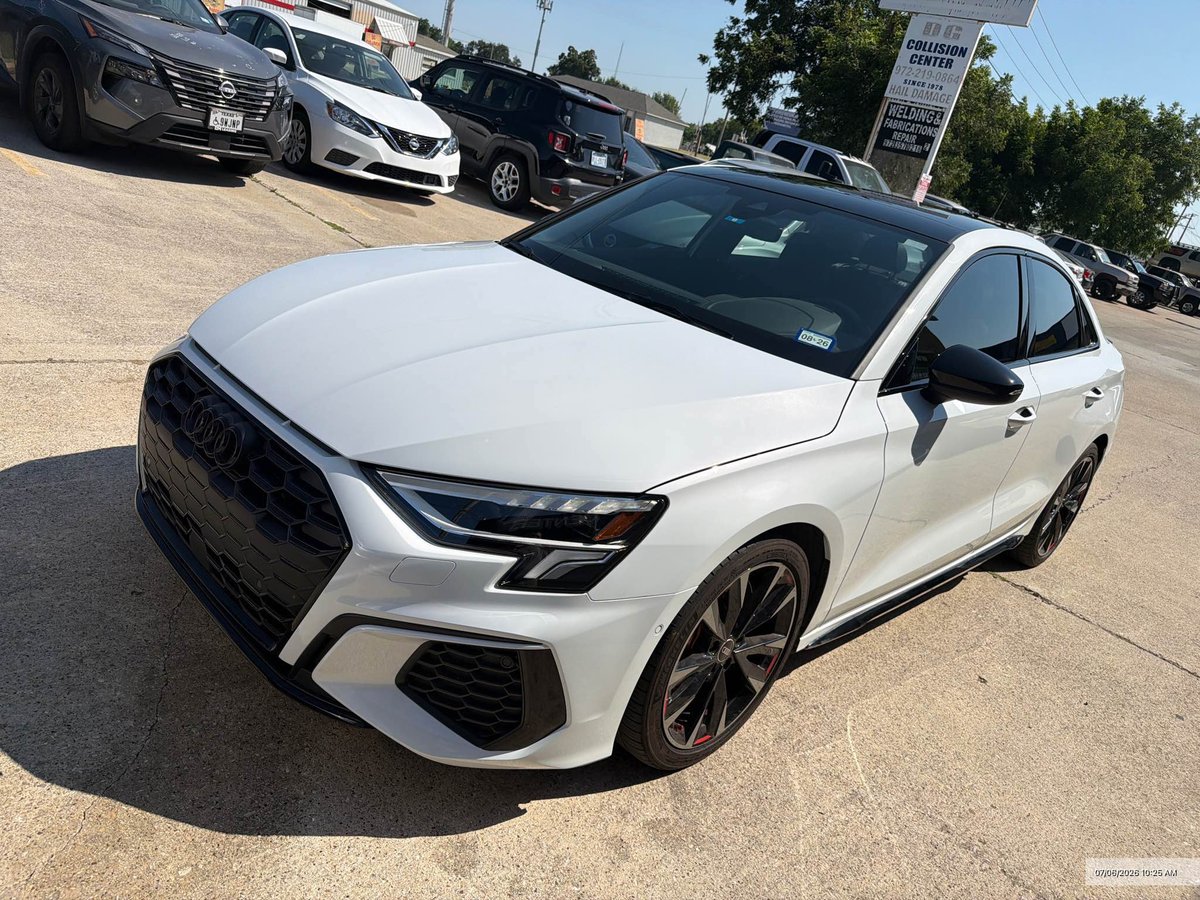
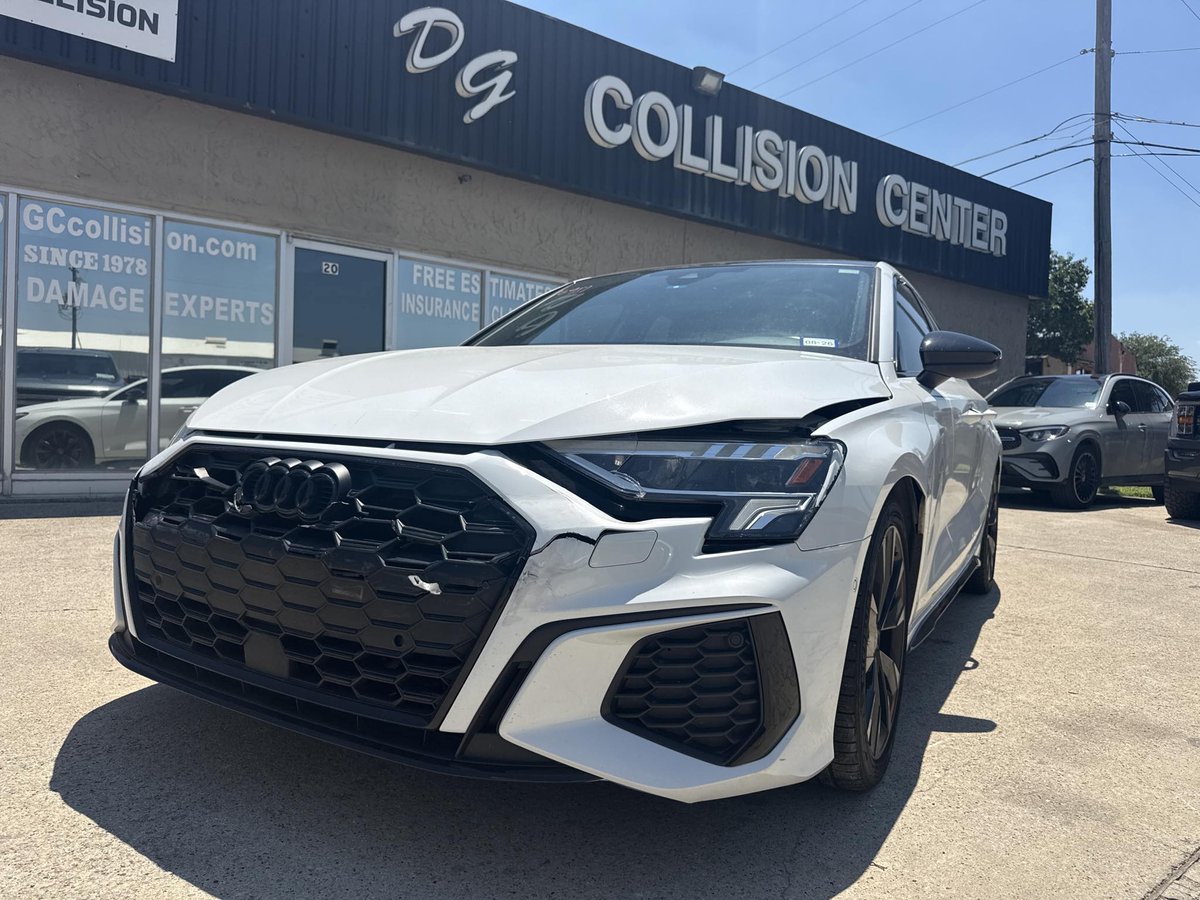 Before
After
Drag the line — a customer’s Audi S3, hit to delivered at our Lewisville shop.
Before
After
Drag the line — a customer’s Audi S3, hit to delivered at our Lewisville shop.
DG Collision Center repairs Audis to the standard the badge is judged by — the edges. Audi’s design identity lives in shutlines, flush surfaces, and light signatures, so our repairs end with gap and flush measured to factory spec and the lighting verified, not eyeballed. The engineering history matters here: Audi put the first volume-production aluminum space frame on the road with the 1994 A8 — a body 40 percent lighter than the steel equivalent, twelve years in development — and that Space Frame heritage means aluminum discipline is not an add-on service for an Audi shop, it’s table stakes: dedicated tools, aluminum-specific technique, strict separation from steel dust. The lighting is Audi’s other signature: the newest models carry second-generation digital OLED taillights — six panels and 266 segments redrawing the light image several times per second — with up to eight selectable light signatures, which turns a “cracked taillight” into a computer-display replacement with genuine-part economics we argue in writing. Driver assistance is a build-sheet question — which pre sense tier and which radar set your Audi carries depends on year, model, and package — so we decode the actual car, then calibrate its cameras and radar in-house. Paint runs from Nardo Gray — code LY7C, the RS calling card, a flat solid that shows every blend edge — to pearls and Audi exclusive individual finishes. And DFW’s favorite Audi is nearly a neighbor: the Q5 is built in San José Chiapa, Mexico, close to its biggest market. Genuine parts argued in writing under Texas Insurance Code §1952.301; free loaner, no day limit; direct billing — your out-of-pocket is typically your deductible, once.
- Edges are the audit — shutlines, flush surfaces, and light signatures are Audi’s design language. Gap and flush get measured to factory spec at delivery, never eyeballed.
- Aluminum is heritage, not novelty — the 1994 A8 was the first volume-production aluminum space frame. Audi aluminum gets dedicated tools and aluminum-specific technique, per the book.
- A taillight is now a display — second-generation digital OLED: six panels, 266 segments, eight selectable signatures. Genuine replacement, function verified, economics argued in writing.
- The build sheet decides the sensors — pre sense tiers and radar sets vary by year, model, and package. We decode the actual car, then calibrate through our specialists.
- Nardo forgives nothing — LY7C is a flat solid gray with no metallic to hide in. Sprayout card, wide blend, or the repair shows at every angle.
- Genuine parts have legal backup — Texas Insurance Code §1952.301 bars insurers from dictating parts by brand, type, or condition. We make that argument for you.
The Badge You Judge By Its Edges
Park an Audi under a streetlight and look down the side of it. That’s the brand, right there: shutlines drawn tight as pencil strokes, glass sitting flush with the metal, a light strip running the width of the tail in one uninterrupted gesture. Audi built its reputation on exactly this kind of visual precision — and it’s why a mediocre repair betrays an Audi in a way it wouldn’t betray a softer car. The paint can be the right color and the panel can be the right shape, but if the gap wavers where the fender meets the door, or the tailgate sits a hair proud, or the light signature draws differently on the repaired side, the car reads wrong — and Audi owners, who bought the car partly for those edges, see it immediately. So we treat the edges as the spec: every repair here ends with gap and flush measured to factory numbers, glass and trim seated flush, and the lighting verified before the car goes home — the tollway commuters on 35E and the Q5s stacked outside every Lewisville and Flower Mound school pickup line get the same standard.
Under the surfaces sits the company that taught the industry aluminum. Audi put the first volume-production aluminum space frame into the world with the 1994 A8 — twelve years in development, a body 40 percent lighter than the equivalent steel design — and the Space Frame idea has run through the brand’s flagships ever since, with today’s A8 built as a multi-material structure of aluminum, steel, and more. For a body shop, that heritage sets the bar: aluminum discipline — dedicated tools, aluminum-specific straightening technique, strict separation from steel dust — isn’t a bolt-on capability for Audi work, it’s the price of entry, and where the factory book says replace rather than repair, that’s what happens. The steel structure underneath still gets the conventional discipline: bench measurement within 1mm of spec, because shutlines can’t sit right over a structure that doesn’t. The electronics follow the same read-the-car rule: which pre sense tier and which camera-and-radar set your Audi carries depends on year, model, and package — so we decode the actual build before promising anything, then calibrate through our specialists and verify before delivery.
And then there’s the lighting — the part of the car Audi treats as a signature. On the newest generation, the taillights are second-generation digital OLED: six panels, 266 segments, redrawing the light image several times per second, with up to eight light signatures the owner can choose. That’s beautiful engineering and brutal collision economics: a scraped corner that once meant a lens and a bulb now means a sealed digital display with a genuine-part price to match — which is exactly why our parts arguments go to the adjuster in writing, and why a “repaired” Audi with an aftermarket light that draws the wrong signature is a repair that failed. Paint runs the same spread: Nardo Gray — code LY7C, the RS calling card — is a flat solid with no metallic flake to hide a blend edge, the hardest kind of color to repair invisibly, while the pearls, the metallics, and the Audi exclusive individual finishes each get sprayout-card proof before they touch the car. It’s the same documentation standard our luxury repair page promises, delivered with a file a future buyer’s appraiser can read clean. The before/after at the top of this page is a customer’s Audi S3 — photographed at our shop, hit to delivered. The gallery below shows a customer’s Toyota RAV4 — same front-end discipline, bumper to headlights; the Audi version adds the Space Frame rules and the lighting verification on top.
The Lineup
EVERY AUDI, AND ITS QUIRKS
Sedans to Sportbacks to the Q family to RS to e-tron — each with its own repair personality.
A3 & A4
The entry point and the long-time benchmark — tollway commuters both, and the stop-and-go rear-ender is their classic claim. Sensor hardware decoded from the build, calibrated after every repair.
A5 & the Sportbacks
The style line — long doors in short parking spots, low fascias meeting steep driveways, glass meeting metal flush by design. Door-edge, rocker, and seal work where the flush surfaces leave nowhere to hide.
A6 & A7
The executive pair — office garages, Legacy-corridor commutes, valet decks. Sensor-dense at both bumpers, long panels where reflections travel, and owners who notice a wavering shutline at ten paces.
A8
The flagship that started it all — the 1994 original was the first volume-production aluminum space frame, and today’s car is a multi-material structure repaired strictly by the book. Aluminum discipline, appointment-grade discretion.
Q3 & Q4 e-tron
The city-sized Qs, gas and electric — apartment garages, parking decks, urban door swings. Compact footprint, full sensor reality, and the e-tron adds the high-voltage protocol before any structural work.
Q5
The volume seller, built in San José Chiapa, Mexico for its biggest market — school-run door edges, liftgate dings, and on the newest generation, digital OLED taillights that make a rear scrape a lighting-system event.
Q7 & Q8
The family flagships — three rows, towing duty, running-board strikes, liftgate claims. Big aluminum-intensive panels measured and refinished to the same edge standard as the sedans, loaner included.
S & RS
Wide arches, unique fascias, staggered wheels — and three different parts sheets: S line trim, S, and RS are not the same car at the estimate. We document which one is actually in the shop, then argue the claim from its real parts prices — often in Nardo Gray, the flat solid that forgives nothing.
e-tron GT & the e-tron Family
The electric line — high-voltage systems disabled per factory procedure before structural work, battery-adjacent damage inspected and documented, never assumed away, and the same edge standard on delivery.
Audi Paint, By The System
Audi’s palette runs from the most unforgiving solid in the luxury market to made-to-order individual finishes. The chemistry decides the repair; the name just decorates it.
Every finish gets the same spectrophotometer-and-sprayout discipline — read the actual panel, prove the mix on a card, blend into the adjacent panel so there’s no edge for the Texas sun to find. On a flat solid like Nardo, that blend discipline isn’t optional — it’s the whole repair.
The Audi Repair, By The Book
Five steps, none optional — and on an Audi, the last one is where ordinary shops show their ceiling:
1 — The Factory Procedures Come First
Every repair starts in the published factory collision procedures for your exact model and year — and on an Audi the materials map matters: Space Frame aluminum gets aluminum technique with dedicated tools, the steel structure gets measured on the bench, and where the book says replace instead of repair, that’s what happens. Nobody improvises on a car built this deliberately.
2 — Blueprint The Actual Car
Full disassembly, every hidden finding photographed and itemized into one documented supplement — plus the Audi-specific decode: S line, S, or RS (three different parts sheets), which pre sense tier and radar set, Audi exclusive paint or series color. The supplement process pays for what’s found and documented — and the claim should price the car that’s actually here.
3 — The Finish Discipline
Spectrophotometer reads, sprayout cards, and wide blends into adjacent panels — with the Audi-specific rule at the top: a flat solid like Nardo has no flake to hide a lazy edge, so the blend is the repair. Pearls get their layers proven on the card; Audi exclusive colors get documented mixes; and every refinished panel is checked along its lines, where this brand lives.
4 — Genuine Parts, Argued In Writing
On structural, safety, and lighting components we push genuine Audi parts and put the argument to the adjuster in writing — and on this brand the lighting argument matters doubly, because a digital OLED taillight is a sealed display, not a lens and bulb. Texas Insurance Code §1952.301 bars insurers from limiting coverage by the brand, type, kind, age, vendor, supplier, or condition of parts — that fight is ours to have, not yours.
5 — Calibration, Edges, And The Delivery File
Pre- and post-repair scans on every job; the camera and radar hardware your build actually carries recalibrated in-house; then the step this badge demands: gap and flush measured to factory numbers panel by panel, glass and trim seated flush, and the light signatures verified drawing correctly on both sides. The car leaves with its edges — and with a delivery file complete enough for the appraiser your future buyer hires.
Real Results
THE FRONT-END REBUILD, BUMPER TO HEADLIGHTS
Drag the slider. A customer’s front-end rebuild — bumper, grille, and hood — billed direct and returned to spec. It’s a Toyota RAV4, not an Audi, and we won’t pretend otherwise: the discipline is identical. On the Audi version, the Space Frame rules and the lighting verification ride on top.
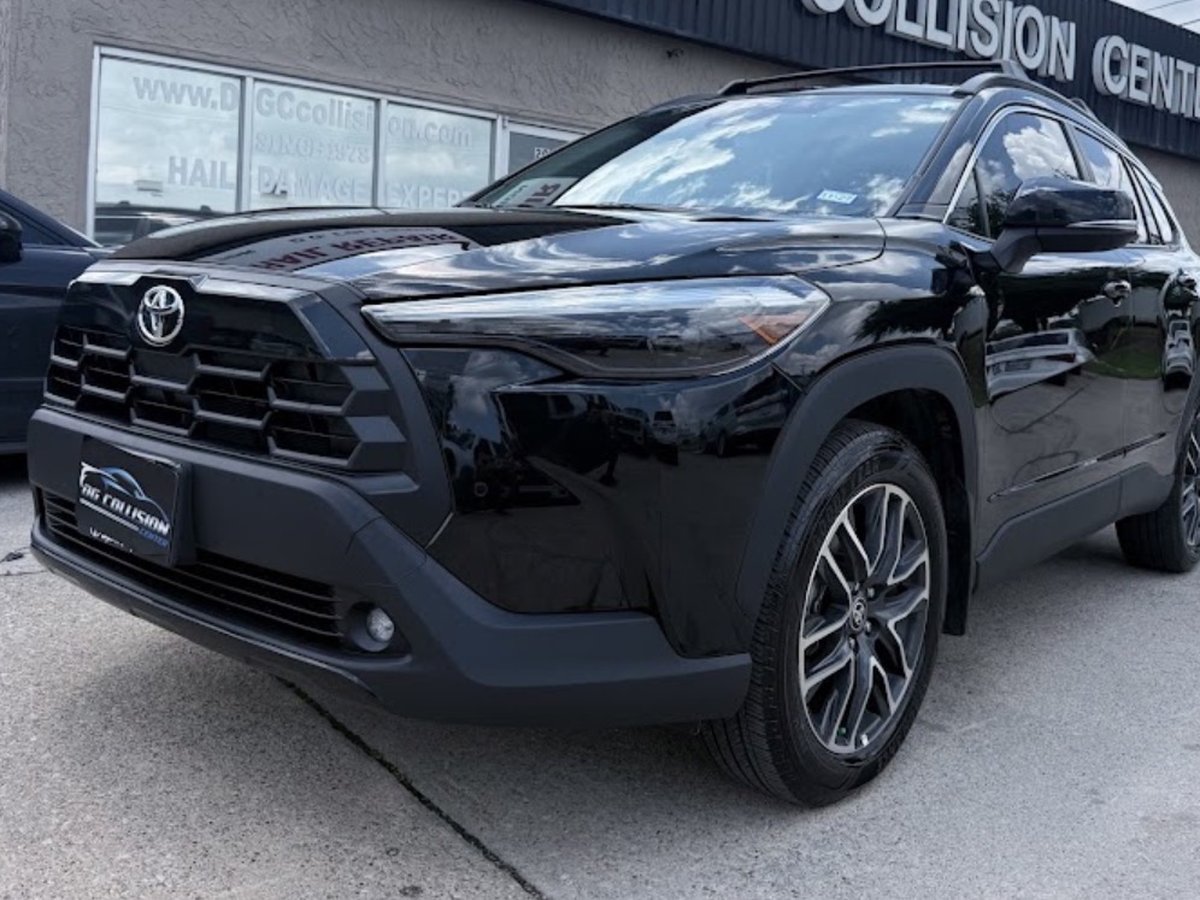
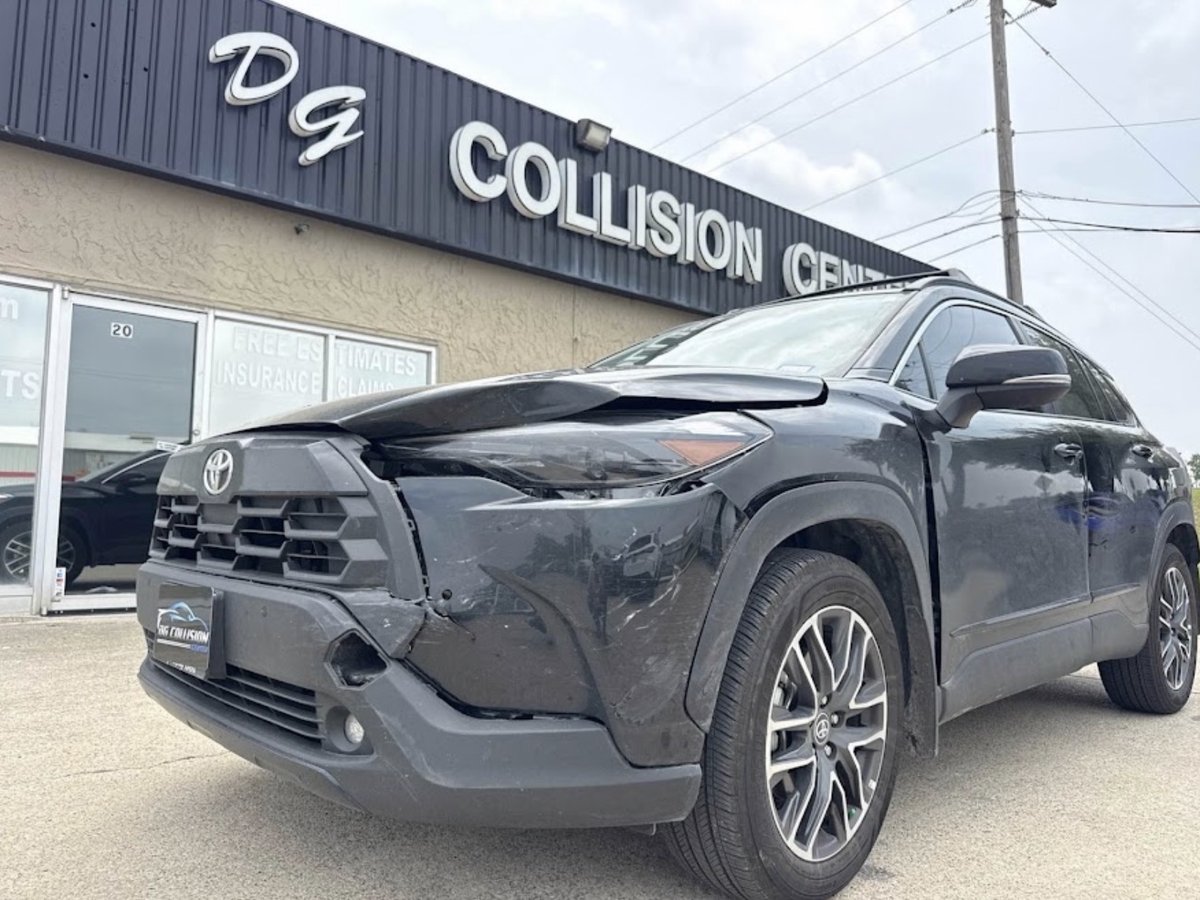 Before
After
Before
After
Front-End Rebuild — Bumper To Headlights
Pictured: Toyota RAV4 — the same front-end discipline we run on Audis, with the Space Frame rules and lighting checks added
Audi Hit? Hailed On? Send Photos.
Text a few photos with your year, model, and trim — S line versus S versus RS, Audi exclusive paint, and sensor packages all matter to the number. We’ll answer with a realistic range, usually within minutes during shop hours.
Common Questions
AUDI REPAIR FAQ
Free · No Obligation
START YOUR AUDI REPAIR
Tell us which Audi you drive — year, model, and trim; S line, RS, and Audi exclusive details price the parts — and what happened. We’ll call back with the real number and next steps.
Prefer to talk now? Call (972) 219-0864 · or text us photos
Audi, A3, A4, A5, A6, A7, A8, Q3, Q4, Q5, Q6, Q7, Q8, e-tron, S line, RS, quattro, Audi pre sense, and Audi exclusive are trademarks of AUDI AG or Volkswagen Group of America, Inc. DG Collision Center is an independent repair facility and is not affiliated with, sponsored by, or endorsed by AUDI AG, Audi of America, or their dealers. References are for factual identification only.