CAN YOU CLAIM DIMINISHED VALUE IN TEXAS?
Yes — when the accident was another driver’s fault. Texas lets you recover the market value the accident history stripped from your car — on top of the repair bill — from the at-fault driver’s liability insurer. Your own policy generally won’t pay it, no formula is required by law, and you have two years from the accident.
Yes — when the crash was the other driver’s fault: diminished value is part of your property-damage claim against their liability insurer, paid on top of the repair, with two years to sue (§16.003) shadowing the negotiation. Under your own collision or comprehensive coverage the answer is generally no — Texas’s Schaefer decision closed that door. Evidence beats formulas: dealer trade-in quotes and an independent appraisal, not the internet’s “17c” arithmetic.
Yes — in Texas you can claim diminished value when the accident was another driver’s fault: it’s part of your property-damage claim against their liability insurer, paid on top of the repair, and you have two years from the accident (Tex. Civ. Prac. & Rem. Code §16.003). Under your own collision or comprehensive coverage the answer is generally no — the Texas Supreme Court’s Schaefer decision held the standard policy’s repair-or-replace promise doesn’t cover post-repair value loss. No formula is required by Texas law: the “17c” number insurers offer is a lowball convention, and real evidence — an independent appraisal, dealer trade-in quotes with the history report showing, the complete repair file — beats it. Claims up to $20,000 fit Texas Justice Court if the carrier stonewalls.
- At-fault driver’s insurer: diminished value is recoverable as part of the property-damage claim — demand it before signing any release.
- Your own policy: generally not owed — Schaefer (Tex. 2003); the UM property-damage wording is the one gray area worth asking about in writing.
- Deadline: two years from the accident — §16.003.
- “17c” is not law: it caps the loss at 10% of pre-accident value and discounts from there — counter it with an appraisal and real dealer quotes.
- Biggest drivers of the number: structural repair on the record, airbag deployment, vehicle age and value, mileage, and a previously clean history.
Your Car Is Worth Less Now — Even Repaired Perfectly
Fix a car flawlessly and it still carries the accident. The moment the claim was filed, the wreck became a permanent line on the vehicle-history report that every dealer — and most private buyers — will pull before making an offer. Two identical vehicles, same year, same miles: the one with an accident on its Carfax sells for less, every time. That gap has a name — diminished value — and in the right circumstances, Texas law makes someone pay you for it.
The right circumstances are the whole game. Whether you can recover diminished value in Texas depends almost entirely on whose fault the accident was, not on how bad the damage looked. Another driver caused it? Their liability insurer owes you the lost value on top of the repair. Your own policy paying? Generally not owed at all. And whichever lane you’re in, the clock is the same: two years from the accident under Texas Civil Practice & Remedies Code §16.003.
One honest disclosure before the map: this guide is written from the estimate bay, not a law office. We don’t file diminished value claims for customers, and none of this is legal advice for your specific situation. What a body shop actually contributes is the repair documentation the entire demand is built on — and a clear-eyed view, from watching hundreds of claims, of which ones are worth pursuing. For the claim mechanics upstream of this topic, start with our supplements guide and the after-an-accident Texas playbook.
When You Can Claim It: The Other Driver Was At Fault
Texas measures property damage the sensible way: what the crash actually cost you. When another driver caused the wreck, your claim against them — in practice, against their liability insurer — isn’t limited to the repair invoice. Texas courts have long recognized that a properly repaired vehicle can still be worth less on the market than it was the day before the crash, and that this difference is part of the loss the at-fault party owes. The repair restores the metal; diminished value compensates the history.
Mechanically, it runs through the same lane as the rest of your property-damage claim: the at-fault carrier’s adjuster, a documented demand, a negotiation. Two practical rules from watching this play out. First, diminished value is claimed, not offered — adjusters almost never raise it on their own, and plenty of Texans leave it on the table simply because nobody told them it exists. Second, don’t sign a release until it’s addressed. A full property-damage release signed at the repair stage can close the claim before the value question was ever asked.
The two-year limitations period sounds generous and shrinks fast: repairs take weeks, the trade-in reality that proves your loss often surfaces months later, and demand-letter ping-pong eats the rest. Calendar the deadline the week of the wreck and work backward from it.
Why Your Own Policy Generally Won’t Pay It
Filing under your own collision or comprehensive coverage — because you were at fault, the other driver was uninsured, or the damage came from hail — changes the legal ground completely. In American Manufacturers Mutual Insurance Co. v. Schaefer (2003), the Texas Supreme Court read the standard Texas policy’s promise to “repair or replace with like kind and quality” to mean exactly what it says: an adequate repair satisfies the insurer’s obligation, and the policy does not additionally owe the market value the repair can’t restore.
So a first-party diminished value demand under a standard Texas auto policy is generally a dead end — not because the loss isn’t real, but because the contract doesn’t cover it. The one gray area worth knowing: uninsured-motorist property damage. UM coverage pays what you’re “legally entitled to recover” from the uninsured at-fault driver — wording many practitioners read as importing the full tort measure, diminished value included. Carriers resist that reading. If an uninsured driver hit you, raise it with your carrier in writing and treat the demand exactly like the third-party version below. Car-sharing hosts have it even more locked down: Turo’s own terms pay nothing for diminished value on any plan — our Turo host guide covers that landscape.
Here’s the whole fault line, scenario by scenario:
claim against their liability insurer
at-fault accidents, hail, vandalism
UM property-damage coverage
you don’t own the depreciating asset
If the wreck also left you arguing about who pays for the repair itself, that’s a different fight with better-known rules — our shop-choice guide covers §1952.301, and the supplements guide covers why the first estimate isn’t the final number.
Hit By Another Driver And Their Carrier Is Calling?
Get the repair documented right before you talk numbers. Our estimates price the real damage — teardown, structure, calibrations — and every repair leaves with the complete file a diminished value demand needs. Free, and it protects both claims.
What A Diminished Value Claim Is Actually Worth
Honest answer: no two of these price alike, and anyone quoting you a flat percentage over the phone is guessing. What actually moves the number, roughly in the order adjusters and appraisers weigh it: structural or frame repair on the record — the single biggest driver, because “frame damage” on a history report spooks buyers like nothing else (our frame straightening page explains what that work really involves); airbag deployment; the vehicle’s age and value — a two-year-old truck has far more value to lose than a twelve-year-old commuter; mileage; and whether the history was clean before this wreck. Stack the wrong side of those factors and the honest answer may be that your claim isn’t worth the effort — we’d rather tell you that at the counter than watch you chase $400 for six months.
Now the number the insurer will offer. Most carriers run some version of “Formula 17c” — a computation borrowed from a Georgia class-action settlement that was never designed to measure your car’s actual loss. It starts by capping the base loss at 10% of pre-accident value, then multiplies it down with a damage modifier and again with a mileage modifier. Three discounts before the conversation starts. No Texas statute or court requires it; it’s a negotiating convention that reliably produces small numbers, offered to people who don’t know they’re allowed to argue.
You argue with evidence, not competing formulas. The cleanest proof of real-world loss: dealer trade-in quotes made with the history report on the desk, set against book value for a clean-history twin. Add an independent diminished-value appraisal for larger claims — appraisers document the comparable-sales gap professionally, and their report is what turns a “we don’t pay that” into a settlement. The delta between what your car should be worth and what anyone will actually pay for it is the claim.
Real Results
THE REPAIR IS HALF THE RECOVERY — THE FILE IS THE OTHER HALF
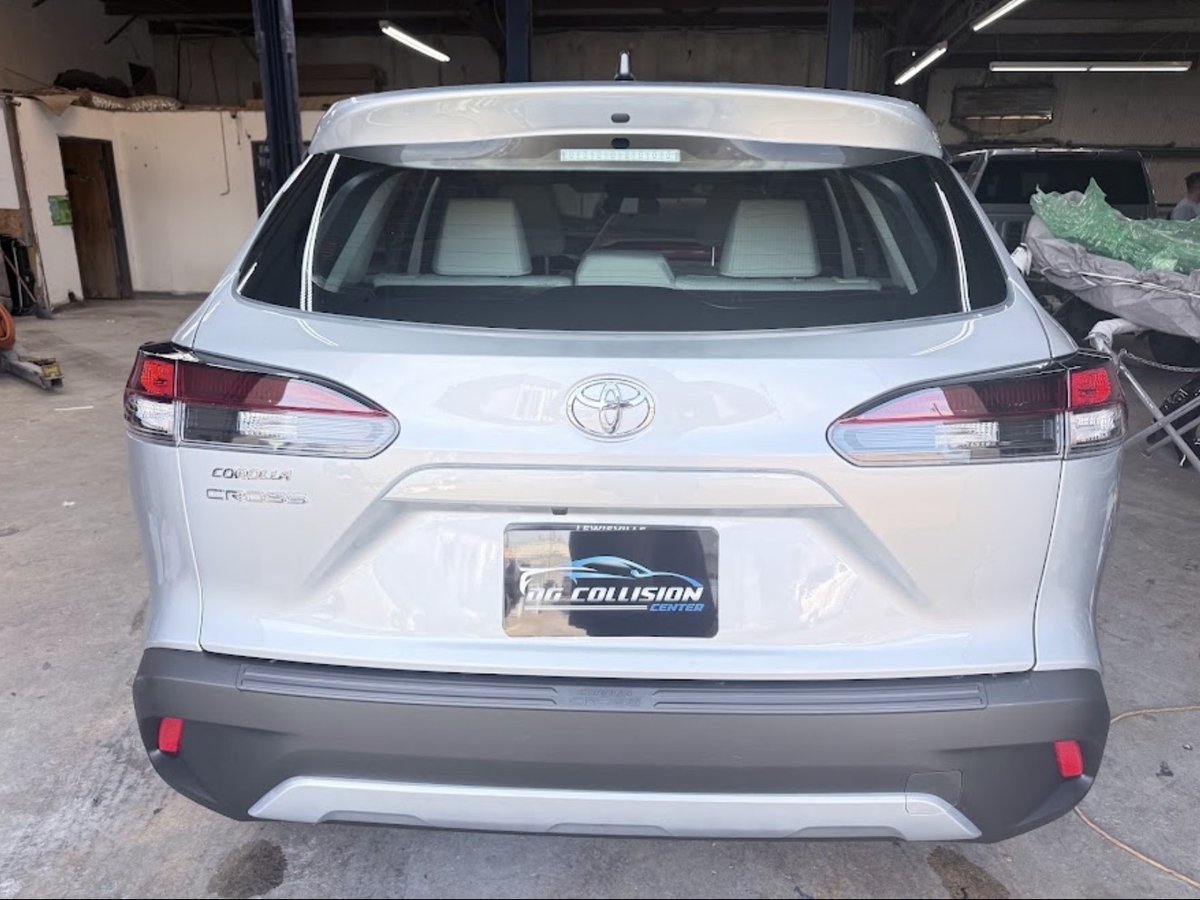
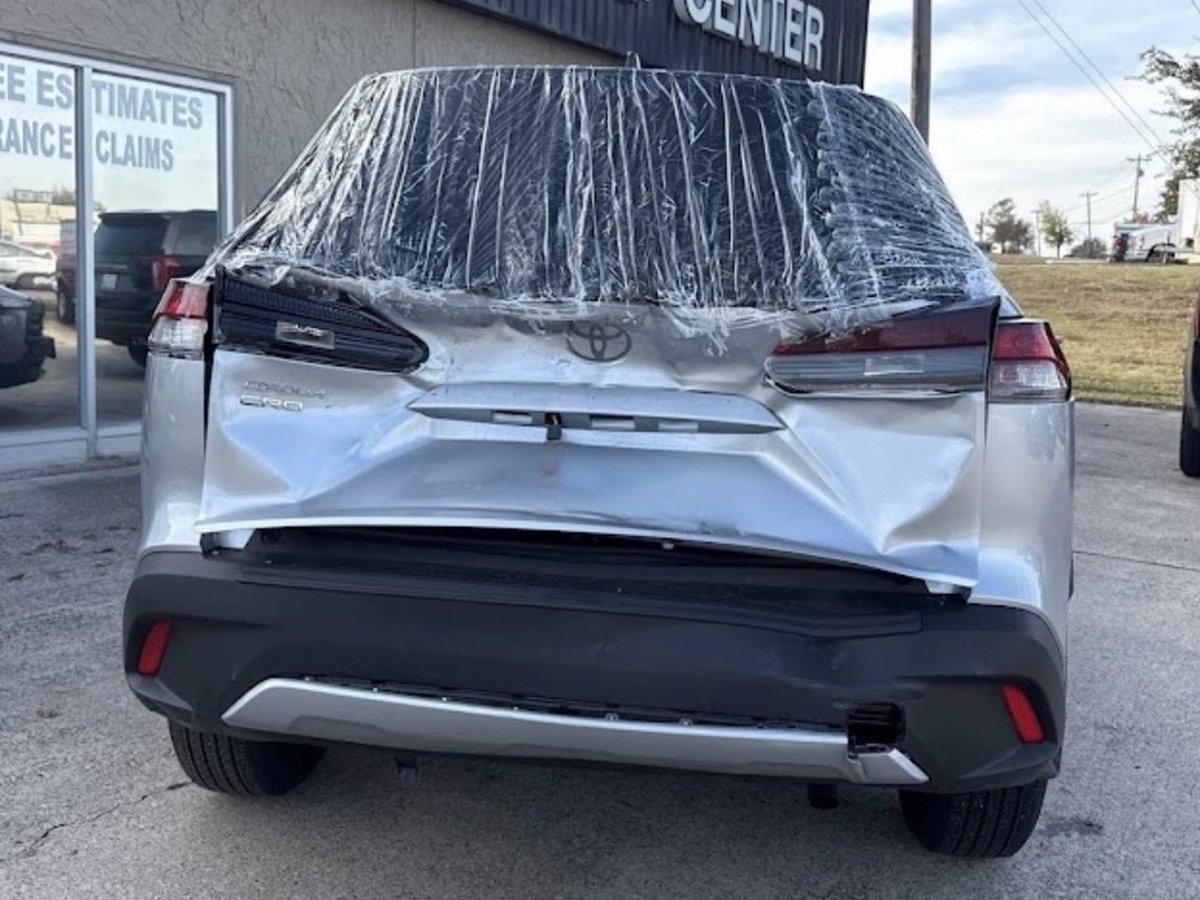
Drag the slider. This customer’s Corolla Cross took a rear-end hit — crushed tailgate and rear panel, the kind of entry that lives on a history report permanently. The repair made the car right; the documented file it produced — teardown photos, supplements, procedures — is exactly what a diminished value demand is built from.
 Before
After
Before
After
Rear-End — Tailgate & Rear Panel
A customer’s actual repair at our Lewisville shop — the complete documented file went home with the owner
The Paper Trail That Wins The Demand
Diminished value demands are won on paper. The file that gets adjusters reaching for settlement authority: the final repair invoice with every supplement — the honest total, not the first estimate (why those differ is the whole subject of our supplements guide); teardown and repair photos; frame-measurement printouts where structural work was done; the CR-3 crash report that establishes fault (how to get it is in the after-an-accident guide); pre-accident value printouts; and the window sticker or options list, because a loaded trim carries more value to lose.
Repair quality cuts through everything here, in both directions. A documented, OEM-procedure repair minimizes the true loss — the car is genuinely right, and the paper proves it to the next buyer. A cheap repair stacks “repaired badly” on top of “was wrecked”: technically a larger diminished-value claim, but a worse car and a harder sale, and nobody wins that trade. This is also where your shop-choice rights matter — Texas Insurance Code §1952.301 puts the repair facility decision with you, not with the at-fault carrier steering you somewhere convenient for them.
Our role in this, stated plainly: DG documents; you demand. We build the repair file — complete, honest, organized — and hand it over at pickup. The demand itself comes from you, your appraiser, or, on a big claim, your attorney. That division keeps everyone honest, and it’s why the shop you choose in week one quietly decides how the value conversation goes in month three.
Want The Documentation Done Right From Day One?
Teardown photos, supplement history, structural printouts, OEM procedures — organized and yours at pickup. The repair protects the car; the file protects its value.
File A Diminished Value Claim In Five Steps
The whole guide, compressed into the sequence we’d run if it were our own truck:
Step 1 — Confirm the posture: whose fault, whose insurance
Diminished value in Texas is a third-party play — it’s owed by the at-fault driver, paid in practice by their liability insurer. If the other driver caused the wreck, you have a claim. If you were at fault or it’s a comprehensive loss like hail, the standard Texas policy generally doesn’t owe it.
Step 2 — Repair first — completely, and keep every page
Diminished value is measured after a proper repair, and the repair file is the backbone of the demand: final invoice with all supplements, teardown photos, structural measurements, parts documentation. Don’t sign a full release of your property-damage claim before diminished value has been addressed.
Step 3 — Price the loss with evidence, not formulas
Print the pre-accident value (KBB, NADA), then get dealer trade-in quotes with the accident showing on the history report. For larger claims, commission an independent diminished-value appraisal. The gap between clean-history value and your car’s real offers is the number you demand.
Step 4 — Send a written demand to the at-fault carrier
One package to the property-damage adjuster: the demand amount, the appraisal, the repair invoice, photos, the CR-3 crash report, and your comparables. Expect a lowball 17c-style counter — that’s an opening position, the same way the first repair estimate was.
Step 5 — Escalate on a timeline you control
Negotiate in writing. If the carrier stonewalls, a complaint to the Texas Department of Insurance adds pressure, and Texas Justice Court hears claims up to $20,000 without a lawyer. All of it has to happen inside two years from the accident — calendar the deadline the week the wreck happens.
Standard honesty footnote: cases, policies, and carriers vary, and this is general information from a repair shop — not legal advice for your claim. For a large or contested claim, a Texas attorney or licensed appraiser earns their fee. What we can give you free is the foundation everything else stands on: an honest repair, honestly documented.
Common Questions
DIMINISHED VALUE IN TEXAS FAQ
Ten questions we hear once people learn this claim exists.
About The Author
Shah Jiwani — Owner, DG Collision Center
Shah has 30+ years of hands-on DFW collision-repair experience. He joined DG Collision in the 1990s, earned equity over time, and took over as owner in 2005. He is I-CAR Gold Class Certified, PPG Certified Refinish, and Sherwin-Williams Automotive Certified. Every guide on this site is written or reviewed based on what we actually see in the shop — not aggregated from other blogs.
Read Shah’s full bio & credentials →Free · No Obligation
START WITH THE REPAIR DONE RIGHT
A documented OEM repair is the best outcome for the car and the foundation of any diminished value demand. Tell us what happened — we’ll price the real damage and build the file right.
Prefer to talk now? Call (972) 219-0864 · or text us photos