CAN I DRIVE MY CAR AFTER AN ACCIDENT? THE DAMAGE-BY-DAMAGE ANSWER
Short version: it depends on what got hit, not how bad it looks. Cosmetic damage drives fine. Anything leaking, rubbing a tire, or deployed gets towed — no exceptions. Broken lights sit in the middle, and the difference between a daylight run to the shop and a week of night commutes is written into Texas law. One more thing most drivers haven’t caught up with: since January 1, 2025, Texas has no annual safety inspection — nobody re-checks this car later. The call is yours. Here’s how we make it, damage by damage.
*Towing is free to you: on covered claims the tow is billed to your insurance carrier — Texas comprehensive and collision policies generally cover reasonable towing. No coverage for the tow? Ask about discounted rates through our towing partners.
Three checks decide it. Leaking anything — coolant, brake fluid, fuel? Tow it. Anything rubbing or about to come off — a panel touching a tire, a hood that won’t latch, a bumper cover on one clip? Tow it. Airbags deployed? Tow it — NHTSA calls bags single-use, replaced before driving. Pass all three and a short daylight drive to a shop is usually defensible; the full three-tier read is below.
Whether you can drive after an accident comes down to three checks. One: is anything leaking? Coolant, brake fluid, or fuel on the ground means tow it — a radiator you drive on becomes an engine you replace. Two: can anything rub or fly off? A panel touching a tire, a hood that won’t latch firmly, a bumper cover hanging by one clip — tow it. Three: did airbags deploy? NHTSA’s rule is plain: airbags are single-use — replace them before the car carries people again. Tow it. Everything cosmetic — dents, creases, scratched paint, a cracked-but-secure bumper — is drive-it damage. Broken lights are the middle ground: Texas requires two working headlamps, taillamps, and stoplamps (Transp. Code §§547.321–.323), but lights only have to be on at night or when you can’t see 1,000 feet ahead (§547.302) — so a daylight trip straight to the shop is a different decision than a week of night driving. And since January 1, 2025 (HB 3297), Texas runs no annual safety inspection — what’s left is §547.004, which makes driving a vehicle “unsafe so as to endanger a person” a misdemeanor, and physics. When it’s a coin flip, don’t flip it: our tow is free to you, 24/7, on repairs we perform — billed to your insurance on covered claims.
- Leaking, rubbing, or deployed = tow it. Cosmetic = drive it. The middle ground is lights — and daylight.
- Nobody inspects your car anymore: Texas safety inspections ended January 1, 2025. This call doesn’t get a second reviewer.
- §547.004 still applies: operating a vehicle unsafe enough to endanger someone is a misdemeanor — inspection or not.
- The tie-breaker is free: 24/7 towing on repairs we perform means guessing wrong costs more than towing ever will.
The 2025 Change
NOBODY INSPECTS YOUR CAR ANYMORE — THE CALL IS YOURS NOW
For fifty years, Texas had a backstop: whatever you drove around on, the annual safety inspection eventually caught it — the one taillamp, the bald tire, the wipers that smeared. That backstop is gone. HB 3297 abolished the safety inspection for non-commercial vehicles on January 1, 2025, replacing it with a $7.50 fee at registration. DFW counties — Dallas, Denton, Collin, Tarrant and their neighbors — still require an emissions test, but an emissions test reads your tailpipe, not your taillights. A car can pass it with a smashed headlamp, a missing mirror, and a hood held down by a bungee cord.
What’s left is exactly two things. The first is Transportation Code §547.004: operating a vehicle that’s “unsafe so as to endanger a person” is a misdemeanor — and it applies to the owner who knowingly lets someone else drive it, too. The second is physics, which doesn’t write citations; it collects. So when people call us from a parking lot asking “can I drive it in, or do you need to come get it?” — and that’s a call we take almost every day — we run the same short triage every time. This page is that triage, written down.
The Verdicts
THREE VERDICTS — DAMAGE BY DAMAGE
Find your damage below. If it appears in more than one list, the worse verdict wins — and anything you’re unsure about defaults down, not up.
DRIVE IT — COSMETIC ONLY
Ugly is not unsafe. If the damage is skin-deep and everything still latches, seals, and clears the tires, the car can wait for its appointment.
- Dents and creases in doors, fenders, or quarters that don’t reach a tire
- Scratched or scuffed paint, scraped bumper corners
- A cracked bumper cover that’s still firmly attached at every mount
- Small windshield chips outside your line of sight
One caveat: bare metal rusts on a weeks-not-months clock in Texas humidity. Drive-it damage is still fix-it-soon damage.
SHORT DAYLIGHT TRIP TO THE SHOP — NOTHING MORE
This tier is legal-to-marginal in daylight and a problem after dark. Shortest route, surface streets, straight to the shop — not a week of commuting.
- One broken headlamp, taillamp, or stoplamp. The equipment floor is two of each (§§547.321–.323) — but lights are only required on at night or under 1,000-foot visibility (§547.302). Daylight changes the risk; it doesn’t repeal the equipment rule.
- A torn-off door mirror — if your inside rearview still gives a clear view 200 feet back, you’re at the statutory floor (§547.602). Rear glass smashed too? Now the door mirror was carrying that view — tow it.
- A crumpled hood that still latches firmly — press down hard on the front edge and try to lift; any give means the red list.
- A cracked windshield with clear sight lines — and a calibration flag: on most late-model cars the forward camera sits behind that glass.
- A door that closes and latches but sits proud of the body line.
DO NOT DRIVE — TOW IT
Every item on this list either gets worse with each mile or takes away your ability to stop, steer, or see. The tow is free on repairs we perform. Use it.
- Any fluid trail. Green or orange is coolant; a driven-on radiator turns a cooling-system repair into an engine job. Fluid near a wheel can be brake fluid. A fuel smell ends the conversation entirely.
- Airbags deployed. NHTSA’s guidance is unambiguous: airbags are single-use — replace them before driving. A deployment also means the hit was hard enough to demand a structural check.
- Anything touching a tire — a folded fender edge or pushed-in bumper bar saws at the sidewall with every bump and steering input.
- A hood that won’t latch securely. At speed, airflow does the rest — and it happens against your windshield.
- A wheel that sits tilted, a steering wheel that’s off-center, or a hard pull — suspension or structure has moved. That’s not an alignment appointment; it’s a teardown.
- A soft or sinking brake pedal. Obvious — and still worth printing.
- Broken headlamps when it’s dark now — §547.302 requires lights at night, and the deer, the cyclist, and the unlit trailer all agree.
Before You Turn the Key
THE FIVE-MINUTE WALK-AROUND WE RUN ON THE PHONE
Look Under The Car
Fresh drips or a trail: green/orange coolant, dark oil, clear-to-amber fluid near a wheel that could be brake fluid, or any fuel smell. Any of these ends the triage — call the tow.
Check Tire Clearance At Full Lock
Turn the wheel lock to lock and look for panel edges near rubber, rub marks on the sidewall, cuts, or bulges. Metal that clears while parked can contact under body roll.
Test Every Latch
Press hard on the hood’s front edge and try to lift it — firm means latched, any give means towed. Close each door; confirm the trunk or liftgate catches. Nothing loose that 60-mph airflow can work on.
Count Lights And The Mirror Floor
Two headlamps, two taillamps, two working brake lamps, turn signals — have someone stand behind the car while you press the pedal. Then the mirror floor: one mirror with a clear view 200 feet back (§547.602).
Roll The First Hundred Feet Slowly
Parking-lot speed, windows down. A scrape, a rub, a pull, or a wobble in the first hundred feet means stop where you are — the car is telling you the verdict. Dashboard warning lights that stay on count too.
The Statute Shelf
WHAT TEXAS LAW ACTUALLY REQUIRES
The equipment floor lives in Transportation Code Chapter 547, and it’s more specific than most drivers expect. §547.321: at least two headlamps, one each side. §547.322: at least two taillamps, red, plainly visible from 1,000 feet, plus a white lamp making the plate legible at 50 feet. §547.323: at least two stoplamps, visible at 300 feet in normal sunlight. §547.602: a mirror giving the driver a view of the highway at least 200 feet back — note it says a mirror, which is why a lost door mirror with an intact rearview usually leaves you at the floor. §547.603: working windshield wipers — and here’s the oddity we get asked about: the chapter requires the wipers, not the glass. No Texas statute specifically outlaws a cracked windshield on a passenger car.
Two rules frame all of it. §547.302 says when lights must actually be on: at nighttime, and whenever you can’t clearly see a person or vehicle 1,000 feet ahead — which is how a one-headlamp car can be a daylight shop run and a nighttime violation on the same day. And §547.004 sits over everything: operating a vehicle that is “unsafe so as to endanger a person” is a misdemeanor, cracked glass and zip-tied bumpers included, at an officer’s judgment. Since the airbag rules carry their own felony provisions for bad reinstallation (§547.614), the pattern is clear enough: Texas stopped inspecting, but it didn’t stop caring. (General information, not legal advice.)
The Coverage Angle
DRIVING IT ANYWAY CAN COST YOU TWICE
Auto policies routinely include a duty to protect the vehicle from further damage after a loss — and in our experience the classic fight looks like this: a fender-bender cracks a radiator, the car gets driven for a week, the engine overheats, and the carrier pays for the fender while disputing the engine as damage you added after the accident. Whether they win that argument or not, you don’t want to fund the debate. The cheapest insurance against it is a flatbed.
And the flatbed usually isn’t your expense anyway. The Texas Department of Insurance says comprehensive and collision coverage generally pay “reasonable towing and storage” on a covered claim — so on repairs we perform, the tow is free to you, billed to your carrier rather than your wallet, with free door-to-door pickup and loaner delivery across a 75-mile radius riding along. Which changes the triage math completely: when guessing wrong can cost an engine, a claim dispute, or worse, and guessing safe costs nothing, there’s only one sensible tie-breaker. If the car’s already sitting at a tow yard instead, daily storage is metering — our tow-yard guide shows how we stop that meter same-day.
Real Results
DOOR & QUARTER DAMAGE BEFORE & AFTER
Drag the slider — a real side-impact rebuild from our Lewisville floor.
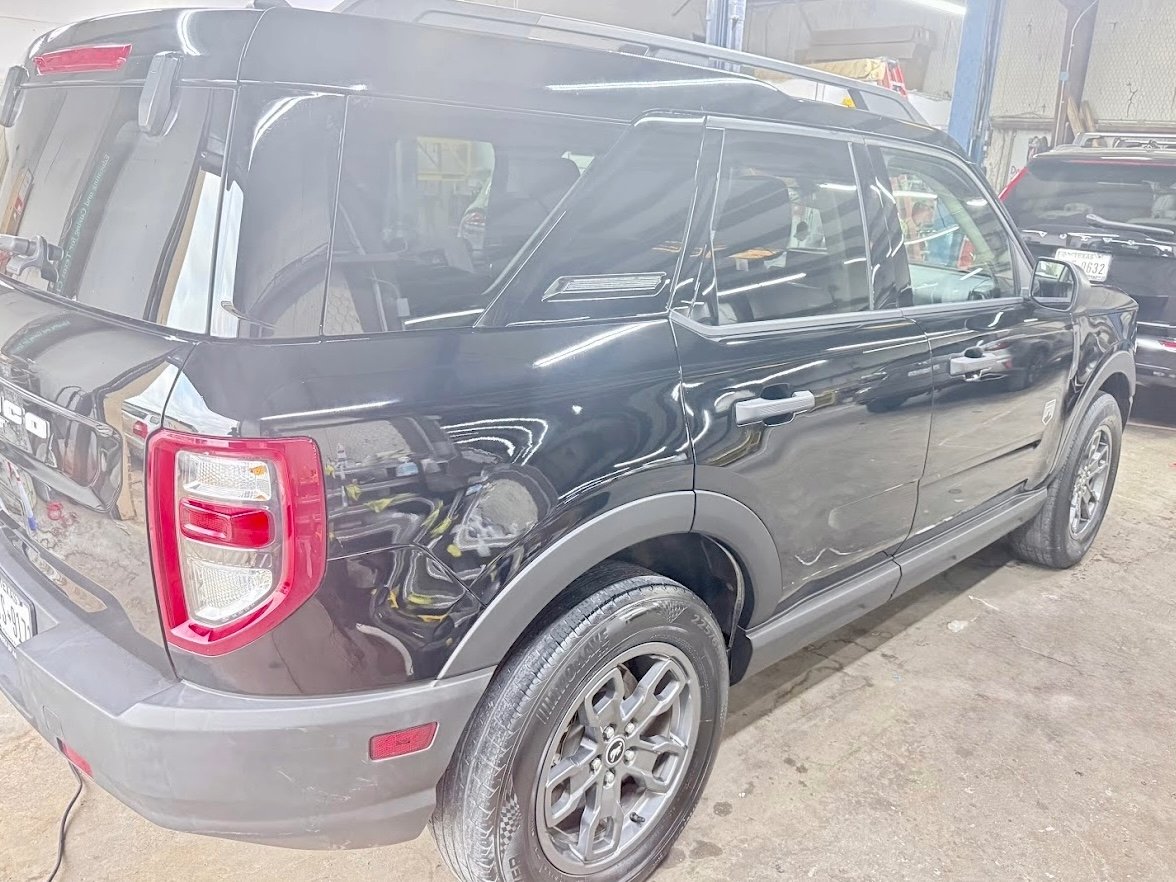
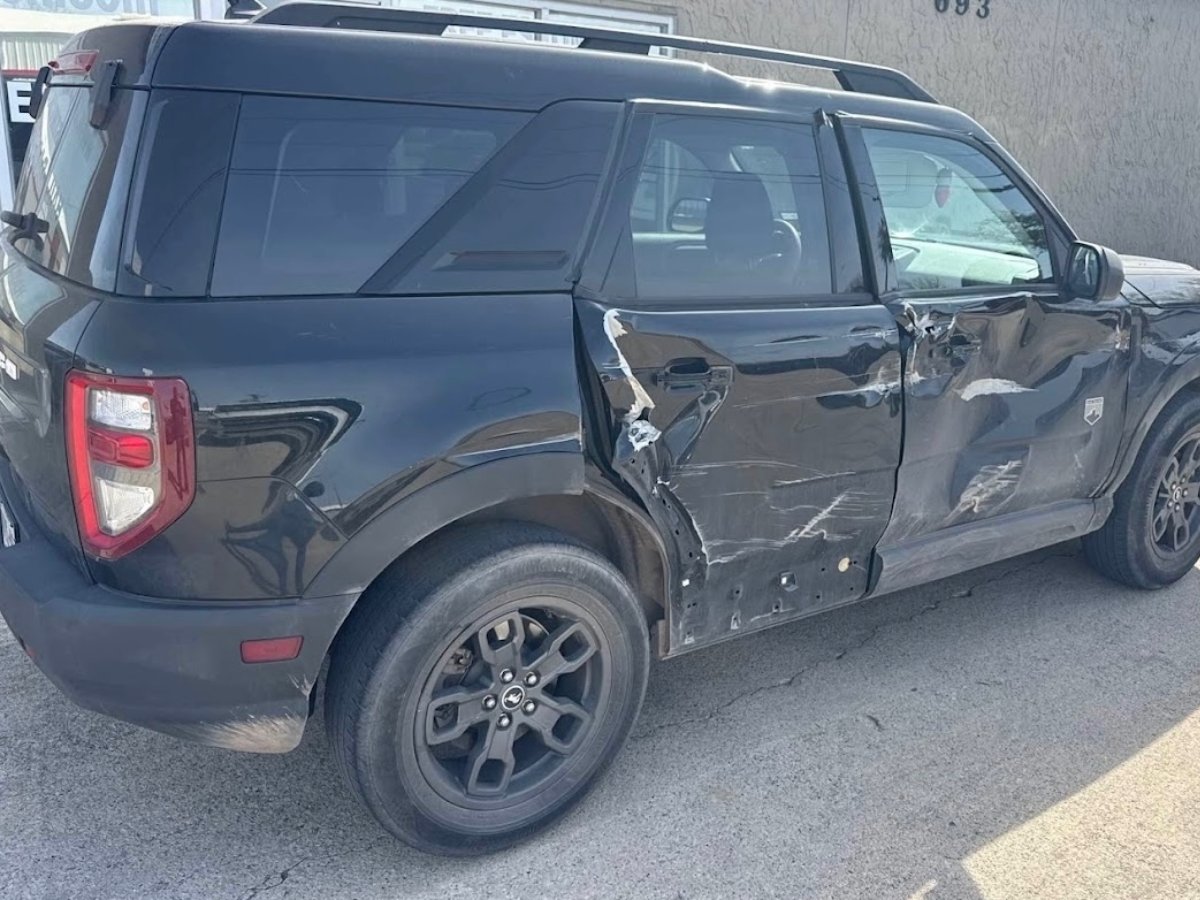 BeforeAfter
Side Impact — Drivable Or Not?
Pictured: a customer’s Ford Bronco Sport — doors caved but structure sound; whether yours is safe to drive is exactly this judgment call
Common Questions
DRIVE-OR-TOW FAQ
Free · No Obligation
GET A REAL NUMBER — NO POLICY NEEDED
Tell us what you drive and what the storm did. We’ll come back with a written estimate — so you can make the file-or-skip call with the real number in hand.
Prefer to talk now? Call (972) 219-0864 · or text us photos