The Short Answer
Yes, By Default — But Texas Law Lets The Shop Absorb It
The deductible is the slice of an insured repair your policy makes you pay — the insurer pays the approved estimate minus your deductible, and the body shop collects that gap from you at pickup. What most Texans don't know: on auto claims, a shop may legally absorb some or all of that deductible out of its own profit margin as a repair credit, provided every dollar billed to your insurer is honest. That's how qualifying claims at DG Collision Center regularly end at $0 out of pocket.
The confusion around this is real, and it comes from two places. First, a 2019 Texas roofing law made "we'll waive your deductible" a crime — for homes and roofs, not vehicles. Second, some shops run the illegal version: they pad the estimate so your insurer unknowingly funds the "waived" deductible. That is insurance fraud, and the claim carries your name.
This guide separates the three cleanly: when you genuinely owe the deductible and who collects it, the honest mechanism that makes assistance legal on Texas auto claims, and the red flags that mean a shop is about to commit fraud on your policy. If your claim is a crash rather than hail, our collision repair page covers the repair side; for storm claims, start with our Texas hail claim guide.
This guide describes standard Texas personal-auto policies as of 2026; your policy documents control, and this is general information, not legal advice.
The Basics
How Deductibles Actually Work On A Repair Claim
A deductible only exists on claims against your own policy — comprehensive and collision coverage. If the other driver was at fault and you claim against their liability coverage, there is no deductible at all; liability pays the full approved repair. The moment you run a repair through your own coverage, the claim math is fixed: insurer pays the approved estimate minus the deductible, and the deductible becomes the shop's job to collect from you.
The two coverages carry separate deductibles, set independently on your declarations page. Comprehensive covers non-crash events — hail, falling branches, theft, animal strikes — and is often set lower, commonly $500 in Texas. Collision covers crash damage regardless of fault and commonly runs $500–$1,500. A DFW hailstorm and a rear-end crash on I-35E can hit the same car in the same month and trigger two different deductibles.
Timing matters just as much as the amount. You pay the shop, at pickup — not the insurer, and never cash up front. The deductible appears as the balance on the shop's final invoice after the insurer's payment posts. A shop that demands the deductible before writing a repair order is showing you a red flag, not a policy requirement. And if hidden damage turns up mid-repair, the shop bills the insurer a supplement at real prices — your deductible stays your ceiling on a covered claim.
One more wrinkle Texans ask about constantly: if the other driver was at fault but you used your own collision coverage for speed, your insurer chases the at-fault carrier through subrogation — and if it recovers, it typically refunds the deductible you paid. Our after-an-accident Texas guide walks through both claim routes step by step.
And if the crash wasn’t your fault, the deductible you pay usually comes back: both payment paths, the subrogation timeline, and the UMPD rules are in our deductible-back guide.
What You Actually Owe
YOUR DEDUCTIBLE IN SIX SCENARIOS
The same car and the same damage can mean six different out-of-pocket numbers, depending on how the claim runs.
You pay the shop at pickup — never cash up front. Not sure which scenario is yours? Bring the estimate — or start with our DFW hail repair cost guide if it's storm damage.
NOT SURE WHAT YOU'D ACTUALLY PAY?
Send us the damage and your deductible amount. We'll tell you in one call whether your claim qualifies for assistance — and what your real out-of-pocket looks like.
The Honest Mechanism
HOW LEGAL DEDUCTIBLE ASSISTANCE WORKS — 5 STEPS
The entire legal question comes down to who pays. Here is the mechanism that keeps the insurer whole and the discount honest.
The Shop Writes A 100% Honest Line-Item Estimate
Every dent, panel, and part at its real price — nothing added, nothing padded. The entire legal mechanism rests on this step: the insurer must see the true cost of the repair.
Your Insurer Approves And Pays The Estimate Minus Your Deductible
Standard claim math: the carrier pays the approved repair cost less your deductible. Nothing about deductible assistance changes what the insurer sees or pays.
The Shop Repairs The Car And Bills Honestly — Supplements Included
Hidden damage found during teardown is documented with photos and billed to the insurer as a supplement at real prices. Honest billing runs through the whole job, not just the first estimate.
The Shop Applies A Repair Credit From Its Own Profit Margin
The shop discounts your share — some or all of the deductible — out of its own margin, as a promotional repair credit. It appears in writing on your final invoice. The insurer's cost is untouched.
You Pay The Remainder At Pickup — Often $0 On Qualifying Claims
Whatever deductible remains after the credit is collected by the shop when you pick up the vehicle. On qualifying claims at DG Collision Center, that number is frequently zero.
The Law, Plain English
Why Deductible Assistance Is Legal On Texas Auto Claims
The "waiving deductibles is a crime" rule that Texans have heard since 2019 is real — it just isn't about cars. Texas HB 2102 amended Business & Commerce Code §27.02 to ban paying, waiving, absorbing, or rebating deductibles on property insurance covering real property — homes and roofs, aimed squarely at storm-chasing roofers. Vehicles are personal property. That statute does not reach an auto claim. How that confusion gets used against you in a parking lot — and the three-day right to cancel what you signed there — is in our hail scam guide.
What governs a body shop is Texas Penal Code §35.02, the insurance-fraud statute — and it draws one clean line: who actually pays for the discount. If the shop inflates the estimate or bills phantom parts so the insurer unknowingly funds your deductible, the insurer was deceived. That is insurance fraud, and it can total felony-level dollar amounts on an ordinary repair. If the shop bills the insurer truthfully and absorbs your share from its own profit margin, nobody is deceived and nothing is fraudulent — the insurer pays exactly what it would have paid anyway, and the discount is a private matter between you and the shop.
That is why the five steps above are the whole story: honest estimate, honest supplements, a written repair credit from the shop's margin, and a smaller — often zero — balance at pickup. It's also why honest assistance never needs to be whispered. At DG Collision Center the credit is printed on the final invoice, and the insurer's file matches ours line for line. Deductible assistance is a supporting benefit here, not a gimmick — every repair also includes a free loaner from our 50+ vehicle fleet and a lifetime workmanship warranty, and under Texas Insurance Code §1952.301 the choice of shop is yours, not your insurer's.
If you want the state's own consumer guidance on auto claims, the Texas Department of Insurance claims guide is the primary source we point customers to.
General information, not legal advice — for a specific situation, consult a Texas attorney or the Texas Department of Insurance.
ANOTHER SHOP OFFERED TO "HIDE" YOUR DEDUCTIBLE?
That padded estimate goes out under your name. Get a second opinion first — an honest number, an honest credit, and paperwork your insurer can read.
Read Before You Sign Anything
DEDUCTIBLE SCAM RED FLAGS
The illegal version of "we'll cover your deductible" always leaves fingerprints. Six signs the discount is coming out of your insurer — and your name is on it:
The Estimate Grows After You Mention The Deductible
You say "$1,000 deductible" and the estimate quietly climbs by about $1,000. That number is going to your insurer as the cost of repair — a padded estimate written to bury your share is textbook §35.02 fraud.
Phantom Parts On The Insurer's Bill
Parts billed but never installed, hours billed but never worked. The insurer unknowingly funds the "waived" deductible — and the claim file with your signature is the evidence.
The Promise Is Verbal Only
An honest repair credit is boring paperwork: it's printed on the final invoice where anyone — including your insurer — can read it. A discount that only exists in conversation is a discount someone plans to hide.
"Don't Tell Your Insurer"
Honest assistance changes nothing the insurer sees, so there's nothing to keep quiet. The moment a shop asks you to keep the arrangement from your carrier, the arrangement needs the carrier deceived to work.
Cash Deductible Demanded Up Front
The deductible is collected at pickup, on the final invoice, after the insurer has paid. A shop demanding it in cash before a repair order exists is running its own playbook — walk.
Sign-Over Paperwork Before An Estimate
A broad work authorization or assignment-of-benefits before you've seen a line-item estimate hands a stranger control of your claim — including the checks. Never sign claim paperwork to get a "free deductible."
A Real Claim
WHAT A DEDUCTIBLE-ASSISTED REPAIR LOOKS LIKE
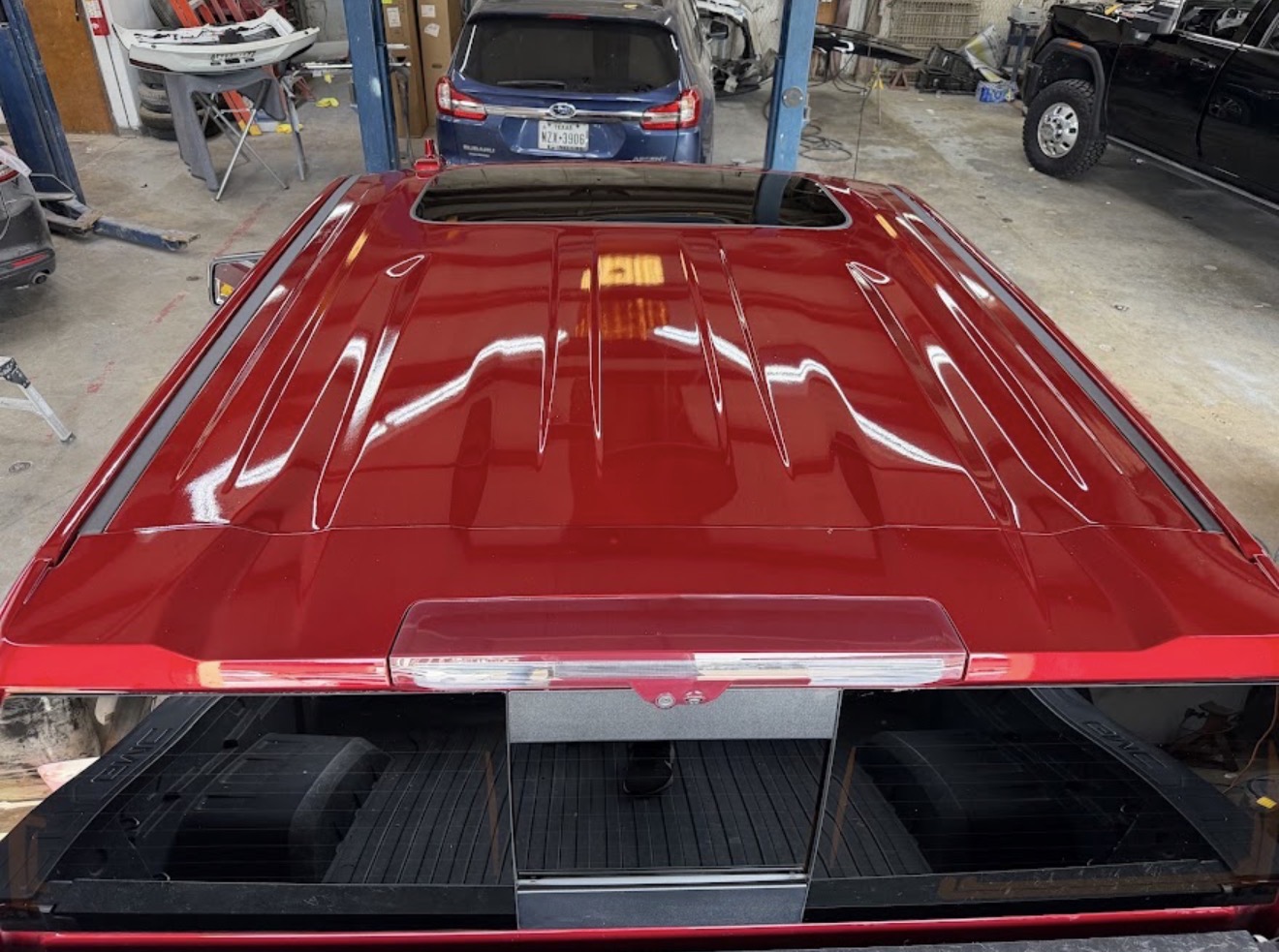
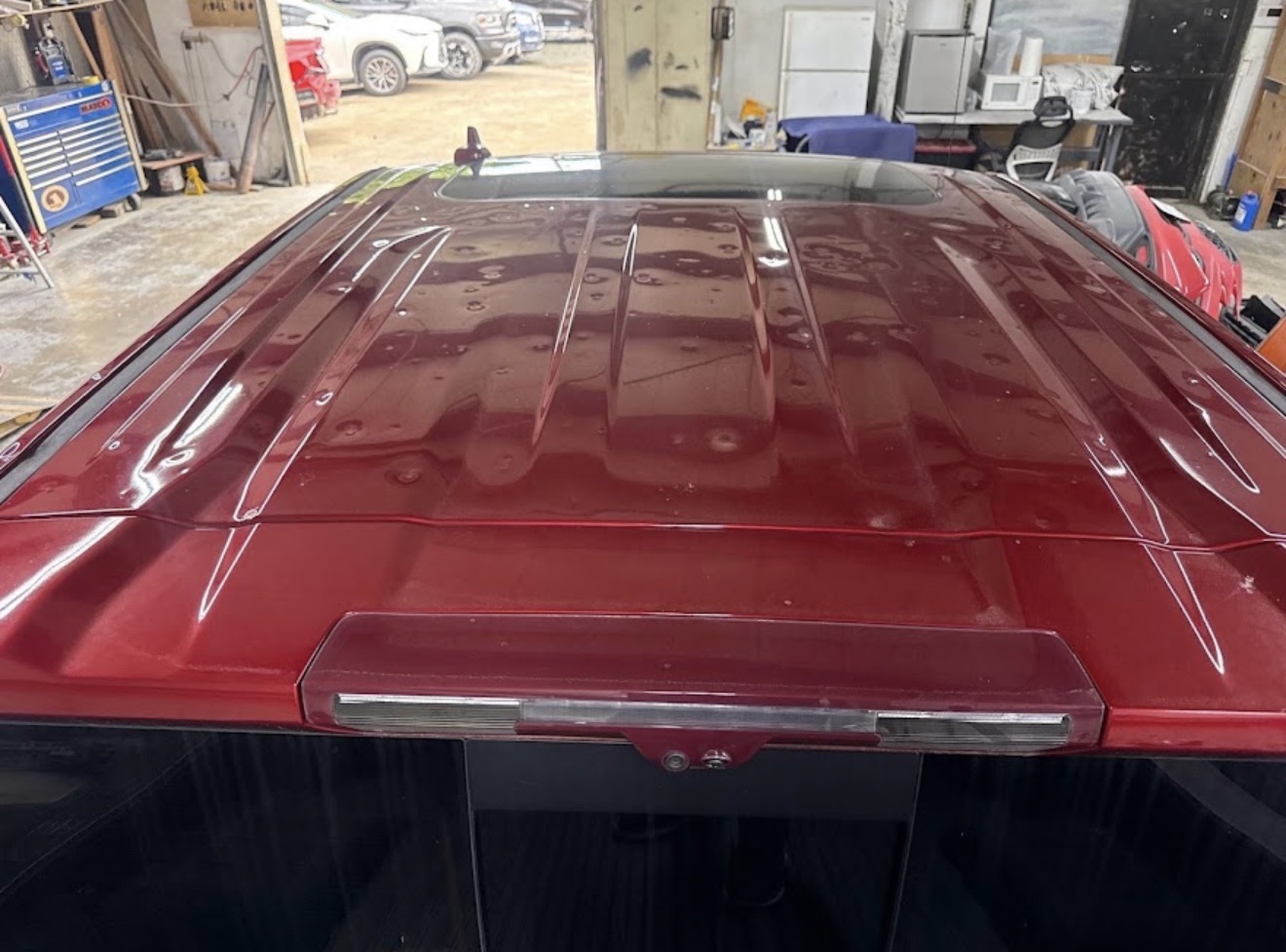
Drag the slider. Comprehensive hail claim, honest panel-by-panel estimate, repair credit from our margin — the customer's out-of-pocket was capped at the deductible or less.
 Before
After
Before
After
Deductible-Assisted Hail Claim — Roof PDR
Insurer billed honestly, repair credit in writing — factory finish preserved, nothing reported to Carfax by us
SEE IF YOUR CLAIM QUALIFIES
Free estimate, honest billing your insurer can verify, and a written repair credit on qualifying claims. Many customers drive out at $0.
Texas Deductible Questions
DEDUCTIBLE FAQ
About The Author
Shah Jiwani — Owner, DG Collision Center
Shah has 30+ years of hands-on DFW collision-repair experience. He joined DG Collision in the 1990s, earned equity over time, and took over as owner in 2005. He is I-CAR Gold Class Certified, PPG Certified Refinish, and Sherwin-Williams Automotive Certified. Every guide on this site is written or reviewed based on what we actually see in the shop — not aggregated from other blogs.
Read Shah’s full bio & credentials →Free · No Obligation
FIND OUT WHAT YOU'D ACTUALLY PAY
Tell us what you drive, what happened, and your deductible amount. We'll call you back as fast as possible with an honest estimate and whether your claim qualifies for deductible assistance.
Prefer to talk now? Call (972) 219-0864 · or text us your estimate