CRASH ON A DFW HIGHWAY — DO THIS FIRST
Short version: if your car can still be normally and safely driven, Texas law says get it out of the lane — on a metro freeway, moving to the frontage road or the nearest safe spot isn’t just allowed, it’s a duty (Transp. Code §550.022(b)). The myth that you’ll “ruin the evidence” gets people hit twice. One guide for every corridor we tow off and rebuild from — I-35E, Sam Rayburn (121), the DNT, PGBT, I-635, US-75, SH 114 — because the law, the tow trap, and the hidden-damage physics are the same on all of them.
Move it if it moves, protect it if it doesn’t, and don’t let a stranger’s tow truck decide where your car spends the week. On a freeway in a Texas metro area, §550.022(b) requires each driver whose car can be normally and safely driven to move it as soon as possible — to a designated crash investigation site if there is one, the frontage road, the nearest suitable cross street, or another safe spot. A quick wide photo on the way to the shoulder preserves plenty; staying in a live lane preserves nothing and risks the second crash, which on highways is routinely worse than the first. If the car can’t drive, the tow decision is the claim decision: name a shop as the destination, because a tow yard runs a daily meter while a shop starts the repair — and on covered claims the tow to us is free to you, billed to your insurance.
Highway crashes change three things about the standard playbook. First, the law flips the don’t-move instinct: §550.022(b) puts a move-it duty on every driver of a drivable car on a metro freeway — frontage road, cross street, investigation site, or other suitable location, “as soon as possible.” Hazards on, one wide photo if it’s safe, then move; the detailed photography happens out of the lane. Second, the tow is a trap with a meter: unsolicited wreckers appear at highway scenes fast, and a car dragged to a storage yard accrues daily charges while everyone argues — name your shop as the destination from the shoulder and the meter never starts (already at a yard? this guide). Third, speed hides damage: impact energy grows with the square of speed, so a 70-mph “glancing” hit carries several times the energy of the same contact at city speed — radiator supports, suspension geometry, and corner-mounted sensors take hits the bumper cover doesn’t show. Report when the law requires it (§550.026), pick your own shop (§1952.301), and get the measurement before accepting any number.
The Legal Ground
THE LAW SAYS MOVE IT — YES, REALLY
The most dangerous minutes of a highway crash are usually the ones after it, spent standing beside a stopped car in a 70-mph lane. Texas wrote that lesson into law: under Transportation Code §550.022(b), when a crash happens on a main lane, ramp, or connector of a freeway in a metropolitan area and each vehicle “can be normally and safely driven,” each driver shall move the vehicle as soon as possible — to a designated collision investigation site if one is available, a location on the frontage road, the nearest suitable cross street, or another suitable location. That’s a duty, not a suggestion, and it exists because second collisions into stopped crash scenes keep injuring people the first crash didn’t.
The folklore that says otherwise — “don’t move anything until police arrive or you’ll ruin the fault evidence” — gets the law backwards on a metro freeway, and it overrates what resting positions prove in a highway crash anyway. What actually decides highway fault: each car’s damage pattern, both drivers’ statements, dashcam and witness accounts, and the CR-3 report. All of that survives the move. If it’s safe to take one wide photo through the windshield or from the shoulder before you roll, take it; if it isn’t, move first and photograph thoroughly on the frontage road. “Normally and safely driven” is the honest test, and it means what it says — a car dragging its bumper, leaking, or riding on a damaged wheel fails it, and so does any car whose driver is hurt. Then the duty flips to protecting the scene: hazards on, everyone out of the car and behind the barrier, upstream of traffic, and 911 told exactly where you are.
The reporting rules don’t change because it’s a highway: Texas requires an immediate report when a crash injures or kills someone or leaves a vehicle that can’t be driven away (§550.026), and on DFW freeways officers respond to most reported crashes. Tell the dispatcher your direction of travel, the nearest exit or mile marker, and whether lanes are blocked — the first two are also exactly what your insurance claim will want, so say them into your phone’s notes while they’re fresh.
The Local Map
THE CORRIDORS WE SEE EVERY WEEK
The shop sits in Lewisville, which puts us minutes from the crash geography of north DFW. I-35E runs practically past the front door and supplies our steadiest work: stop-and-go compression chains through Lewisville and Carrollton, and higher-energy hits where the Denton-bound lanes open up. Sam Rayburn Tollway (SH 121) and the Dallas North Tollway bring the classic tollway crash — closing-speed rear-enders and lane-change clips at 70-plus, where a “minor” swipe still carries highway energy. The President George Bush Turnpike (PGBT), I-635, US-75, and SH 114 through the airport corridor round out the map. Different roads, same three decisions: move it, control the tow, measure the damage.
Two features of Texas freeway design matter to your ten minutes. Frontage roads: most DFW freeways carry continuous service roads — the statute names them as a place to put a drivable car, and they’re almost always the best choice: out of the lanes, visible for the exchange, easy for the officer to find. Tolled lanes: on the DNT, PGBT, Sam Rayburn, and the managed lanes, shoulders can be narrow and traffic unforgiving — favor getting fully off at the next exit over a tight shoulder when the car drives fine and nobody’s hurt. A quarter mile of careful driving to a safe lot beats a conversation conducted eighteen inches from live traffic. Whichever corridor it is, the exchange, the photos, and the claim run exactly like the standard playbook — just conducted from somewhere a second crash can’t reach you.
The Expensive Ten Minutes
THE TOW DECISION IS THE CLAIM DECISION
If the car fails the normally-and-safely test, the next vehicle to arrive is often a wrecker nobody called. Highway crash scenes attract unsolicited tow operators, and the destination they suggest — “our storage yard, you can sort it out tomorrow” — is where the claim starts bleeding: Texas yards charge regulated daily storage plus fees, the meter runs while adjusters schedule inspections, and getting a car released and re-towed adds days and money. We wrote a whole guide on getting a car out of a tow yard; the better move is never arriving there. From the shoulder, name the destination: a repair shop. “Tow it to DG Collision, 693 Metro Park Circle, Lewisville” is one sentence, and it means the car lands where the teardown, the photos, and the estimate begin — the meter never starts.
The money side, stated the way we always state it: towing is free to you on covered claims — the tow is billed to your insurance carrier, and Texas comprehensive and collision policies generally cover reasonable towing. No coverage for the tow? Ask about discounted rates through our towing partners. If police have the scene, they may direct which wrecker moves the car for traffic clearance — you still choose where it ultimately goes, and if it must touch a yard first, say the shop’s name at the scene and call us; we coordinate the yard-to-shop transfer before storage stacks up. One more honest note: being towed doesn’t commit you to repairs — the estimate is free and written either way, and Texas law keeps the shop choice yours, not the carrier’s (§1952.301).
The Part You Can’t See
HIGHWAY SPEED HIDES DAMAGE BY THE SQUARE
Impact energy doesn’t grow with speed — it grows with the square of speed. The same contact at 70 mph carries roughly four times the energy it would at 35, which is why “it was just a glancing hit” means something different on I-35E than in a parking lot. That energy goes somewhere: into the absorber and reinforcement behind an unbothered-looking bumper cover, into radiator and condenser supports, into control arms and knuckles when a wheel takes any of the hit, and into the corner-mounted radar and camera brackets that modern cruise control and blind-spot systems live on. A highway car can drive home feeling fine and still be pulling by Thursday, wearing a tire by month’s end, or cruising with sensors aimed somewhere new.
So the highway rule of thumb: any freeway-speed contact earns a teardown-grade look, whatever the cover shows. The computerized measurement reads the structure against factory reference points in millimeters and answers the question evidence-first — here’s what it catches that eyes don’t. Multi-car highway chains get one more honesty note: with several carriers pointing at each other, fault percentages can take weeks — that’s the textbook case for starting on your own collision coverage and letting your carrier fight it out, with §542.204 requiring them to pursue your deductible within a year of paying or refund it. The not-my-fault guide maps the doors. General information, not legal advice — injuries are doctor-and-lawyer territory; our lane is the car.
Start To Finish
FIVE STEPS FROM THE FAST LANE TO REPAIRED
Hazards On, One Wide Photo, Assess The Car
Flashers immediately. If it’s safe, one wide shot captures the scene. Then the honest test: can this car be normally and safely driven — no dragging parts, no leaks, no damaged wheel, nobody hurt? That answer picks your next step.
Drivable: Move It — The Law Requires It
§550.022(b): on a metro freeway, a drivable car moves as soon as possible — investigation site, frontage road, nearest suitable cross street, or other safe spot. Not drivable: everyone out, behind the barrier, upstream of traffic, and 911 told your direction and nearest exit.
Exchange, Document, And Note The Where
The standard exchange and photo set, done off the lanes — plus the highway extras: direction of travel, nearest exit or mile marker, lane, and dashcam files saved before the loop overwrites them. Police file the CR-3 when the crash requires a report (§550.026).
Control The Tow — Shop, Never Yard
If it can’t drive, name the destination from the shoulder: a repair shop, by name and address. A yard runs a daily meter; a shop starts the documentation. On covered claims the tow to us is billed to your insurance — free to you; without coverage, discounted partner rates.
Measure First, Then Claim From Facts
Freeway-speed energy hides in structure, suspension, and sensors — the computerized measurement finds it before anyone commits to a number. Multi-car chain or disputed fault? Your collision coverage starts the repair now; §542.204 chases the deductible back.
Real Results
A COLLISION REBUILD, BEFORE & AFTER
Pictured: a customer’s Honda CR-V — collision damage torn down, measured, and rebuilt on our Lewisville floor, the same documentation-first process every highway car gets. Drag the slider.
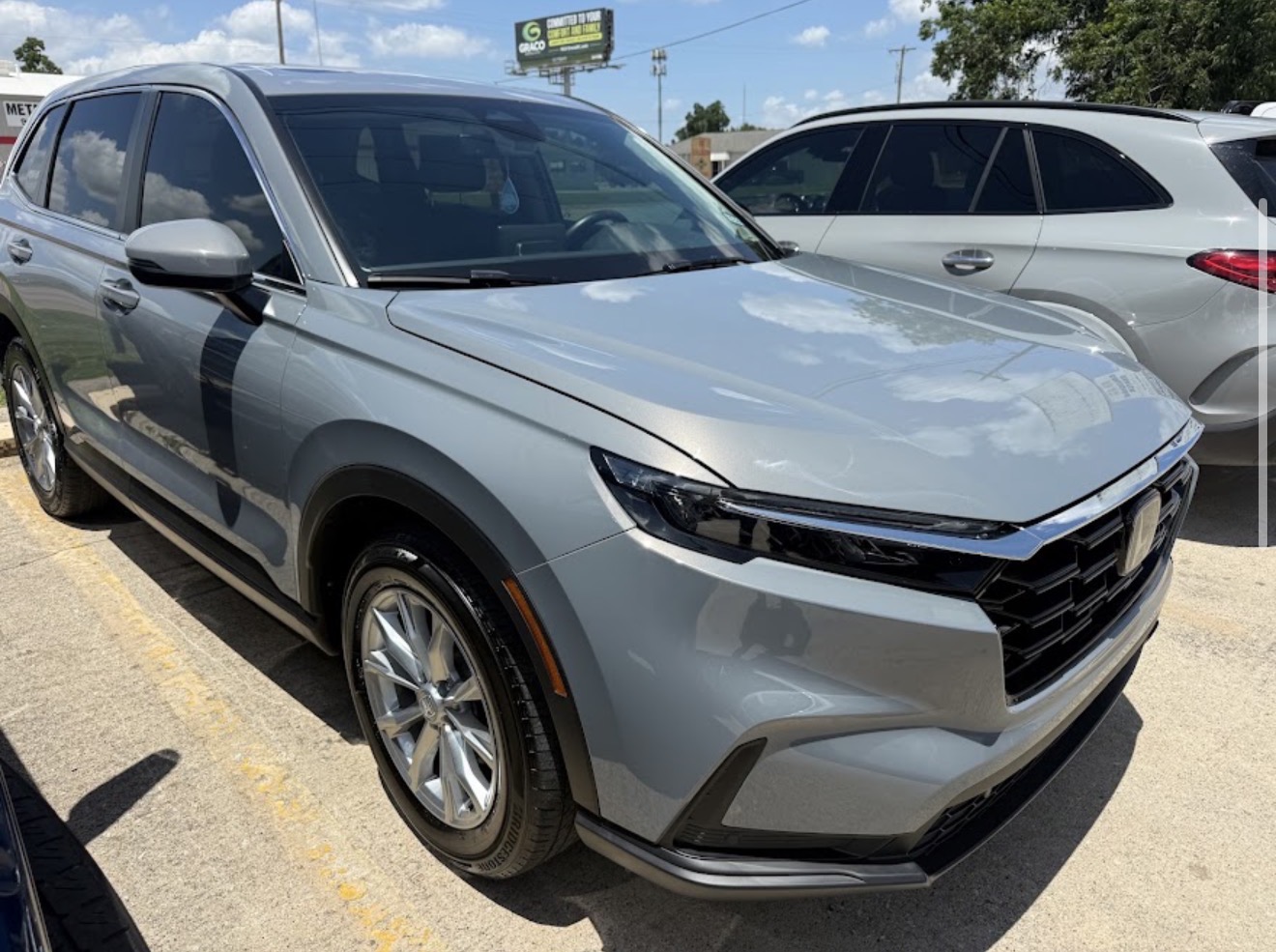
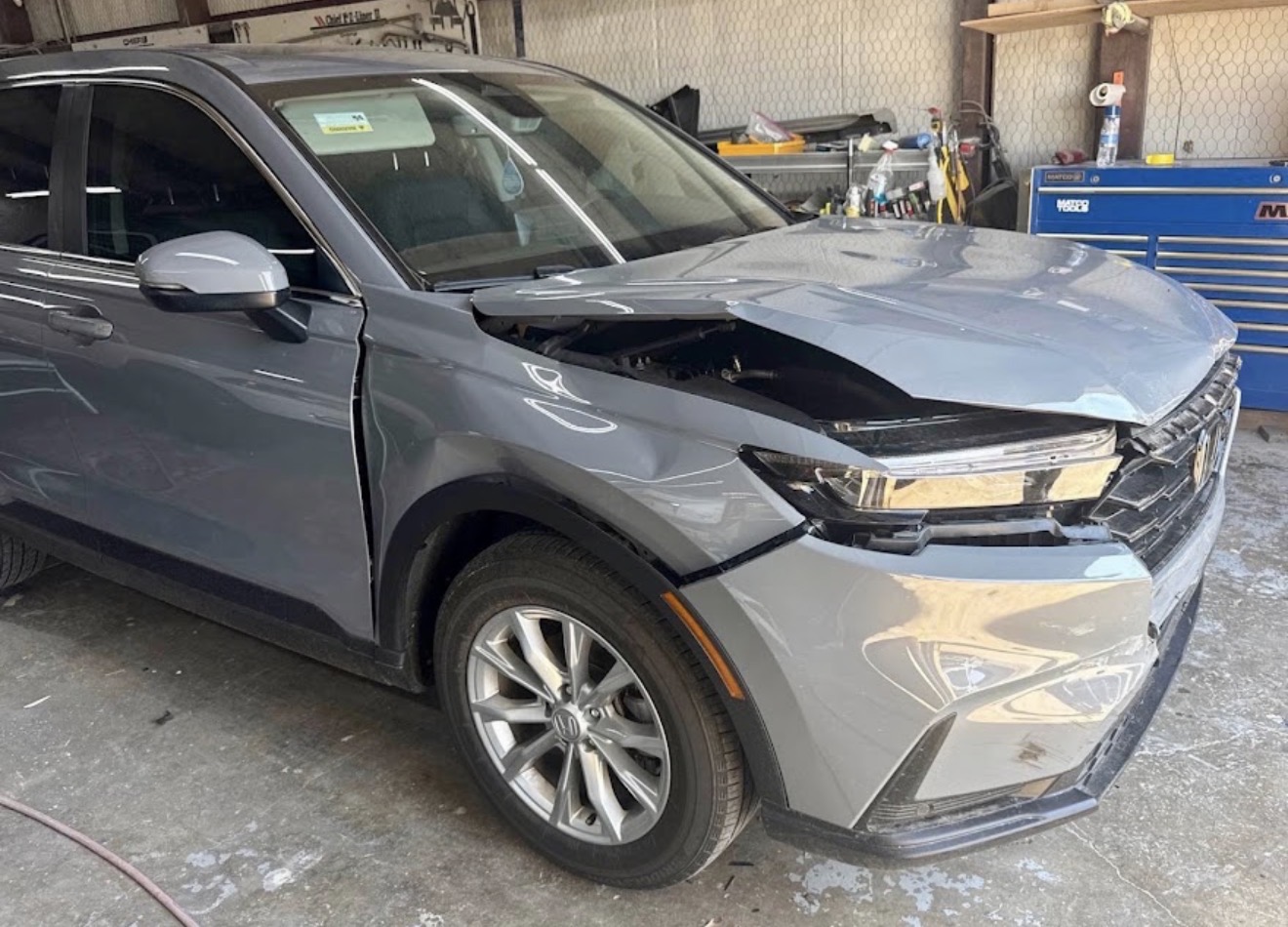 Before
After
Before
After
Collision Rebuild — Teardown To Delivery
Torn down, structure measured in millimeters, supplemented from findings, rebuilt to spec — the process that catches what highway speed hides
DFW Highway Crashes
FREQUENTLY ASKED QUESTIONS
Free · No Obligation
GET A REAL NUMBER — NO POLICY NEEDED
Tell us what you drive and what happened. We’ll come back with a written estimate — so you can make the file-or-skip call with the real number in hand.
Prefer to talk now? Call (972) 219-0864 · or text us photos