THE CRASH WASN’T YOUR FAULT — WHO PAYS FOR YOUR REPAIR?
The at-fault driver’s liability insurance — and not just for the repair. TDI’s consumer guidance says their carrier should pay for “your car repairs, medical bills, and a rental car,” and Texas law adds loss of use and diminished value to the list. The catch: their insurer pays only after it accepts that its driver was at fault, and no law puts that decision on a clock.
Two doors. Theirs: file with the at-fault driver’s liability carrier — no deductible, but no statutory clock forces their decision. Yours: file collision — repair starts now, you front the deductible, and §542.204 requires your insurer to pursue it within one year of paying or refund it. Clear fault and a responsive carrier favor door one; disputed fault or a slow adjuster favors door two.
When the other driver caused the crash, you have two doors. Door one: file directly with their liability insurance — no deductible, and TDI says their carrier should cover your repairs, rental, and medical bills — but nothing forces their decision onto a schedule, because Texas prompt-payment deadlines only bind an insurer to its own customers. Door two: file on your own collision coverage — repair starts now, you front the deductible, and your insurer chases theirs through subrogation; by statute (Tex. Ins. Code §542.204) it must pursue your deductible within one year of paying your claim or refund it to you. Beyond the repair itself, the at-fault side owes rental or loss-of-use, and diminished value on a documented claim. Shared blame prorates recovery under Texas comparative fault, and more than 50% responsibility bars it entirely. Your shop choice is yours on either door (Tex. Ins. Code §1952.301).
- Their carrier owes: repair, rental or loss-of-use, and diminished value — after it accepts liability, which has no statutory deadline.
- Your collision coverage is the fast lane: repair now, deductible fronted, then recovered — §542.204 puts a one-year recover-or-refund clock on it.
- Filing on your own policy is not an admission of fault — it’s a logistics choice, and TDI describes both paths as normal.
- Leverage when they stall: switch doors, complain to TDI, or sue the driver — Justice Court handles up to $20,000.
First Decision
THE TWO DOORS EVERY NOT-AT-FAULT DRIVER CHOOSES BETWEEN
Texas runs on fault: the driver who causes a crash — in practice, their liability insurance — pays for what it damaged. TDI’s plain-language version of your first move covers both doors in two sentences: “file a claim with the other driver’s car insurance. Let your insurance company know.” The choice between actually running the claim through their carrier versus your own collision coverage is a logistics decision, not a moral one — and it’s worth making deliberately, because the doors trade speed against paperwork.
Filing on your own policy does not make the crash your fault, doesn’t “count against you” as an at-fault loss, and doesn’t let the other driver off — your carrier pursues theirs behind the scenes either way. (Someone else behind the wheel of your car when it happened? The whose-policy-answers question is its own guide: someone else driving your car.) The deductible mechanics of door two — how subrogation runs, when refunds come back partial, what to ask your adjuster — get their own full treatment in our deductible-back guide. This page is about the rest of the claim: what their side owes, and how to collect it. Esta guía existe completa en español: el choque no fue mi culpa — ¿quién paga?
Behind Their Curtain
HOW THE AT-FAULT CARRIER’S PROCESS ACTUALLY RUNS
Once you open the claim, their adjuster investigates liability before paying anything — and TDI warns about the first frustration plainly: the other carrier may “take a while to contact you while they wait on their policyholder to respond.” Their insured has no urgency to confess, and the carrier owes its duties to its customer, not to you. Two practical notes for that phase. First, you’re not obligated to give the other side’s adjuster a recorded statement — keep communication factual and written where you can, and let your police report, photos, and estimate do the talking. Second, feed the file: the crash report, scene photos, witness contacts, and a line-item repair estimate are what “liability reasonably clear” gets built from.
Now the honest structural truth. The deadlines Texas puts on insurers — acknowledge in 15 days, decide in 15 business days, pay in 5 — live in the Prompt Payment of Claims Act, and that statute defines a claim as a first-party claim: one made by the insurer’s own policyholder. As a third-party claimant, you’re outside it. Texas also lists “not attempting in good faith to effect a prompt, fair, and equitable settlement of a claim submitted in which liability has become reasonably clear” as an unfair claim practice — but the Texas Supreme Court held in Allstate v. Watson (1994) that a third-party claimant can’t sue the other driver’s insurer over it; that rule is enforced by regulators, not by you. None of this means you’re powerless — it means your leverage lives in different places, which is exactly what the leverage section below maps.
NOT YOUR FAULT? START WITH THE NUMBER EVERY CLAIM RUNS ON.
Free written line-item estimate — the document that anchors the liability file, the supplement, and every negotiation after.
The Full Invoice
EVERYTHING THE AT-FAULT SIDE OWES YOU
Most not-at-fault drivers collect the repair and unknowingly donate the rest. The at-fault side’s tab, in full: the repair itself — with your choice of shop protected by Tex. Ins. Code §1952.301, which also bars insurers from dictating the brand or condition of parts (the OEM-versus-aftermarket fight has its own guide). A rental car or loss of use — TDI lists the rental alongside repairs as what their carrier should pay, and Texas measures loss of use by reasonable rental value even if you never rent; the timing traps and the free-loaner answer live in our rental-car guide. Towing and reasonable storage when the car wasn’t drivable.
And the two everyone forgets. Diminished value: a properly repaired car with a crash on its history report is worth less at trade-in, and in Texas that gap is recoverable from the at-fault driver’s insurer on a documented third-party claim — our diminished-value guide covers the evidence that makes it real money instead of a form-letter denial. Your deductible, if you took door two: your carrier recovers it through subrogation, and Texas law backstops you with a deadline — under Ins. Code §542.204, your insurer must act to recover the deductible from the third party within one year of paying your claim, refund it to you itself, or hand you the collection right in writing. Collect the whole invoice, not just the visible line.
When The Answer Is Silence
YOUR ACTUAL LEVERAGE WHEN THEY STALL OR DENY
Four moves, in escalation order. Switch doors: TDI’s own guidance for a carrier that won’t pay because it disputes fault is to file with your own company — collision coverage required — and let subrogation fight it out; you lose nothing but the fronted deductible, which the one-year rule protects. Complain to TDI: regulators are the enforcement arm for unfair-settlement conduct, and a documented complaint gets a written response obligation moving. Sue the driver: not their insurer — the driver, whose carrier then defends and pays any judgment up to its limits. Texas Justice Court takes property claims up to $20,000 without requiring a lawyer, and you have two years from the crash date (Civ. Prac. & Rem. Code §16.003). A filed petition has a way of making “liability under investigation” conclude.
And know the comparative-fault math before anyone assigns you a percentage: Texas bars recovery only when your share of responsibility exceeds 50%, and below that your recovery is reduced by your percentage (Civ. Prac. & Rem. Code §§33.001, 33.012) — at exactly 50/50 you still recover half. Adjusters sometimes float fault splits as negotiation gravity; a police report and scene photos are what keep the percentage honest. For the full at-the-scene playbook that sets all of this up — the photo checklist, the claim timeline, the mistakes that sink recoveries — our Texas accident guide is the companion read to this page.
The Playbook
GET REPAIRED ON THEIR DIME IN 5 STEPS
01. Build the fault file at the scene
Police report, photos of positions and damage, witness contacts, their insurance card. Liability gets decided on this file — it’s the foundation under every later step.
02. Open their claim, notify yours
File with the at-fault carrier and let your own insurer know — TDI recommends both. Notifying your carrier isn’t filing a claim on yourself; it keeps door two open if theirs stalls.
03. Get the written estimate first
A line-item estimate from your chosen shop — §1952.301 makes the choice yours — before accepting any carrier’s number. Photos-only desk estimates run low; teardown finds what they miss.
04. Choose your door deliberately
Clear fault and responsive adjuster: run their liability claim, skip the deductible. Disputed fault or silence: file collision, repair now, and let subrogation and the one-year deductible rule work.
05. Collect the full invoice
Repair, rental or loss-of-use, towing, diminished value, deductible. Ask for each by name, in writing, with documentation — unclaimed damages are the quietest money insurers keep.
From Our Shop Floor
WHAT A LIABILITY CLAIM PAYS TO FIX
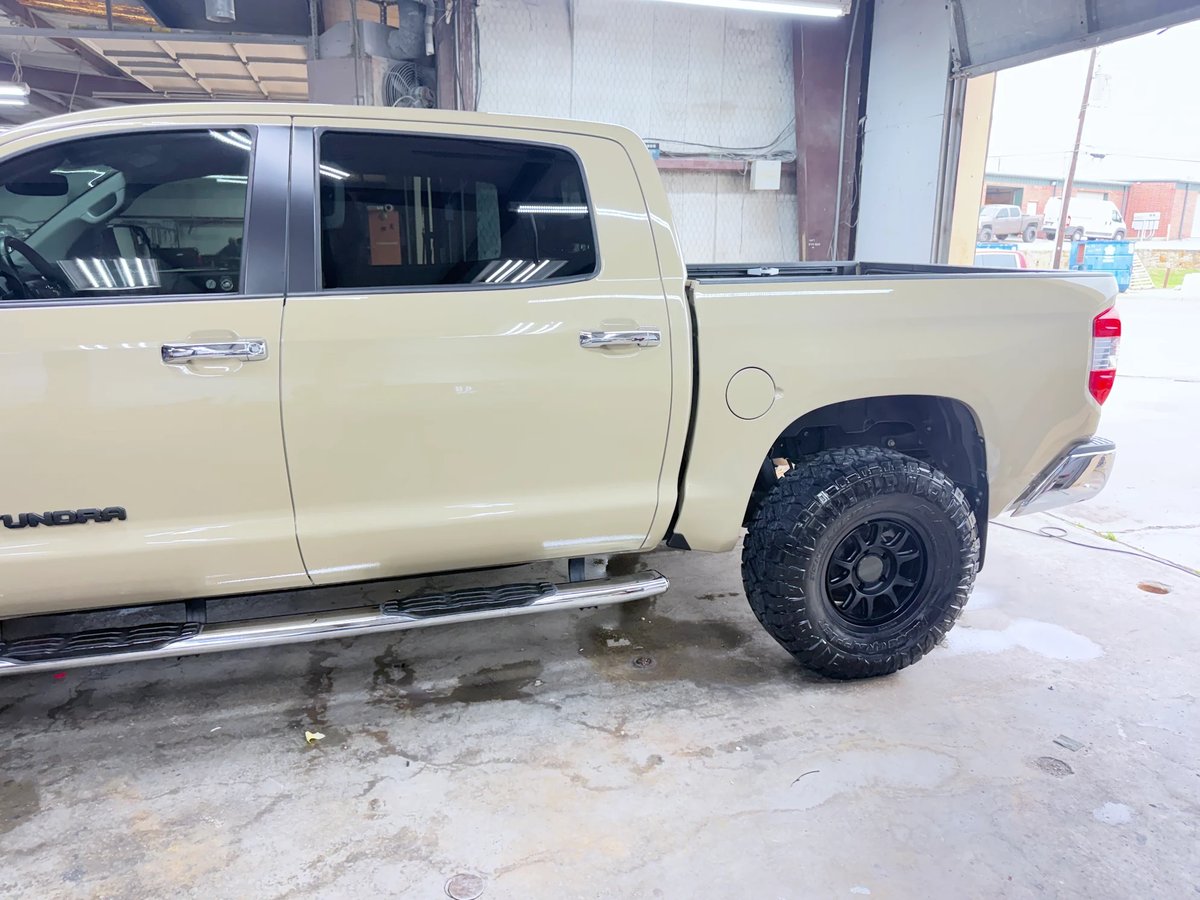
Drag the slider — a real front-end rebuild from our Lewisville floor, documented the way liability files demand.
 Before
After
Before
After
Side Impact — Someone Else’s Mistake
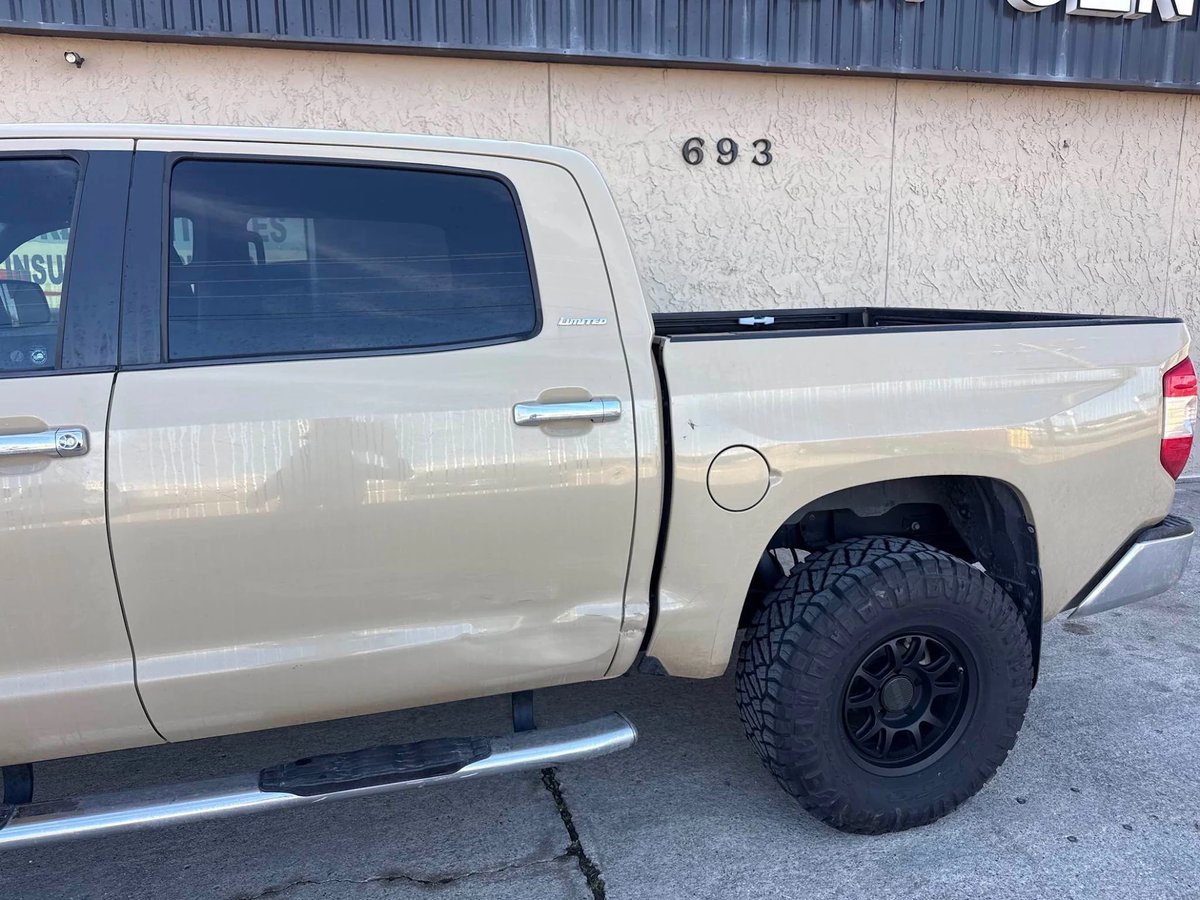
Pictured: a customer’s Toyota Tundra — door and bedside caught in someone else’s lane change, worked back to the factory line
Not-At-Fault Questions