DO YOU GET YOUR DEDUCTIBLE BACK IF THE ACCIDENT WASN’T YOUR FAULT?
Usually, yes — but it depends which door you walk through. Claim directly against the at-fault driver’s liability insurance and there’s no deductible at all. File on your own collision coverage and you pay your deductible up front — then your insurer chases the at-fault carrier through subrogation and refunds your deductible when it recovers, typically months later.
Two paths. File with the at-fault driver’s liability insurer and no deductible ever leaves your pocket — but their investigation sets the pace. Or file on your own collision coverage, front the deductible, and let subrogation recover it: §542.204 requires your insurer to pursue your deductible within one year of paying the claim — or refund it to you.
Not at fault in Texas? You have two ways to get repaired. Path one: claim against the at-fault driver’s liability insurance — no deductible ever leaves your pocket, but their carrier investigates fault first, which takes longer. Path two: file on your own collision coverage — your repair starts fast, you pay your deductible up front, and your insurer recovers the money from the at-fault carrier through subrogation, refunding your deductible when it collects (commonly one to six months). Refunds come back partial when fault is shared — Texas proportionate responsibility (Tex. Civ. Prac. & Rem. Code §33.001) — or when the at-fault driver’s limits run short. If they’re uninsured, UMPD coverage steps in with a statutory $250 deductible (Tex. Ins. Code §1952.105).
- Their insurance = no deductible; your collision coverage = deductible now, refund after subrogation succeeds.
- Typical refund timing: one to six months after your repair — longer when fault is disputed or the other carrier drags.
- Partial refunds are real: found 20% at fault under §33.001 comparative fault, expect roughly 80% of the deductible back.
- Uninsured driver or hit-and-run: UMPD pays your repair minus a $250 statutory deductible — a coverage worth having in a state full of uninsured drivers.
Choose Your Door
THE TWO WAYS A NOT-AT-FAULT REPAIR GETS PAID
Both doors lead to the same shop, the same parts, the same repair — the difference is purely whose paperwork moves first and where your deductible sits in the meantime. The classic mistake is treating the choice as moral (“why should MY insurance pay when it wasn’t my fault?”). It isn’t moral, it’s logistical: filing on your own policy doesn’t admit fault, doesn’t make the accident “yours,” and doesn’t change who ultimately pays — it just gets you repaired on your carrier’s clock instead of waiting on a stranger’s insurer to accept liability. Your shop choice holds on either path (Tex. Ins. Code §1952.301), and we bill whichever carrier is paying, directly.
The Word On The Letter
HOW SUBROGATION ACTUALLY WORKS
Subrogation is your insurer stepping into your shoes. You had a claim against the at-fault driver; by paying your repair, your carrier buys that claim and pursues it — their recovery team against the other insurer’s claims department, no action needed from you beyond answering the occasional question honestly. When they collect, the money unwinds in order, and your deductible rides along: recover everything, and you’re refunded in full; the check or ACH usually arrives with a short letter you might mistake for junk mail.
The honest timeline: commonly one to six months after the repair, occasionally faster when liability is clean and the carriers use industry arbitration, occasionally a year when fault is contested or the at-fault driver’s carrier fights. During that window your job is simple — keep your claim number, don’t give the other carrier a recorded statement without thought, and if the silence stretches past six months, call your adjuster and ask one specific question: “What’s the status of subrogation on my claim, and has my deductible been recovered?” Squeaky wheels get status updates; silent files get archived. The repair file we build — photos, teardown documentation, a clean line-item invoice — is quietly load-bearing here too: subrogation is your carrier proving damages to a hostile audience, and shops that document well make that case easy.
NOT YOUR FAULT? GET THE REPAIR MOVING WHILE THE CARRIERS ARGUE.
Free written estimate, direct billing on either path, and a free loaner from our 50+ fleet while fault gets sorted.
When The Check Is Smaller
PARTIAL REFUNDS, SLOW REFUNDS, AND NO REFUNDS
Three things shrink or stall a deductible refund, and all three are about the other side of the claim. Shared fault: Texas runs proportionate responsibility (Tex. Civ. Prac. & Rem. Code §33.001) — if the carriers settle on you being 20% at fault, subrogation recovers 80%, and your deductible refund typically comes back 80% too. (At 51% or more, you’re barred from recovering at all — that’s the same 51% bar covered in our after-an-accident guide.) Limits that run short: Texas minimum liability is real money but not much of it, and a bad crash can exceed the at-fault driver’s property-damage limit — recoveries get prorated, and your refund with them. An uncollectible driver: no insurance and no assets means your carrier’s subrogation letter goes to someone who can’t pay — which is exactly the scenario the next section’s coverage exists for.
One more honest note: a deductible refund is not the same thing as your rates. Whether and how a not-at-fault claim shows up at renewal is its own topic with its own Texas rules — the short version lives in our rates guide, and “the carrier recovered everything” is a strong fact to have on your side at renewal time.
When There’s Nobody To Bill
UNINSURED DRIVERS AND HIT-AND-RUN
When the at-fault driver has no insurance — or no identity, because they drove off — the recovery chain has nowhere to go, and your own policy’s UMPD (uninsured motorist property damage) coverage becomes the payer. Texas law is unusually concrete here: insurers must offer UM/UIM coverage with every auto policy (you can only decline it by signing a rejection), and UMPD claims carry a statutory $250 deductible under Tex. Ins. Code §1952.105 — a fixed number set by law, not by your policy tier. In a metro where uninsured drivers are a daily reality, that $250 is the difference between a manageable claim and eating a whole repair.
Two practical notes for the worst-case scenarios: for hit-and-run, call the police and get the report — carriers scrutinize phantom-driver claims, and a prompt police report (the CR-3 for crashes an officer works) is the document that separates your claim from fraud-pattern claims. And check your declarations page today, before you need it: UMPD and collision look similar on a repair invoice but behave differently on deductibles and availability, and thirty seconds of reading now beats discovering coverage gaps at the tow yard. Both worst-case scenarios now have their own full guides — our hit-and-run guide covers the police-report rules and phantom-vehicle evidence, and our uninsured-driver guide ranks every option when the at-fault driver carries nothing.
The Playbook
GET YOUR DEDUCTIBLE BACK IN 5 STEPS
01. Document fault at the scene
Photos of positions, damage on both cars, the other driver’s insurance card, and a police report when there is one. Fault evidence is refund evidence — subrogation wins on exactly this file.
02. Pick your path deliberately
Clear fault and a responsive carrier: claim against their liability insurance and skip the deductible entirely. Disputed fault or a stalling carrier: file your own collision claim and let subrogation do the chasing.
03. Repair with full documentation
A line-item estimate, teardown photos, and a clean final invoice — the package your carrier hands the at-fault insurer as proof of damages. It’s the same file we build on every repair anyway.
04. Ask about subrogation by name
At filing: “please note I expect deductible recovery through subrogation.” At the 90-day mark, and quarterly after: “what’s the subrogation status, and has my deductible been recovered?”
05. Watch for the refund — and question shortfalls
Refunds arrive as an unglamorous check or deposit. If it’s partial, ask for the fault percentage and recovery math in writing — under §33.001 the numbers should reconcile, and adjusters correct real errors when asked.
From Our Shop Floor
THE CLASSIC NOT-AT-FAULT REPAIR
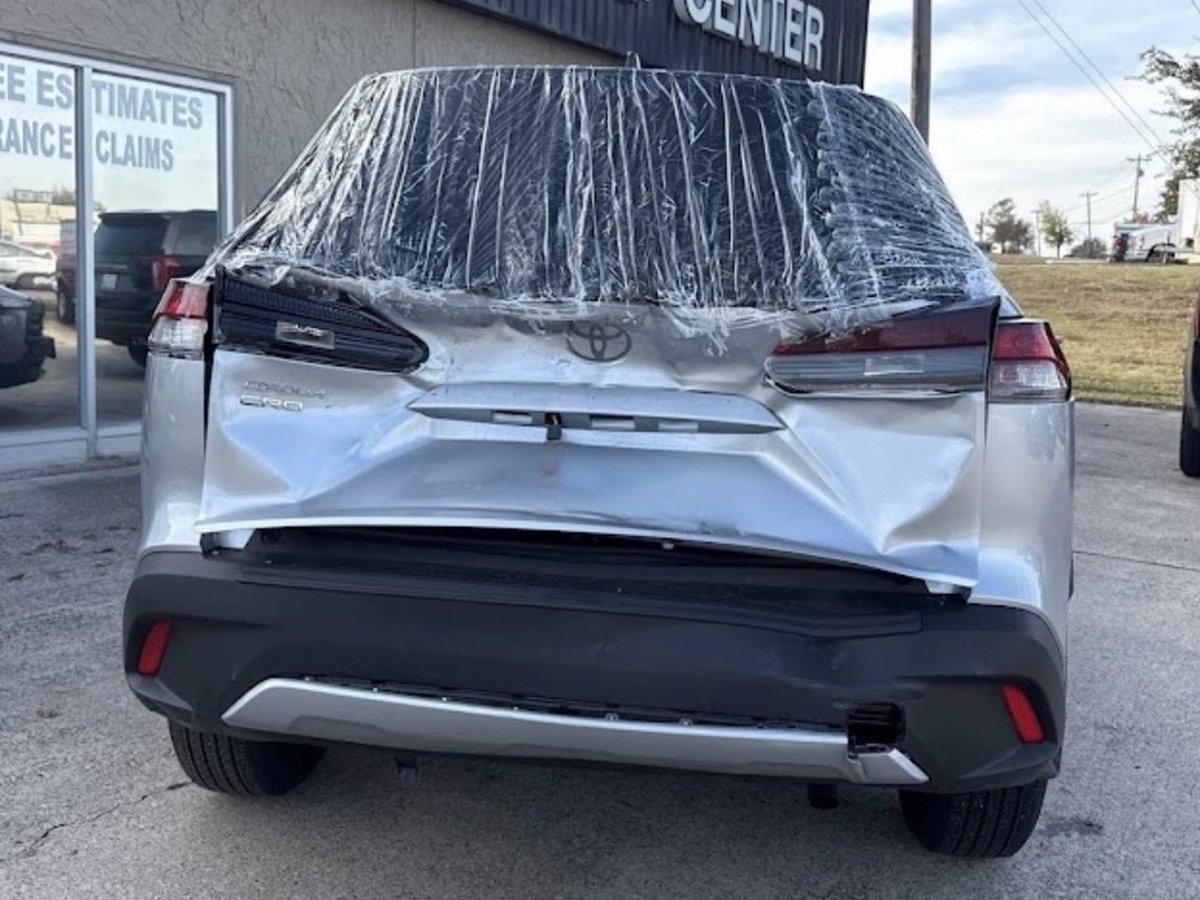
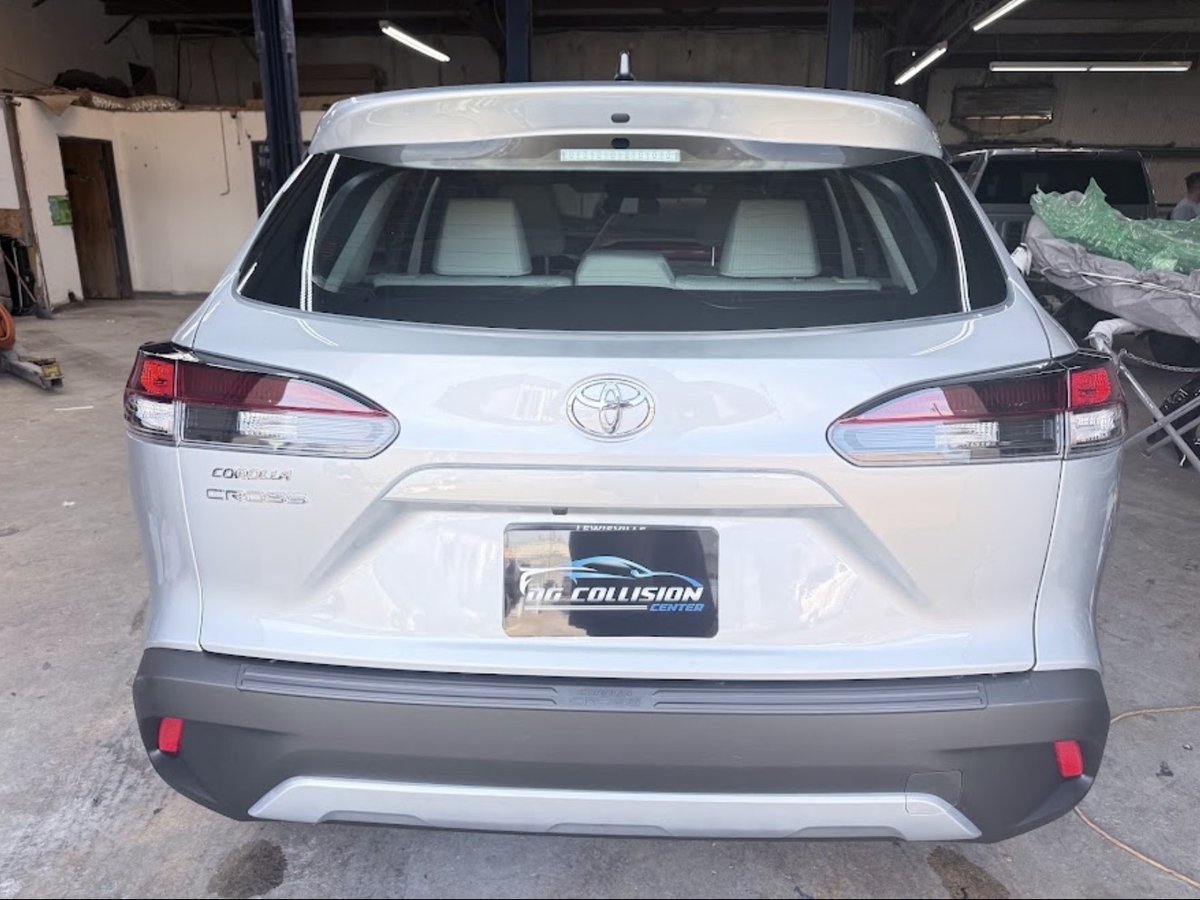
Drag the slider — a real rear-end repair from our Lewisville floor, the single most common not-at-fault claim in DFW traffic.
 Before
After
Before
After
Rear-End Collision — Tailgate & Rear Panel
Pictured: Toyota Corolla Cross — documented, repaired and billed direct while the carriers handled fault
Deductible-Back Questions