HOW TO CHOOSE A BODY SHOP — THE 10 QUESTIONS THAT SORT THEM
Star ratings tell you who’s pleasant. They don’t tell you who follows the manufacturer’s repair procedures when nobody’s watching — and that’s the thing that decides whether your car is actually safe after the paint dries. Ten questions expose it: certifications, teardown practice, warranty in writing, calibration, parts sourcing. Any good shop answers all ten happily. That’s the test working.
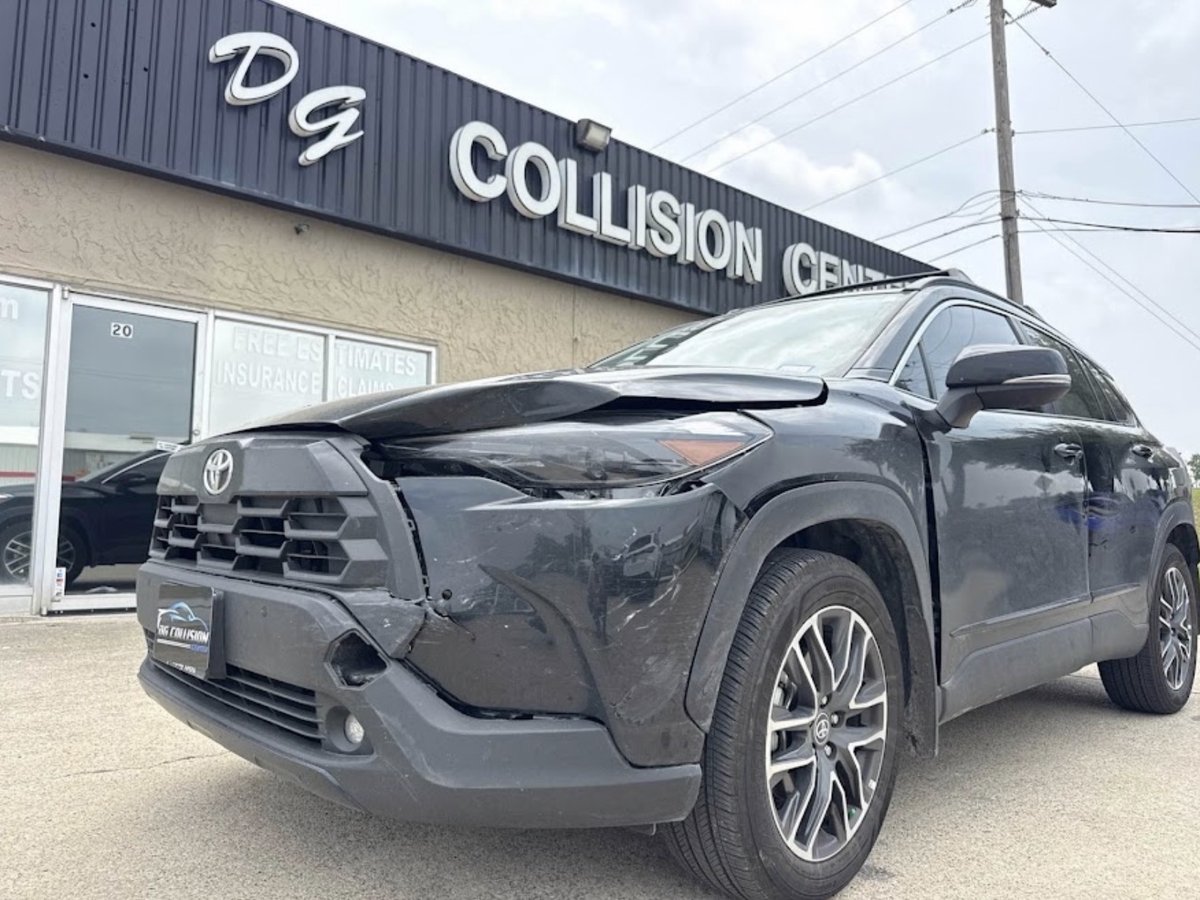
Ten questions beat star counts, and three are load-bearing: is the shop I-CAR Gold Class certified (held by roughly 10% of U.S. shops); does it pull the manufacturer’s repair procedures for every job — the discipline whose absence produced Dallas’s $31.5 million glued-roof verdict; and does it tear down before finalizing the estimate. A good shop answers all three in one phone call, in writing.
Choose a body shop with ten questions, not star counts. The load-bearing ones: Is the shop I-CAR Gold Class certified (held by roughly 10% of U.S. shops)? Does it pull the manufacturer’s repair procedures for every job — the discipline whose absence produced a $31.5 million Dallas verdict after a glued roof that should have been welded? Does it tear down before finalizing the estimate, so hidden damage surfaces before paint instead of after? Is the warranty written and lifetime? Who fights the supplement fight with your insurer? Is ADAS calibration done and documented? Is parts sourcing disclosed on the estimate — a choice Texas law reserves to you? Add paint-match process, loaner support, and whether they’ll show you work in progress. A good shop enjoys these questions; a bad one gets cagey by number three — and that reaction is the answer.
- Certifications first: I-CAR Gold Class shop-wide plus technician-level credentials — verifiable through the certifying bodies, not the lobby wall.
- Teardown before final estimate: the single best predictor of an honest number and a complete repair.
- Warranty and calibration in writing: the repair’s warranty comes from the shop, and a modern car isn’t done until it’s calibrated and documented.
- Red flags end conversations: quotes without seeing the car, deductible “burying,” no written warranty, or a mystery-meat parts line.
The Stakes, Stated Once
WHY SHOP CHOICE IS A SAFETY DECISION
Collision repair looks like a cosmetic trade from the waiting room — dents out, paint on. Structurally, it’s closer to surgery: modern vehicles are engineered systems of specific steels, adhesives, welds, and sensors, and the manufacturer publishes exact procedures for putting each one back together. When a shop follows them, the repaired car protects you like the factory intended. When it improvises, nobody finds out until the worst moment. Texas has the defining example: in a widely reported 2017 Dallas case, a jury awarded $31.5 million after a shop repaired a hail-damaged roof with adhesive where the manufacturer’s body manual called for more than a hundred spot welds — the structure failed its occupants in a later crash that should have been survivable.
You can’t audit welds from the lobby. But you can ask questions whose answers reveal whether a shop is the kind that pulls the manual or the kind that wings it — and Texas law guarantees the choice the answers inform: the shop decision belongs to you, not your insurer (Tex. Ins. Code §1952.301; if an adjuster suggests otherwise, our shop-choice guide handles that conversation). Ten questions, in the order we’d ask them — including at our own counter.
The Checklist
THE 10 QUESTIONS, IN ORDER
Q1. What certifications does the shop hold?
The floor is I-CAR Gold Class — shop-wide training held by roughly 10% of U.S. shops — plus technician-level and refinish-brand certifications. Verify through the certifying bodies, not the lobby frames. (Ours: Gold Class, I-CAR Platinum techs, PPG and Sherwin-Williams.)
Q2. Do you pull OEM repair procedures for every job?
The only acceptable answer is yes, every time — where the welds go and what can’t be sectioned isn’t tribal knowledge, it’s published per vehicle. This question separates repairers from improvisers faster than any other.
Q3. Do you tear down before finalizing the estimate?
Photo estimates start conversations; teardowns finish them. A shop that disassembles before committing to a number finds hidden damage before paint — the honest sequence behind every accurate estimate and half of all supplement fights avoided.
Q4. Is your warranty written — and for how long?
The repair’s warranty comes from the shop, full stop. “Lifetime, in writing” is the strong answer (it’s ours); vague reassurance is the weak one. Ask to see the actual warranty sheet before work begins.
Q5. Who handles supplements with my insurer?
Hidden damage surfaces mid-repair on real collisions. A good shop documents it, files the supplement, and argues it with the adjuster — you shouldn’t referee that fight. Ask who does, and how they document.
Q6. How is ADAS calibration handled — and documented?
Cameras and radar need recalibration after most collision repairs (I-CAR’s guidance: more than likely required). The answer you want: performed to OEM spec, with a printed report in your file. “The dash light’s off” is not calibration.
Q7. Is parts sourcing disclosed on the estimate?
OEM, aftermarket, or recycled — each has its place, and in Texas the choice is legally yours, not the insurer’s (§1952.301). The tell is transparency: every part’s type on paper before you sign, and a shop happy to explain each call.
Q8. What’s your paint-match process?
Factory finishes — tri-coats especially — don’t match from a code alone. Listen for spray-out cards, blending into adjacent panels, and certified refinish systems. “We just shoot the panel” predicts the two-tone door you’ll notice forever.
Q9. What do I drive meanwhile?
Repairs take time; your life doesn’t pause. Ask about loaners before you need one — ours are free from a 50+ vehicle fleet for the duration — or how the shop coordinates rentals and insurance coverage if not.
Q10. Can I see the work — before, during, after?
Documentation culture is quality culture. Shops that photograph teardown, share progress, and walk the finished car with you are showing you their habits — the same ones that govern the welds you can’t see.
ASK US ALL TEN. WE’LL ENJOY IT.
Bring the checklist to our counter — free written estimate, certifications on the wall and in the registries, warranty sheet in hand.
When To Walk
RED FLAGS THAT SHOULD END THE CONVERSATION
A few answers aren’t weak — they’re disqualifying. A firm quote without seeing the car: real estimates come from inspection and teardown; a number invented over the phone will be re-invented mid-repair. “We’ll bury your deductible in the claim”: inflating an estimate so the insurer unknowingly covers your deductible is insurance fraud in Texas, and a shop that lies for you on paper will lie to you on metal. (Legitimate deductible help exists — a shop discounting from its own honest margin — and the difference is the whole ballgame; we explain it plainly in our deductible guide.) No written warranty, no exceptions. A shockingly low bid on structural or airbag-deployment work — the missing money is always a missing procedure, and on restraint systems that can mean the counterfeit-parts trap our airbag guide documents. No answer for calibration on a modern vehicle. And the quiet one: irritation at being asked. Shops that resent informed customers are telling you how they’ll treat you when the car is apart and the leverage has shifted.
None of these require expertise to spot — only permission to take them seriously. The checklist gives you that permission: you’re not being difficult, you’re being the customer every good shop actually prefers.
The Playbook
RUN THE SEARCH IN 5 STEPS
01. Shortlist three shops by certification
Start from the certifying bodies’ own registries — I-CAR’s Gold Class locator, refinish brands’ certified lists — not from whoever bought the top ad slot. Three candidates is plenty.
02. Call each with questions 2, 3, and 4
OEM procedures, teardown practice, written warranty — three questions, five minutes per shop. The phone reaction alone will usually eliminate one candidate.
03. Visit the finalists with your car
Get written line-item estimates and ask the remaining questions in person. Watch how the estimator handles the car and the questions — both predict how they’ll handle the repair.
04. Compare answers, not totals
Line items against line items, warranty against warranty, calibration against calibration. The cheapest sheet with the shortest list is the most expensive repair in the room.
05. Commit — and keep the paper
Estimate, warranty sheet, teardown photos, calibration report, final invoice. That file protects your claim, your resale story, and your recourse — and a good shop builds it for you unasked.
From Our Shop Floor
WHAT TEN GOOD ANSWERS BUILD
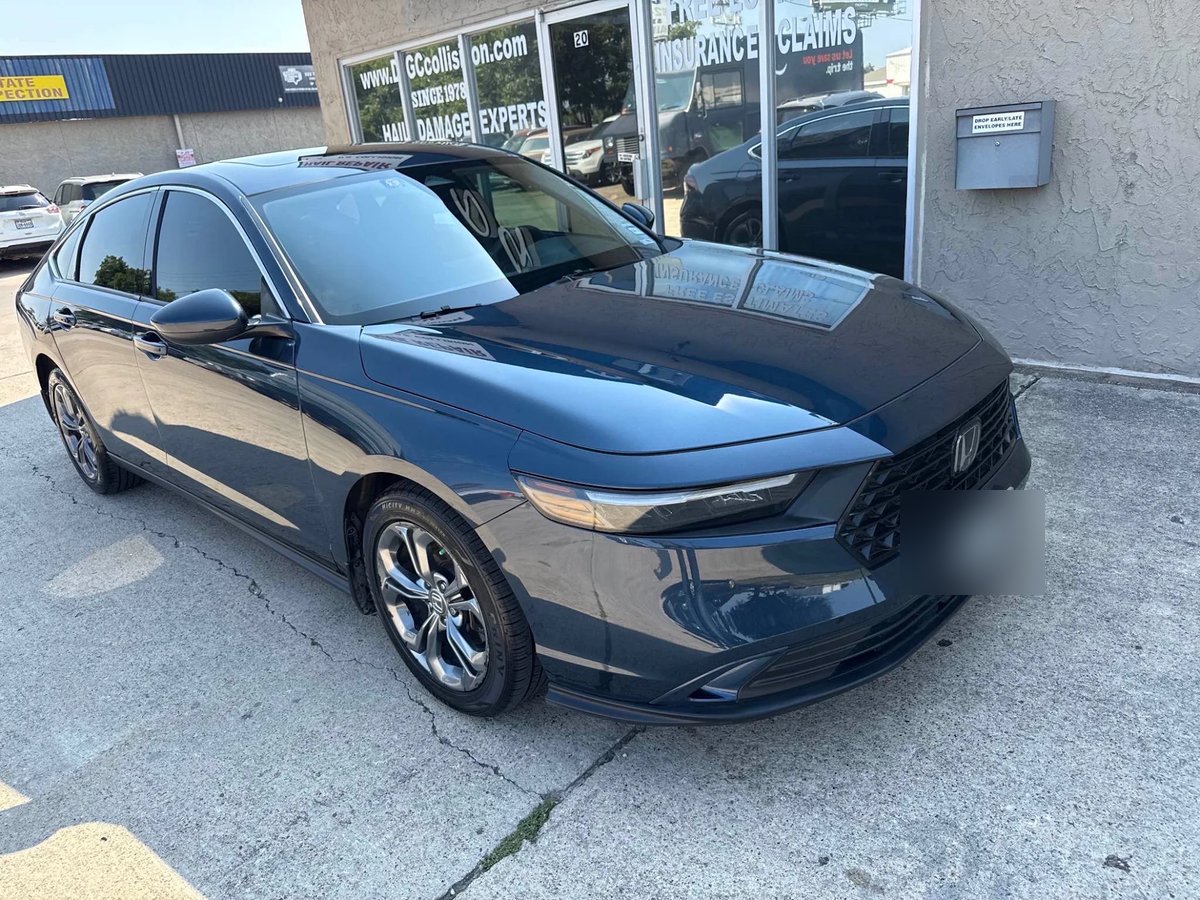
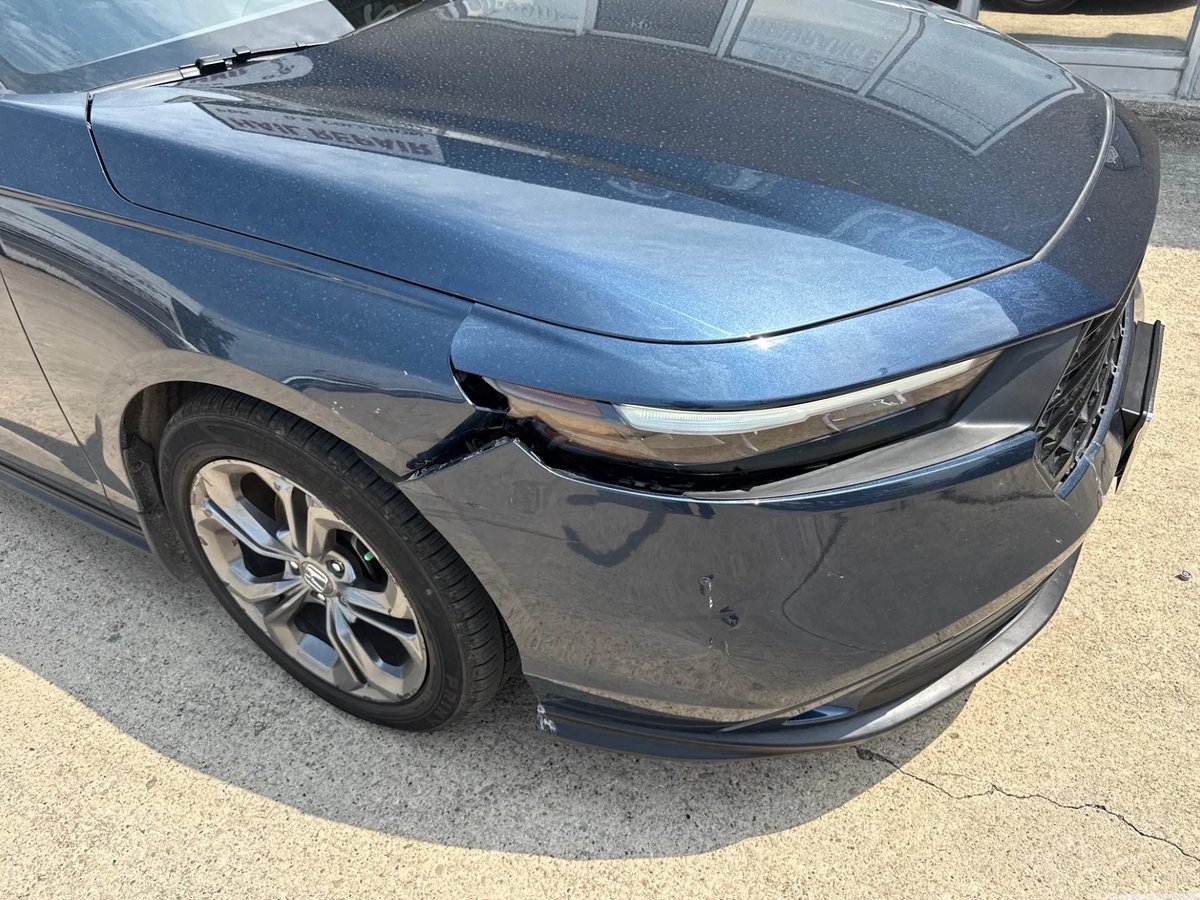
Drag the slider — a real front-corner repair from our Lewisville floor, delivered back at the storefront where the questions were first asked.
 Before
After
Before
After
Front-Corner Hit — Bumper, Fender & Headlight
Pictured: Honda Accord — front-corner damage repaired, refinished, and delivered at our Lewisville storefront
Choosing-A-Shop Questions