The Short Answer
The Paint Decides — Not The Shop
The PDR-or-body-shop question has a simpler answer than most articles make it: look at the paint. If the finish over every dent is intact and the dents are shallow and round, paintless dent repair removes them without filler or repaint — cheaper, faster, and with your factory finish preserved. If hail cracked the paint, creased the metal, or hammered a panel edge, that panel needs conventional repair: filler or replacement, then refinishing.
In practice it's rarely all-or-nothing. After a typical DFW storm, most vehicles we inspect qualify for PDR on the majority of panels while one or two — usually the hood's leading edge or a roof rail — need paint. A shop that does both writes one repair plan and one insurance claim covering the mix. (For how that mix stretches your timeline — typically 1–3 weeks instead of pure-PDR's 3–7 days — see our collision repair timelines guide.)
DG Collision Center has run PDR technicians and a full paint shop under the same Lewisville roof since long before "PDR vs. body shop" was a search term. This guide covers how PDR actually works, the checklist that decides which repair your panels get, what each path costs and takes in DFW, and what the choice means for resale value and your insurance claim. For full pricing detail, see our DFW hail repair cost guide.
Ranges below are typical DFW figures, not quotes — every vehicle gets its own line-item estimate after an inspection under PDR lighting.
The Technique
What Paintless Dent Repair Actually Is
PDR is metalwork, not bodywork. A technician gains access to the back side of the dented panel — through factory openings, or by removing interior trim or the headliner — and massages each dent out with precision steel rods, working from the outer ring of the dent toward its center under a specialized light board that exaggerates every distortion in the reflection. Where there's no rear access, the dent is glue-pulled from the front: a plastic tab is glued to the dent's center, pulled with a lifter, and the raised metal is tapped level.
Nothing is sanded, filled, or sprayed. The repair works because automotive sheet metal has shape memory — a shallow hail dent stretches the panel very little, so the metal can be persuaded back to its original contour without disturbing the finish on top. That's also the technique's hard boundary: PDR restores shape; it cannot restore paint. Once the finish is cracked or the metal is stretched past its memory, rods can't fix what's broken.
Done right, PDR is invisible. Done wrong — rushed by an out-of-town crew after a storm — it leaves high spots, cracked paint from over-pushing, and bent bracing behind the panel. The technician matters more in PDR than in almost any other repair, which is why I-CAR-trained shops with a permanent address are the safer bet than the tent that appears after every storm.
The Green Lights
WHEN PDR IS THE RIGHT CALL
Six things we check on every panel under PDR lighting. The more boxes your damage ticks, the more of your car stays factory-original.
The Paint Is Intact
No cracks, chips, or spidering at the dent centers. This is the deciding test — PDR keeps the factory finish only if the storm left it unbroken. Most DFW hail, even dense golf-ball hits, passes.
Dents Are Shallow & Round
Classic hail dents — soft-edged dish shapes the size of a dime to a golf ball. Shallow means the metal barely stretched, so it still remembers its original contour and can be massaged back.
The Panel Is Accessible
Rods need a path to the back of the dent — through factory openings or behind removable trim. Hoods, roofs, trunk lids, and most door skins offer good access; glue pulling covers many spots rods can't reach.
The Panel Is Steel
Steel has strong shape memory and responds predictably to rod work. Aluminum panels — F-150 bodies, many luxury hoods — can still take PDR, but the window is narrower and the work slower.
No Prior Bodywork On The Panel
PDR only moves factory metal. A paint-thickness reading tells us if a panel carries old filler — if it does, rod pressure cracks the filler loose and the panel routes to conventional repair.
Dents Sit In Open Panel Areas
Mid-panel dents are ideal. Metal at panel edges, body lines, and around bracing is stiffer and double-layered — dents there fight the rods and are the first to get reassigned to paint.
NOT SURE WHICH SIDE YOUR DENTS FALL ON?
Ten minutes under PDR lighting settles it panel by panel — free, no appointment needed, and you leave with a line-item estimate either way.
The Red Flags
WHEN THE DAMAGE NEEDS A BODY SHOP
Any one of these on a panel means rods alone can't finish the job — that panel gets filler or replacement plus refinishing in the paint booth.
Cracked Or Chipped Paint
The most common disqualifier. Large or fast-moving hail can fracture the finish at the impact point — and once the paint is broken, pushing the metal back still leaves a chip that will corrode. The panel needs refinishing.
Sharp Creases
A crease means the metal folded instead of dishing — it stretched along a line and lost its memory. Rods can improve a soft crease, but a hard one reads through the paint forever. Filler and refinish is the honest repair.
Dents On Panel Edges & Body Lines
Edges are double-layered and body lines are the stiffest, most visible geometry on the car. Hail strikes there distort metal that rods can't cleanly reach or reshape — these are the panels that flip to paint on mixed repairs.
Stretched Metal / Oversized Dents
Softball-size impacts and dents deeper than they are wide stretch the sheet metal past its elastic limit. There's now more metal than the contour needs — no rod puts it back. That's filler work or a new panel.
Old Filler From A Prior Repair
Filler doesn't flex — factory metal does. Rod pressure behind a previously repaired panel cracks the old filler off in sheets. We meter paint thickness before committing any panel to PDR; prior bodywork reroutes it.
Aluminum Complications
Aluminum is PDR-repairable, but it's stiffer, work-hardens as it's pushed, and has less memory than steel — deeper aluminum dents cross into body-shop territory sooner. Our aluminum repair page covers the F-150 side of this.
The Money & The Calendar
PDR VS. BODY SHOP — COST & TIME
Typical DFW ranges for hail repair by path. Where damage is mixed, the estimate combines both — PDR pricing on qualifying panels, refinish pricing on the rest.
Same damage, two very different invoices. That's why insurers prefer PDR whenever it qualifies — and why an honest panel-by-panel call matters. Full pricing detail lives in our DFW hail repair cost guide.
WANT A REAL NUMBER, NOT A RANGE?
Bring the car by — or start with the form and photos. Panel-by-panel dent count, line-item estimate, and the PDR-or-paint call for every panel, free.
Think Past The Repair
Factory Paint Is Worth Real Money At Trade-In
Here's the part of the PDR-vs-paint decision that pays off years later. Dealers and serious buyers walk a trade-in with a paint-thickness meter, and repainted panels read instantly — thicker film, and a refinish that, however good, is not the factory bake. "Original paint" is one of the first lines a used-car appraiser writes down, and it moves the number — the whole fix-before-trade-in decision has its own answer.
PDR keeps that line true. The dents leave, the factory finish stays, and the vehicle carries no repaint into its Carfax-checked future. The insurance claim itself may appear on a history report either way — that's between your carrier and the reporting services — but there's a real difference between a report that shows "hail claim, paintless repair" and one paired with panels that meter as repainted.
This is also why over-repainting is the quiet failure mode of hail repair. A shop without PDR capability repaints panels that rods could have saved — the car looks fine the day you pick it up and appraises worse every year after. When paint is genuinely required, our refinish work is spectrophotometer-matched and warrantied for life; the point is that paint should be the repair of necessity, never the default.
Why It Matters Who You Ask
Ask A Shop That Does Both — The Answer Changes
The dirty secret of the PDR-vs-body-shop debate is that the answer you get usually depends on who's selling it. A PDR-only operator — especially the pop-up kind that follows storms across Texas — has every incentive to call marginal damage "PDR-able," because paint work is revenue they can't capture. A body shop without PDR technicians has the opposite bias: every dent looks like a refinish job, and your factory paint pays the price.
DG Collision Center runs PDR technicians and a full paint and body operation under one roof in Lewisville — we're paid the same whichever repair your panel needs, so the recommendation follows the metal, not the equipment list. On a typical mixed hail repair that means rods save the roof, hood, and doors while the one cracked-paint panel goes through the booth — one estimate, one claim, one completion date, and no hand-offs between shops arguing over scope.
We put that call in writing on every estimate: panel by panel, PDR or refinish, with the reason. Drivers from Flower Mound, Denton, and Frisco — the heart of the DFW hail belt — make up a big share of our storm-season work, and the fastest way to start is the free estimate form with a few photos.
The Claim Side
How Insurance Handles PDR Vs. Paint
Hail damage is a comprehensive claim — a no-fault weather claim, not a collision claim — and carriers are genuinely happy to pay for PDR when the damage qualifies: it costs them less than refinishing and returns the car to factory condition. The adjuster's estimate will typically price qualifying panels at per-dent PDR rates and cracked or creased panels at conventional repair rates, exactly the split a good shop's estimate makes.
Two things to hold onto during the claim. First, the shop choice is yours — Texas Insurance Code §1952.301 prohibits your insurer from requiring a particular repair facility, network suggestions included. Second, the adjuster's first dent count is a starting point: a drive-through inspection routinely misses dents that PDR lighting finds, and the supplement process bills the difference to the insurer — your deductible stays your ceiling on a covered claim.
Your out-of-pocket is the deductible or less: DG Collision Center offers deductible assistance on qualifying comprehensive claims — absorbed from our own margin with 100% honest billing to your carrier, which is legal on Texas auto claims. The full filing sequence, timeline, and storm-chaser warnings are in our Texas hail claim guide, and the repair itself is detailed on our hail damage repair page.
General information, not legal advice — your policy documents and carrier claim instructions control.
Proof, Not Promises
WHAT PDR LOOKS LIKE DONE RIGHT
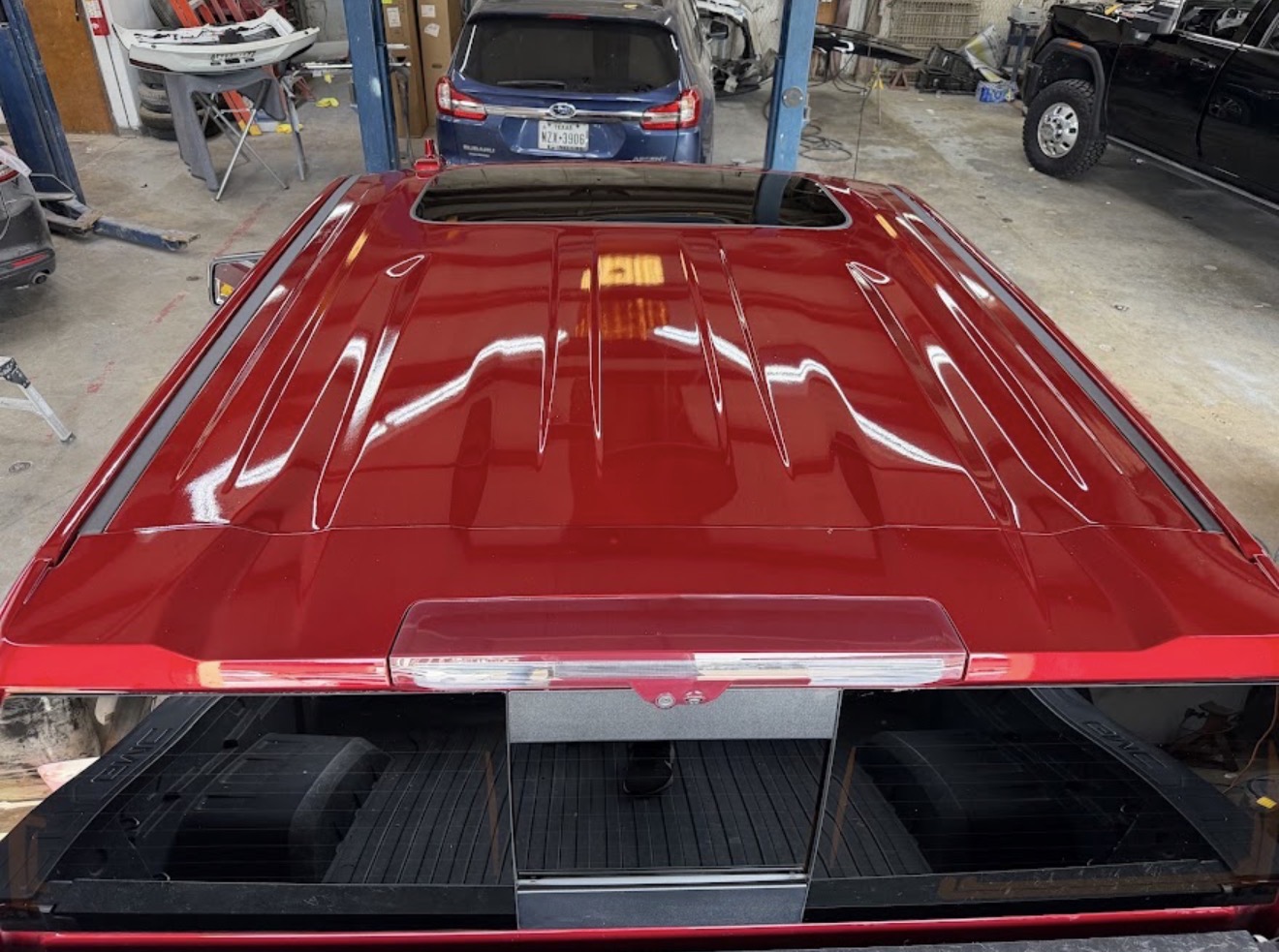
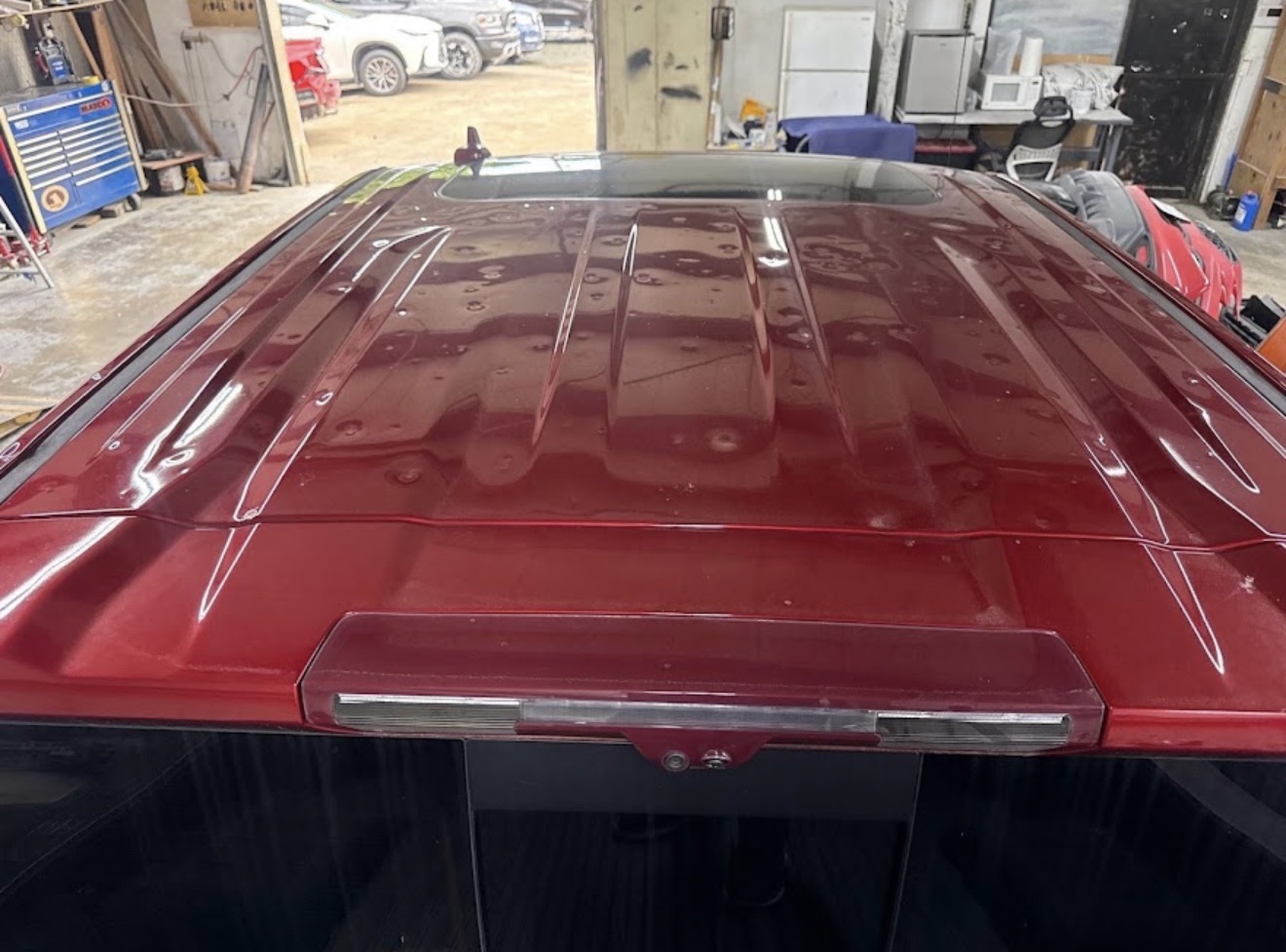
Drag the slider. This pickup roof took a full DFW hailstorm — every dent qualified for PDR, so the factory paint never saw a booth.
 Before
After
Before
After
Full-Roof Hail PDR
Rod-and-light repair, zero repaint — factory finish preserved, nothing reported to Carfax by us
READY FOR THE PANEL-BY-PANEL CALL?
Free inspection under PDR lighting, a written PDR-or-paint verdict for every panel, and a line-item estimate your insurer can work from.
PDR Vs. Body Shop Questions
PDR FAQ
About The Author
Shah Jiwani — Owner, DG Collision Center
Shah has 30+ years of hands-on DFW collision-repair experience. He joined DG Collision in the 1990s, earned equity over time, and took over as owner in 2005. He is I-CAR Gold Class Certified, PPG Certified Refinish, and Sherwin-Williams Automotive Certified. Every guide on this site is written or reviewed based on what we actually see in the shop — not aggregated from other blogs.
Read Shah’s full bio & credentials →Free · No Obligation
GET THE PDR-OR-PAINT CALL ON YOUR CAR
Tell us what you drive and what the hail did. We'll call you back as fast as possible with which panels qualify for PDR, what the repair involves, and a real number.
Prefer to talk now? Call (972) 219-0864 · or text us photos