SOMEONE ELSE WRECKED YOUR CAR — WHOSE INSURANCE PAYS?
In Texas, the car’s policy answers first. TDI’s own guide puts it plainly: cause a crash in a borrowed car and the owner’s insurance pays the claim, with the driver’s own policy stepping in only when the owner’s runs short. Damage to your car itself runs through your collision coverage — no matter who was driving. The exceptions live in the fine print: named-driver exclusions, unlisted household drivers, and the borrower who never had permission.
In Texas, insurance follows the car: when someone drives with your permission, your policy answers first — TDI’s own guidance — and the driver’s policy is excess. Your car’s damage runs through your collision coverage and your deductible, with subrogation behind it when another party caused the crash. The named-driver-policy trap is dead (§1952.353 barred new ones), but written driver exclusions still bite — read yours.
When someone drives your car with permission and crashes, your policy is the one that answers — TDI’s guide says the car owner’s insurance pays the claim, and the driver’s own policy pays only if yours is missing or runs short. Damage to your own car goes through your collision coverage, which Texas regulators describe as paying “without regard to who caused an accident” — you front your deductible, and squaring it with your friend is a personal conversation, not an insurance process. The traps are specific: a named-driver exclusion (legal only if it names each driver and you accepted it in writing — Ins. Code §1952.353) can void coverage entirely for that driver, unlisted household drivers can jeopardize claims, and a thief has no coverage at all — though comprehensive pays for what a thief breaks. Named-driver policies themselves were banned for Texas policies issued or renewed after January 1, 2020.
- Car’s policy first: your liability covers what the borrower did to others; their policy stacks as excess when your limits run short.
- Your car = your collision claim, driver-neutral by design — the deductible conversation with the friend is yours to have.
- The one fatal trap: an excluded-by-name driver behind the wheel can sink coverage for the whole loss — check before you toss the keys.
- Household drivers belong on the policy: TDI warns unlisted drivers can mean denied claims and surprise back-premiums.
The Rule Of Thumb, With Its Fine Print
IN TEXAS, THE CAR’S POLICY ANSWERS FIRST
You’ll hear it as “insurance follows the car, not the driver” — a rule of thumb no regulator actually uses, but one Texas practice mostly honors. The official version comes with hedges worth keeping: TDI’s guide says most policies “cover you, your family, and people driving your car with your permission,” and its borrowed-car section states the payment order outright — “if you cause an accident while driving a borrowed car, the car owner’s insurance pays the claim,” with the driver’s own policy paying when the owner “doesn’t have insurance — or doesn’t have enough.” Under the hood, the standard Texas policy covers “any person using your covered auto,” then strips coverage from anyone driving without a reasonable belief they’re entitled to — which is how permission does the legal work.
The Office of Public Insurance Counsel adds the counterweight every borrowed-keys story needs: even with permission on both sides, “your auto policy may not provide coverage” in some lending scenarios — their advice is blunt: if you regularly lend your car or borrow someone else’s, tell your agent. That’s the honest shape of the rule: car-first is how it usually goes, the policy language is where it’s actually decided, and the exceptions cluster in two places — drivers your policy excludes by name, and household drivers you never listed. Both get their own section below, because they’re where borrowed-car claims actually die.
Follow Both Streams Of Money
TWO DIRECTIONS OF DAMAGE, TWO DIFFERENT PAYERS
Direction one: what your borrower did to other people. Their rear-ending of a stranger’s Tahoe bills against your liability limits — that’s the car-first rule working against you, and it’s why lending the car is a bigger favor than it feels like. If the damage outruns your limits, TDI’s guidance is that the driver’s own policy then pays — their coverage stacks as excess above yours, which is genuine protection when your borrower carries a real policy and a real problem when they carry nothing.
Direction two: your own car. This one’s cleaner than most people fear: collision coverage is deliberately driver-neutral. TDI’s glossary describes collision as paying “for damage to your car without regard to who caused an accident,” and OPIC says the same thing in fewer words — “it does not matter who is at fault.” Your friend crashing your car doesn’t void your own physical-damage coverage (one exception in the next section); you file, you front the deductible, the car gets fixed. What insurance won’t do is referee the aftermath: getting your deductible back from the friend who caused it is a kitchen-table conversation, not a claims process — our experience is that a written estimate makes that conversation dramatically shorter, because a real number replaces two people’s guesses. And if the crash was actually some third driver’s fault while your friend was behind the wheel, the direction changes entirely: that’s a third-party claim against the at-fault driver’s carrier, and the not-at-fault guide takes over from here.
BORROWED-CAR DAMAGE? THE REPAIR IS THE EASY PART.
Free written estimate, direct billing to whichever policy answers, and a number that ends the whose-fault kitchen-table debate.
Where Borrowed-Car Claims Die
NAMED-DRIVER EXCLUSIONS — AND THE 2020 BAN EVERYONE MISQUOTES
The one fine-print clause that overrides everything above is the named-driver exclusion: a provision that strips a specifically named person from coverage under the policy. Texas tightened these in 2019 — an exclusion is valid only if it “specifically names each excluded driver and does not exclude a class of drivers and the named insured accepts the exclusion in writing” (Ins. Code §1952.353(b)). No more blanket “no drivers under 25” clauses; a valid exclusion names a human, and you signed it. But when it exists, it’s absolute: hand the keys to your excluded ex or excluded nephew, and the exclusion strips them from coverage under the policy — which can take your own collision claim down with the liability. Check the exclusions page before you lend, not after.
The same 2019 law killed a whole product: the named-driver policy, which covered only the people listed on it and left everyone else in your household — permission or not — bare. House Bill 259 banned insurers from issuing or renewing them for policies on or after January 1, 2020, and TDI’s implementation bulletin swept the stragglers: none should have been in force after December 31, 2020. (A note for anyone fact-checking us: the internet overwhelmingly cites §1952.0545 for this ban — that was the old 2013 disclosure statute, repealed by the very bill that created the ban. The ban lives at §1952.353.) The practical upshot for lending: a current Texas policy must cover every permitted driver who lives in your household — and the statute defines household as people “living together in the same dwelling, without regard to whether they are related” — unless someone is excluded by name, in writing.
The Kitchen-Table Cases
WHO’S COVERED, SCENARIO BY SCENARIO
Two rows deserve a sentence more. The teen: TDI’s warning is unusually specific — some companies require everyone of driving age in your house on the policy, and if you don’t report a new driver, the company “might deny any claims you have or choose to not renew your policy,” plus back-bill the premium. Report the new license the week it arrives. The thief: the standard policy strips coverage from anyone driving without a reasonable belief they’re entitled to — that’s the policy language, and it means the thief’s wreckage bills to no liability coverage of yours. Your comprehensive coverage is what rebuilds the car; TDI’s definition leads with exactly this peril: it “pays if your car is stolen or damaged by fire, flood, vandalism.” A stolen-and-crashed car is also precisely when the police report and a documented teardown matter — the same evidence discipline from our hit-and-run guide applies wholesale.
The Playbook
SOMEONE ELSE CRASHED IT — 5 STEPS
01. Pin down the driving facts
Who drove, with what permission, and who was at fault in the crash itself. Every coverage question downstream keys off these three answers — get them straight before any carrier call.
02. Read your exclusions page first
A named-driver exclusion changes everything and it’s signed paper — check whether your borrower is on it before filing, so the adjuster isn’t the one who tells you.
03. File on the car’s policy
Your liability answers for what the borrower did to others; your collision fixes your own car regardless of fault. That’s the normal, boring, correct order.
04. Bring in the driver’s policy if limits run short
Their coverage stacks as excess above yours, per TDI’s own guidance. Give your adjuster the driver’s policy details early so the handoff is queued before it’s needed.
05. Repair, then settle the deductible like adults
The car gets fixed on your collision claim; the deductible is a conversation between you and the borrower. A written line-item estimate turns that talk from an argument into arithmetic.
From Our Shop Floor
THE REPAIR AT THE END OF THE WHOSE-POLICY QUESTION
Drag the slider — a real side-impact repair from our Lewisville floor; whichever policy pays, the metalwork is the same.
 Before
After
Before
After
Front-End Repair — Not The Owner Driving
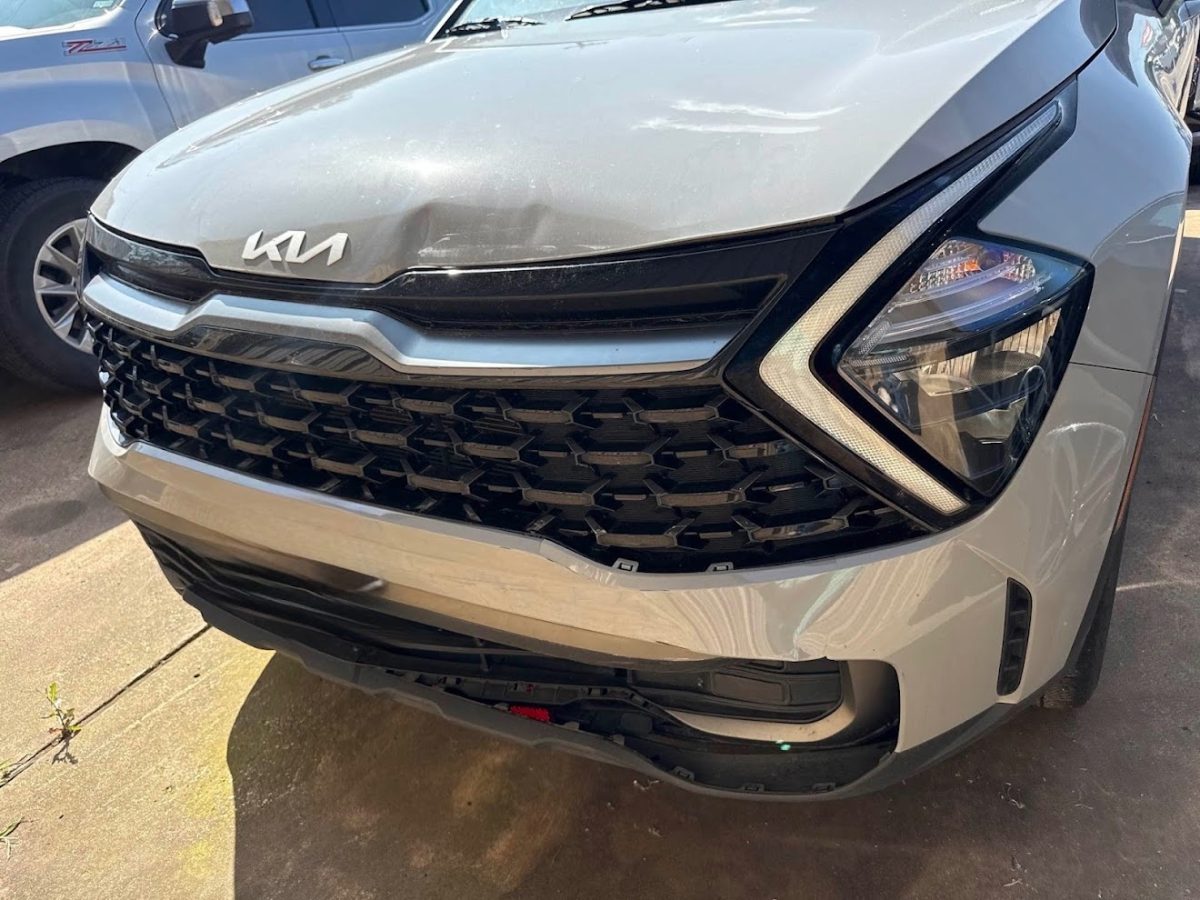
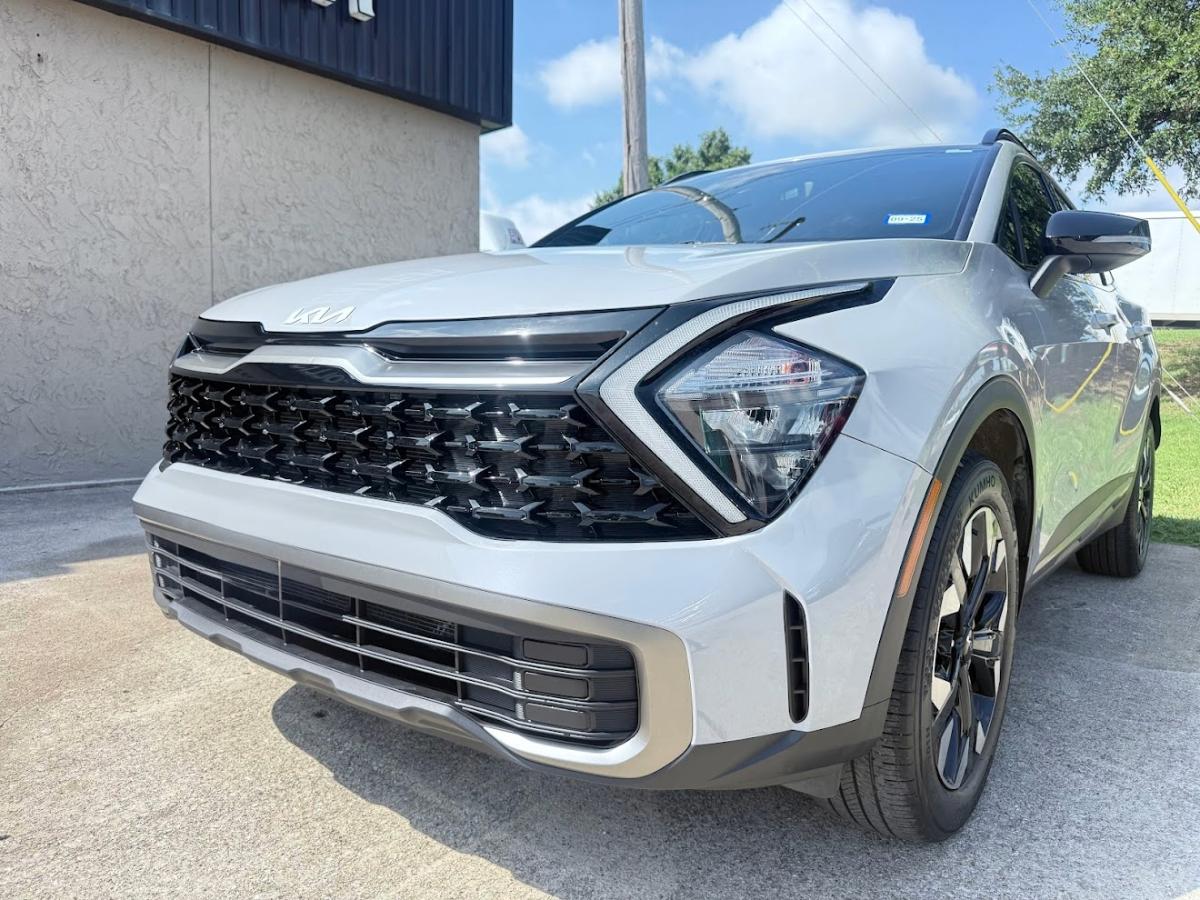
Pictured: a customer’s Kia Sportage — repaired the same no matter who was behind the wheel; whose policy pays is the question below
Borrowed-Car Questions