HIT AND RUN IN TEXAS — WHAT DO YOU DO NOW?
Don’t chase. Write down everything you saw while it’s fresh, call the police from the scene, and photograph the damage and the paint the other car left behind. Your repair gets paid one of three ways: the driver’s liability insurance if a camera or witness identifies them, your UM/UIM property damage coverage with its $250 statutory deductible if they’re never found, or your collision coverage.
Report it to the police even if it feels pointless — TDI is explicit that uninsured-motorist coverage won’t pay a hit-and-run claim that was never police-reported. Record what you remember immediately, photograph everything including their paint on your car. Driver found: their liability pays, no deductible. Never found: UM property damage pays with the $250 deductible Texas fixes by statute (§1952.105).
After a hit-and-run in Texas: stay put, record what you remember of the car and plate immediately, call the police, and photograph everything — including the other car’s paint on yours. Report it to police even if it feels pointless: TDI’s guidance is explicit that uninsured motorist coverage won’t pay a hit-and-run claim that was never police-reported. If the driver is found, their liability insurance pays and you owe nothing. If not, UM/UIM property damage coverage pays with a $250 deductible fixed by Tex. Ins. Code §1952.105 — usually cheaper than your collision deductible — though the unknown-driver path requires actual physical contact between the vehicles (§1952.104). The driver who ran is facing a Class B misdemeanor at minimum; felonies if anyone was hurt.
- Police report = claim oxygen: UM coverage requires one on hit-and-run claims. File it the same day.
- Driver found: their liability carrier pays, no deductible. Driver unknown: UMPD at $250, or collision at your normal deductible.
- Physical contact rule: an unknown-driver UM claim needs actual contact — a swerve that ran you off the road without touching you doesn’t qualify.
- Don’t wash the car: paint transfer is evidence — it helps police identify the vehicle and helps your adjuster believe the claim.
While It’s Fresh
THE FIRST HOUR AFTER A HIT-AND-RUN
The instinct is to chase. Don’t — a second collision at speed turns a property claim into something much worse, and Texas law wants you at the scene, not in pursuit. Spend the first two minutes on the thing that decays fastest: your memory. Voice-memo or type everything you caught — color, make, body style, direction of travel, any fragment of the plate, damage you saw on their car, what the driver looked like. A partial plate plus a body style is often enough for police to work with; the same details half-remembered that evening are not.
Then call the police from the scene. If anyone is hurt or your car can’t be driven normally and safely, Texas law requires the immediate report (Tex. Transp. Code §550.026); for pure vehicle damage the report is your choice legally — and mandatory practically, because your UM claim depends on it. While you wait, photograph wide and close: your car’s position, the damage, the other car’s paint smeared into yours, skid marks, debris. Canvass for witnesses before they scatter, and look up: intersections, storefronts, and doorbell cameras record more of DFW’s streets than most drivers realize. Ask nearby businesses the same day — camera systems overwrite in days, not weeks. (Hit in a parking lot while you weren’t in the car? That’s its own playbook — our parked-car guide covers the note law and the private-lot police wrinkle.)
One thing not to do: don’t wash the car, and don’t start repairs before the damage is documented. The stranger’s paint on your quarter panel is physical evidence — of the color of the car police are looking for, and of the fact the contact happened at all, which your insurer cares about more than you’d think. Esta guía existe completa en español: me chocaron y se fueron — ¿qué hago?
The Coverage Map
WHO PAYS WHEN THE DRIVER DISAPPEARS
UM/UIM is the coverage built for exactly this, and TDI’s own guidance notes it “usually has a lower deductible than collision coverage and may pay for a rental car.” Two fine-print rules worth knowing before you file. First, the physical contact rule: when the driver is unknown, Texas policies pay UM property claims only if the phantom vehicle actually touched your car or you (§1952.104) — a swerve that forced you into a curb without contact doesn’t qualify on the unknown-driver path. Second, the written-rejection carry-forward: insurers must offer UM/UIM with every Texas policy, and it only goes away if a named insured rejected it in writing — but that rejection follows the policy through every renewal until you request the coverage back. If you don’t remember signing one, pull your declarations page today; plenty of drivers discover their coverage answer at the worst possible moment. The deeper dive on uninsured-driver claims — including what happens when the driver is found but carries nothing — is in our uninsured-driver guide.
HIT-AND-RUN DAMAGE? DOCUMENT FIRST, REPAIR RIGHT.
Free written estimate, evidence photographed before teardown, and direct billing on UM, collision, or third-party claims.
The Other Side Of The Ledger
WHAT THE DRIVER WHO RAN IS FACING
Texas grades leaving the scene by what got hurt. Damage to an attended vehicle: a Class C misdemeanor under $200 in total damage, and a Class B misdemeanor — up to 180 days in jail and a $2,000 fine — at $200 or more, a threshold almost any visible dent clears (Tex. Transp. Code §550.022, with the misdemeanor ranges set by the Penal Code). If anyone was injured, it escalates sharply: up to five years’ imprisonment for injury, a third-degree felony for serious bodily injury, and a second-degree felony if someone died (§550.021). This is why officers take a solid description seriously — a hit-and-run with injuries is a felony investigation, not paperwork.
What this means for your wallet: if police identify the driver, your claim upgrades from “my own coverage minus a deductible” to a straightforward claim against their liability insurance — and criminal courts can order restitution on top. The officer’s crash report (the CR-3, filed when a crash involves injury, death, or apparent damage of $1,000 or more to any one person’s property) becomes the backbone document for both the criminal case and your claim; you can buy a copy through TxDOT’s online crash-report system once it’s filed. One outdated tip to ignore: the old CR-2 “blue form” driver’s report was retired at the state level in 2017 — the police report is the document that matters now. And whichever path your claim takes, the wider what-to-do-after-any-accident checklist — photos, adjusters, timelines — lives in our Texas accident guide.
From The Shop Floor
THE EVIDENCE A BODY SHOP CAN PULL OFF YOUR CAR
A hit-and-run repair starts differently on our floor than a normal one: before teardown, we document what the impact left behind. Paint transfer gets photographed close enough to read the color and layer — factory basecoat transfers differently than a repainted panel, which can tell police whether they’re looking for an original-paint vehicle. Impact height and crush direction get recorded too: a smear along your doors at tailgate height with rearward drag says pickup traveling the same direction, not a sedan backing out. None of it is CSI — it’s methodical photography before the evidence goes into a sander — but we’ve had adjusters approve phantom-vehicle claims on the strength of that file, because it makes the contact undeniable.
That documentation matters because carriers scrutinize unknown-driver claims harder than any other property claim — a claim with no defendant invites the question “did this happen the way you say?” A prompt police report, scene photos, and a shop file showing transfer evidence and consistent impact direction answers it before it’s asked. It’s the same documentation discipline that supports the deductible-recovery machinery in our deductible-back guide when a driver is identified — evidence is the currency of every claim conversation.
The Playbook
HIT-AND-RUN RESPONSE IN 5 STEPS
01. Stay — and record what you saw
Don’t chase. Voice-memo the car’s color, make, body style, direction, and any plate fragment in the first two minutes, while your memory is still evidence-grade.
02. Call police from the scene
Required immediately if anyone’s hurt or the car isn’t safely drivable — and effectively required for any UM claim regardless. Get the report number before you leave.
03. Photograph and canvass
Damage, paint transfer, position, skid marks, debris — then witnesses and cameras. Ask businesses for footage the same day; most systems overwrite within days.
04. Call your insurer promptly
Report it as a hit-and-run with the police report number. Ask specifically whether you carry UM/UIM property damage — the $250 statutory deductible usually beats your collision deductible.
05. Repair with the evidence intact
Don’t wash the car or authorize repairs until the transfer evidence is photographed. A documented teardown file is what makes a phantom-vehicle claim undeniable.
From Our Shop Floor
THE DAMAGE A RUNNER LEAVES BEHIND
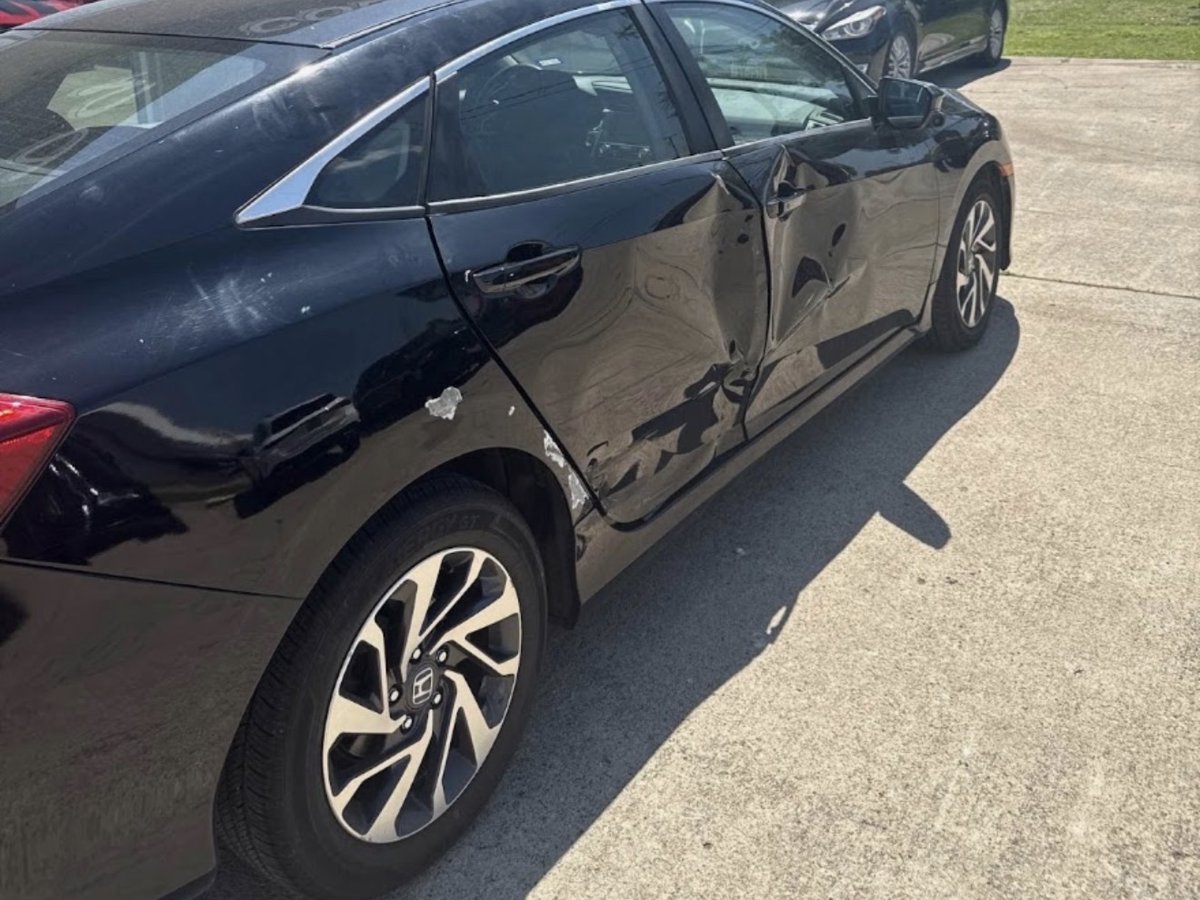
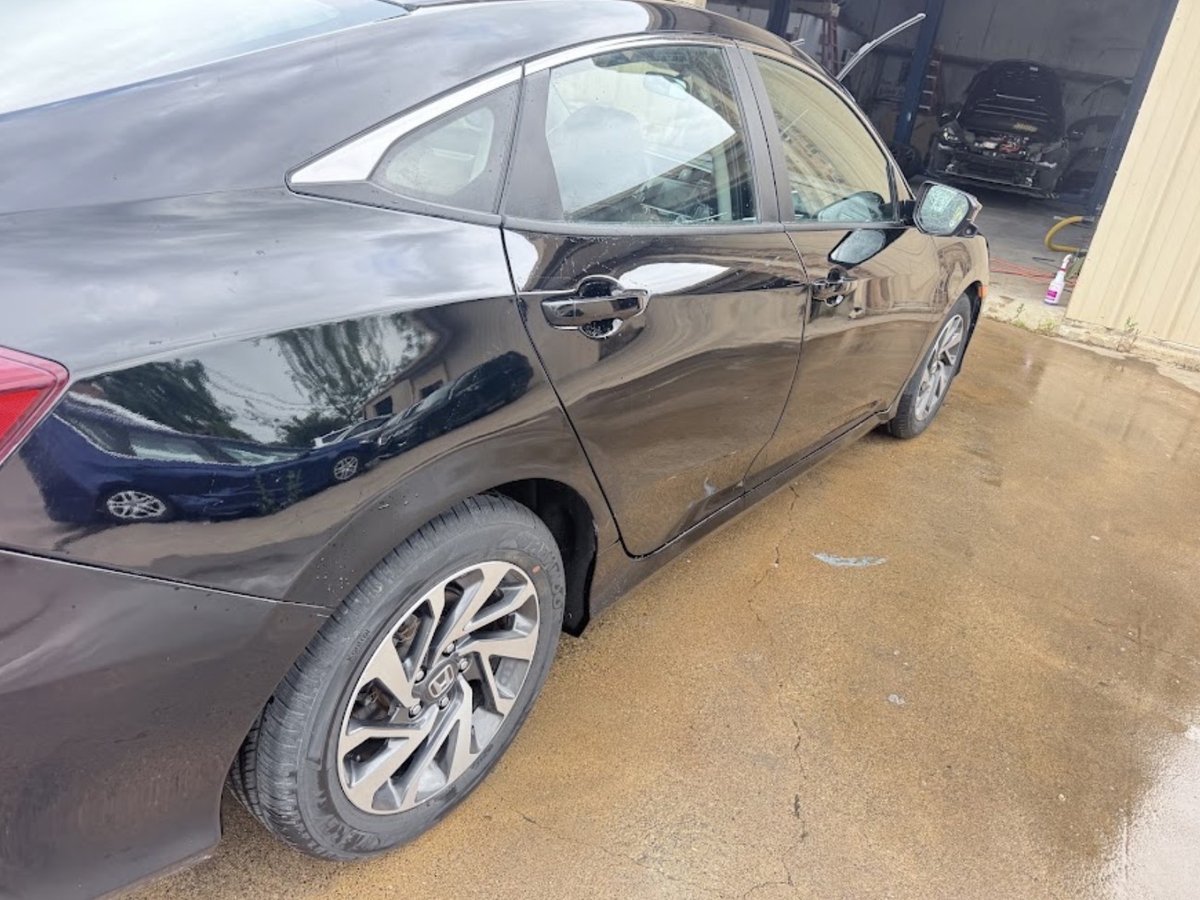
Drag the slider — a real side-impact repair from our Lewisville floor, the classic sideswipe profile of a hit-and-run.
 Before
After
Before
After
Side Impact — Doors & Quarter Panel
Pictured: Honda Civic — dented doors and quarter panel straightened, refinished, and blended for an invisible match
Hit-And-Run Questions