TEXAS JUST GAVE YOU AN APPEAL BUTTON ON LOWBALL OFFERS
Short version: as of 2026, Texas law requires every personal auto policy to carry a binding appraisal provision — a formal way to dispute the amount your insurer offers, with a result that binds both sides. Senate Bill 458 created Insurance Code Chapter 1813, it applies to policies issued or renewed on or after January 1, 2026, and it exists for exactly two moments: the repair estimate that won’t move, and the total-loss value that reads low. Almost nobody knows they have this button yet. Here’s what it is, when to press it, and why the appraisal is usually won by the documentation gathered before anyone invokes anything.
If your insurer’s number is too low — on a repair or a total-loss value — your policy now carries a binding way to fight it. Texas Insurance Code Chapter 1813 (SB 458) requires an appraisal provision in every personal auto policy delivered, issued, or renewed on or after January 1, 2026. It resolves disputes over the amount of loss only — not whether the claim is covered — and the result binds both you and the insurer, with narrow exceptions for fraud, accident, or material mistake. Check the policy that was in force on your date of loss, exhaust the ordinary ladder first (a documented estimate moves most numbers without any formal fight), and when you do invoke it, the side with the better file usually wins. Building that file is what we do, free.
What changed: for years, whether a Texas personal auto policy had to offer appraisal at all was a fight — some carriers stripped the clause, and courts let them. SB 458 ended that: Chapter 1813 makes the appraisal provision mandatory on personal auto (and residential property) policies issued or renewed on or after January 1, 2026. What it does: when you and the insurer disagree on the amount — a repair estimate priced below the documented damage, or a total-loss ACV built on bad comparables — either side can invoke the policy’s appraisal process instead of stalling or suing, and the resulting amount is binding on both sides (§1813.004(b), excepting fraud, accident, or material mistake). What it doesn’t do: coverage disputes — a denial is a different fight with different tools. What decides it: evidence. Teardown photos, a computerized structural measurement, line-by-line estimates, real local comparables. The award is only as strong as the file behind it — which is why the free documented estimate comes before everything.
The New Law
SB 458: THE APPRAISAL CLAUSE BECOMES MANDATORY
Appraisal clauses are old insurance technology: when the two sides of a claim can’t agree on what a loss is worth, each brings in an appraiser, the appraisers resolve it, and everyone skips the courtroom. The problem in Texas was that on personal auto policies the clause had quietly become optional — some carriers removed or declined to honor it, years of litigation followed over whether they could, and drivers facing a lowball number were left with “take it or sue.” Senate Bill 458 (89th Legislature) settled the question by statute: it created Insurance Code Chapter 1813, which requires every personal automobile policy delivered, issued for delivery, or renewed in Texas on or after January 1, 2026 to contain an appraisal provision — residential property policies too. The act took effect September 1, 2025; the Texas Department of Insurance has adopted implementing rules, and by now most Texas auto policies have renewed into the mandate.
One date rule carries the whole thing, so it’s worth saying precisely: your claim runs on the policy that was in force on your date of loss. A crash or storm after your first post-2026 renewal sits squarely under the mandate; a claim under an older policy period runs on that policy’s own terms — and plenty of policies carried appraisal clauses voluntarily all along. Either way the move is the same: read the section of your policy titled Appraisal, because that text — not a blog post, including this one — governs your claim. General information here, not legal advice.
The Two Moments
AMOUNT FIGHTS ONLY — AND THERE ARE EXACTLY TWO
Moment one: the repair number that won’t move. The carrier’s estimate prices half the documented damage, the supplement process has produced photos, measurements, and line items, and the adjuster’s number still won’t meet the evidence. That gap — what the repair genuinely costs versus what they’ll pay — is an amount-of-loss dispute, which is precisely what Chapter 1813’s provision resolves (§1813.003: solely the amount of loss, when that amount is in dispute). Moment two: the total-loss value that reads low. The ACV came from wrong-trim comparables and assumed-condition deductions, your counter-comps are better, and the valuation service won’t budge — the exact fight from the dispute-the-value answer, now with a binding endgame. (Run your own numbers first on the total-loss calculator.)
And the boundary that saves wasted effort: appraisal does not touch coverage. If the insurer says the policy doesn’t cover the event at all — no comprehensive on the policy, outside the filing window, excluded cause — there is no “amount” to appraise, and the tools are different: the written denial, the policy language, documentation, and TDI’s complaint process, all walked through in the denied-claim answer. Sorting which fight you’re in is step zero, and plenty of “denials” are actually lowballs wearing a scarier costume.
The Mechanics
HOW AN APPRAISAL ACTUALLY RUNS
The statute deliberately keeps the skeleton short and leaves the mechanics to your policy’s own appraisal provision and TDI’s implementing rules — so the authoritative description of your process is the appraisal section of your policy. The traditional structure that appraisal provisions follow: either side demands appraisal in writing; each side selects its own appraiser; the two appraisers evaluate the loss and, where they disagree, a neutral umpire resolves it — and an amount agreed by two of the three sets the loss. You generally bear your own appraiser’s cost, which is real money and worth weighing against the size of the gap: a few hundred dollars of disputed paint time may not justify the process, while a five-figure spread on a total-loss value usually does.
What the statute does fix, firmly, is the ending: the amount of loss determined by appraisal is binding on both the policyholder and the insurer (§1813.004(b)), with exceptions only for fraud, accident, or material mistake — and binding cuts both ways, which is the honest caution. Invoke it with a weak file and you can be bound to a disappointing award. That symmetry is why the order of operations matters: appraisal is the endgame, not the opening move, and most disputes die earlier — carriers move numbers when the documentation makes the low offer embarrassing, because they can read a teardown file as well as an umpire can.
The Shop’s Role
APPRAISALS ARE WON BEFORE THEY’RE INVOKED
An appraiser — yours, theirs, or the umpire between them — is a professional valuing a loss from evidence. Hand yours a parking-lot estimate and a hunch, and the process values a hunch. Hand them a teardown-documented repair plan — every operation priced line by line, hidden damage photographed as it was found, the computerized structural measurement in millimeters, OEM procedures cited for why each operation exists — and the process values the truth. On total-loss values, the same logic wears different clothes: current local listings for the exact trim and mileage, the options documented, the maintenance records that defeat assumed-condition deductions. This file is the same one that wins supplements and DV negotiations, which is the point: documentation is the universal currency of every claim fight, and appraisal is just its highest court.
Our lane, stated plainly: we don’t serve as your appraiser and we don’t run your claim — the demand is yours to make under your policy, and the appraiser you hire should be independent. What DG builds is the evidence the whole process runs on — free written estimates at teardown depth, structural measurement, photographed everything — and we’ve watched documented files end “final offer” conversations without anyone hiring anybody. Start there. If the number still won’t meet the evidence, you’ll walk into appraisal already holding the winning exhibit.
Start To Finish
FIVE STEPS FROM LOWBALL TO BINDING NUMBER
Confirm The Fight And The Policy
Amount dispute or coverage dispute? Appraisal only reaches amounts. Then pull the policy in force on your date of loss and read its Appraisal section — post-January 2026 renewals must have one; older policies often do anyway.
Build The File Before Any Demand
Teardown estimate, structural measurement, photos, OEM procedures — or on a total, real comparables and records. Free here, and it’s the ammunition for every later step.
Exhaust The Ordinary Ladder
Supplements, the corrected comp set, the Consumer Bill of Rights right to reject an unfair offer. Most numbers move when the documentation lands — appraisal is for the ones that don’t.
Invoke In Writing, Hire Independent
Demand appraisal per your policy’s provision, in writing, and select an independent appraiser. Weigh the cost against the gap — binding cuts both ways, so walk in with the stronger file.
Take The Award Into The Repair
The determined amount binds both sides (§1813.004(b)) — the repair proceeds on the real number, or the total settles at the corrected value. Either way, the file comes home with you.
Documentation In Action
THE CLASS OF DAMAGE NUMBERS FIGHT OVER
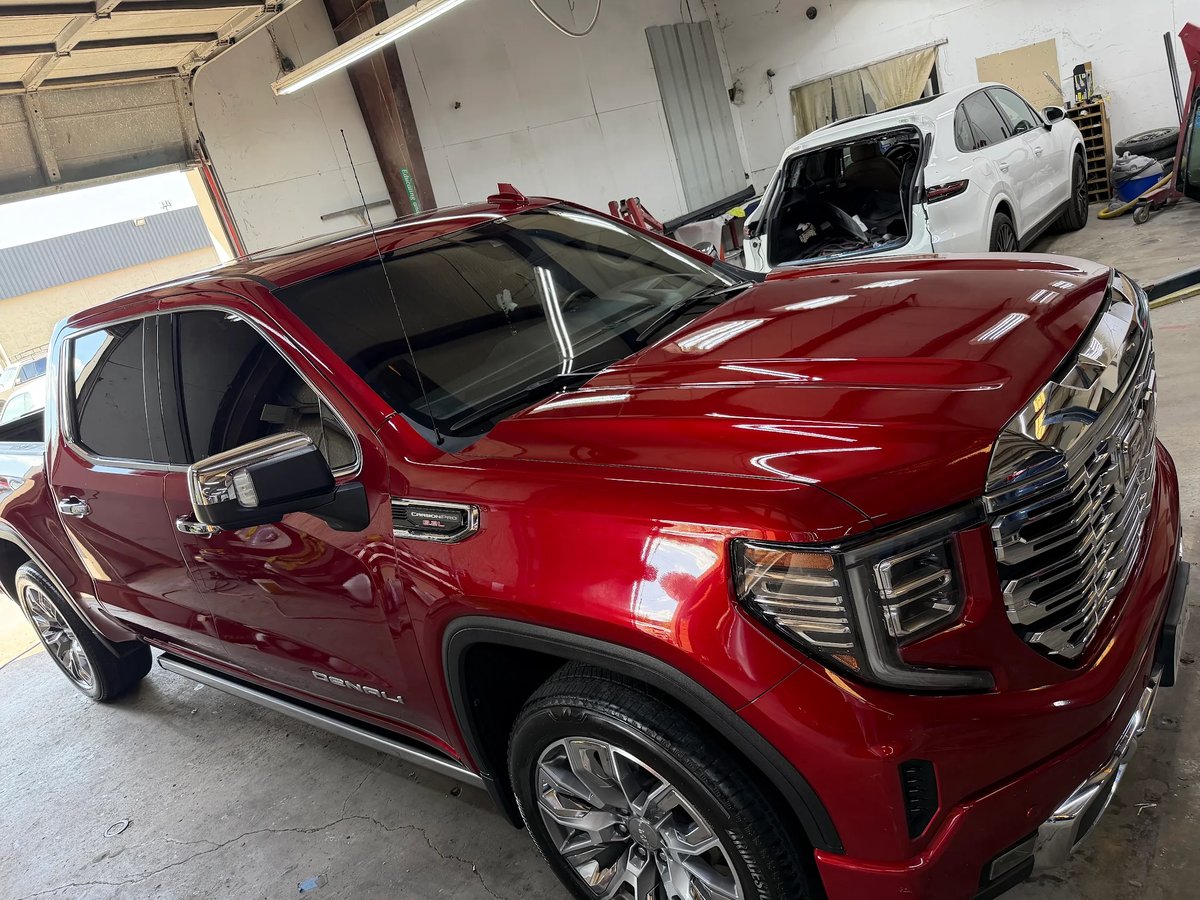
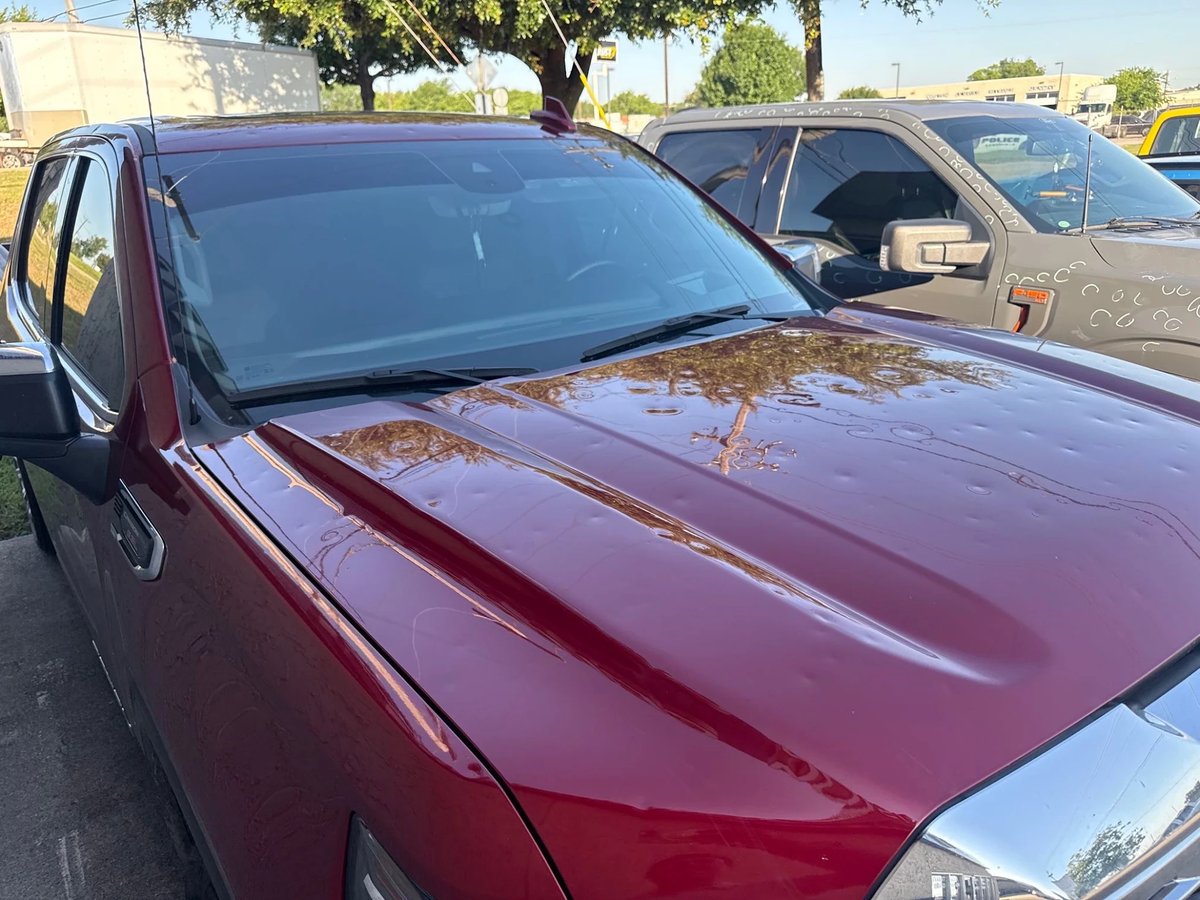
Pictured: a customer’s GMC Sierra 1500 Denali — dense full-vehicle hail, the kind of claim where a five-minute walk-around and a documented count can disagree by thousands. The documented count won. Drag the slider.
 Before
After
Before
After
Full-Vehicle Hail — Documented Panel By Panel
When the count is on paper, the argument gets short — in supplements, in valuations, and in appraisal
Appraisal Rights
FREQUENTLY ASKED QUESTIONS
Free · No Obligation
GET A REAL NUMBER — NO POLICY NEEDED
Tell us what you drive and what happened. We’ll come back with a written estimate — so you can make the file-or-skip call with the real number in hand.
Prefer to talk now? Call (972) 219-0864 · or text us photos