TEXAS TOTAL-LOSS CALCULATOR
Two numbers decide whether your car gets repaired or paid out: what it’s worth, and what fixing it costs. Run them against the line Texas actually draws — free, in about thirty seconds, no phone number required.
Texas draws one line: a car is a salvage-level total when repair cost — counted without repaint materials, labor, or sales tax — reaches 100% of its actual cash value (Transp. Code §501.091). In practice, carriers often make the economic call earlier, as documented repairs approach the value. This calculator runs your repair number against your car’s value, shows you the ratio and which zone it lands in, and tells you honestly what each zone means — including the three doors if it totals: the check, the buyback, and the dispute. Every number it uses is published and named on screen, and every result ends at the number that actually decides it: the free written estimate.
3 Questions · 30 Seconds
WILL YOUR CAR TOTAL?
What’s your car roughly worth today?
Thirty-second way to find it: search current dealer listings for your exact year, trim, and mileage, or use a pricing guide’s private-party value. That market number is close to the actual cash value (ACV) insurers use — it’s what the car would sell for, not what you paid and not what you owe.
Do you have a repair number yet?
What’s the repair estimate?
A first insurance estimate is an opening number — teardown supplements routinely raise it. If yours is a quick photo-app or parking-lot figure, treat the result as the floor of the conversation, not the ceiling.
How bad is the hail?
Collision needs a real number first
Crash damage spreads too wide to guess from a description — a bumper tap and a bent structure can look similar from ten feet. Two honest paths: get a published range from our repair cost estimator and come back with it, or skip the middle step — the written estimate is free and it’s the number the total-loss decision will actually use.
What’s your deductible?
Repair cost vs. your car’s value
Method: the only line Texas law draws is 100% — Transp. Code §501.091 counts repair cost without repaint materials, labor, or sales tax, which means the true statutory ratio runs a little lower than the simple division shown here. Zone boundaries below 100% are presentation, not law; carriers often make the economic call as documented repairs approach the value. This is a planning tool, not a quote or a coverage decision.
The Rules Behind The Tool
HOW TEXAS ACTUALLY DECIDES A TOTAL LOSS
The statute first. Texas Transportation Code §501.091 sets the salvage-level line: a vehicle is a salvage motor vehicle when the cost of repairs — counted without repaint materials and labor, and without sales tax — reaches the vehicle’s actual cash value immediately before the damage. That exclusion matters more than it looks: on a paint-heavy repair like dense hail, the statutory count can sit meaningfully below the estimate total, which is why this calculator’s simple division slightly overstates the statutory ratio. There is no 70% rule, no 80% rule — those thresholds belong to other states, and any DFW shop or adjuster quoting one for Texas is repeating folklore.
Then the practice. Carriers don’t wait for 100% — totaling is an economic decision, and when documented repairs approach the car’s value the carrier weighs repair cost, rental days, supplement risk, and salvage recovery against just writing the check. That’s why the zone between roughly 80% and the line is where outcomes genuinely swing, in both directions: a complete, documented estimate can prove a borderline car is a sound repair — and an honest teardown can reveal that a “$6,000 repair” was a total all along, which protects you from pouring a deductible into a car the math had already condemned. Both numbers in the ratio are contestable, too: the repair side moves through supplements, and the value side moves through the valuation dispute — including, on personal auto policies issued or renewed since January 1, 2026, the binding appraisal provision Texas now requires (Insurance Code Chapter 1813).
The full walkthrough of the math — with the hail-specific wrinkles, the “cosmetic” dent counts that add up at $75–$200 per dent, and what happens on financed cars — lives in the total-loss guide. This page is the fast version: two numbers, one honest read, and the free written estimate that turns a zone into an answer.
The Three Doors
IF IT TOTALS, YOU STILL HAVE CHOICES
Door one: take the check. The settlement is the car’s actual cash value minus your deductible — and the ACV is not a verdict, it’s an offer. Pull the valuation report, audit the comparables, and if the number reads low, dispute it — Texas’s Consumer Bill of Rights says you may reject any settlement amount you believe is unfair, and newer policies carry a binding appraisal right for exactly this argument.
Door two: keep the car. Owner-retained salvage means the insurer deducts the vehicle’s salvage value from your settlement and the car stays yours. Whether a branded title follows depends on what totaled it — Texas’s salvage definition excludes hail, so a purely hail-totaled buyback typically keeps a clean title, one of the quirks that makes hail totals gentler than crash totals. Flood runs the other way: the definition includes it, and the brand follows.
Door three: mind the loan. If you owe more than the settlement, the loan survives the car — unless you carry gap coverage, which retires the balance above the ACV. On any financed car the lienholder is paid first, so run the payoff letter against the settlement before choosing a door; the leased-and-financed guide maps that terrain.
From Our Floor
REPAIRED, NOT TOTALED
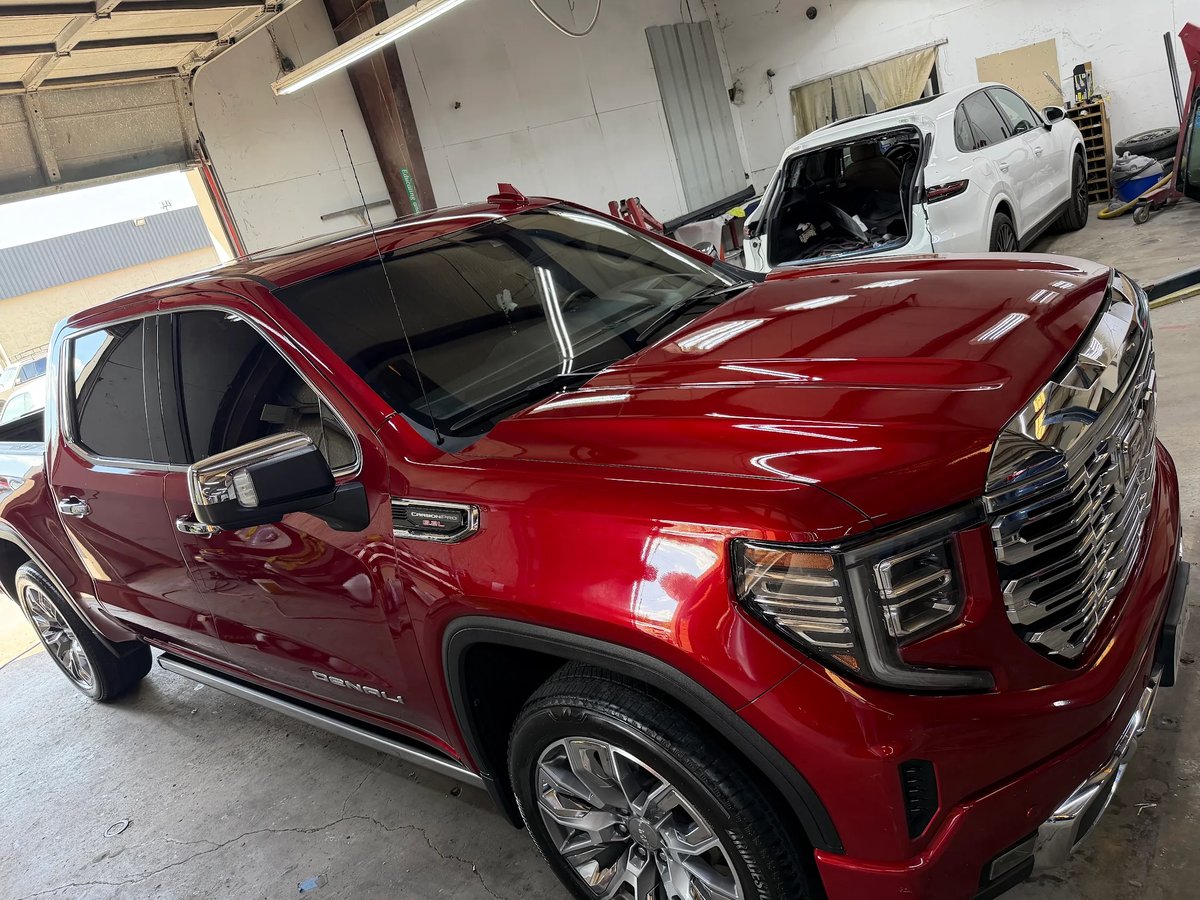
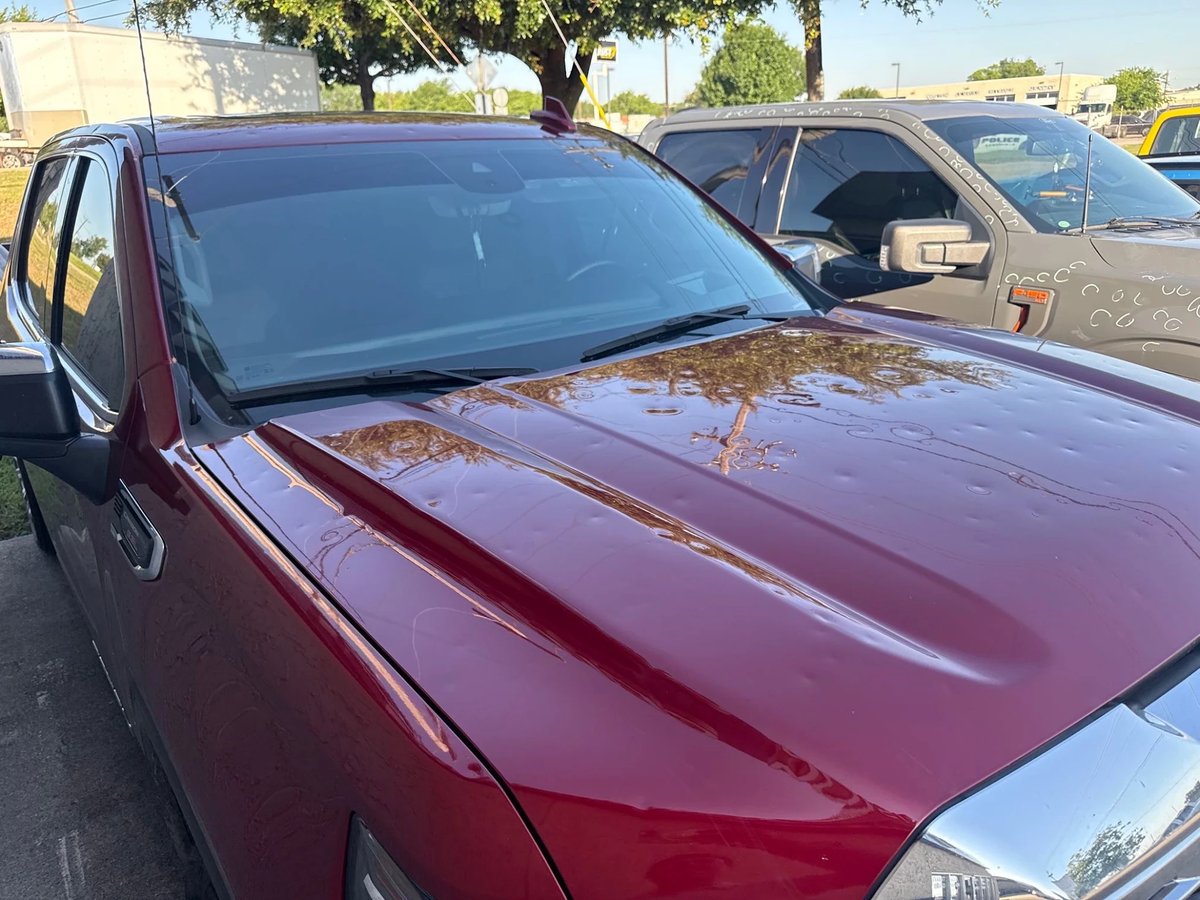
Pictured: a customer’s GMC Sierra 1500 Denali — dense full-vehicle hail, exactly the class of damage that starts total-loss math — documented, argued, and repaired here. Drag the slider.
 Before
After
Before
After
Full-Vehicle Hail — Sierra Denali
Dense coverage across every upper panel — the documented count kept the math on the repair side of the line
Total-Loss Questions