HYUNDAI BODY SHOP LEWISVILLE, TX
Tucson, Santa Fe, Elantra, Palisade, Santa Cruz, the IONIQ family, and the N cars — the brand that put a decade on the clock. Hyundai’s ten-year powertrain warranty reset how long Americans expect to keep a car, and Hyundai owners plan accordingly: these cars stay in the driveway. That’s the standard a Hyundai repair answers to — not next month, but year eight, when a corroding seam or a fading blend would finally tell on a shortcut. We repair for the decade: factory procedures, sealed edges, SmartSense recalibrated through our calibration specialists, the IONIQ’s 800-volt system handled by the book. Free loaner, written lifetime warranty, direct billing.
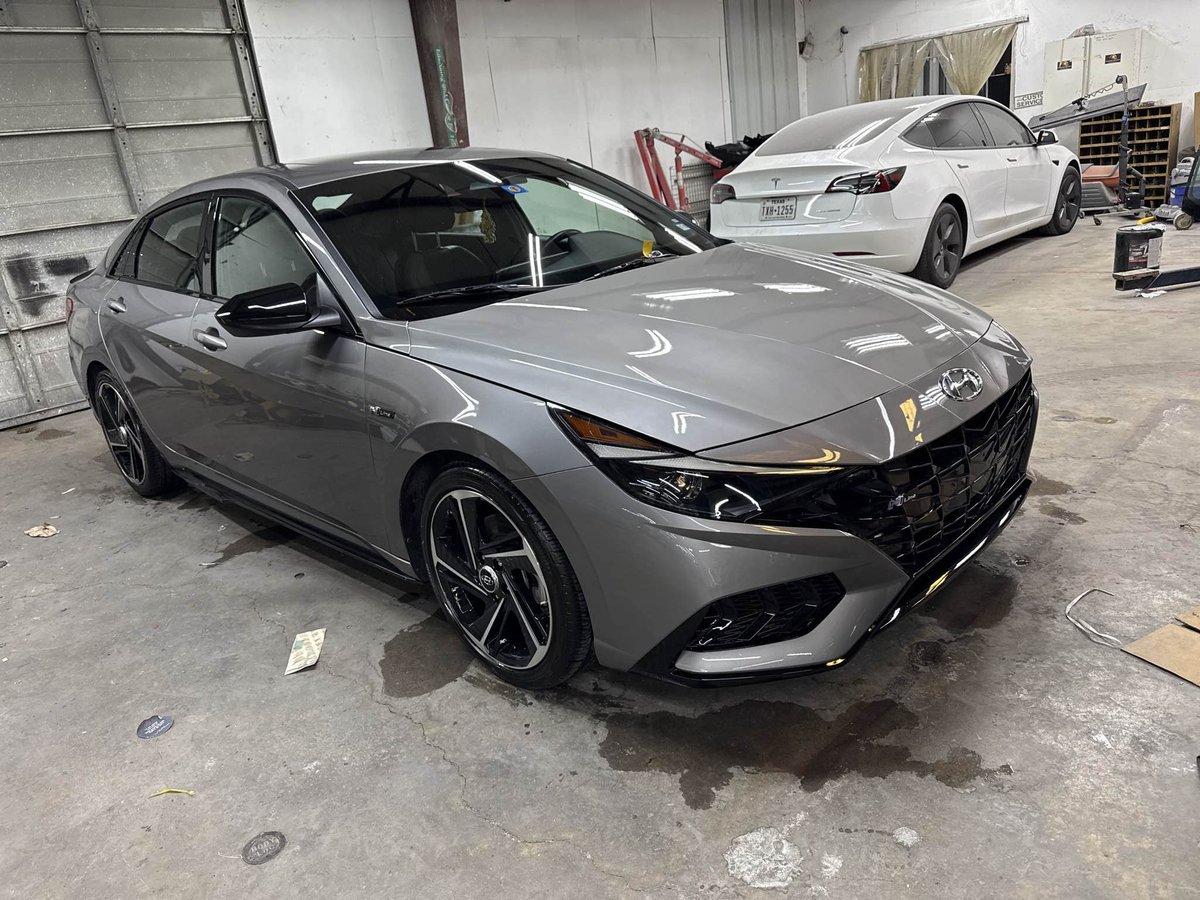
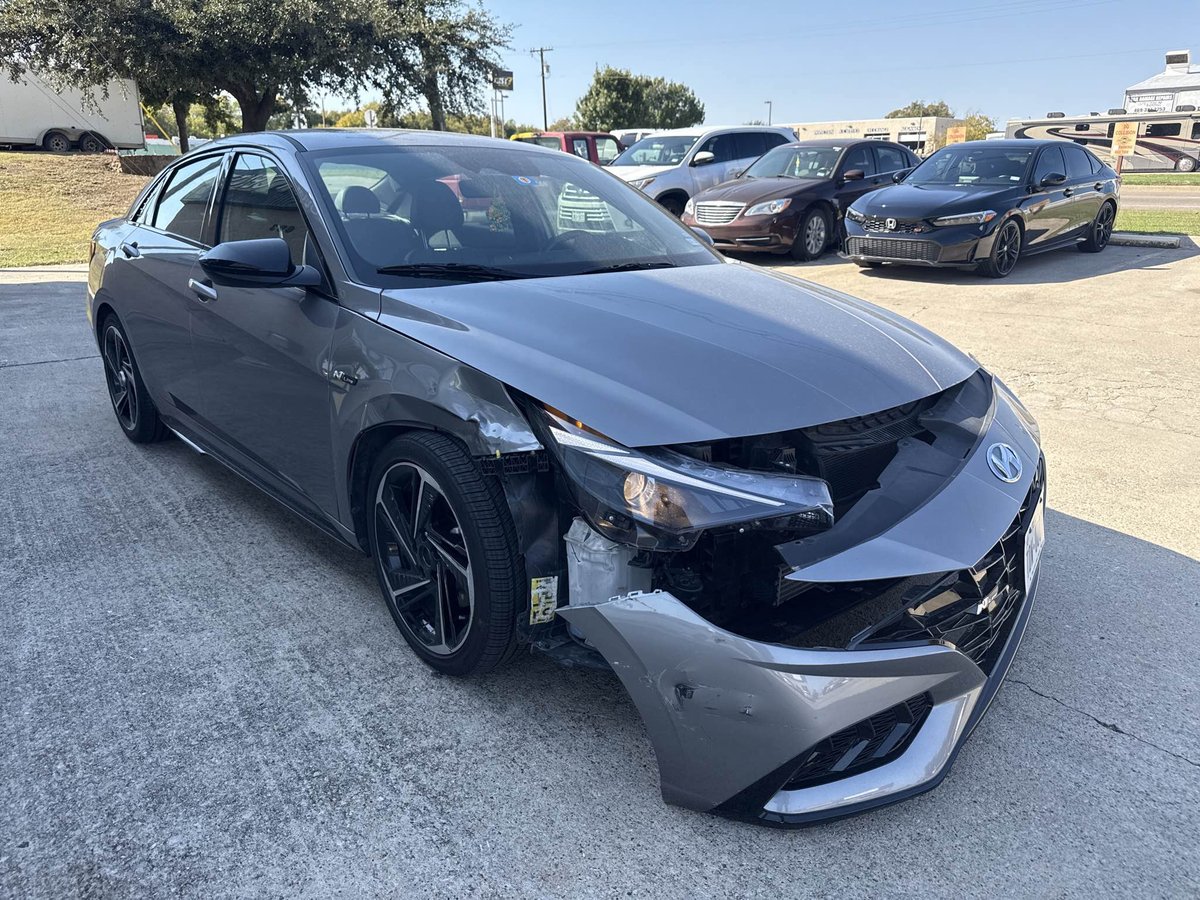 Before
After
Drag the line — a customer’s Elantra N Line, hit to delivered at our Lewisville shop.
Before
After
Drag the line — a customer’s Elantra N Line, hit to delivered at our Lewisville shop.
DG Collision Center repairs Hyundais on the clock the brand itself set — the decade. Hyundai’s ten-year powertrain warranty rewired how long its owners plan to keep their cars, and a repair built for that horizon is a different job than a repair built to look good at pickup: bare metal primed and edges seam-sealed so year-eight corrosion never starts, blends run wide enough to age evenly under a decade of Texas sun, genuine parts specified because they’re the ones still fitting right in 2036 — and all of it documented in a delivery file that follows the car. The hardware earns the care: Hyundai SmartSense comes standard on every current model — cameras, radar, and sensors that turn bumper, windshield, and mirror work into calibration events we run in-house — and the electric line raises the bar further: the IONIQ family rides on E-GMP, the group’s dedicated EV platform with 800-volt-class ultra-fast charging, so high-voltage disable-by-the-book precedes any structural work. The build map is increasingly American: Montgomery, Alabama assembles the Santa Fe, Tucson, and Santa Cruz, while the new Metaplant in Ellabell, Georgia builds the IONIQ 5 and IONIQ 9. The N cars bring the enthusiast layer — and Performance Blue, code SFB/XFB, chosen by people who will inspect the match. Genuine parts argued in writing under Texas Insurance Code §1952.301; free loaner, no day limit; direct billing — your out-of-pocket is typically your deductible, once.
- The decade is the audit — Hyundai owners keep their cars, so the repair has to survive year eight: primed metal, sealed seams, wide blends, genuine parts, documented everything.
- SmartSense is standard equipment — on every current model. Bumper, glass, and mirror work are calibration events, decoded from your build and verified in-house before delivery.
- The IONIQs run 800-volt-class hardware — E-GMP’s ultra-fast-charging architecture gets factory disable protocol before structural work, verified again before the keys come back.
- Increasingly built in the South — Santa Fe, Tucson, and Santa Cruz from Montgomery, Alabama; IONIQ 5 and 9 from Georgia’s new Metaplant. Domestic parts channels follow.
- The N cars are their own story — Performance Blue SFB/XFB, unique aero and hardware, owners who read forums. Documented at blueprint, priced from the N parts sheet.
- Genuine parts have legal backup — Texas Insurance Code §1952.301 bars insurers from dictating parts by brand, type, or condition. We make that argument for you, in writing.
The Brand That Put A Decade On The Clock
When Hyundai stapled a ten-year powertrain warranty to its cars, it didn’t just win customers — it changed how those customers think. Hyundai owners plan in decades: the Tucson bought for the commute is also the car that will drive a teenager to Marcus or Hebron in 2032, and the Palisade hauling the youth soccer league intends to haul the same league’s younger siblings. That mindset is exactly the right lens for judging a collision repair, because the difference between honest work and a shortcut doesn’t show at pickup — it shows in year eight. Filler where metal should have been finished shrinks into a visible ring by the fifth summer. A seam left unsealed starts blooming rust where nobody looks until it’s through the paint. A narrow blend that matched in October drifts apart from the factory finish after a few thousand hours of Texas sun. So we repair on the owner’s clock: bare metal primed and seam-sealed per the factory book, blends run wide so the panel ages evenly, genuine parts because they’re the ones still fitting right a decade out — and photographs of all of it in your delivery file, because a repair meant to last should be documented like it.
The hardware has grown into the promise. Hyundai SmartSense comes standard on every current model — forward camera and radar for collision-avoidance braking, lane keeping, and the rest of a suite that turns everyday bodywork into electronics work: a windshield, a bumper skin, or a mirror is a calibration event, decoded from what your specific build carries and verified in-house before delivery. The electric line goes further: the IONIQ family rides on E-GMP, the group’s dedicated EV platform, with 800-volt-class ultra-fast charging — brilliant engineering that commands respect in a body shop, so the high-voltage system is disabled per factory procedure before any structural or welding work, battery-adjacent damage is inspected and documented rather than assumed away, and everything is re-verified before the keys come back. Structure gets the same discipline the decade demands: hard hits go to the bench and get measured within a millimeter, because ten years of daily driving will find any geometry a practiced eye missed. And the same group engineering runs through the family’s other badges — our Kia body shop page covers that side of the house, and the luxury side lives at our Genesis body shop page.
The build map tells you where this brand is heading: Montgomery, Alabama assembles the Santa Fe, Tucson, and Santa Cruz, and the new Metaplant in Ellabell, Georgia — the group’s third U.S. production hub — builds the IONIQ 5 and IONIQ 9, which keeps genuine-parts channels domestic and lead times sane on exactly the models DFW drives most. The N cars bring the enthusiast layer: Elantra N and IONIQ 5 N owners chose Performance Blue — code SFB/XFB — on purpose, modify on purpose, and inspect repairs on purpose, so N work gets documented at blueprint and priced from the N parts sheet, not the base car’s. Paint across the lineup follows the same code-first rule: pearls rebuilt in their layers, the code plate trusted over the brochure name, every mix proven on a sprayout card. The before/after at the top of this page is a customer’s Hyundai Elantra N Line — photographed at our shop, hit to delivered. The gallery below shows a customer’s Toyota RAV4 — same compact-crossover front-end discipline a Tucson claim gets; the Hyundai version adds the decade standard and the calibration file on top.
The Lineup
EVERY HYUNDAI, AND ITS QUIRKS
Commuter sedans to three-row flagships to 800-volt EVs — each with its own repair personality.
Tucson
The volume Hyundai of DFW, built in Montgomery, Alabama — school runs, office decks, 35E stop-and-go. Its classic claims are bumper corners and door edges, all sensor-adjacent on a SmartSense car, all calibrated after.
Santa Fe
The family workhorse from the same Alabama line — now wearing boxy new bodywork whose flat panels and square arches show every ripple. Metal finished true, liftgate claims handled honestly, hybrid versions decoded first.
Elantra & Sonata
The commuter sedans — apartment parking, first-car duty, rush-hour rear-enders. Sharp creased styling that punishes filler-heavy repairs, and owners in year six of a ten-year plan who need the car back right.
Palisade
The three-row flagship — carpool duty, trailer hitches, liftgate-versus-garage incidents, and big sculpted panels where reflections travel. Family-schedule urgency our free loaner actually solves.
Santa Cruz
The truck that isn’t quite a truck, built in Montgomery — bed rails and tailgate claims on a unibody body, a combination most shops misread in the estimate. We price the vehicle that actually exists.
IONIQ 5, 6 & 9
The E-GMP electrics — 800-volt-class charging architecture, with the 5 and 9 built at Georgia’s new Metaplant. High-voltage protocol before structural work, battery-adjacent damage documented, calibration verified at delivery.
The N Cars
Elantra N, IONIQ 5 N — the enthusiast layer, usually in Performance Blue SFB/XFB, often modified, always owned by somebody who reads forums. Documented at blueprint, priced from the N parts sheet, finished to N standards.
Kona & Venue
The city-sized pair — tight parking, urban door swings, first-owner insurance claims. Compact footprint, full SmartSense sensor reality, and the same decade standard as everything else on this page.
The Ten-Year Clock
The card that explains the others: Hyundai owners keep their cars, so every repair here is built for year eight — primed metal, sealed seams, wide blends, genuine parts, and a delivery file that proves it was done right.
Hyundai Paint, Built To Age Well
Paint on a car you’ll keep a decade has a different job than paint on a car you’ll trade in three years. The code decides the match; the discipline decides whether it still matches in 2034.
Every finish gets the same spectrophotometer-and-sprayout discipline — read the actual panel, prove the mix on a card, blend into the adjacent panel so there’s no edge for the Texas sun to find. On this brand, the sun gets a decade to look — so the discipline isn’t optional.
The Hyundai Repair, By The Book
Five steps, none optional — and on a Hyundai, every one of them answers to the decade:
1 — The Factory Procedures Come First
Every repair starts in the published factory collision procedures for your exact model and year — structural sections, sensor brackets, corrosion protection requirements — and on the IONIQ family the high-voltage protocol leads before any structural or welding work. A car built to be kept ten years gets repaired by the book it was built from.
2 — Blueprint The Actual Car
Full disassembly, every hidden finding photographed and itemized into one documented supplement — plus the Hyundai-specific decode: which SmartSense hardware the build carries, hybrid or 800-volt IONIQ, N car or standard. The supplement process pays for what’s found and documented — and the claim should price the car that’s actually here.
3 — The Decade Discipline
This is where the ten-year clock earns its name: metal finished instead of buried in filler, bare steel primed and seams sealed per the corrosion book, refinish layered and blended wide so the panel ages in step with the factory paint. None of it shows at pickup — all of it shows in year eight, which is exactly when your Hyundai will still be in the driveway.
4 — Genuine Parts, Argued In Writing
On structural, safety, and sensor-bearing components we push genuine parts and put the argument to the adjuster in writing — because the cheap alternative’s real cost shows up over the years the owner actually keeps the car. Texas Insurance Code §1952.301 bars insurers from limiting coverage by the brand, type, kind, age, vendor, supplier, or condition of parts — that fight is ours to have, not yours.
5 — Calibration, And The File That Outlasts Us
Pre- and post-repair scans on every job; the SmartSense cameras and radar your build carries recalibrated in-house and verified; and then the handover the decade deserves: procedures cited, parts itemized, corrosion protection photographed, calibrations printed. Ten years from now, that file is the difference between “it was repaired” and “it was repaired right.”
Real Results
THE FRONT-END REBUILD, BUMPER TO HEADLIGHTS
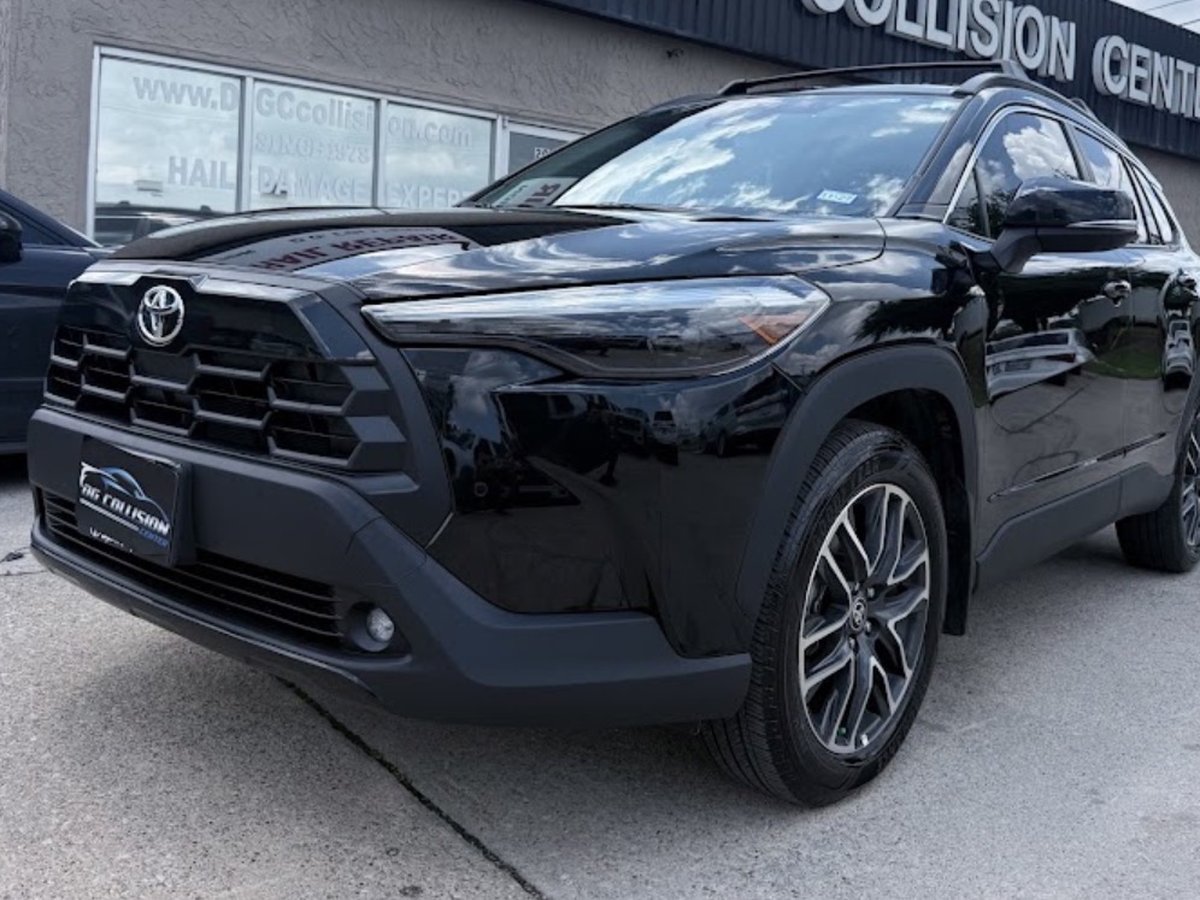
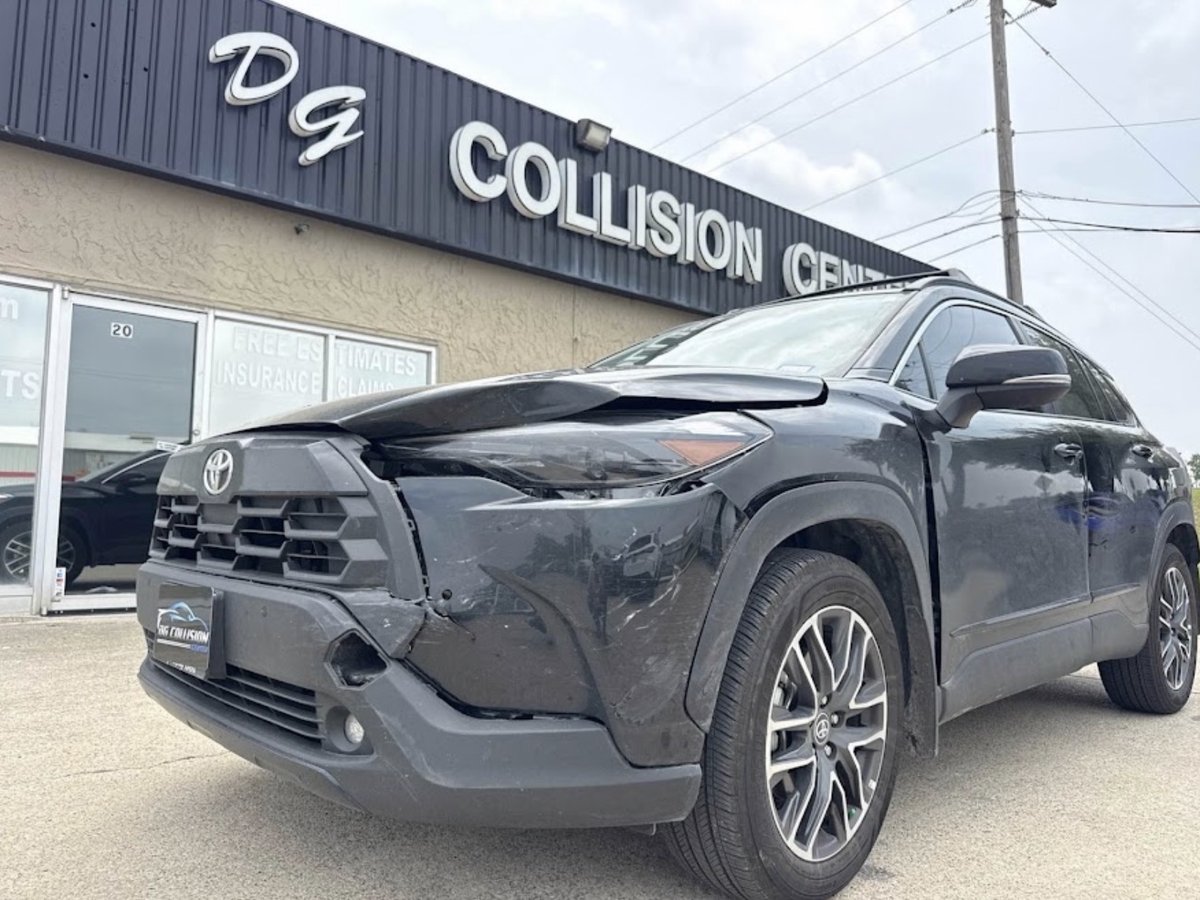
Drag the slider. A customer’s front-end rebuild — bumper, grille, and hood — billed direct and returned to spec. It’s a Toyota RAV4, not a Hyundai, and we won’t pretend otherwise: the compact-crossover discipline is identical to what a Tucson claim gets. On the Hyundai version, the decade standard and the calibration file ride on top.
 Before
After
Before
After
Front-End Rebuild — Bumper To Headlights
Pictured: Toyota RAV4 — the same front-end discipline we run on Hyundais, with the decade standard and calibration added
Hyundai Hit? Hailed On? Send Photos.
Text a few photos with your year, model, and trim — SmartSense hardware, hybrid or IONIQ high voltage, and N details all change the plan. We’ll answer with a realistic range, usually within minutes during shop hours.
Common Questions
HYUNDAI REPAIR FAQ
Free · No Obligation
START YOUR HYUNDAI REPAIR
Tell us which Hyundai you drive — year, model, and trim; N details, SmartSense hardware, and the IONIQ family’s high voltage all price the plan — and what happened. We’ll call back with the real number and next steps.
Prefer to talk now? Call (972) 219-0864 · or text us photos
Hyundai, Tucson, Santa Fe, Elantra, Sonata, Palisade, Santa Cruz, Kona, Venue, IONIQ, N, and Hyundai SmartSense are trademarks of Hyundai Motor Company or Hyundai Motor America. DG Collision Center is an independent repair facility and is not affiliated with, sponsored by, or endorsed by Hyundai Motor Company, Hyundai Motor America, or their dealers. References are for factual identification only.