JEEP BODY SHOP LEWISVILLE, TX
Wrangler, Gladiator, Grand Cherokee, Compass, Wagoneer — the only badge whose owners unbolt half the body on purpose. Here’s the fact most estimates miss: on the Wrangler and Gladiator, the removable parts aren’t steel — doors, hood, fenders, hinges, and windshield frame are aluminum, and the tailgate is magnesium under an aluminum skin. Add lifted-and-armored rigs whose parts sheets no template estimate survives, and Jeep repair is its own discipline. Factory procedures, genuine Mopar parts argued in writing, calibration through our calibration specialists, free loaner, written lifetime warranty, direct billing.
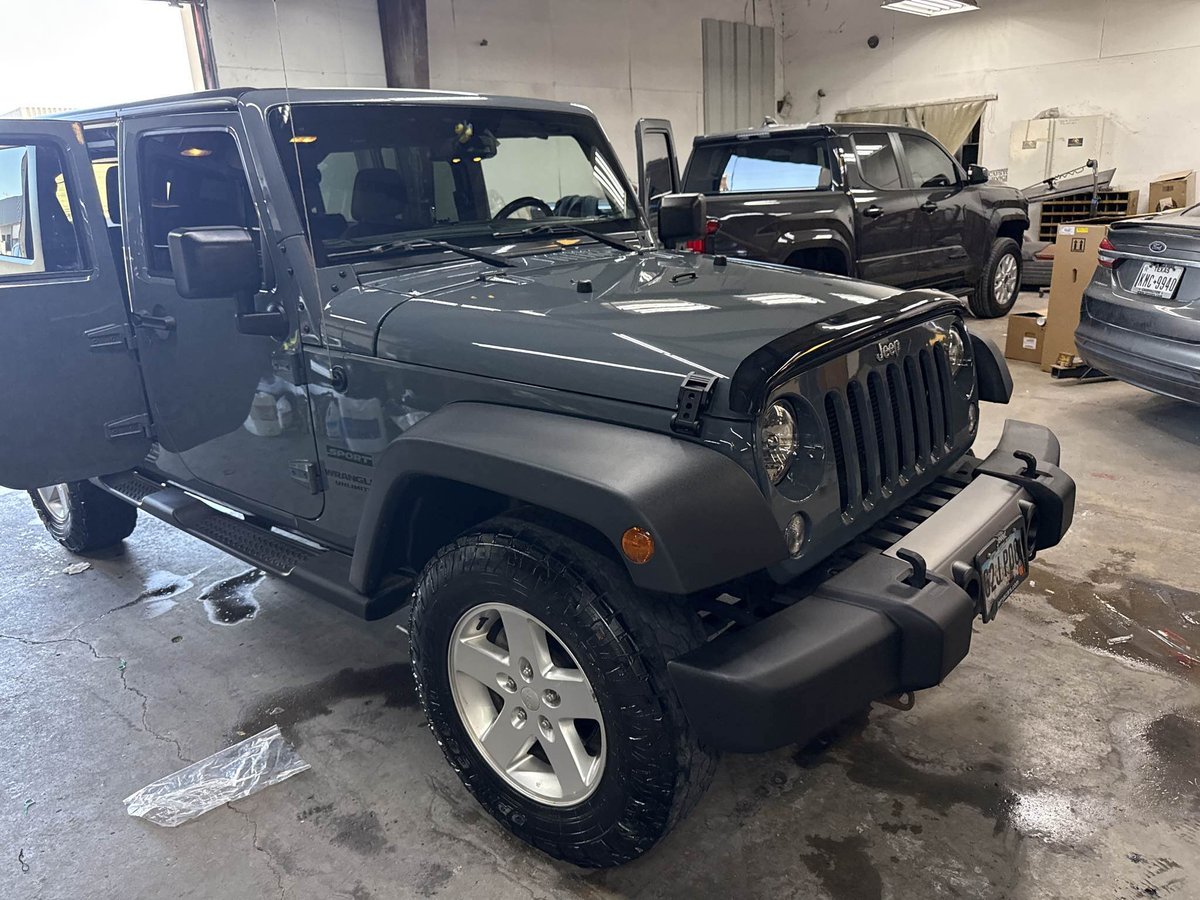
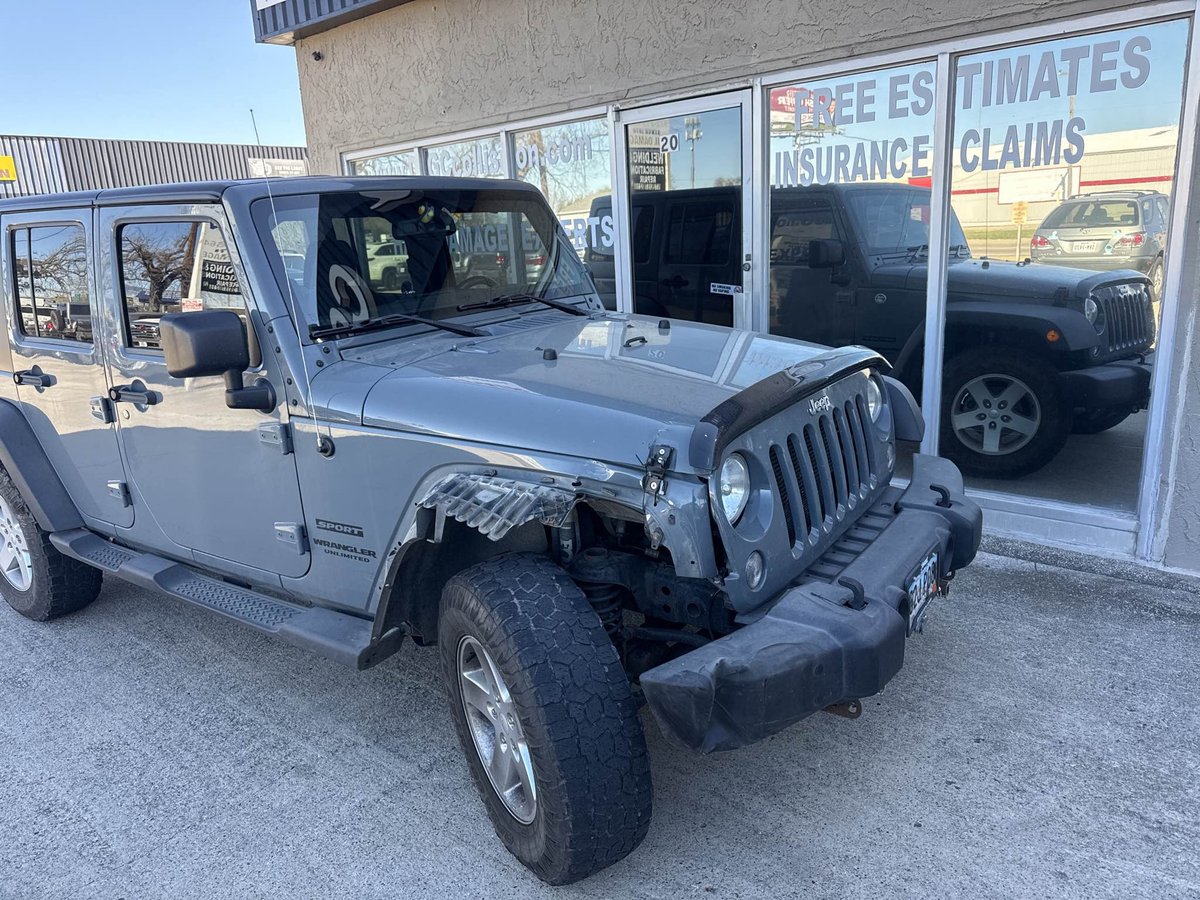 Before
After
Drag the line — a customer’s Wrangler Unlimited, hit to delivered at our Lewisville shop.
Before
After
Drag the line — a customer’s Wrangler Unlimited, hit to delivered at our Lewisville shop.
DG Collision Center repairs Jeeps to the factory book — and knows where Jeep hid the metallurgy: on the Wrangler and Gladiator, the doors, hood, fenders, exterior hinges, and windshield frame are aluminum, and the tailgate is a magnesium structure under an aluminum skin — only the rear quarters, floor, and rockers stay steel, over a high-strength-steel frame. That split decides everything: aluminum panels run through our isolated aluminum bay, magnesium doesn’t take a hammer-and-dolly like steel (that conversation is usually a replacement conversation), and the body-on-frame underneath gets measured on the bench after any hard hit — trail or traffic. Jeep’s limited-run colors (Tuscadero PHP came back by 30,000-order demand; Gecko PFM appears and vanishes) make paint matching formula archaeology, proven on a sprayout card before it touches your rig. Modified Jeeps get their steel bumpers, winches, lifts, and rock rails documented at blueprint so the claim prices the build, not a showroom-floor Sport. Genuine Mopar parts argued in writing under Texas Insurance Code §1952.301; calibration and scans in-house; direct billing — your out-of-pocket is typically your deductible, once.
- The removable parts aren’t steel — aluminum doors, hood, fenders, and windshield frame; magnesium-and-aluminum tailgate. A shop that treats a Wrangler as a steel box gets its most-hit panels wrong.
- Magnesium changes the conversation — it doesn’t work like steel under a dolly; tailgate damage is usually a replace-and-refinish call, honestly priced.
- Body-on-frame means the bench — Wrangler and Gladiator hits get measured within 1mm of spec, with printed proof, before anyone talks panels.
- Your build is part of the claim — steel bumpers, winches, lifts, and armor get photographed and itemized at blueprint; tell your carrier what’s bolted on before you need them to pay for it.
- Limited-run paint is real work — Tuscadero (PHP), Gecko (PFM), and the other special-run colors are matched by formula and sprayout card, then blended — not guessed at.
- Mopar parts have legal backup — Texas Insurance Code §1952.301 bars insurers from dictating parts by brand, type, or condition. We make that argument for you.
Two Kinds Of Jeep Damage — And The Metallurgy Under Both
Every Jeep that rolls into our shop carries one of two stories. The first is ordinary DFW: a rear-ender on 35E, a parking-lot door, hail across the hood — the same physics every commuter eats. The second story only Jeeps tell: trail pinstripes down the flanks, a rocker kissed by a ledge, a fender folded by a tree that didn’t move, a steel bumper that did its job and now wears the proof. A shop that’s honest about Jeeps has to price both stories correctly — and that starts with knowing what the vehicle is actually made of, because Jeep quietly built the Wrangler out of three metals.
Since the current body generation, the parts you can unbolt are the parts that aren’t steel: the doors, hood, fenders, exterior hinges, and windshield frame are aluminum; the tailgate is a magnesium structure clad in aluminum; the rear quarters, floor, and rockers stay steel over a high-strength-steel frame and roll cage. The repair consequences are direct. Aluminum panels — the doors and hood that take the most damage — run through our isolated aluminum bay, because steel dust embedded in aluminum breeds corrosion months after delivery. Magnesium is stiffer-lipped still: it doesn’t move under a hammer and dolly the way steel does, so an honest tailgate conversation is usually a replacement conversation, and we’ll say so before anyone burns hours pretending otherwise. And because Wrangler and Gladiator are body-on-frame — built that way in Toledo, Ohio — any hard hit earns the measuring bench before the panel talk starts.
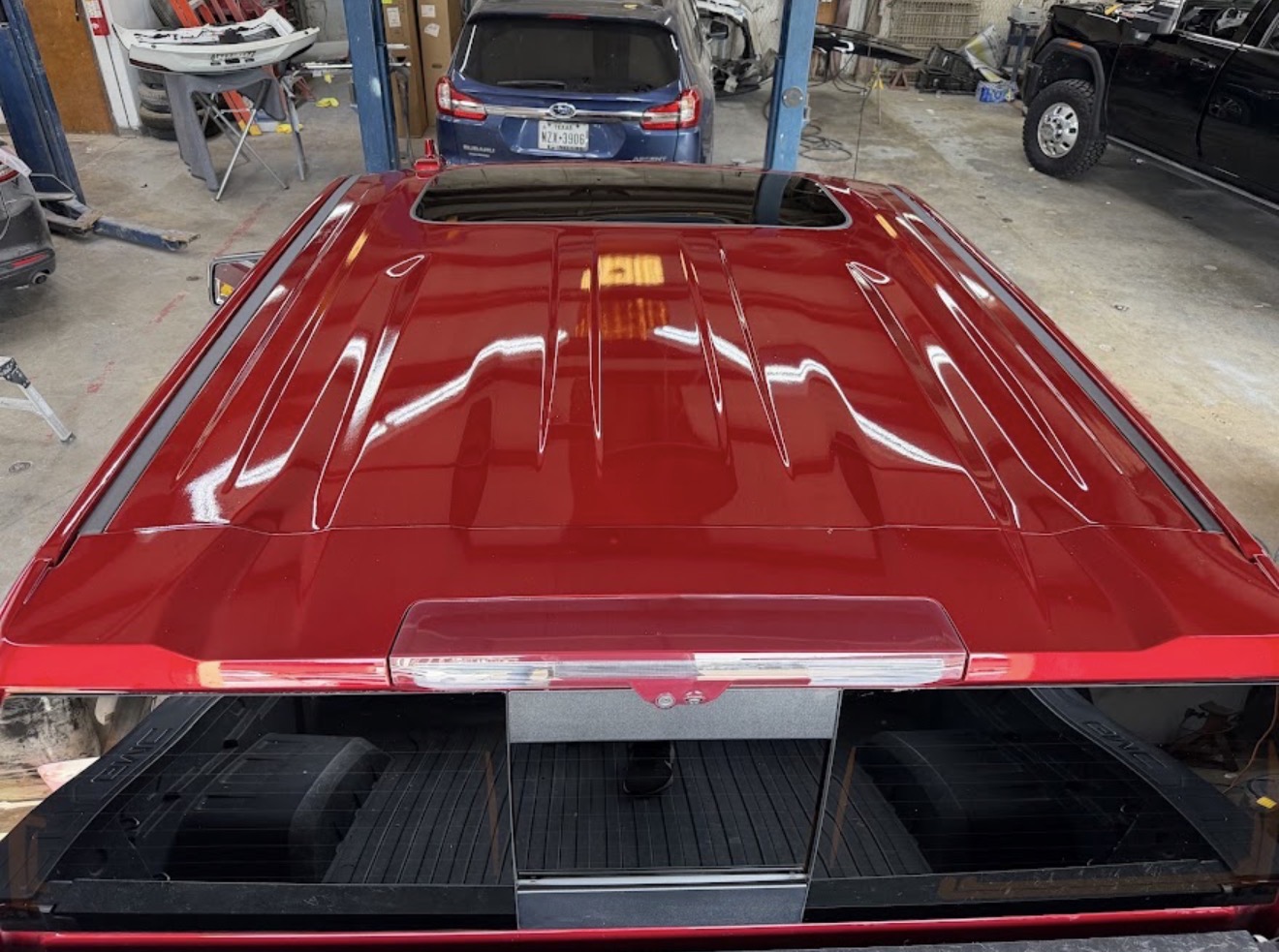
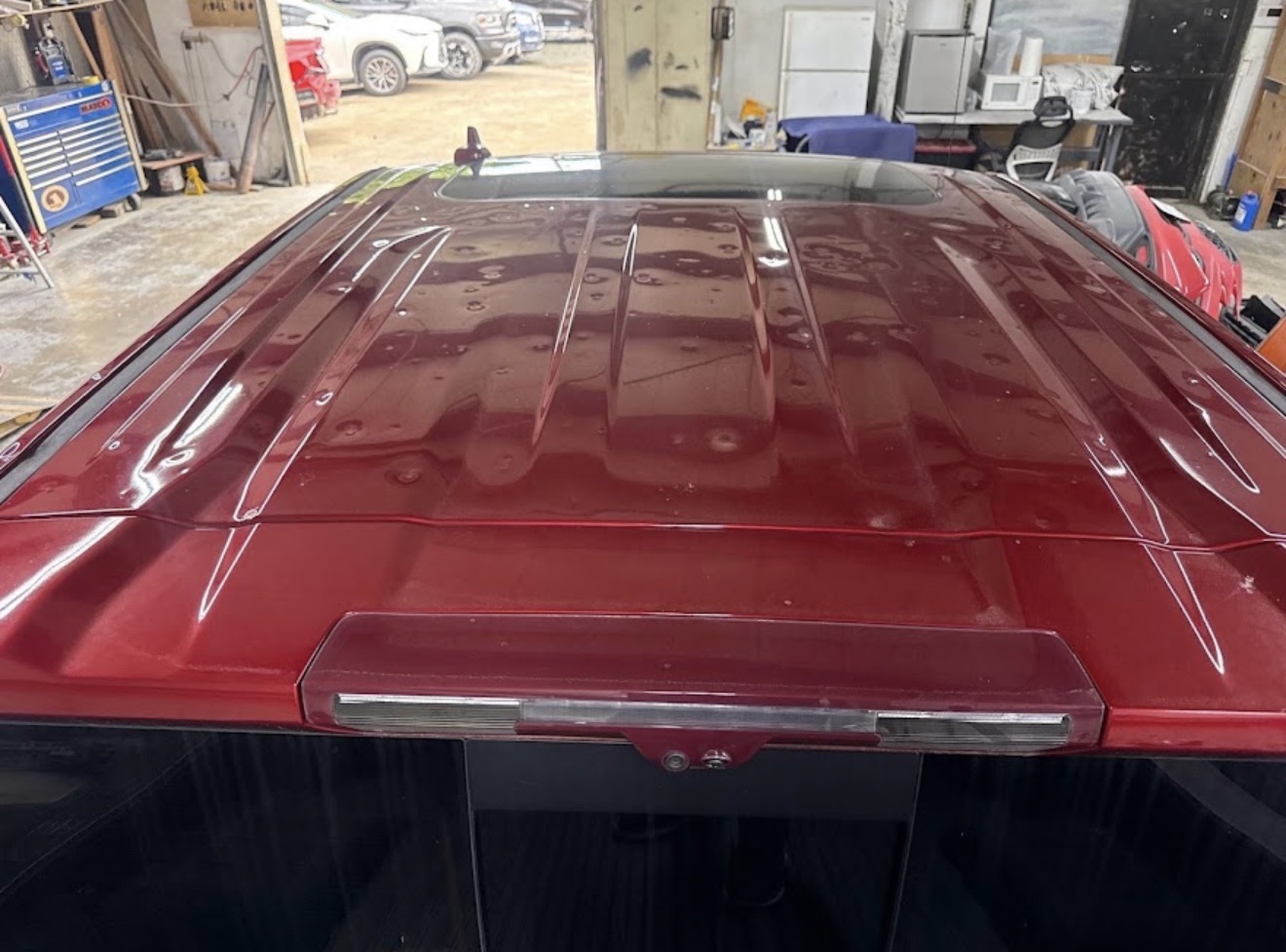
Then there’s the build sheet. Half the Wranglers in this county wear something the factory didn’t bolt on — steel bumpers, winches, lifts, rock rails, oversized rubber — and that hardware is exactly where impacts land. We photograph and itemize the build at blueprint so the claim prices your Jeep, and we’ll give you the plain-language advice we give every owner: tell your carrier what’s bolted on before you need them to pay for it, because accessory coverage varies by policy. Like its Stellantis stablemate on our Ram page, the parts question runs through Mopar channels — argued in writing. The before/after at the top of this page is a customer’s Wrangler Unlimited — front fender and bumper, photographed at our shop, hit to delivered. The hail repair in the gallery below is a customer’s GMC Sierra — it’s here because that roof-and-hood process is exactly what a hailed Wrangler needs, with the aluminum-hood technique on top.
The Lineup
EVERY JEEP, AND ITS QUIRKS
Five nameplates and the hardware culture around them — each with its own repair personality.
Wrangler
Aluminum doors, hood, fenders, and windshield frame over a steel-and-magnesium core — the mixed-metal flagship. Traffic damage, trail damage, and hail all land on panels that demand the aluminum bay, not a universal dolly.
Gladiator
The Wrangler’s metallurgy with a bed behind it — and bed-rail dents, tailgate hits, and trailer contact on top. Body-on-frame, bench-measured after hard hooks and hard landings alike.
Grand Cherokee & Grand Cherokee L
The volume seller and the sensor-dense one — forward camera at the glass, radar up front, blind-spot radar behind the rear corners. Family-SUV damage patterns with luxury-trim parts prices, calibrated through our calibration specialists after every repair.
Compass
The commuter Jeep — apartment garages, school pickup lanes, and 121 stop-and-go. Conventional unibody repair done with the same documentation discipline as its trail-rated siblings.
Wagoneer & Grand Wagoneer
The full-size flagships — big panels, big glass, premium finishes, and parts sheets that punish guesswork. Repaired appointment-clean and documented like the luxury purchases they are.
Wrangler 4xe & Grand Cherokee 4xe
The plug-in hybrids add a high-voltage layer to everything above — HV systems get disabled per factory procedure before structural or welding work starts, and battery-adjacent damage is documented for the claim, never assumed away.
The Modified Rig
Not a model — a lifestyle. Steel bumpers, winches, lifts, rock rails, and 35s change crush behavior and the parts list. We document the build at blueprint so the claim pays for what’s actually on the vehicle.
Doors-Off Season
Also not a model — a Texas ritual. Doors and hinges are aluminum, and they collect damage in garages as often as on trails. We repair and refinish removed panels to the same standard as mounted ones, hinge hardware included.
Jeep Paint, By The Code
Like every Stellantis vehicle, a Jeep’s paint code rides on the driver’s door-jamb label after the letters PNT — but Jeep runs the family’s wildest paint program: high-impact, limited-run colors that appear for a model year or two, vanish, and occasionally come back by public demand. Matching one three years later is formula archaeology, and we treat it that way.
Every color, famous or fleet, gets the same spectrophotometer-and-sprayout discipline — read the actual panel, prove the mix on a card, blend into the adjacent panel so there’s no edge for the Texas sun to find.
The Jeep Repair, By The Book
Five steps, none optional — and on a Jeep, the metallurgy step is where template estimates fall apart:
1 — The Factory Procedures Come First
Every repair starts in the published factory collision procedures for your exact model and year. Where the book says replace instead of repair, that’s what happens — and on a body-on-frame Wrangler or Gladiator that took a hard hit, the frame bench measures before anyone opines.
2 — The Right Discipline For Each Metal
Aluminum doors, hood, fenders, and windshield frame go to the isolated aluminum bay with aluminum-only tools; steel quarters and rockers get conventional repair; and the magnesium-cored tailgate gets an honest replace-versus-repair call up front. Three metals, one vehicle, routed correctly.
3 — Blueprint The Build, Not Just The Body
Full disassembly, every hidden finding photographed and itemized into one documented supplement — and on a modified Jeep that inventory includes the aftermarket layer: steel bumpers, winch mounts, lift components, rock rails, wheel and tire spec. The supplement process pays for what’s found — if it’s documented.
4 — Genuine Mopar Parts, Argued In Writing
On structural and safety components we push genuine Mopar parts and put the argument to the adjuster in writing. Texas Insurance Code §1952.301 bars insurers from limiting coverage by the brand, type, kind, age, vendor, supplier, or condition of parts — that fight is ours to have, not yours.
5 — Calibration, Scans, And Function Checks
Pre- and post-repair scans on every job; forward camera, front radar, and blind-spot sensors recalibrated in-house where equipped; HV systems on 4xe models re-verified after disable; and on Wranglers, the doors, hinges, and tailgate get function-checked — because on this badge, removability is part of the spec.
Real Results
TRUCK HAIL, COUNTED AND REPAIRED
Drag the slider. A customer’s pickup roof after severe North Texas hail — counted dent-by-dent under PDR lighting, repaired without repainting, billed direct. Not a Jeep, and we won’t pretend otherwise — the roof-and-hood hail process is the point, and on a Wrangler the aluminum hood gets its own technique.
 Before
After
Before
After
Pickup Roof PDR — Severe Hail
Counted under PDR lighting, billed direct — deductible once, factory paint preserved
Jeep Hit? Trail Rash? Hailed On? Send Photos.
Text a few photos with your year, model, and build — bumpers, lift, and color all matter to the number. We’ll answer with a realistic range, usually within minutes during shop hours.
Common Questions
JEEP REPAIR FAQ
Free · No Obligation
START YOUR JEEP REPAIR
Tell us which Jeep you drive — build included: bumpers, lift, color — and what happened. We’ll call back with the real number and next steps.
Prefer to talk now? Call (972) 219-0864 · or text us photos
Jeep, Wrangler, Rubicon, Gladiator, Grand Cherokee, Compass, Wagoneer, Grand Wagoneer, 4xe, Trail Rated, Tuscadero, and Mopar are trademarks of FCA US LLC, a Stellantis company. DG Collision Center is an independent repair facility and is not affiliated with, sponsored by, or endorsed by Jeep, Stellantis, or their dealers. References are for factual identification only.