PORSCHE BODY SHOP LEWISVILLE, TX
911, 718, Taycan, Panamera, Macan, Cayenne — the only brand that will audit its own cars. Porsche sells the original build card for your VIN, and Porsche Classic’s certificate inspection exists to determine whether original parts were ever replaced. That’s the standard a Porsche repair answers to — not the week the car goes home, but the inspection someone runs on it years from now. So we repair to the paper: factory procedures, the 911’s aluminum outer skin repaired as aluminum, the Taycan’s 800-volt system handled by protocol, every decision documented in a file built to be read. Free loaner, written lifetime warranty, direct billing.
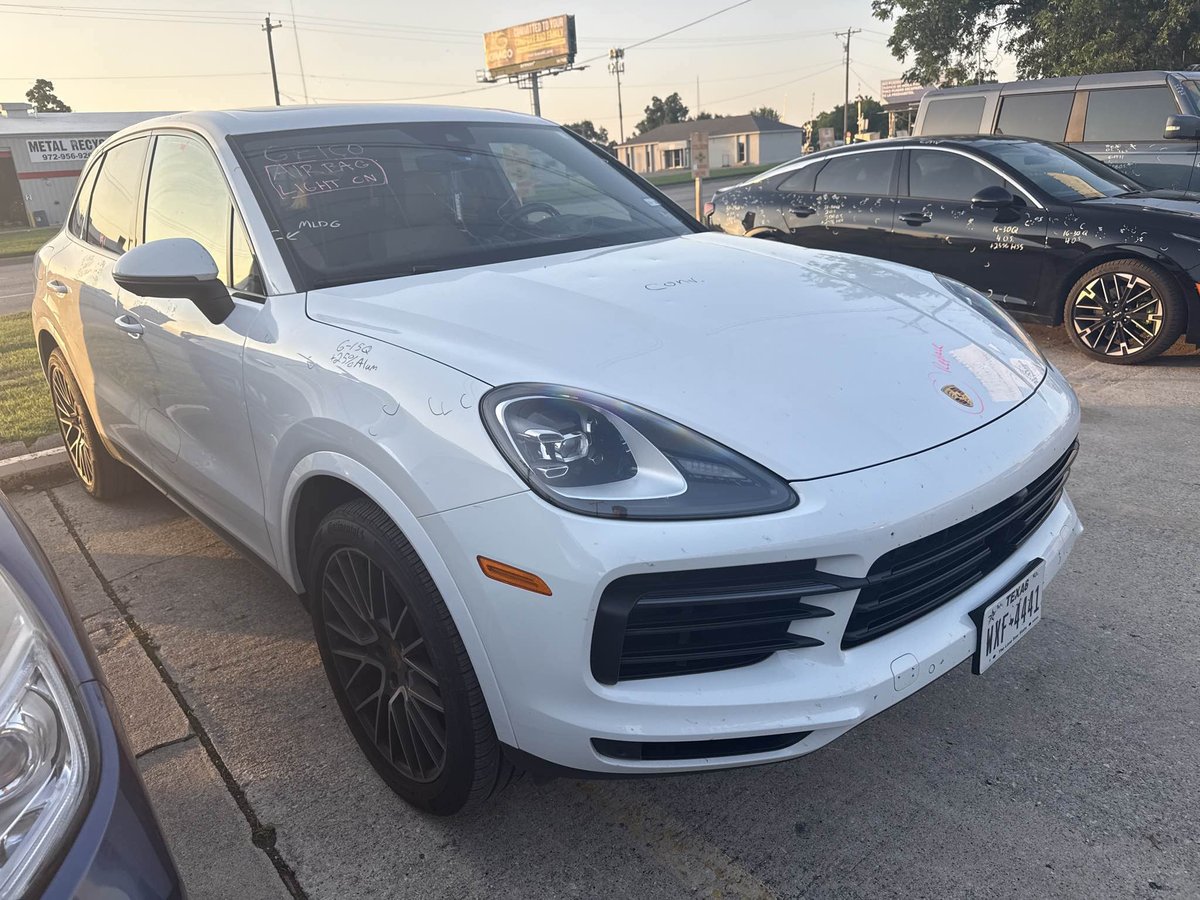 A customer’s Cayenne, mid-estimate at our Lewisville shop — every panel read, every line documented.
DG Collision Center repairs Porsches to the standard the brand itself enforces — the paper trail. Porsche is the one manufacturer that formally audits its own cars after the fact: it sells a Porsche Production Specification — the original build card for your VIN, listing every option, color, engine and transmission the car left the factory with — and Porsche Classic’s Technical Certificate includes an expert inspection that determines whether original parts were ever replaced and whether the numbers still match the records. Add the pre-purchase inspection nearly every serious Porsche buyer commissions, and the truth of this brand is simple: a Porsche repair will be discovered — the only question is what the discoverer finds. It helps that the cars refuse to disappear: Porsche’s own estimate is that about 70 percent of all Porsche road cars ever built are still on the road. So we repair to the file: published factory procedures; the current 911’s outer skin, which is aluminum in its entirety apart from the front and rear aprons, repaired with aluminum discipline; the Taycan — the first production car with an 800-volt system — disabled by protocol before structural work; paint matched by code, not name, because Guards Red alone spans five codes across the generations and the Paint to Sample program adds 160-plus factory colors beyond that. Genuine parts argued in writing under Texas Insurance Code §1952.301; free loaner, no day limit; direct billing — your out-of-pocket is typically your deductible, once.
- The paper trail is the audit — Porsche sells your car’s original build card by VIN, and its certificate inspection exists to catch replaced parts. Every repair here is documented to survive that reading.
- These cars outlive their repairs — about 70 percent of all Porsches ever built are still on the road, by Porsche’s own estimate. A shortcut taken today gets found in a decade.
- The 911 is an aluminum car at the skin — the current body’s outer skin is entirely aluminum apart from the aprons, the doors are aluminum sheet, and the A-pillars are boron steel. Each material gets its own book.
- The Taycan runs 800 volts — first production car to do it. High-voltage disable by factory protocol before any structural work, verified live again before delivery.
- The name is not the code — Guards Red spans 80K, 84A, M3A, G1, and G8 depending on generation; Chalk is M9A. We shoot the sprayout from your car’s code, then blend wide.
- Genuine parts have legal backup — Texas Insurance Code §1952.301 bars insurers from dictating parts by brand, type, or condition. We make that argument for you, in writing.
The Brand That Audits Its Own Cars
Every luxury car gets judged. A Porsche gets inspected — formally, by the company that built it. Porsche will sell any owner the Production Specification for their VIN: the original build card, listing the exact options, exterior and interior colors, engine and transmission the car carried out of the factory. Porsche Classic goes further with its Technical Certificate — an inspection by a Porsche technical expert built to determine whether original parts were ever replaced, and whether the engine and transmission numbers still match the records. And before the factory ever gets involved, there’s the ritual nearly every serious Porsche buyer performs: the pre-purchase inspection, a stranger with a lift and a paint gauge going panel by panel. No other badge institutionalizes suspicion this thoroughly — which means a Porsche body repair is never really finished when the car drives home. It gets finished years later, when someone qualified reads the car and finds either honest work or a shortcut. We repair for that second reading — on the weekend 911s that come out when the Hill Country calls, and on the Macans and Cayennes running the 35E school-and-office circuit every day in between.
It helps to understand how long these cars live. Porsche’s own estimate is that about 70 percent of all Porsche road cars ever built are still on the road — a survival rate the company supports with a Porsche Classic catalog of more than 50,000 genuine parts for models long out of production. A car that refuses to die gives a bad repair decades to be discovered, and a good one decades to prove itself. The current 911 shows why the work rewards discipline: apart from the front and rear aprons, its outer skin is aluminum in its entirety, the doors are made exclusively of aluminum sheet, the share of extruded aluminum profiles in the shell jumped from 3 to 25 percent across the generation change, and the A-pillars carry super-high-strength boron steel. That materials map is a repair plan: aluminum discipline — dedicated tools, aluminum-specific technique, strict separation from steel dust — where the skin is aluminum, bench measurement within a millimeter where the structure is steel, and replacement instead of repair wherever the factory book says so. The electronics get the same read-the-car rule: Porsche sells assistance à la carte — InnoDrive, the predictive cruise system, is a box on the option list, not a default — so we decode what your build actually carries, then coordinate its calibration with our specialists and verify before delivery.
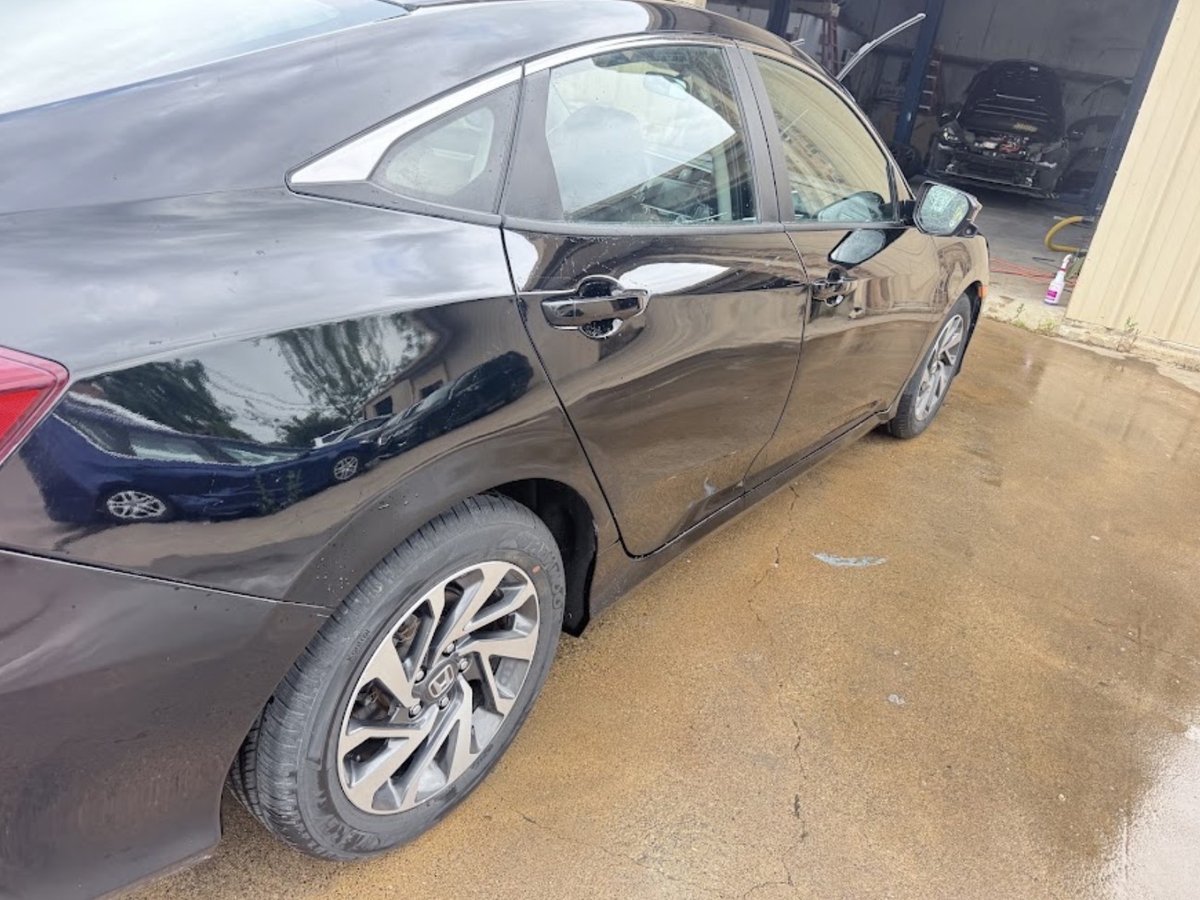
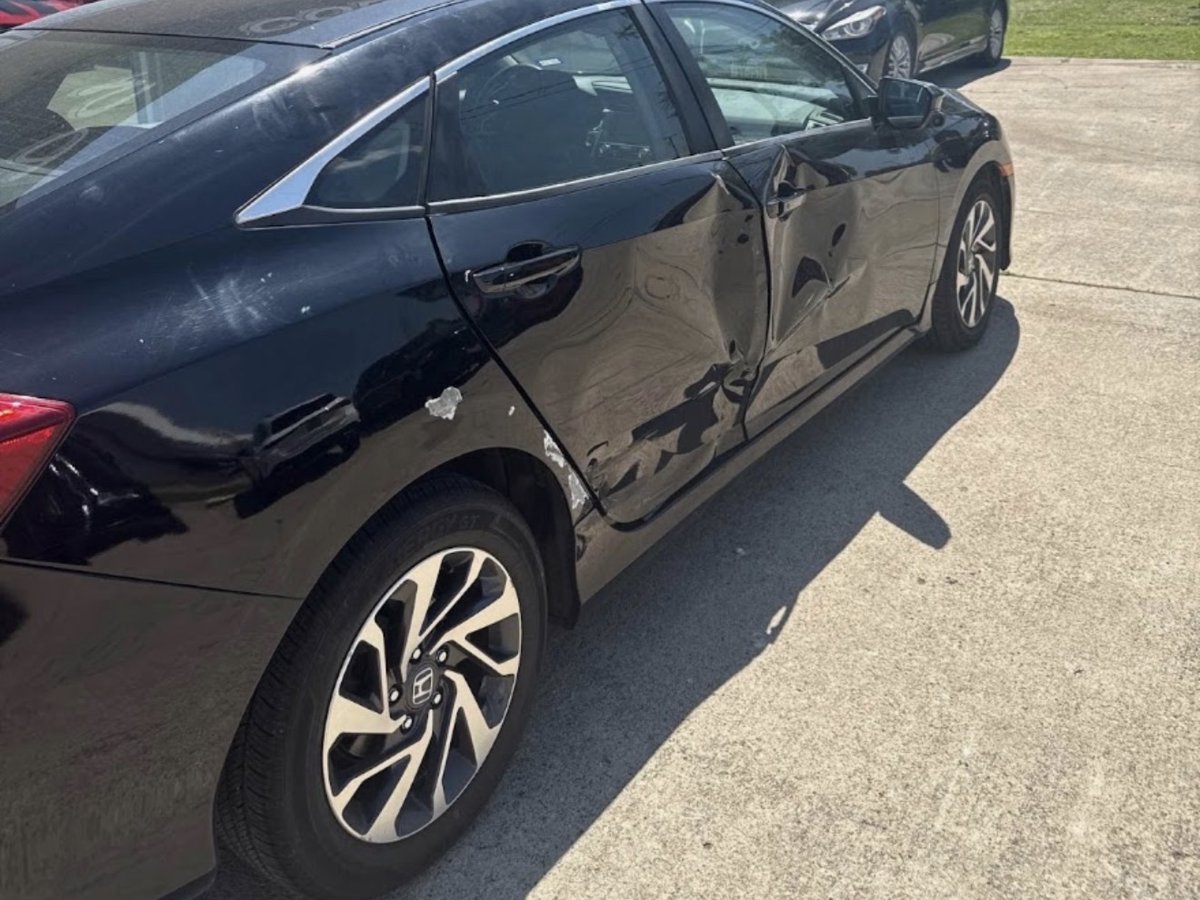
Then there’s the paint, where Porsche teaches the industry’s best lesson in humility: the name is not the code. Guards Red — the most Porsche color there is — spans five different codes across the generations: 80K, 84A, M3A, G1, G8. Chalk, the modern flat-tone signature, is M9A. And beyond the series palette sits Paint to Sample: more than 160 factory-approved colors mixed at the same Zuffenhausen plant that builds the 911, 718, and Taycan — including revived historic colors like Rubystar Red, Maritime Blue, and Mint Green — plus Paint to Sample Plus, where a customer’s own sample becomes a factory color after feasibility testing. A shop that matches “Guards Red” by name is guessing; we pull the code from your car, prove the mix on a sprayout card, and blend wide enough that the Texas sun finds no edge. The finished file — procedures, parts, paint records, calibration reports — meets the same documentation standard our luxury repair page promises. The marked-up Cayenne at the top of this page is a customer’s — photographed mid-estimate at our shop, the paper trail this page keeps talking about, in ink. The before/after below is a customer’s Honda Civic, not a Porsche — same side-impact discipline, doors to quarter panel; the Porsche version adds the materials map and the paper trail on top.
The Lineup
EVERY PORSCHE, AND ITS QUIRKS
Weekend icons to daily drivers to forty-year-old air-cooled survivors — each with its own repair personality.
911
The icon — and at the skin, an aluminum car: the current body’s outer panels are aluminum in their entirety apart from the aprons, over boron-steel A-pillars. Garage-door dings to real hits, repaired by the materials map, documented like the collector item it will become.
718 Cayman & Boxster
The mid-engine pair from the same Zuffenhausen line as the 911 — low fascias meeting steep DFW driveways, long doors in short parking spots, and a structure where the engine sits behind the doors, so a side hit gets mapped carefully before anyone talks numbers.
Taycan
The first production car with an 800-volt system — which is exactly why the high-voltage protocol comes first: disabled per factory procedure before structural work, battery-adjacent damage inspected and documented, re-verified before delivery.
Panamera
The executive Porsche, built in Leipzig — office garages, valet decks, long panels where reflections travel. Sensor-dense at both bumpers, and owners who will absolutely notice a wavering reflection line at ten paces.
Macan
DFW’s daily Porsche, built in Leipzig — school runs, tollway commutes, parking-deck door swings. The classic claims are door edges, bumper corners, and liftgates; the classic mistake is treating it like an ordinary crossover. It isn’t — and neither is its parts sheet.
Cayenne
The family flagship and the tow rig — three rows of Little League gear one weekend, a boat at Lewisville Lake the next. Hitch-area hits, running-board strikes, and liftgate claims, repaired to the same standard as the sports cars, loaner included.
The GT Cars
GT3, GT4 RS, and their siblings — the most scrutinized Porsches on earth, bought by owners who read build sheets for sport. Lightweight materials where fitted, track history in the file, and documentation that survives the pre-purchase inspection these cars always face at resale.
Air-Cooled & Classic
The survivors behind Porsche’s 70-percent claim — supported by a Porsche Classic catalog of 50,000-plus genuine parts. Work on a matching-numbers car is done knowing a certificate inspection exists to catch replaced parts: procedures, patience, and paper, by appointment.
Paint to Sample & Exclusive Manufaktur
More than 160 factory-approved colors beyond the series palette — plus Plus-program one-offs proven from a customer’s own sample. A PTS car is a rolling paint contract: we match from the documented code and card-prove the mix before it touches metal.
Porsche Paint, By The Code
No brand punishes name-matching like Porsche. The same famous color name can span five codes across generations — and the factory will happily paint a car any of 160-plus approved colors beyond the brochure. The code decides the repair; the name just decorates it.
Every finish gets the same spectrophotometer-and-sprayout discipline — read the actual panel, prove the mix on a card, blend into the adjacent panel so there’s no edge for the Texas sun to find. On this brand there’s one more step: the paint record goes in the delivery file, because on a Porsche the paperwork is part of the paint job.
The Porsche Repair, By The Book
Five steps, none optional — and on a Porsche, the last one is the one the brand itself will eventually check:
1 — The Factory Procedures Come First
Every repair starts in the published factory collision procedures for your exact model and year — and on a Porsche the materials map is the plan: aluminum outer panels get aluminum technique with dedicated tools, boron-steel structure gets measured on the bench, and where the book says replace instead of repair, that’s what happens. Nobody improvises on a car the factory keeps records on.
2 — Blueprint The Actual Car
Full disassembly, every hidden finding photographed and itemized into one documented supplement — plus the Porsche-specific decode: this is the most à-la-carte brand in the industry, so the option list is the truth of the car. Which assistance hardware, which brakes, which seats, PTS or series paint — the supplement process pays for what’s found and documented, and the claim should price the car that’s actually here.
3 — The Finish Discipline
Spectrophotometer reads, sprayout cards, and wide blends into adjacent panels — with the Porsche-specific rule at the top: match the code, never the name. Guards Red alone spans five codes across the generations, and a Paint to Sample car may wear a color no other car in Texas wears. The code comes off your car, the mix gets proven on a card, and the record goes in your file.
4 — Genuine Parts, Argued In Writing
On structural, safety, and identity components we push genuine Porsche parts and put the argument to the adjuster in writing — because on this brand, parts provenance is resale value: the factory’s own certificate inspection exists to catch substitutions. Texas Insurance Code §1952.301 bars insurers from limiting coverage by the brand, type, kind, age, vendor, supplier, or condition of parts — that fight is ours to have, not yours.
5 — Calibration, And The File The Next Inspector Reads
Pre- and post-repair scans on every job; the camera and radar hardware your option list actually carries recalibrated in-house; then the step this brand demands above all: the dossier. Procedures cited, parts itemized, paint codes and mixes recorded, calibrations printed, photos at every stage — a file built for the pre-purchase inspector, the appraiser, or the Porsche technical expert who reads the car after us. That reading is the real delivery date.
Real Results
THE SIDE-IMPACT REBUILD, DOORS TO QUARTER
Drag the slider. A customer’s side-impact repair — doors and quarter panel — billed direct and returned to spec. It’s a Honda Civic, not a Porsche, and we won’t pretend otherwise: the discipline is identical. On the Porsche version, the materials map and the delivery dossier ride on top.
 Before
After
Before
After
Side-Impact Repair — Doors To Quarter Panel
Pictured: Honda Civic — the same side-impact discipline we run on Porsches, with the materials map and delivery dossier added
Porsche Hit? Hailed On? Send Photos.
Text a few photos with your year, model, and options — on this brand the option list is the estimate: PTS paint, carbon-ceramic brakes, and assistance packages all move the number. We’ll answer with a realistic range, usually within minutes during shop hours.
Common Questions
PORSCHE REPAIR FAQ
Free · No Obligation
START YOUR PORSCHE REPAIR
Tell us which Porsche you drive — year, model, and options; Paint to Sample, GT trims, and assistance packages price the parts — and what happened. We’ll call back with the real number and next steps.
Prefer to talk now? Call (972) 219-0864 · or text us photos
Porsche, 911, 718, Cayman, Boxster, Taycan, Panamera, Macan, Cayenne, Carrera, GT3, InnoDrive, Paint to Sample, Porsche Exclusive Manufaktur, and Porsche Classic are trademarks of Dr. Ing. h.c. F. Porsche AG. DG Collision Center is an independent repair facility and is not affiliated with, sponsored by, or endorsed by Porsche AG, Porsche Cars North America, Inc., or their dealers. References are for factual identification only.