SUBARU BODY SHOP LEWISVILLE, TX
Outback, Forester, Crosstrek, Ascent, Impreza, WRX, BRZ — the brand whose eyes ride on the glass. EyeSight is a stereo pair of cameras at the top of the windshield, judging distance the way your own two eyes do — which means every cracked windshield, every hailstorm, every mirror-area hit in DFW’s rock-chip-and-hail belt is a vision event, not just a glass ticket. We repair to what the car sees: EyeSight recalibrated and road-verified after glass and body work, the ring-shaped reinforcement frame measured on the bench, the rally blues and pearls matched by code. Free loaner, written lifetime warranty, direct billing.
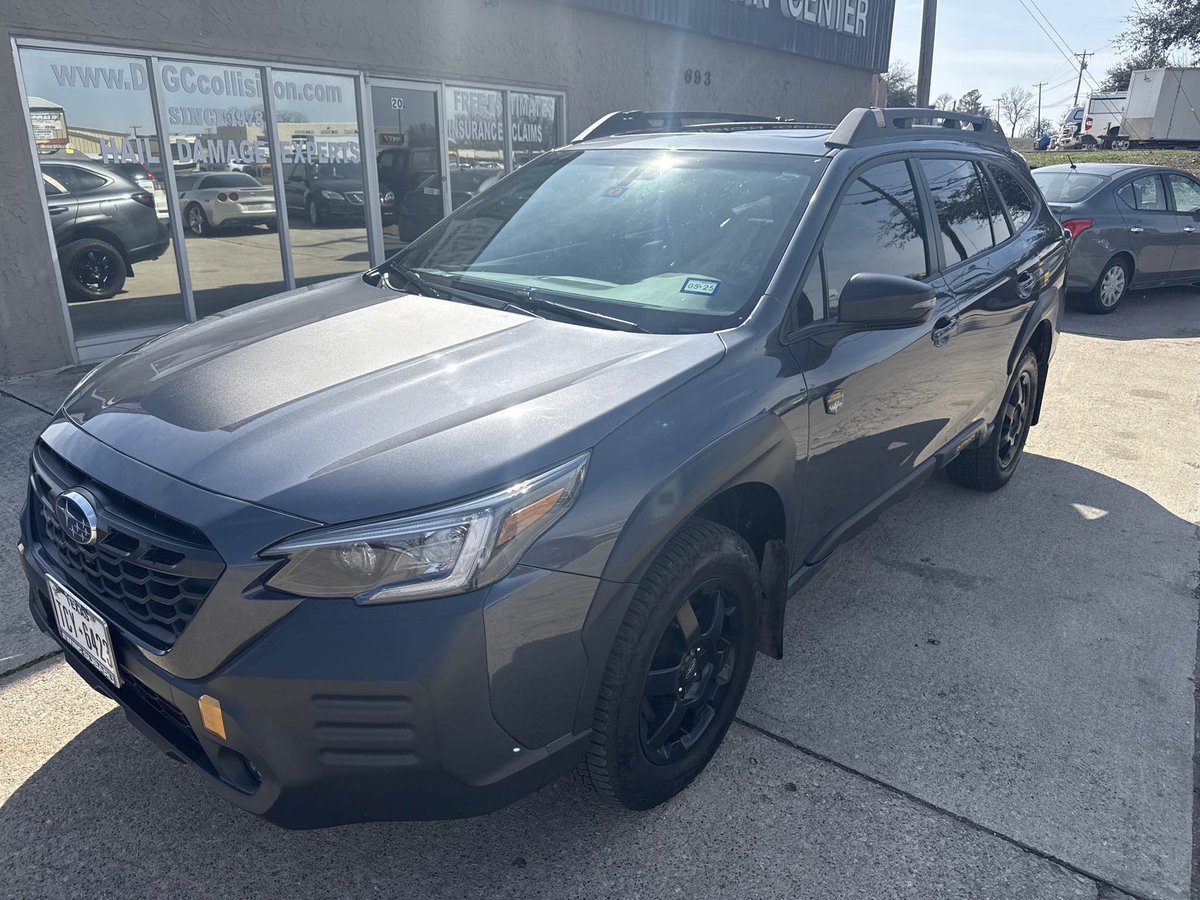
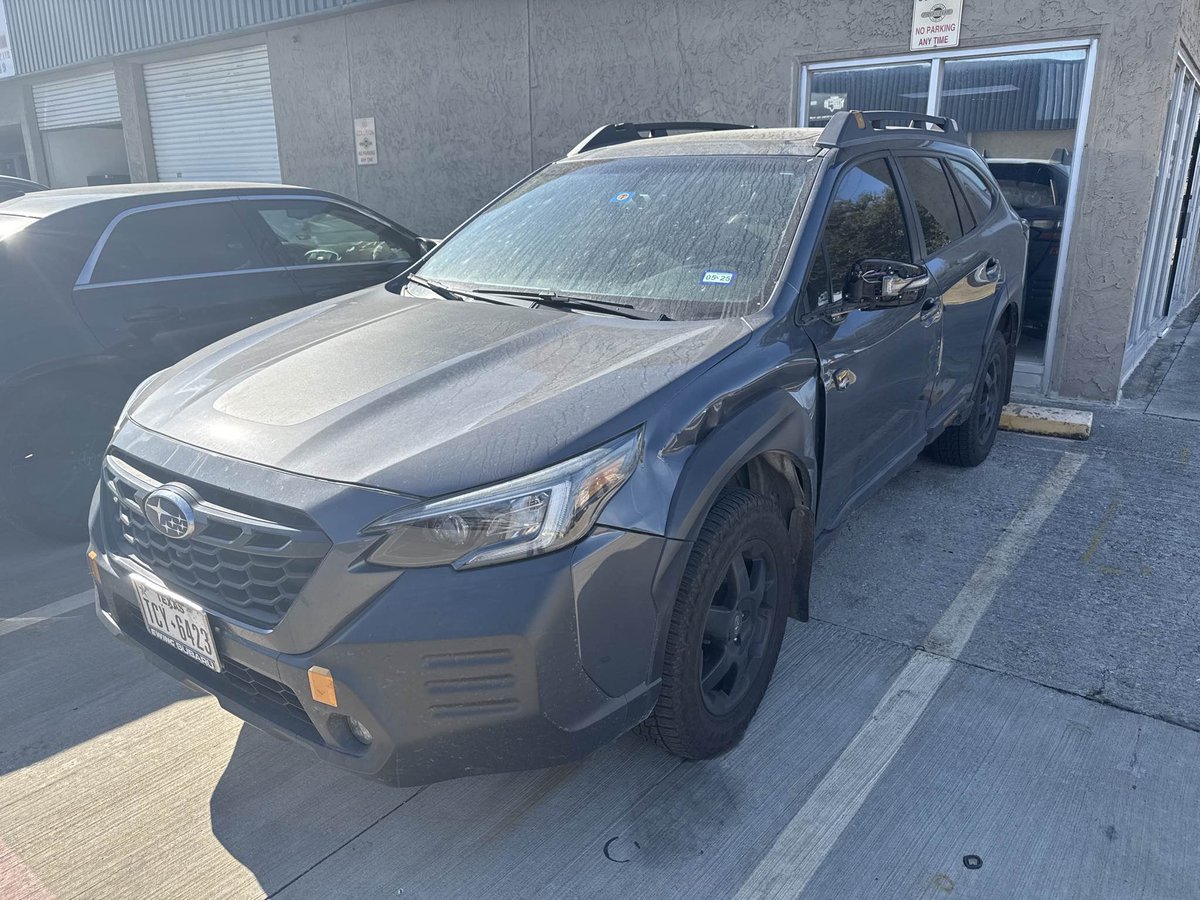 Before
After
Drag the line — a customer’s Outback Wilderness, hit to delivered at our Lewisville shop.
Before
After
Drag the line — a customer’s Outback Wilderness, hit to delivered at our Lewisville shop.
DG Collision Center repairs Subarus to the standard the brand actually runs on — what the car can see. EyeSight is a stereo camera pair: two color cameras flanking the rearview mirror at the top of the windshield, judging depth the way two eyes do, with a third wide-view camera on select newer models — and it’s standard on nearly the whole current lineup. That hardware choice writes the repair rules in hail-and-gravel country: a windshield replacement on a Subaru is a calibration event, a hailstorm is a roof-hood-glass-and-cameras claim, and a mirror-area or front-end hit puts the car’s vision in question until it’s recalibrated — which we do in-house, static targets first, then the road-drive verification EyeSight commonly requires. Under the glass sits honest engineering: the Subaru Global Platform’s ring-shaped reinforcement frame ties the pillars, sills, and floor members into a cage around the cabin — measured on the bench within a millimeter after structural hits — and Symmetrical All-Wheel Drive is standard on every model except the BRZ, with the boxer engine keeping the driveline low and straight down the centerline, so big hits get a driveline-and-geometry inspection, not just panel work. Paint runs from WR Blue Pearl — code K7X, the rally signature — to Crystal White Pearl, code K1X, a true tri-coat, matched from the code and proven on a sprayout card. Subaru’s only plant outside Japan, in Lafayette, Indiana, has built more than six million Subarus. Genuine parts argued in writing under Texas Insurance Code §1952.301; free loaner, no day limit; direct billing — your out-of-pocket is typically your deductible, once.
- The eyes ride on the glass — EyeSight is a stereo camera pair at the top of the windshield. Glass work, hail, and mirror-area hits are vision events, recalibrated and road-verified before delivery.
- Windshields are the DFW reality — gravel on the interstates, hail in the spring. On a Subaru the glass claim and the camera calibration are one job, done together, documented together.
- Hail gets handled honestly — steel panels take paintless dent repair well, the glass gets assessed, and EyeSight gets recalibrated after. One claim, every layer covered.
- The cage underneath — the ring-shaped reinforcement frame ties pillars, sills, and floor into one protective ring. After a structural hit it goes on the bench and gets measured, not eyeballed.
- The name is not the code — WR Blue Pearl is K7X, Crystal White Pearl is K1X and a true tri-coat. We match from your car’s code plate and prove the mix on a card.
- Genuine parts have legal backup — Texas Insurance Code §1952.301 bars insurers from dictating parts by brand, type, or condition. We make that argument for you, in writing.
The Brand That Watches The Road With Two Eyes
Most driver-assistance systems lean on radar. Subaru went a different way: EyeSight sees the road through a stereo pair of color cameras riding at the top of the windshield, one on each side of the rearview mirror — two eyes, judging depth exactly the way yours do, with a third wide-angle camera added on select newer models. It’s a clever, human way to build a safety system, it’s standard on nearly the whole current lineup — and it quietly rewrites the collision-repair rules for every Subaru in North Texas. Because if the eyes live on the glass, then the glass is never just glass: DFW’s construction-gravel interstates and spring hail seasons crack and pit windshields constantly, and on a Subaru, a windshield replacement is a camera-calibration event. Same for a hailstorm that stars the glass while it dents the roof, same for any front-end or mirror-area hit. The question a Subaru repair has to answer isn’t just “does it look right” — it’s does the car still see straight. We answer it in-house: static target calibration in the shop, then the dynamic road-drive verification EyeSight commonly requires, documented in the delivery file.
Under the glass, Subaru builds one of the most honest structures in the mainstream market. The Subaru Global Platform carries a ring-shaped reinforcement frame — A-pillars, B-pillars, side sills, and floor cross-members tied into a single protective ring around the cabin, built to spread a hit’s energy no matter which angle it arrives from. That’s exactly the kind of structure that deserves a real bench measurement after a serious hit — the cage has to be verified within a millimeter, not eyeballed — and it’s why we put structural Subarus on the bench before anyone talks panels. The drivetrain adds its own discipline: Symmetrical All-Wheel Drive is standard on every model except the BRZ, laid out with the boxer engine low and the driveline straight down the car’s centerline, so a hard hit gets a driveline-and-suspension-geometry inspection along with the bodywork — a wheel shoved back on a Crosstrek that lives on gravel roads is never “just a wheel.” And the electronics get the read-the-car rule every brand deserves: EyeSight hardware varies by year and model, so we decode what your build actually carries, then coordinate its calibration with our specialists and verify before delivery. The pedigree behind all of it is quietly impressive: Subaru’s only plant outside Japan — in Lafayette, Indiana — has built more than six million Subarus.
The paint tells you who buys these cars. WR Blue Pearl — code K7X — carries the brand’s World Rally heritage on WRXs and BRZs whose owners chose the color on purpose, and Crystal White Pearl — code K1X — is a true tri-coat, a pearl layer over a color base that has to be rebuilt layer-for-layer and blended into the adjacent panels or the repair reads as a flat white patch in the sun. The rest of the palette rotates with the brand’s outdoorsy identity — the greens, bronzes, and grays of the Wilderness era come and go by model year — so we match from the code plate on your car, never the name, and prove every mix on a sprayout card first. The Wilderness and Crosstrek crowd adds one more honesty note: that gray textured cladding around the arches is unpainted by design — scuffed cladding gets replaced or refinished with the factory texture, never just sprayed smooth. It’s the same spectrophotometer-and-sprayout discipline we run on everything, tuned to how Subarus actually live. The before/after at the top of this page is a customer’s Outback Wilderness — fender and doors, photographed at our shop, hit to delivered. The hail repair in the gallery below is a customer’s GMC Sierra roof — the metal-panel discipline is identical, and on the Subaru version the glass assessment and EyeSight recalibration ride on top.
The Lineup
EVERY SUBARU, AND ITS QUIRKS
School-run wagons to rally-blue enthusiasts to trailhead regulars — each with its own repair personality.
Outback
The default DFW Subaru — school run all week, state park on Saturday. Roof rails and crossbars that actually get used, cargo-area liftgate claims, and a windshield that lives in the gravel spray of 35E — which on this car means EyeSight lives there too.
Forester
The glasshouse of the lineup — big windows, upright pillars, parking-lot visibility owners chose on purpose. Door edges and quarter panels in tight lots, and the same rule as every EyeSight car: glass work and camera work are one job.
Crosstrek
The trailhead regular — gravel roads, crowded park lots, urban curbs. Textured cladding that takes the scrapes by design and gets replaced, not painted smooth; steel panels underneath that get repaired to the same standard as anything on the floor.
Ascent
The three-row family flagship — carpool duty, trailer hitches, liftgate-versus-garage incidents. Big panels, sensor-dense bumpers, and a family cabin whose ring-frame structure gets bench-verified after any serious hit.
Impreza
The commuter — hatch practicality, all-weather confidence, stop-and-go tollway miles. Its classic claim is the rush-hour rear-ender: bumper, liftgate, and the calibration check that follows any hit near the car’s eyes.
WRX
The rally car with a license plate — often in WR Blue Pearl, often modified, always owned by somebody who will inspect the repair closely. Aftermarket parts documented at blueprint, factory finish standards on delivery, K7X matched from the code.
BRZ
The exception that proves the rules — the one Subaru without standard all-wheel drive, jointly developed with Toyota, low nose meeting Texas parking blocks. Sports-car panel gaps and an owner base that measures them.
The Wilderness Line
Outback, Forester, and Crosstrek in hiking boots — more cladding, higher stance, all-terrain rubber, and owners who actually leave the pavement. Trail damage gets honest triage: what’s cladding, what’s paint, what’s structure, priced from the actual trim’s parts list.
Hail & Glass Claims
The DFW specialty, Subaru edition: steel roofs and hoods take paintless dent repair beautifully, the glass gets assessed panel by panel — and because the car’s eyes ride on that glass, EyeSight recalibration is part of the claim, not an afterthought.
Subaru Paint, By The Code
Subaru’s palette runs from rally heritage to trailhead earth tones — and like every brand worth matching, the name on the brochure is not the formula in the gun. The code plate decides; the card proves it.
Every finish gets the same spectrophotometer-and-sprayout discipline — read the actual panel, prove the mix on a card, blend into the adjacent panel so there’s no edge for the Texas sun to find. On the pearls that discipline is the whole repair; on the cladding, the discipline is knowing when not to paint at all.
The Subaru Repair, By The Book
Five steps, none optional — and on a Subaru, the last one ends with the car proving it can see:
1 — The Factory Procedures Come First
Every repair starts in the published factory collision procedures for your exact model and year — the ring-shaped reinforcement frame has its own structural rules, the glass has camera-bracket and calibration requirements, and where the book says replace instead of repair, that’s what happens. A safety structure this deliberate doesn’t get improvised on.
2 — Blueprint The Actual Car
Full disassembly, every hidden finding photographed and itemized into one documented supplement — plus the Subaru-specific decode: which EyeSight hardware the build carries, Wilderness cladding versus standard trim, aftermarket racks and WRX modifications documented as found. The supplement process pays for what’s found and documented — and the claim should price the car that’s actually here.
3 — The Finish Discipline
Spectrophotometer reads, sprayout cards, and wide blends into adjacent panels — with the Subaru-specific rules attached: K1X’s tri-coat pearl gets its layers proven on the card, K7X gets matched for the owner who chose it deliberately, the rotating earth tones get matched from the code plate, and the textured cladding gets replaced or texture-refinished, never painted smooth.
4 — Genuine Parts, Argued In Writing
On structural, safety, and glass components we push genuine Subaru parts and put the argument to the adjuster in writing — and on this brand the glass argument matters doubly, because the windshield is a camera mount with optical requirements, not just a pane. Texas Insurance Code §1952.301 bars insurers from limiting coverage by the brand, type, kind, age, vendor, supplier, or condition of parts — that fight is ours to have, not yours.
5 — Calibration, And The Seeing Check
Pre- and post-repair scans on every job; then the step this brand is named for: EyeSight’s stereo cameras recalibrated in-house — static targets set at factory-specified distances in the shop, then the dynamic road drive EyeSight commonly requires to confirm the calibration holds. The car leaves seeing straight, with the calibration records in a delivery file your insurer, your dealer, and your future buyer can all read.
Real Results
THE HAIL REPAIR, ROOF AND HOOD
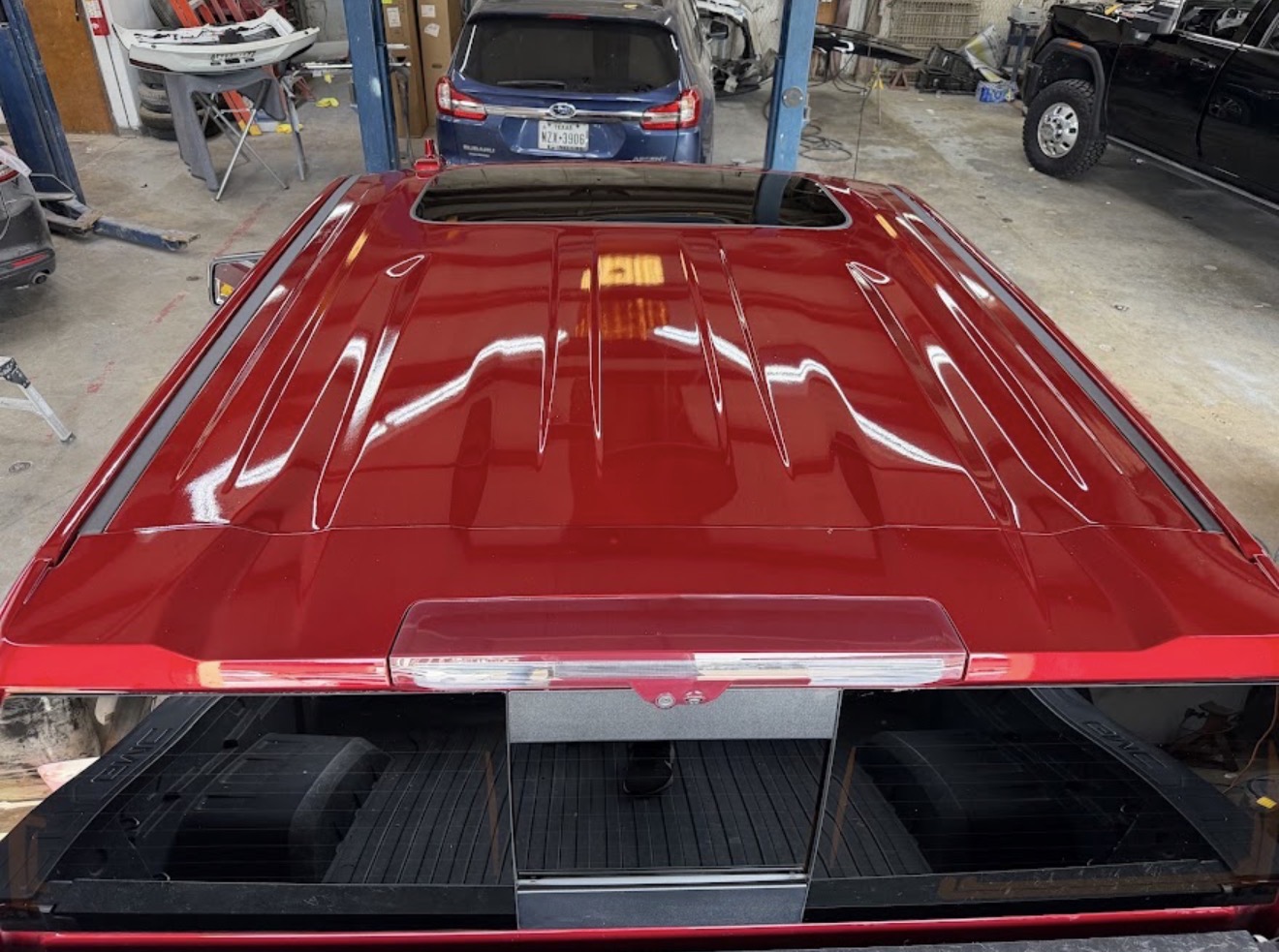
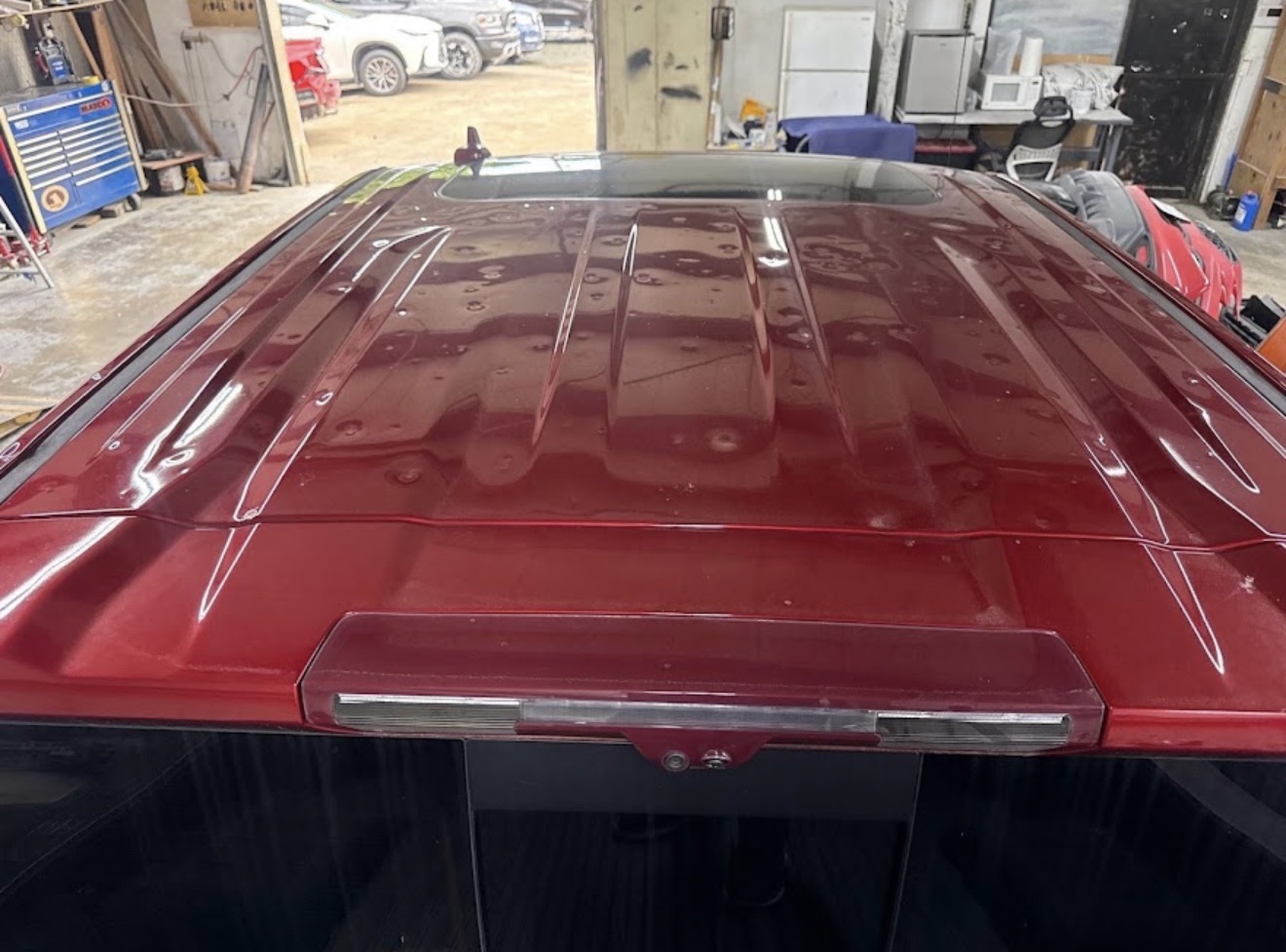
Drag the slider. A customer’s hail repair — a dented roof brought back by paintless dent repair with the factory paint preserved. It’s a pickup truck, not a Subaru, and we won’t pretend otherwise: the metal-panel discipline is identical. On the Subaru version, the glass assessment and EyeSight recalibration ride on top.
 Before
After
Before
After
Hail Repair — Roof Brought Back, Factory Paint Preserved
Pictured: customer’s pickup roof — the same hail discipline we run on Subarus, with the glass assessment and EyeSight recalibration added
Subaru Hit? Hailed On? Send Photos.
Text a few photos with your year, model, and trim — EyeSight hardware, Wilderness cladding, and pearl paint all move the number, and cracked glass makes it a calibration job too. We’ll answer with a realistic range, usually within minutes during shop hours.
Common Questions
SUBARU REPAIR FAQ
Free · No Obligation
START YOUR SUBARU REPAIR
Tell us which Subaru you drive — year, model, and trim; EyeSight hardware and Wilderness cladding change the parts list — and what happened. We’ll call back with the real number and next steps.
Prefer to talk now? Call (972) 219-0864 · or text us photos
Subaru, Outback, Forester, Crosstrek, Ascent, Impreza, WRX, BRZ, Wilderness, EyeSight, and Symmetrical All-Wheel Drive are trademarks of Subaru Corporation or Subaru of America, Inc. DG Collision Center is an independent repair facility and is not affiliated with, sponsored by, or endorsed by Subaru Corporation, Subaru of America, Inc., or their dealers. References are for factual identification only.