HOW TO READ A COLLISION REPAIR ESTIMATE, LINE BY LINE
Every collision estimate is built from the same pieces: an operation (what’s being done), a part type (whose part), labor hours (in tenths), a labor rate, and paint and materials lines that price by the refinish hour. Once you can read R&I versus R&R, spot a blend line, and know what “betterment” means, no estimate — ours, a dealer’s, or your insurer’s — can hide anything from you.
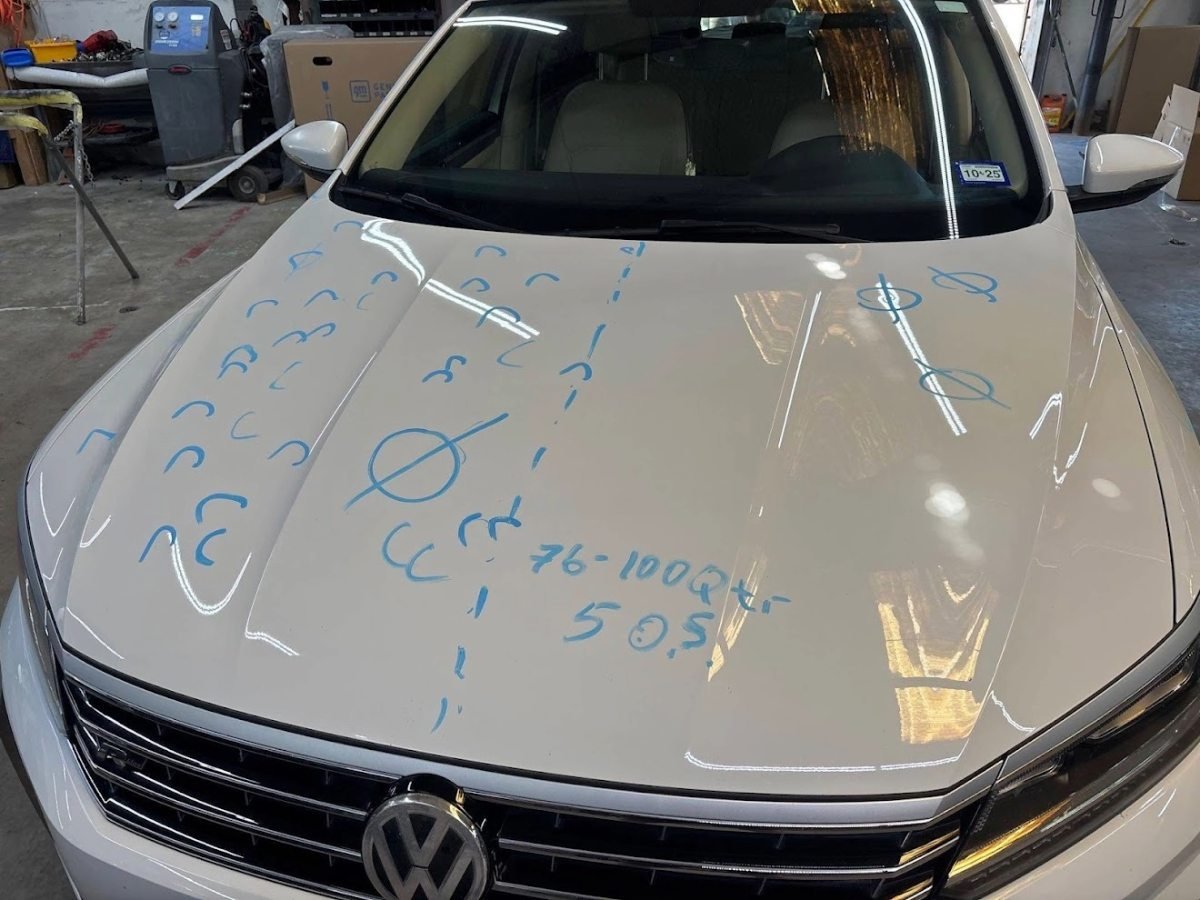
Five columns tell the story: the operation (R&I = remove & reinstall the same part, R&R = replace with new, Blend = feathering paint into an undamaged neighbor for the color match), the part type (OEM, aftermarket, LKQ recycled), labor hours in tenths, the rate, and paint & materials. Compare estimates line by line, never total by total (or bring the carrier’s estimate here for a free second read) — the cheap one is usually cheap because of what it leaves out.
A collision estimate reads in five columns: the operation (R&I means remove & reinstall the same part; R&R means remove & replace with a new one; Blend means fading paint into an undamaged neighbor panel for color match), the part type (OEM, A/M aftermarket, LKQ recycled), labor hours in tenths, the labor rate, and paint & materials billed off refinish hours. “Betterment” is a deduction when a repair leaves you better than before (a worn tire replaced new); “sublet” is work sent out, like alignment or calibration; “appearance allowance” is cash offered to NOT fix something. The first estimate is a starting point by design — hidden damage found at teardown is handled by a supplement, and on a covered claim your deductible stays your cap.
- R&I vs R&R is the money line: reinstalling your part vs buying a new one — same initials, very different totals.
- Blend lines aren’t upselling: modern colors can’t butt-match at a panel edge; blending the neighbor is how factory finishes are matched.
- Missing lines predict fights: no R&I for moldings, no calibration sublet after sensor-area work, no blend next to a painted panel — a cheap estimate that omits them becomes a supplement war later.
- Compare line-items, not totals: two estimates $800 apart usually differ in what was counted, not what the same work costs.
Five Columns, Every Line
THE ANATOMY OF AN ESTIMATE LINE
Whether the sheet comes from us, a dealer, or your carrier’s app, it was almost certainly written in one of the industry estimating platforms, and every line carries the same five pieces. Take a typical line: “R&R Bumper cover, front — A/M — 2.8 — refinish 2.5.” Translated: remove the damaged front bumper cover and replace it (R&R) with an aftermarket part (A/M), 2.8 labor hours to do the swap, plus 2.5 refinish hours to prep and paint it. Labor hours are written in tenths — 2.8 means two hours and forty-eight minutes, not “about three” — and most operations pull from published time guides, which is why two honest shops usually agree on the hours and differ on what’s counted.
The quiet column that decides quality is the part type — OEM, A/M, LKQ — and it’s usually a two-letter code you’d never notice. That column has its own playbook and its own Texas law (§1952.301’s parts-freedom clause), which we cover fully in the OEM vs aftermarket guide. What this page gives you is the rest of the sheet: the operations, the hours, the paint math, and the totals.
Say It In English
THE JARGON DECODER
Platform abbreviations vary slightly by system, but these terms appear on virtually every U.S. collision estimate in some spelling.
Where The Number Comes From
HOW THE TOTALS BUILD — AND WHY QUOTES DIFFER
The bottom of the sheet stacks four subtotals: parts (each line’s part price), body labor (repair and replace hours × the body rate), refinish labor (paint hours × the refinish rate), and paint & materials — plus sublet, tax, and any betterment deduction. When two estimates for the same car land $800 apart, line them up side by side and the difference is almost never the same operation priced differently — it’s lines that exist on one sheet and not the other: a blend into the adjacent panel, R&I of the moldings and handles before refinish, a calibration sublet after bumper work, corrosion protection reapplied inside a welded panel.
That’s why the cheapest estimate so often becomes the most expensive repair: the missing lines don’t disappear, they resurface mid-repair as a supplement — or worse, the work silently doesn’t happen. It’s also why our cost estimator gives ranges instead of fake-precise totals: the real number comes from writing the lines, and the written estimate is free. On a covered claim, remember the anchor fact: the estimate decides what the insurer pays — your out-of-pocket stays capped at your deductible either way.
GOT AN ESTIMATE YOU CAN’T QUITE DECODE?
Bring it in or text a photo of it — we’ll translate it line by line and tell you what’s missing, free.
Read These Twice
FIVE RED FLAGS ON ANY ESTIMATE
No blend line next to a refinished panel
A door gets painted and the fender beside it doesn’t get a blend line? On a metallic or pearl, that edge will show. Either the estimator plans to eat the blend — or plans a visible color step.
No R&I on trim, moldings, and handles
Painting around masking tape instead of removing hardware is the classic corner-cut: overspray edges, buried tape lines, and trim that never sits right again. R&I lines are how you know parts come off.
No calibration after sensor-area work
Bumper, windshield, grille or mirror work on a car with driver-assist features should carry a calibration line or sublet. Its absence means the system either goes unchecked — or becomes your problem later.
Betterment on anything that isn’t a wear item
Tires, batteries, exhaust — fair game for betterment math. A betterment deduction on structural parts, restraints, or body panels is a number worth challenging on the spot.
An appearance allowance you didn’t ask about
Cash-to-not-repair has honest uses, but when it appears unrequested on prior damage or blends into the settlement, it’s quietly shrinking the repair. Make sure every allowance is a choice you made.
Do This With Yours
REVIEW YOUR ESTIMATE IN 5 STEPS
01. Match lines to damage
Walk the car with the sheet: every dented panel should have a repair or replace line, and every part in the damage path an R&I or R&R. Damage without a line is the first supplement waiting to happen.
02. Check the operations
R&I where your parts survive, R&R where they didn’t, blends beside every refinished panel on metallic or pearl colors. The operations column is where quality is written down — or isn’t.
03. Read the part-type codes
OEM, A/M, LKQ, Recond next to each part line. Sort them against the four OEM-required categories — structural, welded, sensor-bearing, restraints — before you approve anything.
04. Question deductions
Every betterment and appearance-allowance line should survive one question: “why is this here?” Wear items, fine. Anything else, make them show the math.
05. Compare estimates by lines, not totals
Put competing sheets side by side and find the lines that exist on one and not the other. The missing lines — not the hourly rates — are almost always the whole difference.
From Write-Up To Delivery
WHAT THE LINES TURN INTO
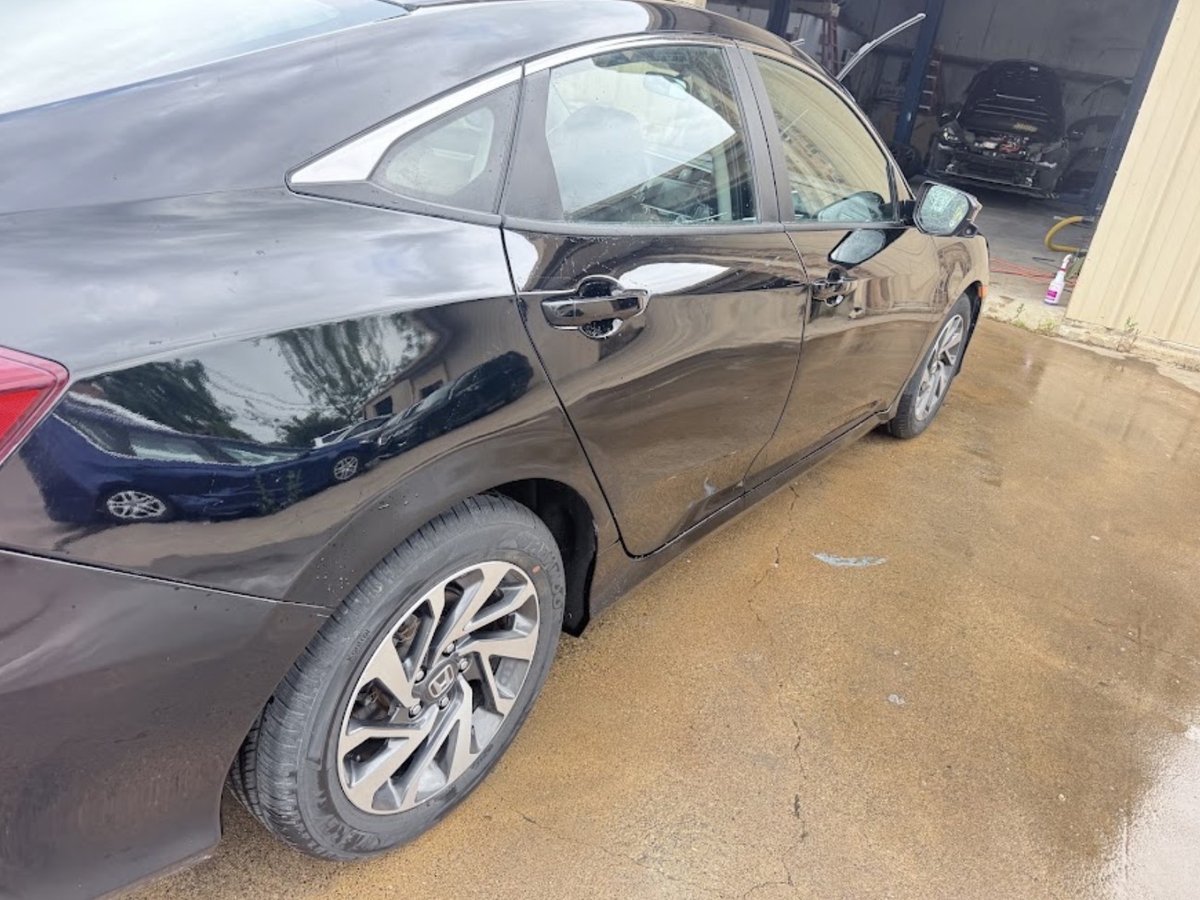
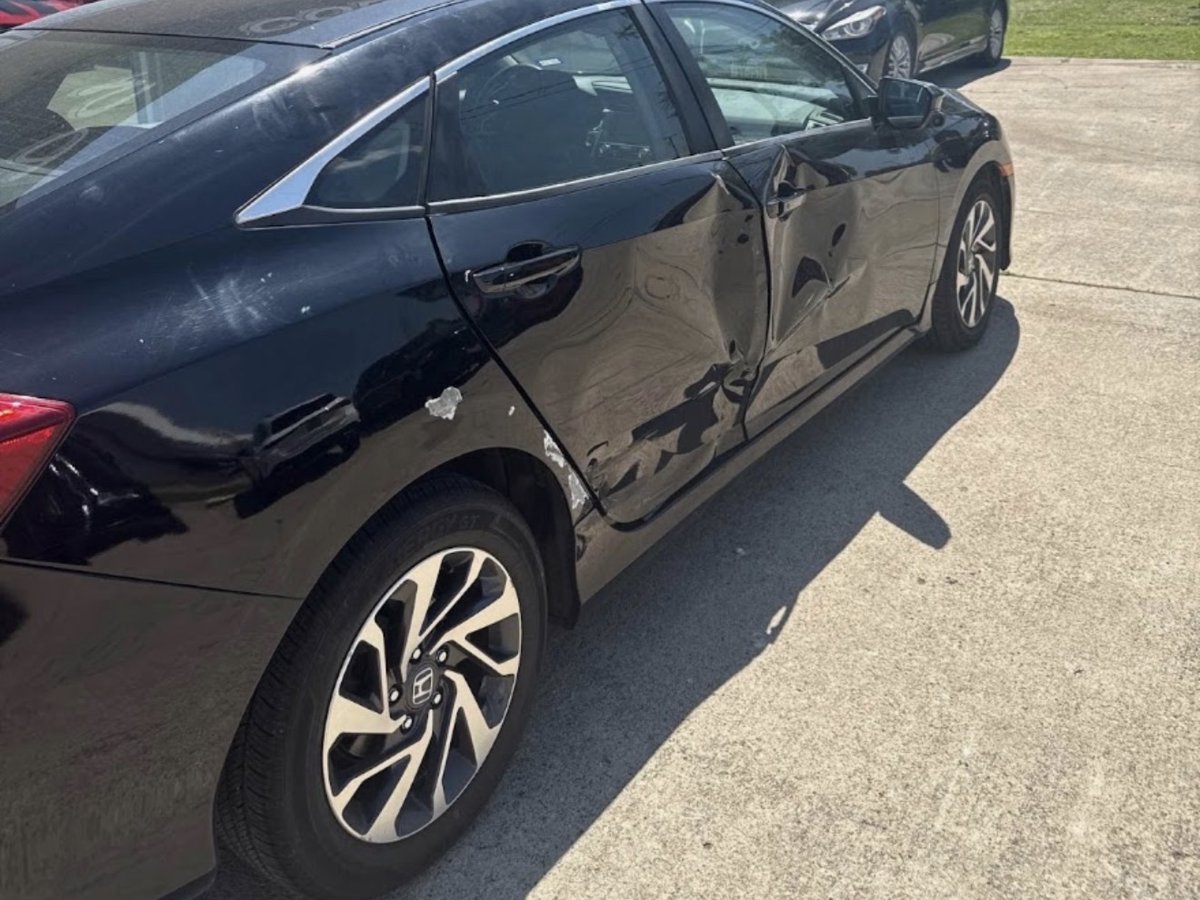
Drag the slider — a real multi-line repair from our Lewisville floor, from a two-page estimate to a finished quarter panel.
 Before
After
Before
After
Side Impact — Doors & Quarter Panel
Pictured: Honda Civic — the kind of repair whose estimate runs R&R, R&I, blend and refinish lines across two pages
Estimate Questions