CORVETTE BODY SHOP LEWISVILLE, TX
C8 Stingray, Z06, E-Ray, C7, and every generation back to 1953 — the car that has never worn steel. Every production Corvette ever built carries composite body panels over its frame, and composite plays by different rules: it doesn’t dent, it cracks — and a repair that isn’t blocked dead flat reads wavy in the first direct sunlight it meets, at the car show, in the parking lot, everywhere this car actually lives. So we repair to the light: composite repaired as composite, the aluminum frame measured true, the E-Ray’s high-voltage system handled by protocol, and every panel read in daylight before delivery. Free loaner, written lifetime warranty, direct billing.
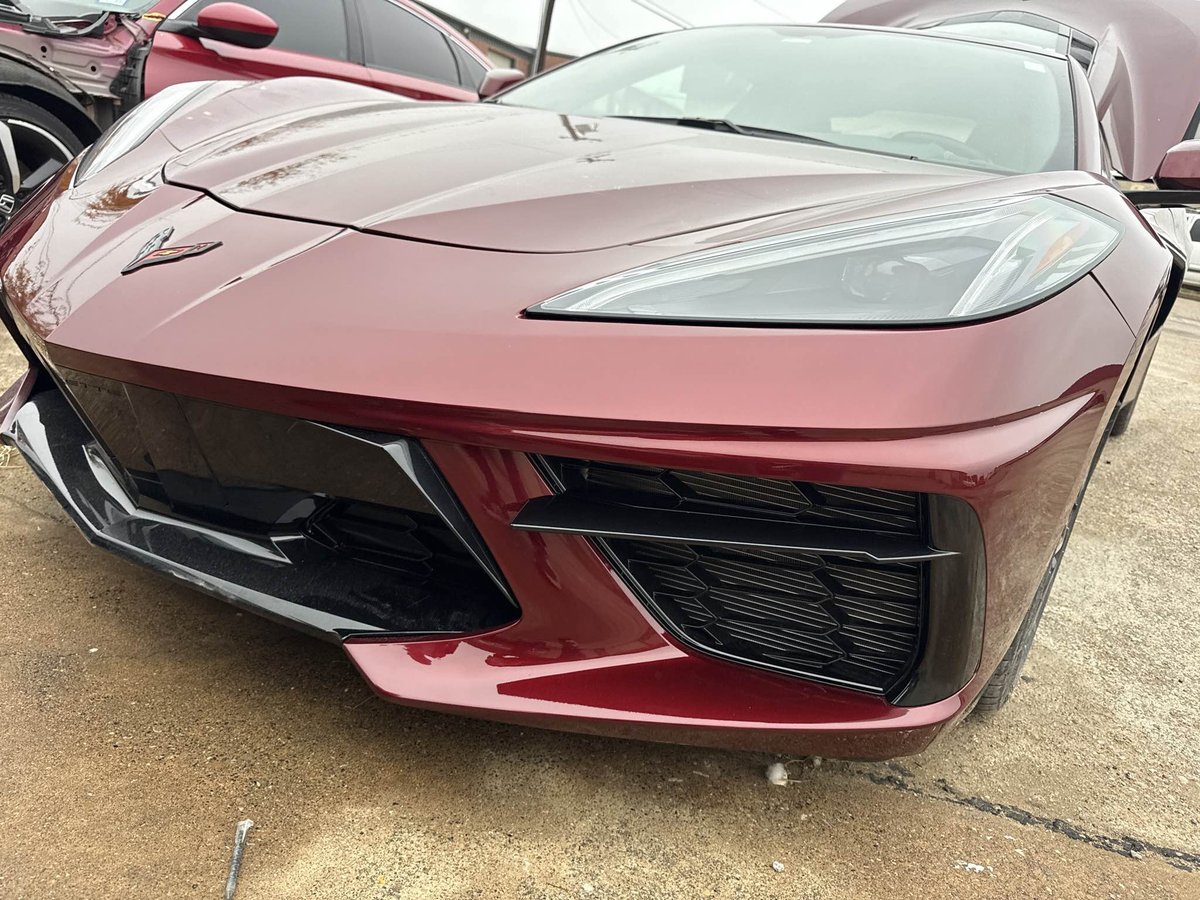
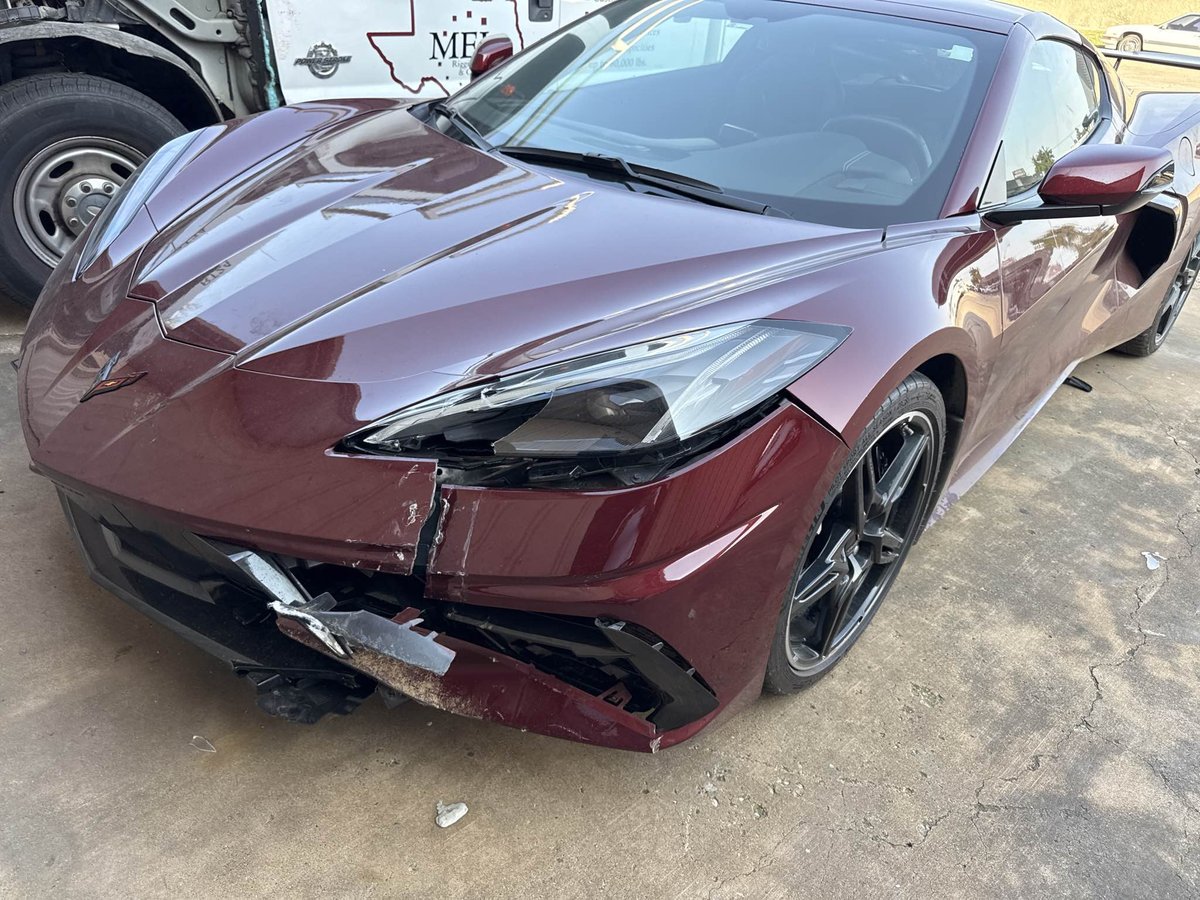 Before
After
Drag the line — a customer’s Corvette Stingray, hit to delivered at our Lewisville shop.
Before
After
Drag the line — a customer’s Corvette Stingray, hit to delivered at our Lewisville shop.
DG Collision Center repairs Corvettes to the standard the car is actually judged by — direct sunlight. No production Corvette has ever worn steel body panels: fiberglass in 1953, sheet-molded compound and carbon fiber today, bonded over an all-aluminum frame built from stampings, extrusions, hydroformed tubes, and six large die castings. Composite changes everything about collision work: it doesn’t dent, it cracks and crazes — so paintless dent repair has no purchase on it, hail is a crack inspection instead of a dent count, and a panel that isn’t blocked dead flat announces itself in the first parking-lot light, on a car whose owners walk the show field looking for exactly that. The engineering runs deep: the C8 carries an industry-first curved rear bumper beam in pultruded carbon fiber, so even a routine rear-ender is a composite-structure assessment; the E-Ray — the first electrified, first all-wheel-drive Corvette, 655 combined horsepower — parks its battery between the seats, which makes high-voltage protocol and center-tunnel inspection part of any serious hit; and the Z06’s flat-plane 670-horsepower V8 came billed at debut as the most powerful naturally aspirated V8 in any production car. Every Corvette since 1981 has been built in Bowling Green, Kentucky — many delivered through the National Corvette Museum — and the paint follows Corvette rules too: Torch Red is code WA9075, order code GKZ, and the deep Tintcoat finishes build color into the clear itself. Genuine parts argued in writing under Texas Insurance Code §1952.301; free loaner, no day limit; direct billing — your out-of-pocket is typically your deductible, once.
- Sunlight is the audit — a composite repair that isn’t blocked flat reads wavy in direct light, and Corvette culture looks. Every panel gets read in daylight before delivery.
- It has never been steel — every production Corvette since 1953 wears composite panels. They crack instead of denting, so the repair playbook is bonded composite work, not metal finishing.
- Hail is a different question here — no metal memory means no paintless dent repair on composite. A Corvette hail claim is a crazing-and-crack inspection, assessed honestly.
- The rear bumper beam is carbon fiber — an industry-first curved pultruded structure on the C8. A rear-ender is a composite-structure assessment, never just a fascia swap.
- The E-Ray’s battery lives between the seats — first electrified, first all-wheel-drive Corvette. High-voltage disable by protocol, center-tunnel inspection documented.
- Genuine parts have legal backup — Texas Insurance Code §1952.301 bars insurers from dictating parts by brand, type, or condition. We make that argument for you, in writing.
The Car You Judge In Direct Sunlight
A Corvette doesn’t live in a garage — it lives at the Saturday-morning meet, the show field, the office parking lot where somebody always walks over. And Corvette people look down the body side the way jewelers look through a loupe, because they know the car’s oldest secret: no production Corvette has ever worn steel body panels. It was fiberglass in 1953 and it’s sheet-molded compound and carbon fiber today, and composite makes its own rules for collision repair. It doesn’t dent and hold a shape the way steel does — it flexes, crazes, and cracks; there’s no metal memory for a dent tech to massage; and a panel repair that isn’t filled, blocked, and refinished dead flat will read as a wave in the first direct sunlight it meets. That’s the wavy-fiberglass tell that has haunted badly repaired Corvettes for seventy years, and it’s the standard we repair against: composite repaired as composite by the factory book, and every finished panel read outdoors, in the light where this car’s reputation actually gets decided.
Under the panels, the modern car is serious engineering. The frame is all aluminum — stampings, extrusions, hydroformed tubes, and six large die castings — measured on the bench within a millimeter of spec, because composite panels bond to the structure and a frame that’s out shows up as panels that never quite sit right. The C8 even hides an industry first behind its tail: a curved rear bumper beam in pultruded carbon fiber, which means the most ordinary claim in DFW — the stop-and-go rear-ender on 35E or the tollway — is a composite-structure assessment on this car, never just a fascia swap. The drivetrains raise the stakes further: the E-Ray, the first electrified and first all-wheel-drive Corvette, sends 655 combined horsepower through a battery packed between the seats — so the high-voltage system gets disabled per factory procedure before structural work and the center tunnel gets inspected and documented after any serious hit — while the Z06’s flat-plane 670-horsepower V8, billed at its debut as the most powerful naturally aspirated V8 in any production car, tends to arrive here wearing the wide body, the carbon aero, and a parts sheet all its own. Every one of them has been built in Bowling Green, Kentucky, the Corvette’s only home since 1981 — many delivered through the National Corvette Museum — and owners who chose museum delivery care about provenance in a way our documentation is built to match.
The paint carries the same enthusiast weight. Torch Red — code WA9075, order code GKZ — has anchored the palette across recent generations, and the deep reds and darks often come as Tintcoat finishes, GM’s system that builds color into the translucent clear itself — the same chemistry we bank on our Chevrolet hub, where film thickness decides the shade and a careless blend shows as a color shift. The specialty colors rotate nearly every model year, which is why we match from the code on your car and prove the mix on a sprayout card before anything touches a panel — and on composite, refinish starts with substrate prep that steel never asks for: flexible panels, bonded seams, adhesion promoters, then the spectrophotometer-and-sprayout discipline, then blocking until the reflection runs straight. It’s the documentation standard of our luxury repair page applied to America’s sports car. The before/after at the top of this page is a customer’s Corvette Stingray — front corner, photographed at our shop, hit to delivered. The gallery below shows a customer’s Toyota Corolla Cross — same rear-end discipline, tailgate to quarter; the Corvette version adds the composite rules and the sunlight read on top.
The Lineup
EVERY CORVETTE, AND ITS QUIRKS
Mid-engine C8s to front-engine C7s to fiberglass survivors — each generation with its own repair personality.
C8 Stingray
The first mid-engine production Corvette — a low nose that meets Texas parking blocks and steep driveways daily. The optional front lift that memorizes up to 1,000 locations helps; when it isn’t enough, splitter, fascia, and undertray damage gets repaired as the composite it is.
Z06
The flat-plane-crank car — 670 horsepower, billed at debut as the most powerful naturally aspirated V8 in any production car — wearing the wide body and the carbon aero. A different parts sheet from a Stingray at every corner, documented before the estimate goes anywhere.
E-Ray
The first electrified, first all-wheel-drive Corvette — 655 combined horsepower with the battery between the seats. High-voltage disable per factory procedure before structural work, center-tunnel and battery-adjacent damage inspected and documented, never assumed away.
ZR1 & The Flagships
The top of the range — the most carbon-intensive, most scrutinized Corvettes built, and the ones that get trailered to us. Appointment-grade intake, enclosed-transport coordination, and a repair file written for owners who know every panel’s part number.
C7 Stingray / Z06 / Grand Sport
The last front-engine generation — aluminum frame, composite panels, and a huge DFW population that’s now out of warranty and squarely in body-shop years. Same composite discipline, same bench measurement, same sunlight standard as the newest cars.
C1 Through C6
Seventy years of fiberglass survivors — from mid-year chrome to C5/C6 daily drivers. Restoration-grade honesty by appointment: original panels saved where the book and the substrate allow, period-correct repairs documented for cars that get judged on originality.
Targa Tops & Convertibles
Removable roof panels and folding hardtops mean fit is everything: a repaired quarter or windshield frame has to seal, latch, and sit flush against a panel the owner removes weekly. Fit-and-seal verification is part of delivery, not an afterthought.
Behind The Rear Fascia
The C8 hides an industry-first curved pultruded carbon-fiber bumper beam behind its tail — strong, light, and not a repair-and-forget part. A rear-ender here means composite-structure assessment, genuine replacement where the book requires it, and the argument in writing.
Track Days & Show Fields
Cars and Coffee on Saturday, MSR or Eagles Canyon when the itch hits — Corvettes get used, and track incidents need honest triage: what’s cosmetic composite, what’s structural aluminum, what the delivery file should say so the car’s story stays clean at resale.
Corvette Paint, On A Composite Canvas
Corvette paint is enthusiast paint — codes get discussed on forums, colors get chosen years before the car arrives, and the specialty shades rotate almost every model year. The code decides the match; the substrate decides the technique.
Every finish gets the same spectrophotometer-and-sprayout discipline — read the actual panel, prove the mix on a card, blend into the adjacent panel so there’s no edge for the Texas sun to find. On a Corvette the last step is literal: we take the car outside and read every repaired panel in direct daylight before it goes home.
The Corvette Repair, By The Book
Five steps, none optional — and on a Corvette, the last one happens outdoors:
1 — The Factory Procedures Come First
Every repair starts in the published factory collision procedures for your exact generation — and on a Corvette the materials map is unlike anything else in the GM catalog: bonded composite panels over an all-aluminum frame, with carbon-fiber structure in the newest cars. Composite gets composite technique, aluminum gets the bench, and where the book says replace instead of repair, that’s what happens.
2 — Blueprint The Actual Car
Full disassembly, every hidden finding photographed and itemized into one documented supplement — plus the Corvette-specific decode: Stingray, Z06, E-Ray, and the flagships carry different fascias, aero, wheels, and structure at every corner, and a crazed composite panel can hide its cracks under paint. The supplement process pays for what’s found and documented — and the claim should price the car that’s actually here.
3 — The Finish Discipline
Spectrophotometer reads, sprayout cards, and wide blends — with the Corvette-specific rule at the top: the substrate isn’t steel, so prep starts with composite-correct primers and adhesion promoters, and finishing means blocking the panel until its reflection runs dead straight. Tintcoat depths get their layers proven on the card; the one-year specialty colors get matched from the code plate, never the name.
4 — Genuine Parts, Argued In Writing
On structural, safety, and composite components we push genuine parts and put the argument to the adjuster in writing — and on this car the composite argument matters doubly, because panels are bonded assemblies and the C8’s rear bumper beam is a pultruded carbon-fiber structure, not a commodity bar. Texas Insurance Code §1952.301 bars insurers from limiting coverage by the brand, type, kind, age, vendor, supplier, or condition of parts — that fight is ours to have, not yours.
5 — Calibration, And The Sunlight Read
Pre- and post-repair scans on every job; the camera and sensor hardware your build carries recalibrated in-house; then the step this car demands: outside, in direct Texas daylight, reading every repaired panel down its reflection line — because that’s exactly how the show field will read it. The car leaves flat, documented, and ready to be looked at the way Corvettes get looked at.
Real Results
THE REAR-END REBUILD, TAILGATE TO QUARTER
Drag the slider. A customer’s rear-end rebuild — tailgate, rear panel, and quarter — billed direct and returned to spec. It’s a Toyota Corolla Cross, not a Corvette, and we won’t pretend otherwise: the discipline is identical. On the Corvette version, the composite rules and the carbon-beam assessment ride on top.
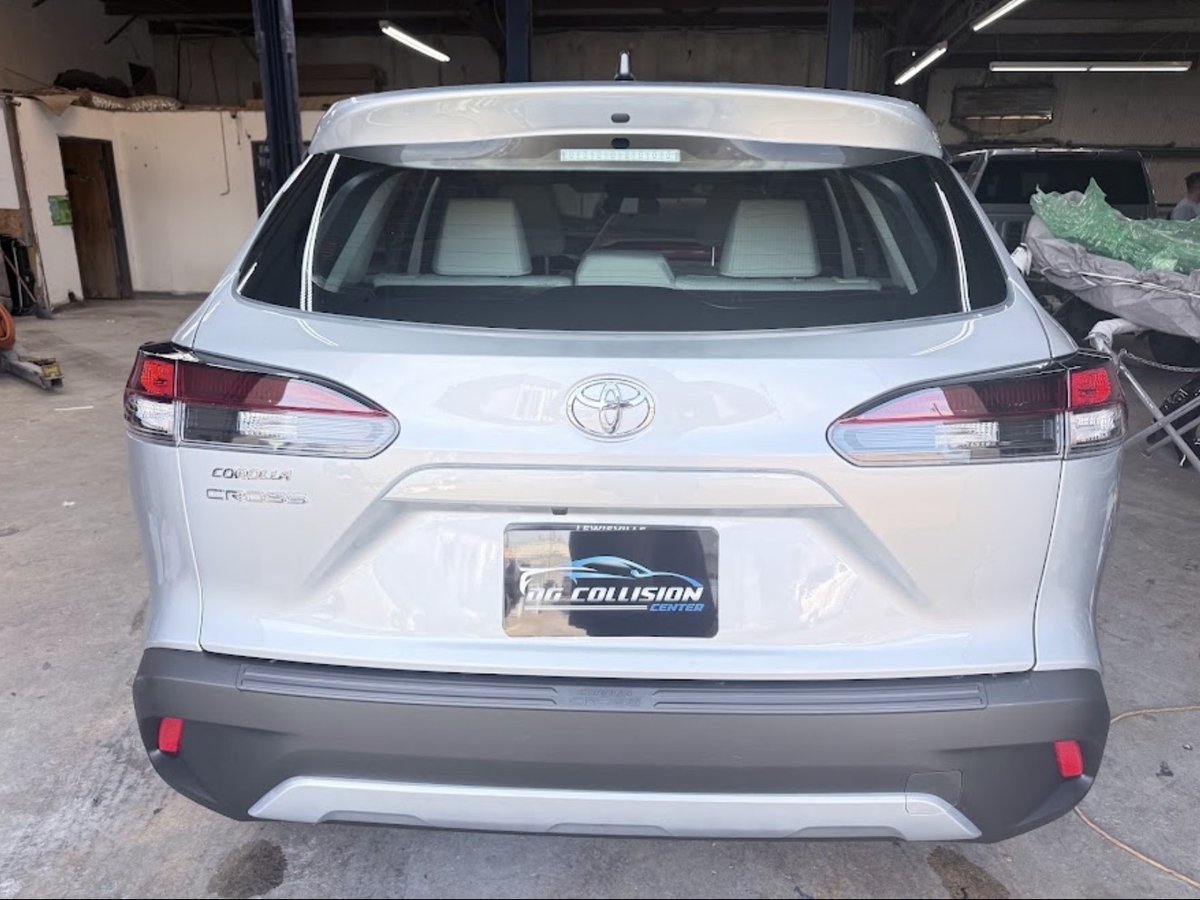
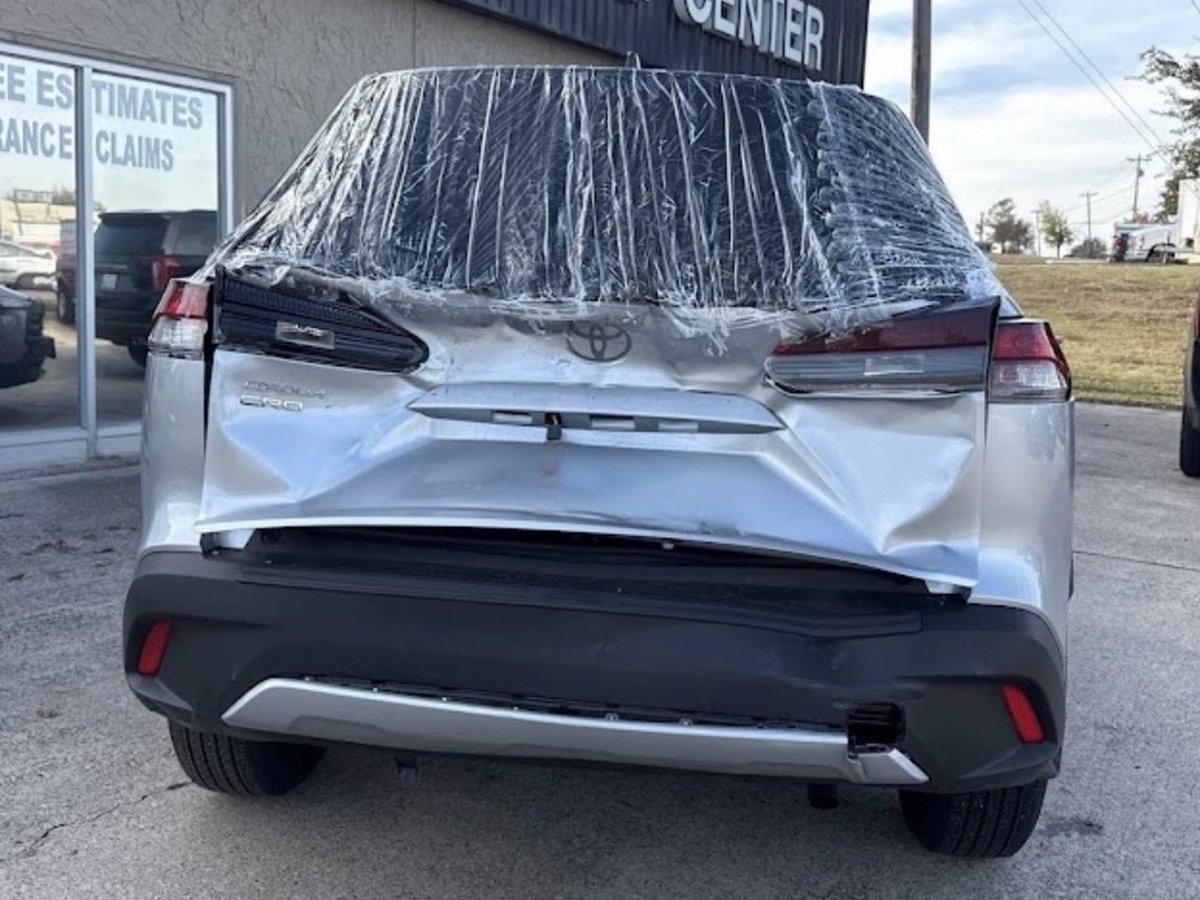 Before
After
Before
After
Rear-End Rebuild — Tailgate To Quarter
Pictured: Toyota Corolla Cross — the same rear-end discipline we run on Corvettes, with the composite rules and carbon-beam assessment added
Corvette Hit? Hailed On? Send Photos.
Text a few photos with your generation and trim — Stingray versus Z06 versus E-Ray changes the parts sheet at every corner, and composite damage often hides beyond what a photo shows. We’ll answer with a realistic range, usually within minutes during shop hours.
Common Questions
CORVETTE REPAIR FAQ
Free · No Obligation
START YOUR CORVETTE REPAIR
Tell us which Corvette you drive — generation and trim; Stingray, Z06, and E-Ray carry different parts sheets at every corner — and what happened. We’ll call back with the real number and next steps.
Prefer to talk now? Call (972) 219-0864 · or text us photos
Corvette, Stingray, Z06, E-Ray, ZR1, Chevrolet, and Tintcoat are trademarks of General Motors LLC. DG Collision Center is an independent repair facility and is not affiliated with, sponsored by, or endorsed by General Motors LLC, Chevrolet, or their dealers. References are for factual identification only.