F-150 HAIL DAMAGE REPAIR: ALUMINUM DONE RIGHT
Yes — paintless dent repair works on aluminum F-150 body panels, and done right it’s the best repair your truck can get: factory paint intact, no filler, typically 3–7 days. But every F-150 built since 2015 wears an aluminum body that work-hardens around every hail strike, and it does not forgive the shortcut techniques that pass on steel.
Every F-150 built since 2015 has an aluminum-alloy body — hood, doors, bedsides, tailgate — and aluminum responds to hail differently than steel: it work-hardens around each dent, has less metal memory, and demands slower, aluminum-specific PDR technique. Done properly, PDR still fixes the overwhelming majority of F-150 hail damage with the factory paint untouched, typically in 3–7 days. Costs run the same ranges as other vehicles — roughly $750–$1,500 for light counts, $5,000–$12,000 for a typical full-truck claim — though heavy aluminum counts land toward the upper half because each dent simply takes longer. Hail is a comprehensive claim, and at DG Collision most F-150 hail customers pay $0 out of pocket.
- Aluminum years: F-150 2015+, Super Duty 2017+, Expedition 2018+ — the same repair rules apply to all three. Pre-2015 F-150s are steel and repair conventionally.
- The technique gap is real: aluminum tolerates fewer pushes per dent — over-working a spot hardens it permanently. Ask any shop how their aluminum process differs from steel before handing over the keys.
- Trucks catch more hail: the biggest hood in the driveway, a tall roof, and bed rails — and most don’t fit in a garage.
- Claim math: comprehensive, not-at-fault; 28 TAC §5.7016 bars nonrenewal solely over weather claims; your shop choice is yours under Tex. Ins. Code §1952.301.
The Metallurgy That Changes The Repair
WHY HAIL DENTS IN AN F-150 AREN’T STEEL DENTS
In 2015 Ford moved the F-150’s entire body — hood, doors, fenders, bedsides, tailgate — to high-strength aluminum alloy, cutting roughly 700 pounds from the truck. Super Duty followed in 2017 and Expedition in 2018. It was a smart trade for towing and fuel economy, and to be fair to the material, aluminum panels resist small hail better than thin modern steel — dime-size stones that dimple a sedan roof often bounce off an F-150 hood clean. But when DFW hail gets to quarter size and up, the aluminum dents — and from that moment the repair rules change.
Two properties drive everything. First, aluminum has less metal memory than steel — steel “wants” to spring back to its stamped shape, which is half of what makes conventional PDR feel like magic; aluminum holds the dent stubbornly and needs more massaging per dent to walk it home. Second — and this is the one that separates shops — aluminum work-hardens: every push of a PDR rod stiffens the metal at the contact point. A technician trained on steel who attacks an aluminum dent with fast, aggressive pushes will harden the spot before the dent is out, and at that point no amount of skill recovers it — the panel needs paint or replacement. The correct aluminum technique is slower, warmer (controlled heat keeps the alloy compliant) and more patient, which is why an honest shop quotes aluminum hail work with more labor time per dent, and why some PDR crews — especially the storm-chasing kind — simply avoid aluminum trucks or butcher them. The other eight tells of a storm-chaser operation are in our hail scam guide.
This is the same reason we run a dedicated aluminum repair bay with separate tools: beyond technique, steel dust settling on bare aluminum triggers galvanic corrosion, so trucks that need any conventional panel work get isolated from steel grinding entirely. If hail cracked paint or stretched a panel past PDR’s limits, the conventional side of the repair follows Ford’s own procedures — self-piercing rivets and structural adhesive, not the weld-everything habits of a steel-era shop. And if you drive the steel generation — any F-150 up to 2014 — good news: your truck repairs conventionally, usually a bit cheaper. The rest of our Ford-specific repair intel — paint systems, sensor locations, the full aluminum model list — lives on our Ford body shop page.
Panel By Panel
WHERE F-150s TAKE HAIL — AND WHAT LAZY ESTIMATES MISS
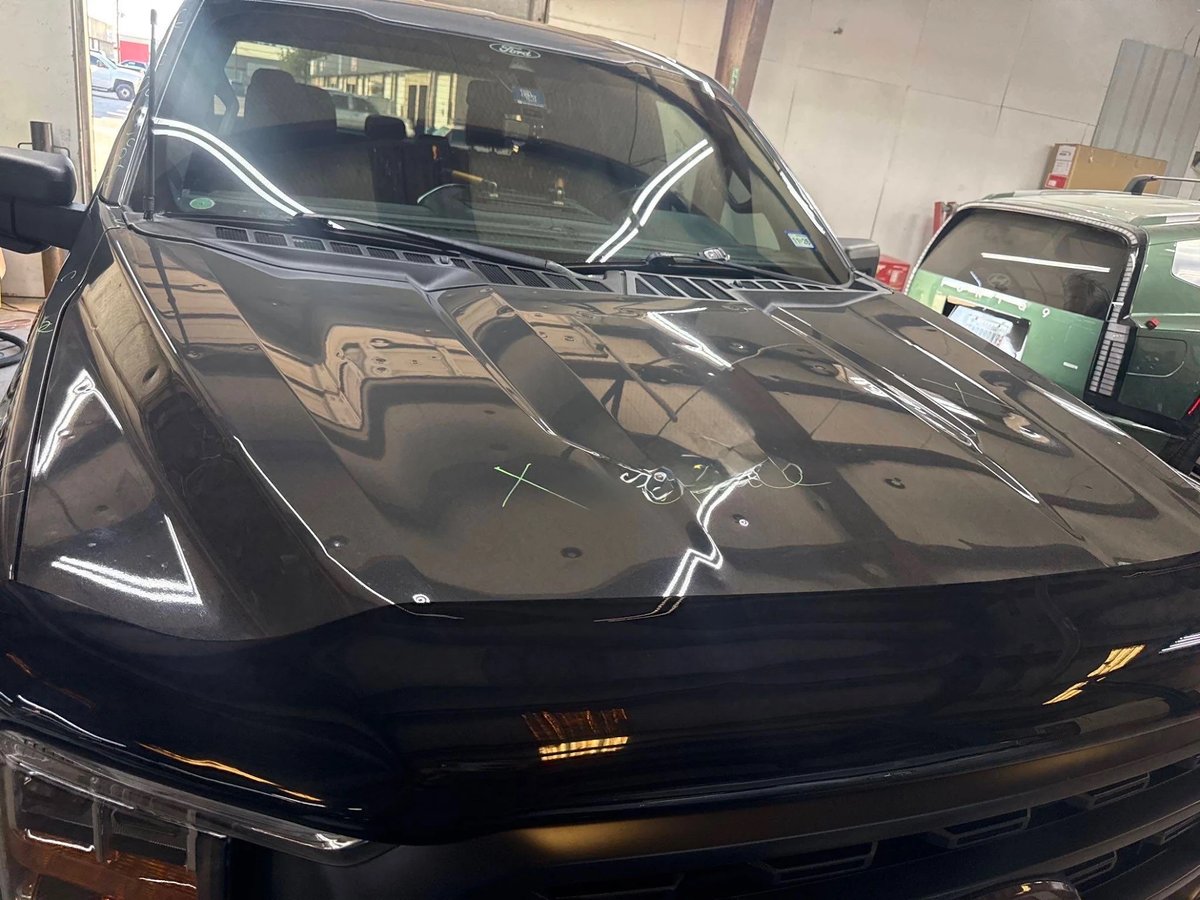
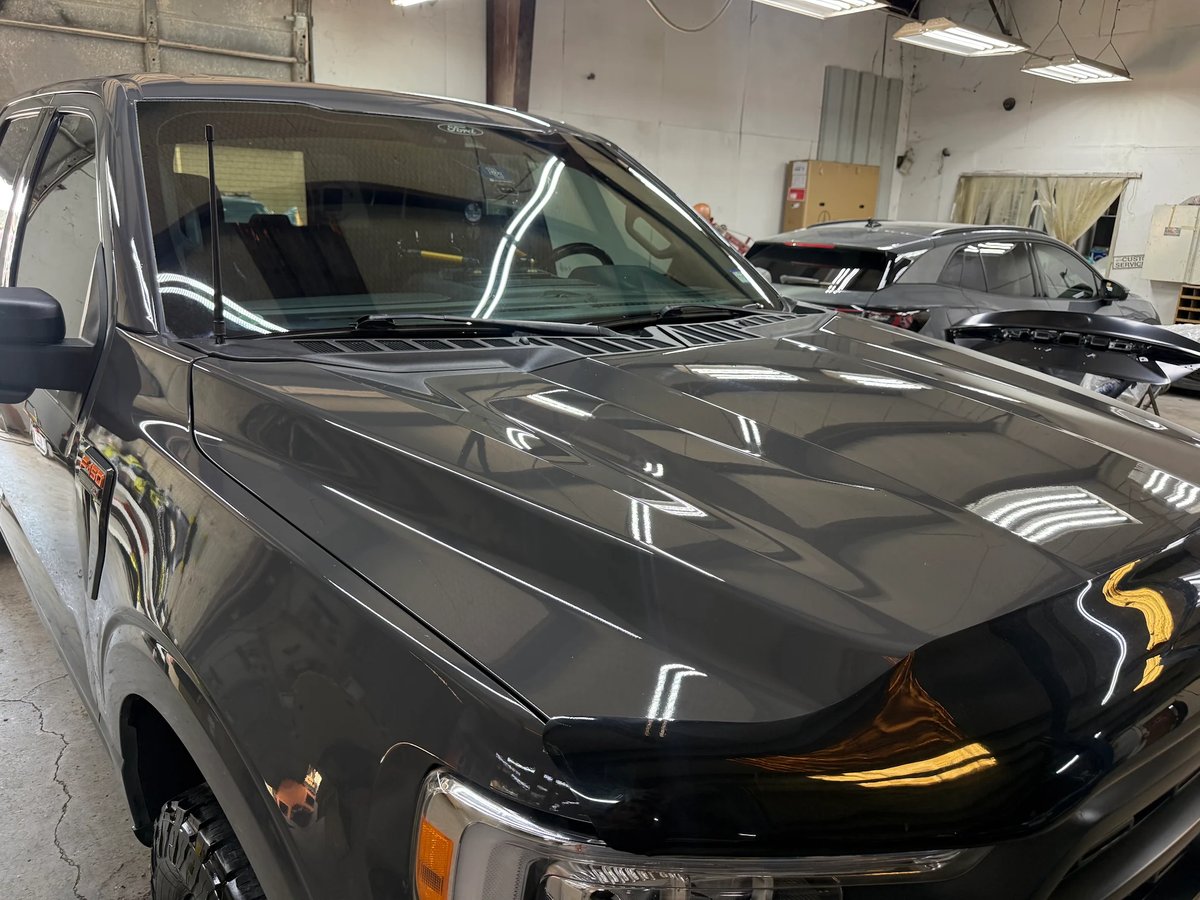
A pickup is the worst-case hail geometry in the driveway: the F-150’s hood is the largest horizontal panel on any common DFW vehicle, the cab roof sits high and flat, and behind it run six-plus feet of bed rails and a tailgate top edge — all pointed straight at the sky. Add the practical reality that long-bed and lifted trucks don’t fit in most garages, and F-150s eat a disproportionate share of every North Texas hail event. The hood and roof take the classic dent fields — that’s what you see in the photo up top, and what the slider below shows repaired. The bed rail caps and tailgate top edge take sharp-crease hits that are easy to spot once you run a hand along them.
What separates a real truck estimate from a lazy one is the second pass: aluminum tailgate skins dent on the top edge where the panel is nearly horizontal; plastic cowls, mirror caps and trim crack rather than dent and have to be caught at write-up or they become a fight later; tonneau covers take the hail meant for the bed floor — hard covers dent and soft ones tear, and either belongs on the same comprehensive claim as the sheet metal; and windshield edges and back glass crack under the egg-size-and-up stones that DFW produces somewhere every season. When we write an F-150 hail estimate, every one of those items is checked panel by panel under PDR lighting — because a supplement discovered mid-repair costs you days, while a complete estimate up front usually doesn’t.
One honest caveat in the other direction: a spray-in bedliner means the bed floor itself almost never needs anything, and we’ll say so rather than pad the count. The written estimate lists exactly what hail touched — nothing it didn’t.
HAIL-DENTED F-150? GET IT INSPECTED THE RIGHT WAY.
Ten minutes under PDR lighting, every panel checked, the count in writing — free, and no pressure to file.
Straight Numbers
WHAT F-150 HAIL REPAIR COSTS IN DFW
Same honest ranges we publish for every vehicle — with the aluminum reality stated plainly: because each aluminum dent takes more technician time, heavy F-150 counts tend to land in the upper half of these ranges rather than the lower. With comprehensive coverage your out-of-pocket is capped at your deductible either way — and usually erased entirely by our deductible assistance.
Ranges reflect what we actually write on DFW trucks; your written estimate is the real number. At the severe end the estimate can approach an older truck’s value — the total-loss math is in this guide.
Why not just replace a badly-hailed hood? Sometimes we do — but an aluminum F-150 hood is a genuinely expensive part, and Texas law is on your side about part quality when it’s replaced: Tex. Ins. Code §1952.301 bars your insurer from dictating the “brand, type, kind, age, vendor, supplier, or condition” of repair parts. When replacement beats repair, we’ll show you the math on both lines — and when PDR saves the factory panel and factory paint, that’s almost always the better truck at the end.
The Claim Side
THE F-150 HAIL CLAIM, START TO FINISH
Hail is a comprehensive claim — no fault, no points, nothing on your driving record — and Texas rule 28 TAC §5.7016 bars your insurer from refusing to renew solely over weather claims. A single hail claim typically doesn’t surcharge your rate by itself; the honest premium math lives in our rates guide. Not sure which storm got the truck? Our NWS-verified DFW hail storm log pins down the date, sizes and cities — the verification an adjuster wants on a late-discovered claim.
Your deductible: on approved hail claims we absorb it from our own margin as a repair credit, on a 100% honest estimate and invoice — the mechanism that keeps deductible assistance legal on Texas auto claims. Most F-150 hail customers here pay $0 out of pocket and drive one of our 50+ free loaners while the truck is in the bay. And the shop decision is yours by law, not your carrier’s — which matters more on an aluminum truck than on almost anything else in the driveway, because the “preferred” volume shop working your claim at steel-era speed is exactly where aluminum hail repair goes wrong.
How We Do It
OUR ALUMINUM HAIL REPAIR PROCESS IN 5 STEPS
01. Map every dent under PDR light
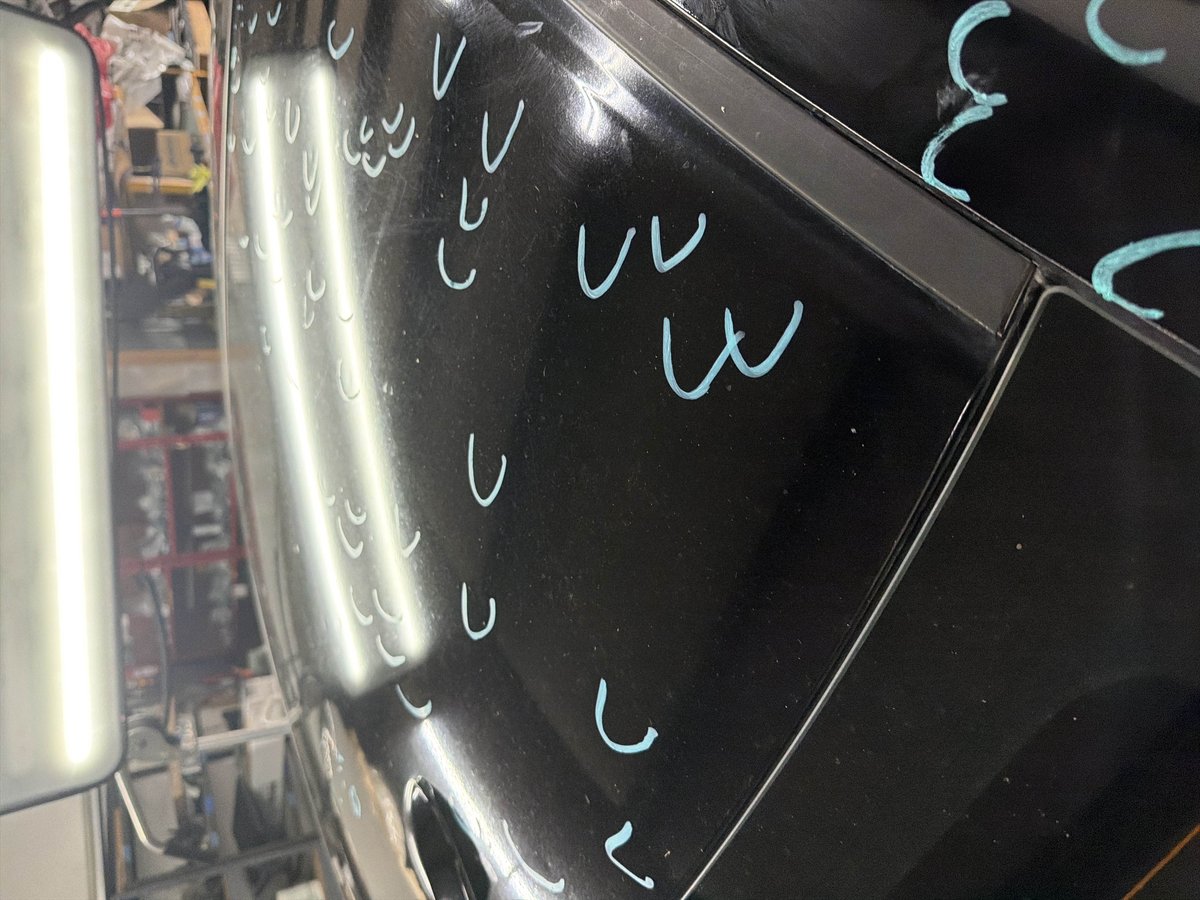
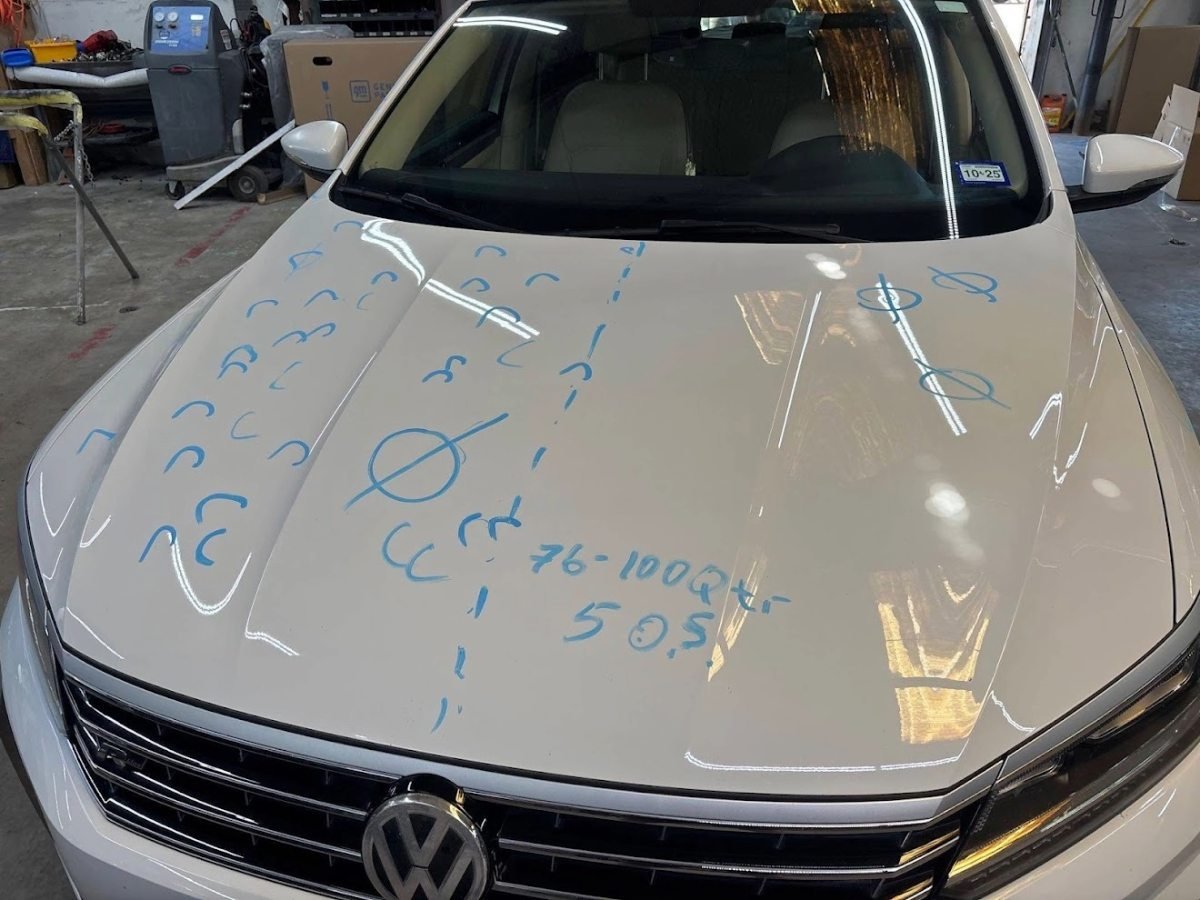
The truck goes under line-board lighting and every strike gets marked and counted — hood, roof, bedsides, tailgate edge, plus trim, cowls, tonneau and glass. The written count is your estimate and your claim documentation in one.
02. Sort PDR panels from paint panels
Aluminum with intact paint and no stretched metal gets PDR. Cracked paint, sharp creases or stretched strikes get flagged for conventional repair in the aluminum bay — decided up front, not discovered mid-job.
03. Open access the factory way
Headliner dropped, hood insulation out, bed access set up — aluminum dents get worked from behind with full sight lines, never blind-pulled through an edge because access was too much trouble.
04. Work the aluminum slowly and warm
Controlled heat keeps the alloy compliant; each dent is massaged out in patient passes that respect work-hardening instead of racing it. This is the step that separates aluminum-literate PDR from a hardened, ruined panel.
05. Verify, document, deliver
Every panel re-checked under the boards, the supplement (if any) settled with your carrier direct, and the truck delivered with its factory paint intact — typically 3–7 days after drop-off, loaner in between.
Real F-150 Work
AN ALUMINUM F-150 HOOD, BEFORE & AFTER
This is a customer’s F-150 from our Lewisville shop floor — the exact repair this page describes. Drag the slider.
 Before
After
Before
After
2015+ Aluminum Hood — Full Hail PDR
Worked slow and warm, dent by dent — no repaint, no filler, no work-hardened spots
F-150 Hail Questions