GUEST DAMAGED YOUR TURO CAR? THE 24-HOUR RULES THAT DECIDE YOUR CLAIM
Short version: your out-of-pocket was decided the day you listed the car. Turo’s three earnings plans carry a per-claim “damage responsibility” of $250, $1,500, or $2,750 — the higher your share of trip income, the higher your share of the damage. From there, the claim itself is won or lost on discipline: metadata-stamped photos inside Turo’s 24-hour windows, damage that clears the 3-inch wear-and-tear line, and documentation their reimbursement process accepts. And don’t look to your personal policy for backup — Texas law expressly lets it exclude car sharing entirely (Bus. & Com. Code §113.0053). Here’s the whole playbook, verified against Turo’s published terms.
Since January 7, 2026, Turo’s three US host plans pair income with a per-claim “damage responsibility”: keep 70% with $250, 80% with $1,500, or 90% with $2,750. Above that, Turo reimburses eligible physical damage up to the car’s actual cash value (capped at $200,000) — but by its own terms it “isn’t insurance,” §1952.301 doesn’t govern it, and the claim lives or dies on your 24-hour trip photos with intact metadata. The photo ritual is the coverage.
Turo restructured its US host plans on January 7, 2026 into three tiers, and each pairs an income share with a per-claim deductible Turo now calls “damage responsibility”: More peace of mind — keep 70% of the trip price, $250 responsibility; Balanced — keep 80%, $1,500; More earnings — keep 90%, $2,750. Above that amount, Turo reimburses eligible physical damage up to the lesser of the car’s actual cash value or $200,000 — and by its own terms that reimbursement “isn’t insurance”; it’s a contract, with contract rules. The rules that decide real claims: photos must carry date, time, and location metadata or they’re “deemed invalid”; pre-trip photos are taken within 24 hours before the trip and post-trip photos within 24 hours after it ends; dings and scratches 3 inches or smaller are “wear and tear” Turo doesn’t pay for — even several of them; and there’s no diminished value, no lost hosting income, and no replacement vehicle in any US plan. Your personal auto policy likely won’t backstop any of this — Texas Bus. & Com. Code §113.0053 expressly permits insurers to exclude coverage during a car sharing period. Figures verified August 2026 against Turo’s published terms; they change — confirm yours.
- Your deductible is a dial you set at listing: $250 / $1,500 / $2,750 against 70% / 80% / 90% of trip income.
- The 24-hour photo windows are the claim. No metadata = “deemed invalid.” Shoot before and after every trip, every time.
- The 3-inch rule: dings and scratches 3″ or smaller are unreimbursed wear and tear — and separate small dings don’t add up.
- No DV, no lost income, no replacement car in any US plan — and your personal policy can lawfully exclude sharing (§113.0053).
- Our lane: expedited host scheduling, direct handling of Turo’s claims process, and deductible assistance sized per repair — the $1,500 and $2,750 tiers are exactly why it exists.
The Deductible Dial
YOUR CAR IS A SMALL BUSINESS — AND YOU SET ITS DEDUCTIBLE YOURSELF
DFW’s airport-anchored Turo market puts a lot of privately owned cars into strangers’ hands every weekend, and some of those cars come back wrong — we repair them. What surprises new hosts isn’t that damage happens; it’s discovering how much of the outcome they chose themselves, months earlier, on the listing screen. When Turo moved US hosts to three earnings plans on January 7, 2026, it tied the income dial and the risk dial together: the more of each trip you keep, the more of each damage claim you eat. Turo also renamed the deductible — it’s now your “damage responsibility” — but the mechanics are exactly what the old word implies: the first dollars of every physical-damage claim are yours, and they apply to glass, tires, interior, and mechanical damage a guest causes, not just crumpled sheet metal.
One more definitional honesty check, in Turo’s own words: physical damage reimbursement “isn’t insurance.” It’s a contractual promise from Turo, governed by the terms of your plan — which means the claim runs on documentation and deadlines, not on an adjuster’s discretion to cut you slack. That’s not a reason to avoid hosting. It’s a reason to know the rules cold, because hosts who follow them get paid and hosts who wing it discover the exclusions one denial at a time.
The Three Plans
WHAT EACH PLAN COSTS WHEN A GUEST WRECKS IT
All three plans carry the same third-party liability layer — up to $750,000 through a policy issued to Turo by Travelers — so the real choice between them is the trade below.
Above your damage responsibility, Turo reimburses eligible damage up to the lesser of the car’s actual cash value or $200,000, and chooses at its discretion between paying repair costs or paying ACV on a total loss. Verified August 2026 against Turo’s published US host terms; trips booked on the pre-2026 plans follow those plans’ terms. Plan details change — confirm yours in the app.
The Evidence Clock
THE 24-HOUR PHOTO WINDOWS ARE THE CLAIM
Turo’s reimbursement process is built on one evidentiary spine: photos proving the damage happened during the trip. The windows are unforgiving and worth memorizing. Pre-trip photos must be taken no more than 24 hours before the scheduled start and uploaded within 24 hours after the trip begins. Post-trip photos must be taken and uploaded within 24 hours after the trip ends. And the detail that quietly kills claims: “Photos without metadata showing date, time, geolocation will be deemed invalid” — so screenshots, edited exports, and camera apps with location services turned off can turn a real claim into an unprovable one. Shoot with your phone’s native camera, location on, walking the same lap around the car every time: all four corners, all four sides, roof, glass, wheels, interior, odometer.
Miss the window and the claim “could result in the claim being closed or denied” — though if the car was impounded or otherwise out of your hands, that circumstance won’t disqualify you, and Turo may at its discretion accept other evidence like a police report. Treat those as mercy rules, not a plan. When a damaged Turo car lands with us, our teardown adds the layer their process respects on the repair side: dated photos of every damaged part, diagnostic reports where electronics are involved, and an itemized estimate — but none of that substitutes for the trip photos only a host can take. Your camera roll is the foundation; we build the documentation house on top of it.
Read Before You Expect A Check
THE 3-INCH RULE — AND THE THREE NO’S
The exclusion that surprises hosts most often is the smallest one. Dings, dents, cracks, and scratches 3 inches in diameter or less are “Exterior Wear and Tear” on every plan — not reimbursable — and Turo’s terms close the loophole you’re already thinking of: separate small incidents that cumulatively add up to more than 3 inches are still wear and tear. A guest can return your car with a new door ding on every panel and, under the plan terms, that’s the cost of doing business. Document them anyway — what looks like a ding is sometimes a crease that measures past the line, and the measurement, not the eyeball, decides it. Also excluded: damage during the delivery window (liability only applies while you drive to meet a guest), pre-existing damage, mechanical wear, underside scrapes, truck-bed loading damage, and tires that were worn, old, or underinflated to begin with. On the covered side of the ledger: collisions and “acts of nature” — including the hail this region specializes in — are reimbursable causes, subject to your plan’s terms.
Then the three no’s, stated flatly in the terms. No diminished value: a repaired car that’s worth less on Carfax-checked resale gets nothing for the value loss — a sharper cut for hosts than ordinary drivers, since in a normal Texas crash caused by another driver, third-party diminished value is recoverable. No loss of hosting income: every day in the shop is unbilled calendar, and no US plan pays for it. No replacement vehicle reimbursement either. And one structural catch worth knowing before you file: once a claim is submitted to Turo for handling, their terms bar seeking additional recovery from the guest or other sources — the plan you picked is the whole deal. Speed is the only lever left on the income side, which is exactly why Turo host cars run on an expedited track here — priority scheduling in, teardown the day the car arrives, priority delivery out.
Shop Choice, Honestly
YOU PICK THE SHOP — TURO CAPS THE MATH
Here’s the straight version, because it’s different from an insurance claim and we’d rather you hear it from us. Texas’s shop-choice statute governs insurers — and Turo’s physical-damage reimbursement isn’t an insurance claim, so the protection you may know from ordinary wrecks doesn’t apply here. What applies is Turo’s contract, which does let you use your own shop — with a cap: reimbursement is limited to what Turo’s approved vendors would charge at prevailing labor rates, and anything above that line is yours. Their terms also decline to reimburse repeat repairs when an out-of-network shop’s work turns out badly, and storage fees are reimbursed only up to prevailing rates with a hard $2,500 ceiling — with a duty to move the car promptly once Turo says it’s reached an impasse, or the accruing fees become yours.
Our answer to all of that is boring on purpose: we write estimates at prevailing DFW labor rates with no padding to collide with their cap, we produce the dated, itemized, photo-backed repair documentation their reimbursement process demands — including making the car available if Turo orders an independent inspection or reinspection — and we back the work with a lifetime warranty, which matters precisely because their terms won’t pay to redo bad work. We also carry the process so you don’t play middleman: you file the claim and the trip photos — only a host can — and from there we work Turo’s reimbursement process directly: estimates in the format their math accepts, dated invoices, inspections scheduled around us, and direct-to-shop payment where Turo offers it. (One structural note worth knowing: the Travelers policy behind Turo covers liability to third parties — the money that repairs your own car is Turo’s contractual reimbursement, so Turo’s process, not an insurance adjuster, is the lane we work.) If the car is sitting at a tow yard racking up daily storage instead, that meter outranks everything — our tow-yard playbook is how we stop it same-day, and it’s the same move that keeps you clear of Turo’s unreasonable-charges line. Free door-to-door pickup and a free loaner for your personal driving come standard in our 75-mile radius.
The Claim, Start to Finish
FIVE STEPS FROM BAD RETURN TO REIMBURSED
Shoot The Post-Trip Photos Inside The Window
Native camera, location on, within 24 hours of trip end — the full lap: corners, sides, roof, glass, wheels, interior, odometer. Metadata-free photos are deemed invalid, so this step is the claim.
Report It To Turo Promptly
File through the app with your photos attached, inside the same 24-hour discipline. If the car isn’t in your possession — impound, guest still has it — say so; those circumstances don’t disqualify the claim.
Triage Damage Against The 3-Inch Line
Measure before you assume. Under 3 inches is wear and tear on every plan; over it — or a crease, crack, or anything structural — is a physical-damage claim against your damage responsibility.
Get A Documented, Prevailing-Rate Estimate
Teardown-level, itemized, at prevailing labor rates — the format Turo’s reimbursement math accepts. Keep every invoice dated and photographed, and make the car available if Turo orders an inspection.
Repair Fast, Collect Above Your Responsibility
Turo reimburses eligible costs above your $250 / $1,500 / $2,750 tier, up to ACV or $200,000. Since no plan pays for your lost hosting days, repair speed is the only income lever — we start teardown the day the car arrives.
Real Results
FRONT-END DAMAGE BEFORE & AFTER
Drag the slider — a real front-end rebuild from our Lewisville floor.
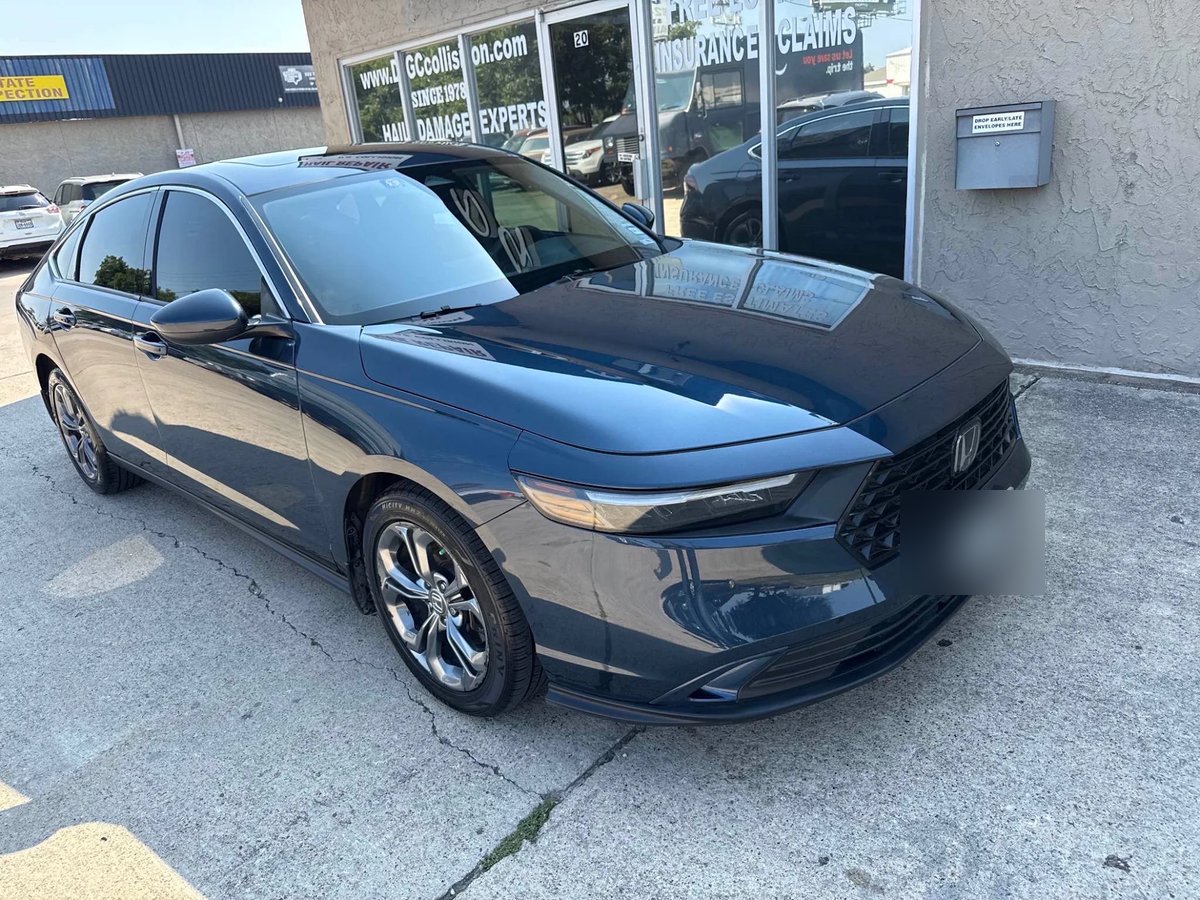
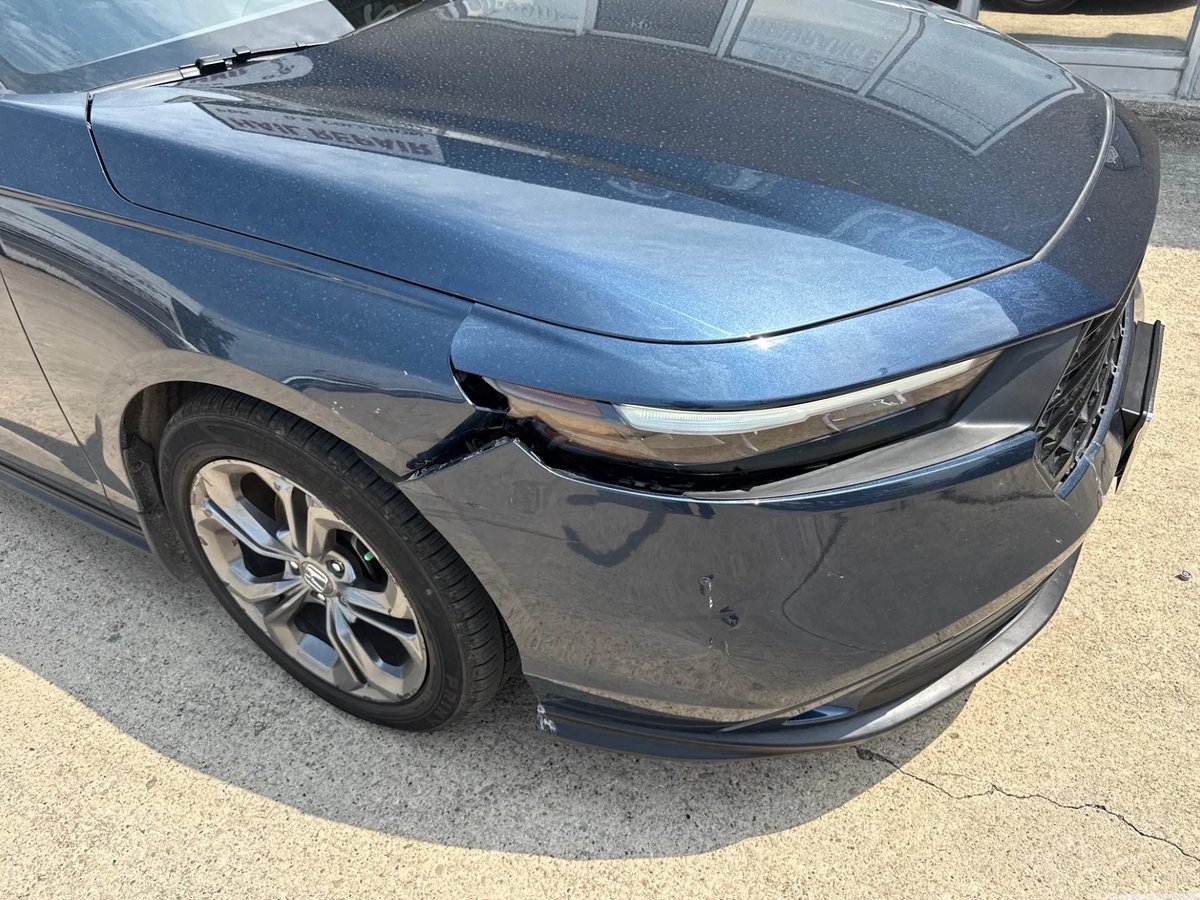 BeforeAfter
Front-End Rebuild
Pictured: Honda Accord — front-end collision rebuilt to spec, with the dated teardown documentation a contractual reimbursement claim runs on
Common Questions
TURO HOST FAQ
Turo® is a trademark of Turo Inc., used here to identify the platform hosts list on. DG Collision Center is an independent repair facility and is not affiliated with, endorsed by, or contracted to Turo. Plan names, damage responsibility amounts, and coverage terms were verified August 2026 against Turo’s published US host terms and Texas Business & Commerce Code Chapter 113; platform terms change — confirm current terms in your Turo account. General information, not legal advice.
Free · No Obligation
GET A REAL NUMBER — NO POLICY NEEDED
Tell us what you drive and what the storm did. We’ll come back with a written estimate — so you can make the file-or-skip call with the real number in hand.
Prefer to talk now? Call (972) 219-0864 · or text us photos