CAN INSURANCE FORCE AFTERMARKET PARTS ON YOUR REPAIR IN TEXAS?
No — and the law is unusually specific about it. Tex. Ins. Code §1952.301 bars your insurer from limiting the “brand, type, kind, age, vendor, supplier, or condition” of the parts used to repair your car. But here’s the honest part most articles skip: the statute stops the insurer from dictating parts — it doesn’t automatically make them pay the OEM premium.
No — §1952.301 bars your insurer from dictating the “brand, type, kind, age, vendor, supplier, or condition” of parts, and the shop choice is yours too. What the statute doesn’t do is automatically fund OEM prices: carriers write estimates on aftermarket and recycled parts to control cost, and closing that gap takes documentation — which is why DG argues OEM first, in writing, on every estimate.
Texas law says your insurer cannot dictate what parts go on your car: Tex. Ins. Code §1952.301 bars limiting the “brand, type, kind, age, vendor, supplier, or condition” of repair parts, and you choose the shop. What the law doesn’t do is force the insurer to pay OEM prices automatically — carriers write estimates on aftermarket and recycled (LKQ) parts to control cost, and closing the gap takes negotiation, a supplement, or in some cases paying the difference. The practical rule: insist on OEM where fit, safety and sensors live — structural parts, ADAS brackets, anything welded — and let cosmetic aftermarket parts save you money where they genuinely perform, especially on older vehicles.
- The statute, verbatim: no limits on “brand, type, kind, age, vendor, supplier, or condition” of parts — and the shop choice is yours too.
- The honest catch: your right to choose parts ≠ the insurer’s duty to fund the priciest option; the estimate line-items are where it’s settled.
- Where OEM matters most: structural and welded parts, bumper covers hiding radar, headlamps with camera brackets, anything that positions an ADAS sensor.
- Where aftermarket is smart money: cosmetic panels on older, high-mileage vehicles — certified aftermarket at half the price is often the right call, and we’ll say so.
Know What You’re Reading
THE FIVE PART TYPES ON EVERY ESTIMATE
OEM (Original Equipment Manufacturer) — the same part your car was built with, boxed by the automaker, sold through dealers. Guaranteed fit, factory corrosion protection, and on modern vehicles, the geometry ADAS sensors were calibrated around. It’s also the most expensive line on the sheet, which is exactly why estimates rarely start there.
OEM surplus / OES — the identical part made by the automaker’s own supplier, sold without the automaker’s box and markup. When available, it’s the quiet best deal in collision repair: factory part, discount price. Aftermarket (A/M) — a copy made by a third-party manufacturer. Quality ranges from excellent to miserable; CAPA certification marks copies tested for fit and metallurgy, and uncertified copies are where the horror stories live: gaps, flimsy metal, corrosion in two winters.
Recycled / LKQ (“like kind and quality”) — a genuine OEM part recovered from a salvage vehicle. For a bolt-on panel on a five-year-old car, a clean recycled OEM door often beats a new aftermarket copy — it IS the factory part, just previously owned. Reconditioned — a damaged part (commonly wheels and bumper covers) repaired and refinished for resale; fine within limits, but never for anything structural, and reconditioned wheels are a safety debate we resolve in favor of “no.” The abbreviations matter because your estimate won’t say “imitation part” — it’ll say A/M, LKQ, or Recond in a narrow column, and our estimate-reading guide decodes the rest of the sheet the same way.
The Statute
WHAT TEXAS LAW ACTUALLY SAYS ABOUT PARTS
Texas Insurance Code §1952.301 does two things in one breath: it puts the repair-shop choice with you, not your insurer — and it bars the insurer from limiting the “brand, type, kind, age, vendor, supplier, or condition” of the parts used in the repair. That’s one of the broader parts-freedom clauses in any state’s insurance code: seven separate words, each closing a different loophole. “Brand” blocks steering to a favored aftermarket maker; “age” and “condition” block forcing used parts; “vendor” and “supplier” block routing everything through the carrier’s parts-procurement pipeline. Section §1952.302 backs it up by prohibiting steering to the insurer’s preferred shops, and §1952.305 requires you be told these rights exist.
Now the honest lawyer-free reading of the limits: §1952.301 restrains the insurer’s conduct — it doesn’t write a blank check. The carrier’s payment obligation still comes from the policy: to restore the vehicle, typically measured by a repair estimate written to prevailing practices. In practice that means the insurer can price the claim assuming an aftermarket bumper cover; what it cannot do is refuse to let your shop install OEM, punish you for the choice, or dictate where parts are bought. The gap between the aftermarket price they wrote and the OEM part you want closes one of three ways: your shop documents why OEM is required and wins it on a supplement, the carrier agrees in negotiation, or you pay the difference knowingly. All three are normal; pretending the statute makes option three impossible is how internet articles set customers up for a fight they lose.
On The Estimate
HOW THE PARTS FIGHT ACTUALLY PLAYS OUT
Carrier estimating platforms default to the cheapest “acceptable” part for your car’s age: on a two-year-old vehicle you’ll usually see OEM; at five years the sheet quietly fills with A/M and LKQ lines. Nobody calls to discuss it — the assumptions are just there, in the parts column, priced before you’ve chosen a shop. This is why reading the estimate matters more than quoting the statute: the parts decision is made in writing before anyone says the word “aftermarket” out loud.
Where a good shop earns its keep is the documented exception. A bumper cover on a car with front radar isn’t cosmetic — thickness and bracket geometry sit in the sensor’s path, and automaker position statements say so. A headlamp that carries a camera bracket positions the camera. Structural rails, reinforcements, and anything welded gets repaired to OEM procedures with OEM steel — that’s not preference, it’s the crash-energy math the engineers ran, and it’s the lesson of every glued-roof cautionary tale in this industry. When we flag those lines, cite the procedure, and submit photos, carriers approve OEM far more often than the internet believes — because the file makes denying it expensive. That’s the quiet version of §1952.301 in action: not a courtroom speech, a well-documented supplement.
ALREADY HAVE AN ESTIMATE FULL OF A/M AND LKQ LINES?
Bring it in. We’ll walk the parts column with you, flag what’s worth fighting for, and put the rest in writing — free.
Draw The Line Here
WHERE OEM IS NON-NEGOTIABLE
Four categories are worth insisting on, in writing, every time. Structural and welded parts — rails, aprons, reinforcements, pillars: these are engineered crumple math, and substitutes change how the car absorbs the next crash. Anything that locates a sensor — bumper covers over radar, grilles with camera mounts, headlamps and mirrors carrying ADAS hardware, windshields on camera-equipped cars: a millimeter of geometry drift becomes a calibration that won’t complete or, worse, one that completes wrong. Airbag and restraint components — new, OEM, no exceptions, ever. Leased and financed-new vehicles — many lease turn-in inspections flag non-OEM crash parts, so the “savings” resurfaces as a turn-in charge with your name on it.
On everything in those four buckets, our position at write-up is simple: the estimate gets OEM lines, the documentation supports them, and §1952.301 gets cited by number when a carrier pushes back. Most don’t push twice.
Honest Money Advice
WHERE AFTERMARKET IS THE SMART CALL
Here’s the part a shop selling parts markup won’t tell you: on a nine-year-old commuter with 140,000 miles, a CAPA-certified fender or a clean recycled OEM door is frequently the rational choice — and we’ll tell you so at the counter. The certified copy bolts on, paints out identically under our refinish process, and nobody — not a buyer, not an appraiser — will ever distinguish it on a cosmetic panel. Recycled OEM is even easier to defend: it’s the factory part. Paying cash instead of filing? The savings go straight in your pocket, which is exactly the file-or-pay math our claim-or-cash guide runs.
The dividing line isn’t OEM-good, aftermarket-bad. It’s certified and cosmetic versus uncertified or structural. Uncertified copies of anything, and copies of anything safety-adjacent, are where we hold the line — because the failure shows up two owners later as rust bubbling through a cheap fender, or right now as a radar staring through the wrong bumper skin.
Your Playbook
PROTECT YOUR PARTS CHOICE IN 5 STEPS
01. Read the parts column first
Before signing anything, scan the estimate’s parts column for A/M, LKQ and Recond codes. That column — not the total — is where the quality decisions already got made.
02. Sort the lines into two piles
Cosmetic bolt-ons on an older car: candidates for certified aftermarket or recycled OEM. Structural, welded, sensor-bearing, or restraint parts: OEM, full stop.
03. Put your choice in writing
One sentence to the adjuster: “Under Tex. Ins. Code §1952.301 I’m directing my shop on parts selection; please note the file.” Written beats said, every time.
04. Let the shop document the exceptions
OEM-required lines win on evidence: automaker position statements, sensor locations, weld procedures, photos. That’s supplement work we do with the carrier directly.
05. Decide the gap knowingly
If a cosmetic OEM preference doesn’t win, you choose: accept the certified alternative or pay the difference — a known number, decided by you, not a surprise on pickup day.
From Our Shop Floor
WHAT A PARTS-HEAVY REPAIR LOOKS LIKE DONE RIGHT
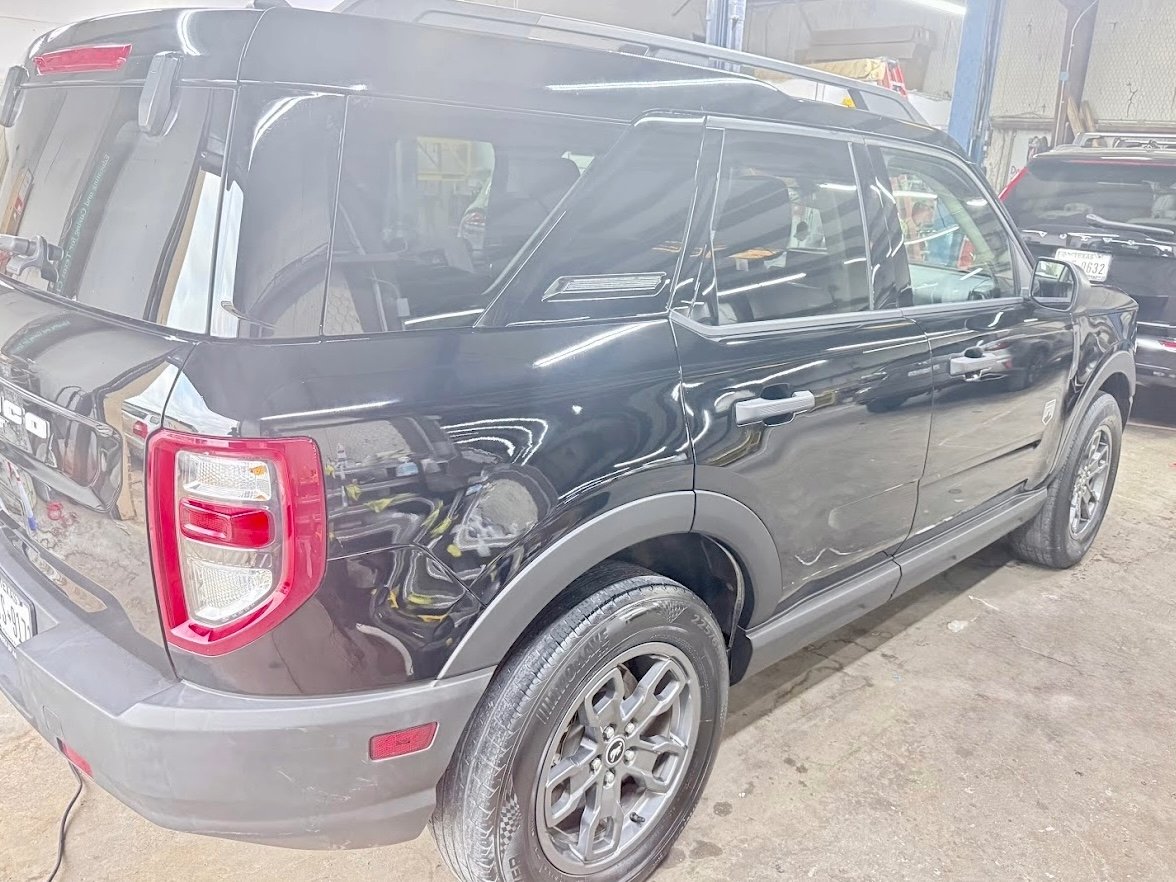
Drag the slider — a real front-end rebuild from our Lewisville floor, the kind of repair where the parts column runs two pages.
 Before
After
Before
After
Side Impact — Panels Replaced
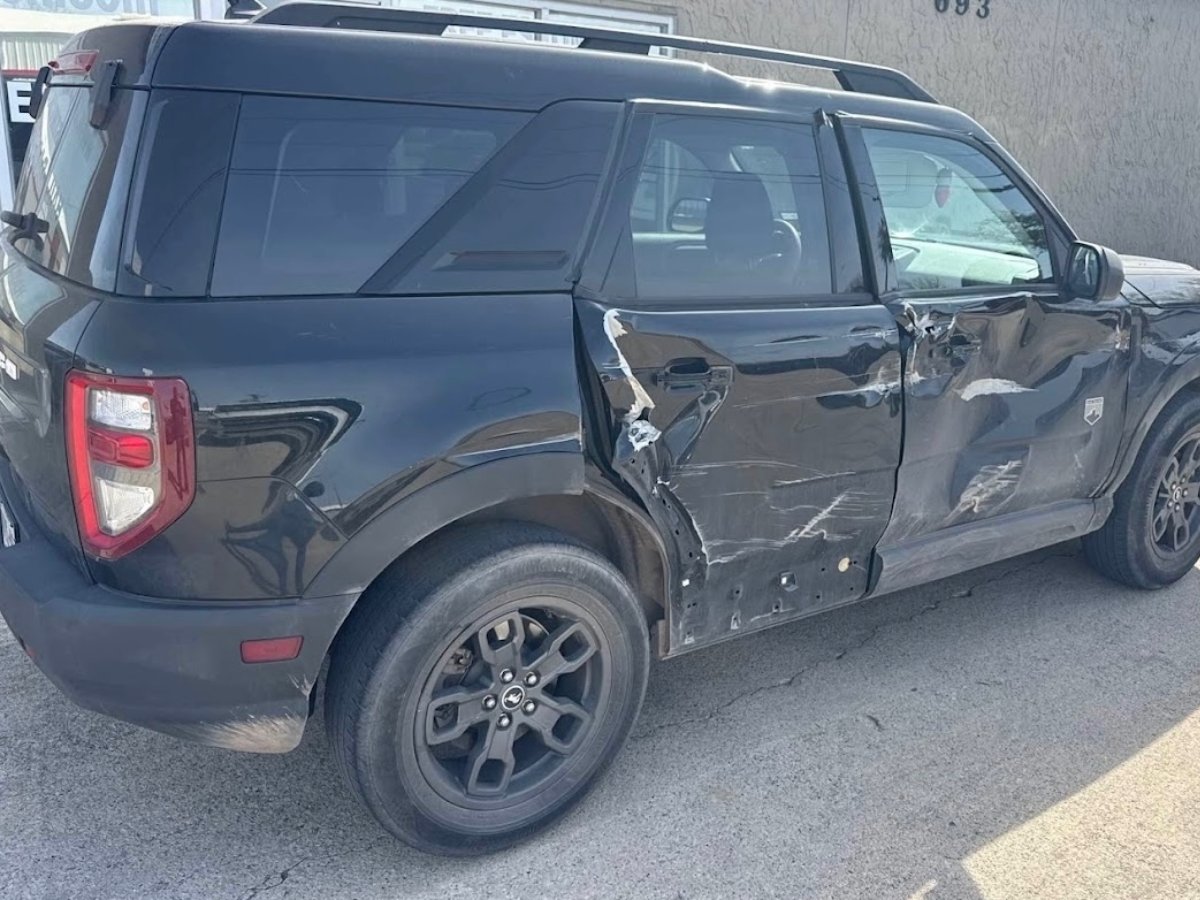
Pictured: a customer’s Ford Bronco Sport — doors and quarter repaired; which parts go on a car is the whole argument below
Parts Questions