I REAR-ENDED SOMEONE — WHAT HAPPENS NOW?
The guide for the driver nobody writes for. Short version: your liability coverage pays for their car and their injuries, up to your limits — that’s what it exists for, and causing a crash is not a moral failing, it’s a Tuesday on I-35E. Your own car is a separate question your liability never touches: collision coverage or your wallet. What you do in the first hour — the legal duties, what you say, what you photograph — shapes everything after. No judgment here; just the mechanics, the money, and the honest answer about your rates.
Stop, check on them, exchange information, and let the insurance system do the job you’ve been paying it for. Your liability coverage handles their car, their rental, and their injury claims up to your limits — you don’t negotiate with them or their carrier directly, yours does. Your own car needs its own plan: collision coverage (your deductible, likely an at-fault mark at renewal) or cash repair at published prices. At the scene, state facts without arguing fault — the percentages get assigned later from evidence, not from what anyone blurted on the shoulder. And a front end that hit something at speed deserves a teardown, not a glance: radiators, sensors, and structure live where your car just spent its energy.
Legal duties first: stop, give your name, address, registration, and insurance, and render reasonable aid (Transp. Code §550.023); crashes with injuries or an undrivable vehicle require an immediate police report (§550.026). Leaving is the one way to turn a fender-bender into a criminal case. Their side: they claim against your liability; your carrier investigates, negotiates, and pays up to your limits — cooperate with your insurer promptly, because your policy requires it and because they’re the ones defending you. Expect their rental or loss-of-use on your claim, possibly a diminished-value demand — legitimate in Texas. Your side: liability never pays for your own car; collision coverage does (deductible applies, and an at-fault claim typically counts against you at renewal — the weather-claim protection of 28 TAC §5.7016 does not cover this), or you pay cash at published rates. Fault isn’t always 100%: Texas compares negligence (§33.001) — brake-check and sudden-lane-change facts matter, which is why you photograph everything even when it feels like your fault.
The First Hour
YOUR LEGAL DUTIES ARE SHORT — AND NON-NEGOTIABLE
Texas asks four things of a driver involved in a crash, and they fit on one hand: stop at or near the scene, check on everyone involved and render reasonable aid, give your name, address, vehicle registration, and insurance information (Transp. Code §550.023), and report — immediately, to police — when the crash injures or kills someone or leaves a vehicle that can’t be driven away (§550.026). Do those four and the legal system treats the event as what it is: an accident. Skip the first one and it becomes a crime with a name — the penalties for leaving a scene scale from misdemeanor to felony with the harm done, and no repair bill ever got smaller by running from it.
On what to say: be human — ask if they’re okay, exchange everything the law requires, photograph both cars, both plates, and the scene exactly as you would if the fault were theirs. What you shouldn’t do is litigate the crash on the shoulder of the road, in either direction. “I didn’t see you stop” is a fact; “this is all my fault, my insurance will take care of everything” is a legal conclusion made before the evidence exists — and Texas assigns fault in percentages (§33.001), where the facts you photograph may matter more than you’d guess: brake lights that weren’t lit, a lane change that pinched your stopping room, a chain push from behind you. State facts, document everything, and let the two insurance companies do the arguing — it is literally what the premiums pay for.
The Other Side
WHAT HAPPENS ON THEIR SIDE OF THE CLAIM
The other driver files against your liability coverage, and from there the process mostly leaves your hands: your carrier investigates, negotiates, and pays what it owes up to your policy limits — repair or total-loss value for their car, a rental or loss of use while it’s down, and injury claims if there are any. Your job is to notify your insurer promptly and cooperate with it — your policy’s cooperation clause requires it, and your carrier can’t defend you against a claim it learns about late. You do not pay the other driver directly, you don’t owe their shop a number, and if they or their carrier contact you, the correct and polite answer is that your insurance company is handling it.
Two of their claims surprise at-fault drivers because they’re real. Loss of use: Texas law lets them recover the reasonable rental value of their car for the repair period from your side, even if they never rent. Diminished value: their car now carries an accident history, and Texas lets them recover that lost market value from your liability carrier on top of the repair — we know, because we wrote the guide their side is reading and the DV playbook it points to. Both come out of your coverage, not your pocket, up to limits — which is also the honest argument for carrying more than the state minimum next renewal.
Your Own Bumper
LIABILITY NEVER PAYS FOR YOUR CAR — HERE’S WHAT DOES
The coverage that pays them does nothing for you — that’s the whole design of liability insurance, and it’s the moment a lot of drivers discover what’s actually on their declarations page. If you carry collision coverage, your own repair runs through it: your deductible, your choice of shop (§1952.301 — no carrier may condition payment on their network), the ordinary supplement process for what teardown finds. If you’re liability-only, the repair is a cash conversation at published prices — honest ranges, no claim required, and the liability-only guide walks that math without judgment.
Either way, respect what your front end just did: it spent the crash’s energy on purpose. Behind a front bumper cover live the radiator and condenser, crash absorbers, radar and camera brackets, and the rails engineered to crumple — which is why a front-end hit that “just cracked the bumper” earns a teardown and why the structural measurement exists. A crooked wheel, a pull, coolant smell, or a warning light in the days after are your car filing its own supplement — report the symptom, don’t drive through it.
The Renewal Question
WILL YOUR RATES GO UP? THE HONEST ANSWER
Probably, at renewal — and anyone who promises otherwise is selling something. An at-fault accident is exactly the event most carriers’ rating systems charge for, typically when the policy renews rather than mid-term, and typically influencing rates for a few policy cycles while the claim sits on your CLUE record (about seven years of visibility). Texas’s consumer protections point elsewhere: 28 TAC §5.7016 shields weather and not-at-fault claims from nonrenewal — an at-fault crash is the case it deliberately doesn’t cover. What we won’t do is invent percentages; surcharge schedules vary by carrier, prior record, and tenure, and the only real number is the one on your renewal.
What actually helps: an otherwise clean record, accident-forgiveness if your policy includes it (check the declarations — it exists or it doesn’t, no arguing it in later), and shopping the market at renewal rather than assuming your loyalty is priced kindly. One honest caution on the tempting alternative — paying their damage privately to keep insurance out of it: your policy requires prompt notice of accidents, injuries have a habit of surfacing weeks later, and a private deal doesn’t bind anyone once a lawyer calls. For a true parking-lot scuff settled on the spot, people do it; for anything with people in the other car, the quiet route carries real risk. General information, not legal advice.
Unforced Errors
FIVE WAYS AT-FAULT DRIVERS MAKE IT WORSE
Leaving. The only move that converts an accident into a criminal charge — stay, every time, even when the damage looks trivial. Arguing fault at the scene or on social media. Percentages get assigned from evidence; your posted apology or their dashcam clip will outlive your memory of the moment. Ignoring your own carrier. Late notice is the easiest way to complicate the defense your premiums already bought; report promptly even when you dread the call. Giving the other side’s adjuster a recorded statement without thought. You owe cooperation to your insurer; you generally owe the other driver’s carrier nothing of the kind — let your carrier carry that conversation. Skipping your own car’s inspection. Guilt makes people treat their own damage as the penalty; your front end took the hardest hit in the crash and deserves the same teardown their rear end is getting — the written estimate is free.
Start To Finish
FIVE STEPS WHEN THE CRASH WAS YOUR FAULT
Stop, Check On Them, Call 911 If Needed
The duties in §550.023 come first: stop, render reasonable aid, and get help coming when anyone’s hurt. Everything else in this guide assumes you did the human part right.
Exchange Information And Document Everything
Name, address, registration, insurance — given and received. Photograph both cars, both plates, and the scene: comparative fault runs on evidence, and the facts that soften your percentage are captured now or never.
Notify Your Insurer Promptly — And Only Yours
Your policy requires prompt notice and your cooperation; your carrier then handles the other side’s claim, adjuster, and negotiation. Their carrier’s questions route through yours.
Get Your Own Car Torn Down And Measured
Your front end absorbed the crash by design. Free written estimate, structural measurement, and the honest read on whether it’s a collision claim or a cash repair at published prices.
Plan For Renewal, Not Just Repair
Expect the at-fault mark to show at renewal; check for accident forgiveness on your declarations, keep the rest of the record clean, and shop the market when the term ends. One crash is an event, not an identity.
Real Results
A FRONT-END REBUILD, BEFORE & AFTER
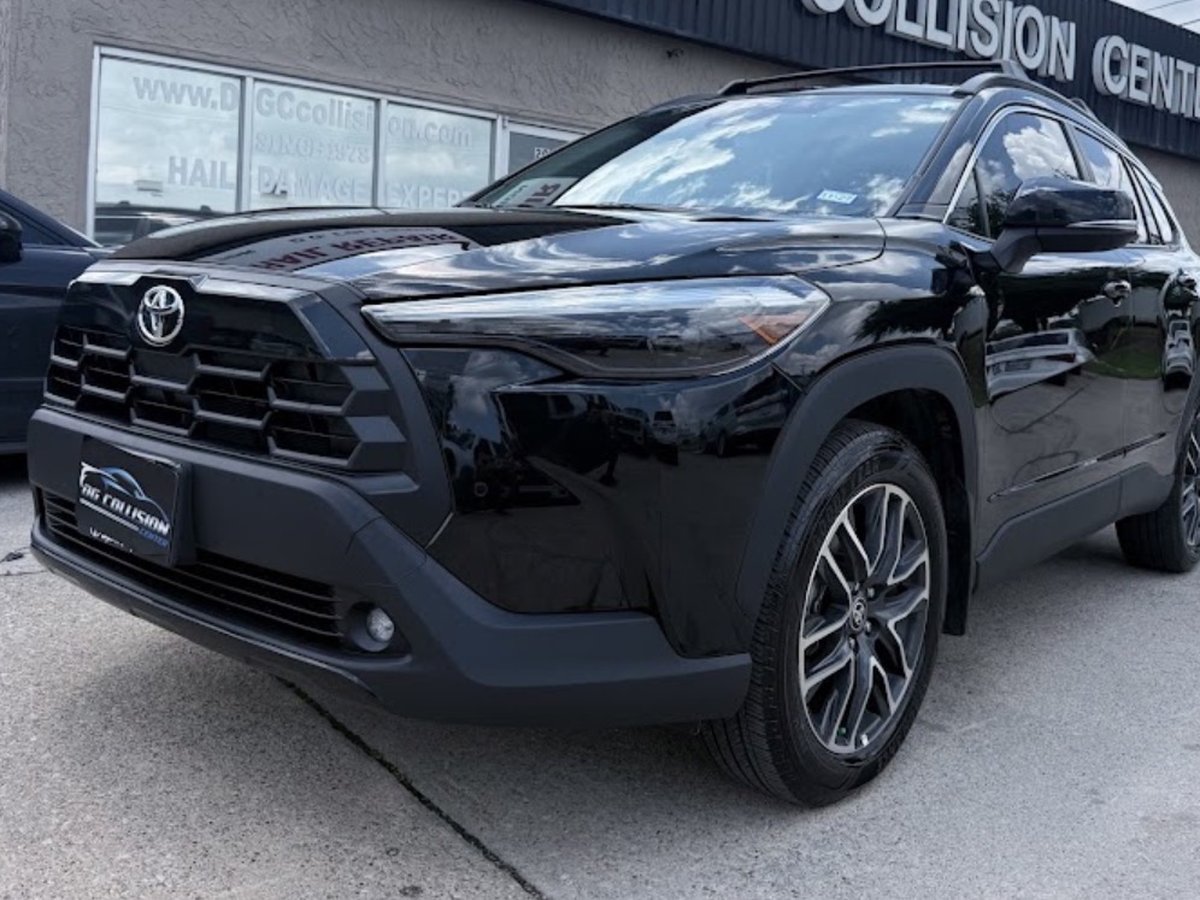
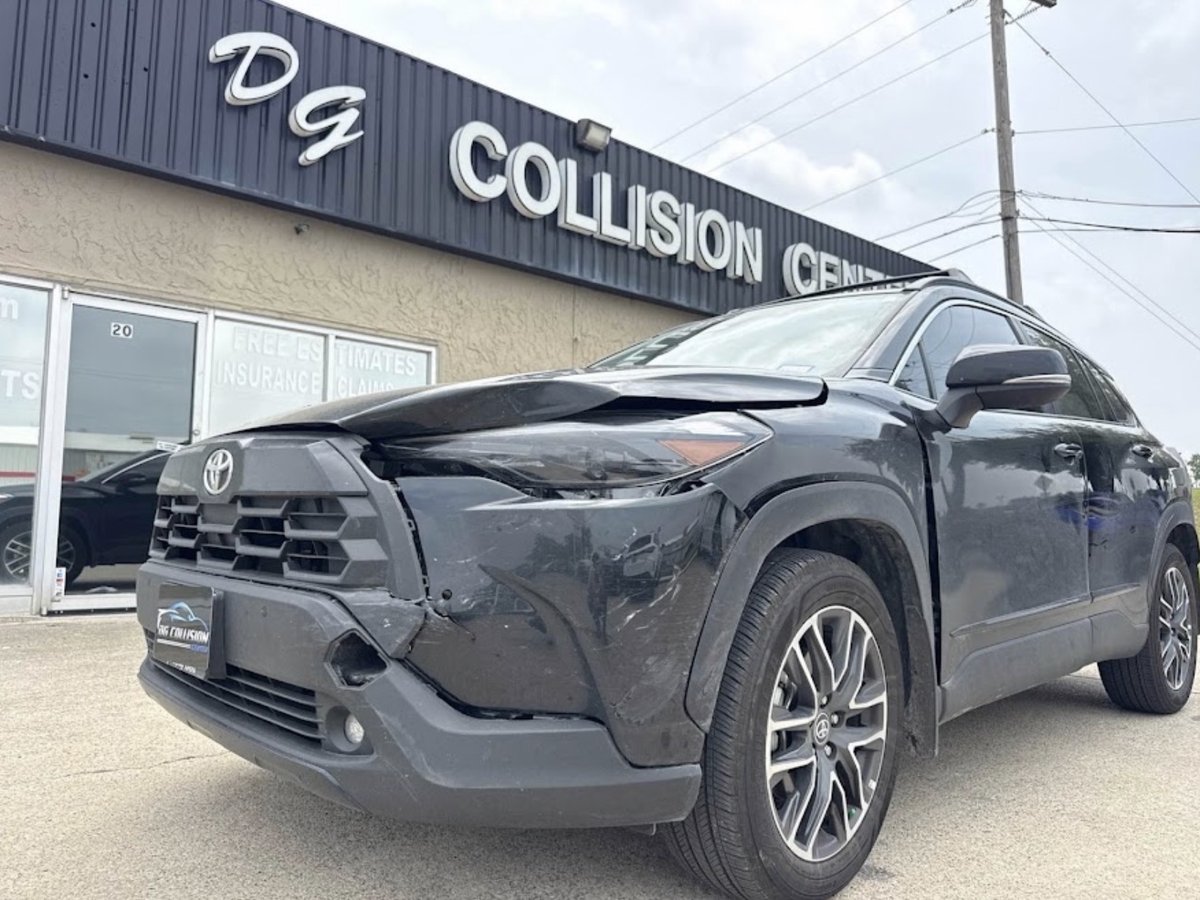
Pictured: a customer’s Toyota RAV4 — bumper, grille, and hood damage from a front-end impact, rebuilt on our Lewisville floor. The striking car’s side of the story. Drag the slider.
 Before
After
Before
After
Front-End Collision — Bumper, Grille & Hood
The energy your car spends protecting you lands here — torn down, measured, and rebuilt to spec
At-Fault In Texas
FREQUENTLY ASKED QUESTIONS
Free · No Obligation
GET A REAL NUMBER — NO POLICY NEEDED
Tell us what you drive and what happened. We’ll come back with a written estimate — so you can make the file-or-skip call with the real number in hand.
Prefer to talk now? Call (972) 219-0864 · or text us photos