LIABILITY-ONLY AND YOUR CAR GOT DAMAGED — WHAT ARE YOUR OPTIONS?
Liability insurance pays for the other driver’s car — never yours. So your options come down to who caused the damage. Someone else at fault: their liability carrier owes your whole repair, no deductible, and being liability-only yourself changes nothing. Hail, or a crash that’s on you: there’s no policy to bill, and the repair is a cash decision — which is exactly where published pricing and an honest shop matter most.
Liability-only fixes the other driver’s car, never yours — so the playbook splits: another driver at fault means a third-party claim on their insurance; a storm or single-car incident means cash repair at published rates. That second lane is why our prices are public — $75–$200 per dent PDR and honest panel-by-panel numbers, no coverage required.
Liability-only means your policy fixes the other driver’s car, not yours — TDI’s guide describes liability as paying to repair the other driver’s vehicle, and it’s collision and comprehensive that pay for your own. Texas law only requires the liability part; nothing makes you carry the rest. So the playbook splits three ways. Another driver at fault: file a third-party claim with their insurance — your own coverage status is irrelevant, they owe the repair and a rental. Hail: with no comprehensive and no at-fault driver, there’s nobody to bill — it’s a cash repair, priced from our published tables (single dents run $75–$200 each cash, plus trim-removal labor where panels have to come apart). Your own crash: same cash math, sequenced so safety items come first and cosmetics wait until you’re ready. Then close the gap: comprehensive and collision can usually be added any time — but not once a storm is already on the radar.
- Their fault: their liability insurance pays everything — your liability-only status costs you nothing.
- Hail with no comprehensive: nobody to bill — cash PDR at $75–$200 per dent (published), light 1–2 panel hits $750–$1,500.
- Your fault: cash repair by priority — minor dents and scratches run $300–$800 on our published collision table.
- Close the gap early: insurers stop adding coverage when storms threaten — add comprehensive before the season, not during.
The Fine Print, Plainly
WHAT LIABILITY-ONLY ACTUALLY COVERS
The Texas Department of Insurance describes it in one line: liability insurance “pays to repair the other driver’s car if you caused the accident,” plus the other side’s medical bills. If that’s the seat you’re in today, the at-fault guide walks that whole road without judgment. Read that sentence twice and notice whose car never appears in it — yours. The coverages that pay for your vehicle are the two optional ones: collision (“pays to repair or replace your car after an accident,” in TDI’s words) and comprehensive, which TDI’s storm guidance says “will pay to repair or replace your car if it’s damaged or destroyed by hail, wind, fire, or flood.”
Texas law never makes you buy those two. The state’s financial-responsibility chapter (Transp. Code ch. 601) requires liability coverage — proof you can pay for what you damage — and stops there; the only party that ever requires comprehensive and collision is a lender, which is why TDI’s guide notes that if you still owe money on your car, your lender will require both. A paid-off car with liability-only coverage is a completely legal, very common Texas setup. It just carries one built-in bet: when your own car takes damage, the outcome depends entirely on who caused it — which is the fork the rest of this guide follows.
The Good Fork
SOMEONE ELSE CAUSED IT — THEIR INSURANCE OWES YOU
Here’s the part liability-only drivers consistently underestimate: your coverage status has nothing to do with their obligation. Texas has no rule reducing what an at-fault driver owes you because your own policy is thin. The Office of Public Insurance Counsel addresses your exact situation by name: if the other driver has insurance but you don’t carry collision coverage, “you have to deal directly with the other driver’s insurance company” — a third-party claim, and their carrier owes your repair, a rental during the fix, and diminished value on a documented claim, with no deductible anywhere in the equation.
The honest catch is process, not entitlement. Because you can’t fall back on your own collision coverage, you’re negotiating with their carrier alone — and TDI warns plainly that the other company may dispute fault, may be slow to return calls, and offers “no guarantee they will pay.” That makes your evidence file the whole ballgame: police report, scene photos, witnesses, and a written line-item estimate before you accept any number. The complete third-party playbook — what they owe, the liability investigation, your leverage when they stall — is our not-at-fault guide, and the rental piece specifically is covered in the rental-car guide. If the driver who hit you turns out to carry nothing either, that worst case has its own honest map: the uninsured-driver guide — for a liability-only victim it mostly runs through Justice Court, so read the collectability section before spending a filing fee.
LIABILITY-ONLY AND STARING AT DAMAGE? START WITH A REAL NUMBER.
Free written estimate from published tables — whether it becomes their carrier’s bill or your cash decision.
The Fork Nobody Warns You About
HAIL WITH NO COMPREHENSIVE — THE NOBODY-TO-BILL PROBLEM
Hail is the scenario that exposes liability-only hardest, for a simple structural reason: there’s no at-fault driver. A crash gives you a third party to claim against; a storm doesn’t. Comprehensive coverage is the product built for exactly this — and without it on the policy, there is no claim path at all. Not a reduced one, not a slow one: none. We say that bluntly because the alternative is watching people burn days calling carriers about a claim that structurally cannot exist.
What’s left is a cash decision, and it deserves real numbers instead of dread. Our published hail pricing — the same table behind our hail cost guide — puts individual dents at $75–$200 each for cash paintless dent repair, plus trim-removal labor where panels or headliners have to come off for tool access, and light hail across one or two panels at $750–$1,500. That pricing changes the strategy for a liability-only driver: a hood-and-roof peppering that would be a $3,000 insurance claim can become a few hundred dollars of targeted PDR on the dents you actually care about — because cash customers get to choose. Paint-intact dents can also wait indefinitely without getting worse, which means you can fix the hood this month and the roof after the next paycheck. That’s not a discount program; it’s just what honest per-dent pricing makes possible.
Spending Your Own Money Well
THE CASH-REPAIR PLAYBOOK
Three rules make cash repair rational instead of painful. Get the line-item estimate first — free here, and it turns “probably thousands” into an actual number you can plan around; our repair cost estimator gives you a published range in about a minute if you want it before calling anyone. Sequence by function, not appearance: a crushed bumper absorber, a door that won’t latch, or a headlight aimed at the trees gets fixed now; a paint-intact dent on the quarter panel gets fixed whenever you feel like it. A good estimate separates those lines so you can approve them separately. And don’t pay collision-repair prices for PDR-class damage — if the paint isn’t broken, paintless repair is usually the cheaper, faster, factory-finish answer, which is the whole subject of our PDR-vs-body-shop guide.
Before The Next Storm
CLOSING THE GAP FOR NEXT TIME
If this guide found you standing next to a hailed-on car, file this section for later — but do file it. Most carriers will add comprehensive and collision to an existing policy whenever you ask; that’s company practice rather than a legal right, and some insurers photograph or inspect the vehicle first, precisely so last week’s dents don’t become next week’s claim. Which points at the honest limitation: coverage starts when it starts. Damage that predates the coverage isn’t covered, and no amount of creative timing changes that — attempting it is the fraud line, not a loophole.
The other timing trap is the weather itself. When a storm is bearing down, the window closes: TDI’s own guidance on named Gulf storms is that once one enters the Gulf, most insurers “stop selling new policies or making changes to existing ones,” and DFW carriers apply the same logic as common practice when hail is in the forecast — binding restrictions go up, and coverage additions wait until the sky clears. Translation: the day to add comprehensive is a boring sunny one in February, not the afternoon the radar turns purple. Once the coverage exists, the question shifts from “can I claim?” to “should I?” — and that math, deductibles against published repair ranges, is what our file-or-pay guide is for.
The Playbook
LIABILITY-ONLY DAMAGE IN 5 STEPS
01. Establish who caused it
Everything forks on fault. Another driver: document it — police report, photos, their insurance card — because their carrier owes you the whole repair regardless of your own coverage.
02. Get the written estimate
Free, line-item, from published tables. It’s the demand document for a third-party claim and the planning document for a cash repair — either way, it’s step one of spending wisely.
03. Their fault? Run the third-party claim
File directly with their carrier, hand over the evidence file, and don’t accept a desk number before a real teardown. No deductible applies to you at any point.
04. Your problem? Repair by priority
Safety items first — latches, lights, structure. Paint-intact dents can wait indefinitely, and per-dent PDR pricing means you fix what you care about, when you can.
05. Close the gap on a sunny day
Add comprehensive and collision before storm season — carriers freeze coverage changes when weather threatens, and new coverage never reaches backward to old damage.
From Our Shop Floor
WHAT HONEST PER-DENT PRICING LOOKS LIKE
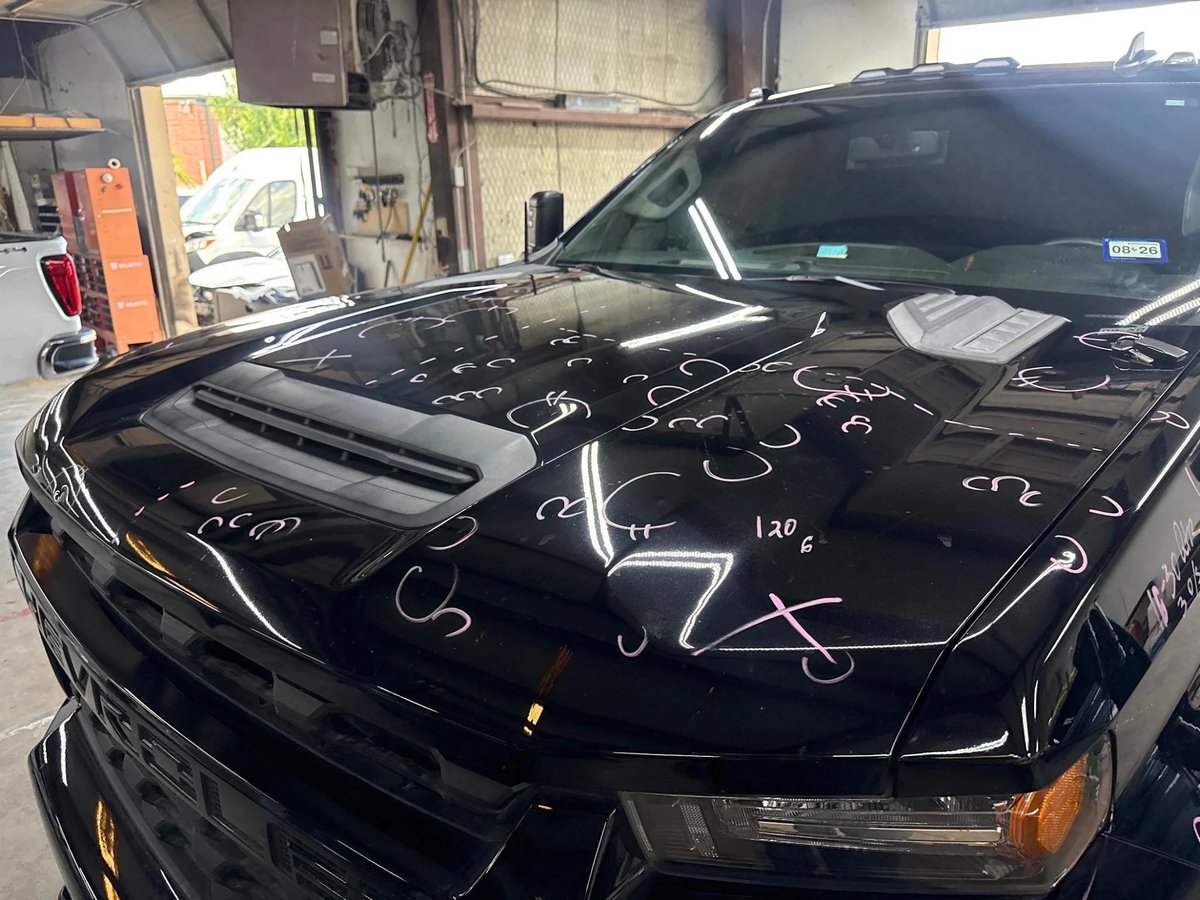
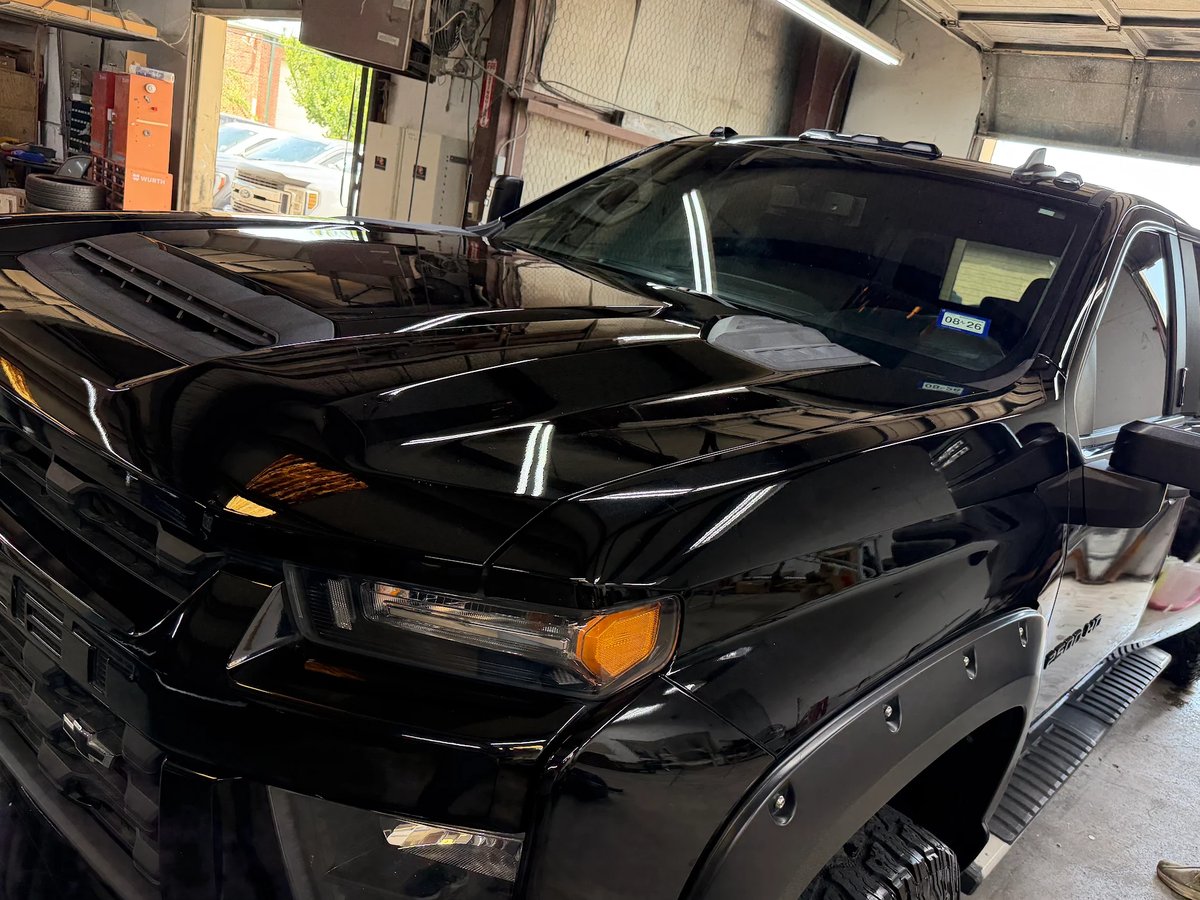
Drag the slider — a real hood from our Lewisville floor, every dent marked and counted during the estimate before a single one was priced.
 Before
After
Before
After
Marked Hail Hood — Counted, Then Repaired
Pictured: Chevrolet Silverado 2500HD hood — 120 hail dents marked during the estimate, then removed by paintless dent repair
Liability-Only Questions