I GOT REAR-ENDED — WHAT DO I DO NOW?
Short version: in Texas, fault in a rear-end crash usually lands on the driver behind — the law requires an assured clear distance (Transp. Code §545.062) — but it’s argued case by case, not automatic. Your repair has two doors: their liability insurance (no deductible, no legal clocks) or your own collision coverage (starts now, deductible chased for you under §542.204). And the damage you can see is rarely the whole story — a rear bumper cover springs back over crushed structure. Here’s the entire map, from the shoulder of the road to the supplement that finds what the cover hid.
Document everything, choose your claim door deliberately, and never let a springy bumper cover declare the damage “minor.” Fault usually sits with the driver who hit you — Texas requires an assured clear distance behind every vehicle (§545.062) — so their liability carrier typically owes your repair, your rental, and your car’s lost market value, with no deductible. When their carrier stalls, your own collision coverage starts the repair today and §542.204 makes your insurer chase your deductible back within a year or refund it. Either door, the first honest number comes from a teardown, not a parking-lot glance.
Rear-end crashes have one legal anchor in Texas: §545.062 requires the following driver to maintain an assured clear distance — room to stop safely considering speed, traffic, and conditions. That’s why fault usually lands behind you, and also why it isn’t automatic: Texas compares negligence (§33.001 — you recover unless you’re more than 50% responsible), and dead brake lights, sudden reversing, or a multi-car chain can move the numbers. At the scene: safety, 911 if anyone’s hurt, photos of both cars and both plates before anything moves, insurance exchanged, police when the law requires a report (§550.026). The repair: their liability pays with no deductible but no deadline pressure on their side — or your collision pays now and your carrier pursues theirs. The trap: rear bumper covers are plastic and spring back; the absorber, reinforcement, trunk floor, and sensors behind them don’t. A trunk that needs a slam, new gaps, or a crooked wheel after a “minor” tap is the structure reporting in — and the computerized measurement that settles it is in-house.
The Legal Ground
WHY FAULT USUALLY SITS BEHIND YOU — AND WHEN IT DOESN’T
Texas doesn’t have a statute that declares the rear driver automatically at fault. What it has is Transportation Code §545.062, which requires every following driver to maintain “an assured clear distance” — enough room, considering speed, traffic, and road conditions, to stop safely without hitting the vehicle ahead. A driver who plants their front end in your trunk has, almost by definition, failed that duty — which is why adjusters, juries, and common sense usually put a rear-end crash on the driver behind. If you were the one hit, the law starts on your side.
“Usually” is doing honest work in that sentence, though. Texas runs comparative negligence (Civ. Prac. & Rem. Code §33.001): fault is split in percentages, you recover as long as you’re not more than 50% responsible, and your recovery shrinks by your share. The classic arguments that move the percentages: brake lights that weren’t working, a sudden reverse at a light, cutting in and braking hard, or a multi-car chain where the question becomes who pushed whom — a middle car can be both victim and striker, and the photo evidence of which bumper hit what settles it. None of this changes your first moves; it just means the facts you document in the first ten minutes are worth real money later. If you were the one who caused the crash, that side of the street has its own honest guide.
At the scene, the checklist is the same one from our full after-an-accident playbook, compressed: safety first and 911 if anyone is hurt; move drivable cars out of the lane; exchange names, addresses, insurance, and plates with a photo of their card rather than your handwriting; and photograph both vehicles before anything moves — your rear, their front, the contact point, the whole scene with lane markings. Texas requires an immediate report when the crash injures or kills someone or leaves a vehicle undrivable (§550.026); when police come, the CR-3 crash report becomes the neutral referee on fault. When they don’t, your documentation carries the claim — and if child seats were in the car, they belong on it too.
The Claim Decision
THEIR INSURANCE OR YOURS — THE TWO-DOOR CHOICE
Door one: their liability carrier. When fault is clear, the other driver’s insurance owes your repair with no deductible, plus a rental or the value of your lost use, plus — the part most people never claim — your car’s diminished value. The honest catch: Texas’s prompt-payment deadlines bind an insurer only to its own policyholders, so a third-party claim runs on their timetable — no statutory clock hurries their investigation, and a disputed-fault file can sit.
Door two: your own collision coverage. The repair starts immediately on your schedule, you front your deductible, and your carrier pursues the at-fault driver’s insurer through subrogation — with real teeth: §542.204 requires your carrier to pursue your deductible within one year of paying the claim or refund it to you. Clear fault and a responsive carrier favor door one; disputed fault, a slow adjuster, or a car you need back this week favor door two. The full decision tree, including the hybrid paths, lives in the not-my-fault guide — and whichever door you pick, Texas law puts the shop choice in your hands, not theirs (§1952.301).
Beyond The Repair Bill
THE MONEY PEOPLE LEAVE ON THE TABLE
A rear-end claim against the at-fault driver is bigger than the body work, and the extras are routinely forgotten. Loss of use: Texas case law lets you recover the reasonable rental value of your car for the repair period from the at-fault side — even if you never actually rent a replacement. Diminished value: your car now carries an accident history that the market discounts, and that loss is recoverable from their liability carrier on top of the repair — evidence beats formulas, and the DV guide shows exactly what to gather. Property in the car: child seats (replaced per NHTSA’s criteria), damaged cargo, the aftermarket hitch that took the hit — documented line items, all of them.
One caution worth stating plainly: if their carrier calls early with a fast, friendly settlement figure, remember that a number offered before a teardown is a number priced before the facts. Get the written estimate first — it’s free — and read anything called a release carefully before signing, because a signed release generally ends the conversation. General information, not legal advice; for injuries, talk to a doctor first and a lawyer if you need one — our lane is the car.
Start To Finish
FIVE STEPS FROM IMPACT TO REPAIRED
Secure The Scene, Then Photograph Both Cars
Safety and 911 first if anyone’s hurt. Then shoot your rear, their front, both plates, the contact point, and the wide scene before anything moves — in a chain collision, which bumper touched what is the evidence that assigns the percentages.
Exchange Information — And Call Police When Required
Names, addresses, insurance, plates — photograph their card. Texas requires an immediate report when someone’s hurt or a car can’t drive away (§550.026); the CR-3 report that follows is the neutral referee adjusters trust on fault.
Choose Your Claim Door Deliberately
Clear fault and a responsive carrier: file on their liability — no deductible. Disputed fault or a stalling adjuster: file on your own collision, repair now, and let §542.204 chase your deductible back within the year.
Get The Written Estimate And The Measurement
Before any number is accepted, the bumper comes off and the structure gets measured in millimeters on the bench. That’s how a springy cover stops deciding what your claim is worth, and the documentation feeds every door: repair, supplements, and diminished value.
Repair, Supplement, Then Collect The Rest
Hidden damage found at teardown goes to the carrier as a documented supplement — routine, not a fight. When the car’s done, the file we hand you supports the loss-of-use and diminished-value conversation with the at-fault side.
Real Results
A REAR-END REBUILD, BEFORE & AFTER
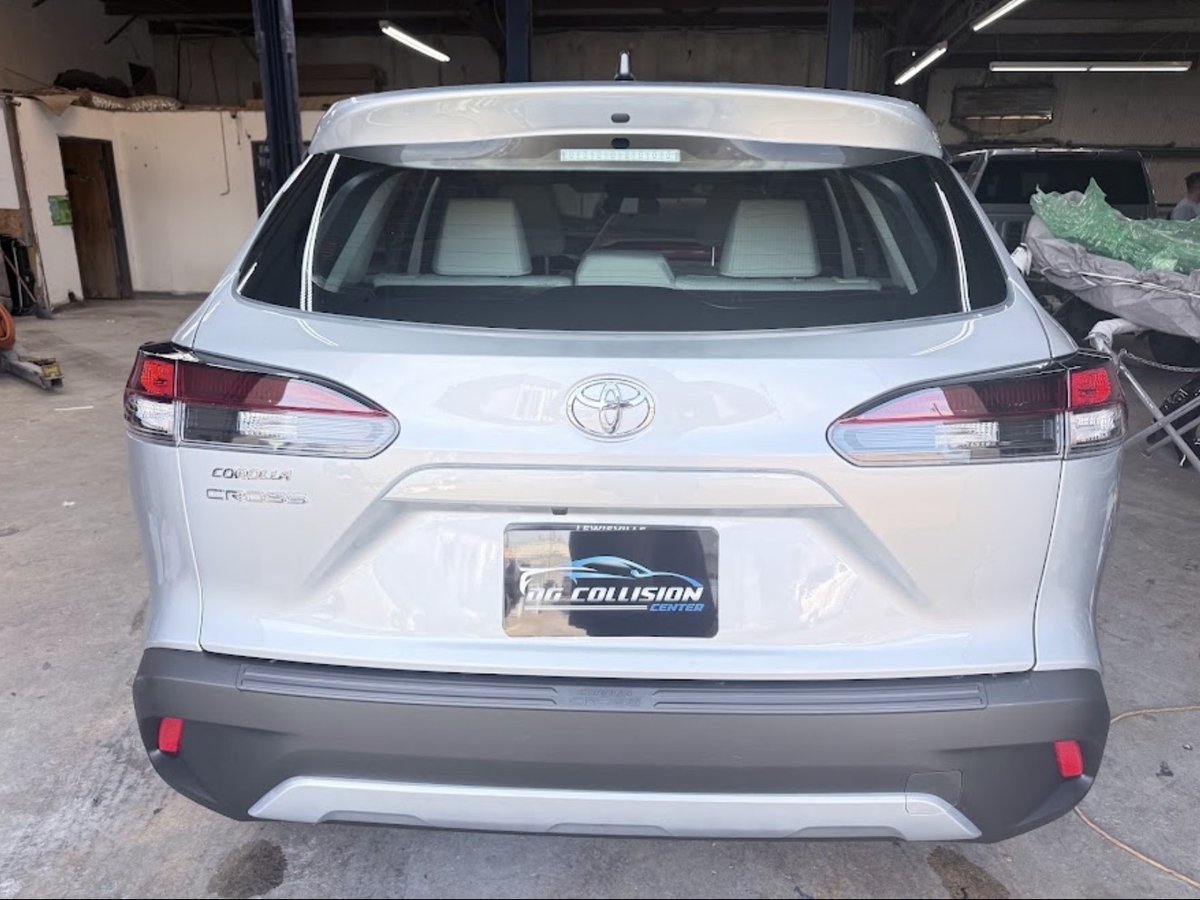
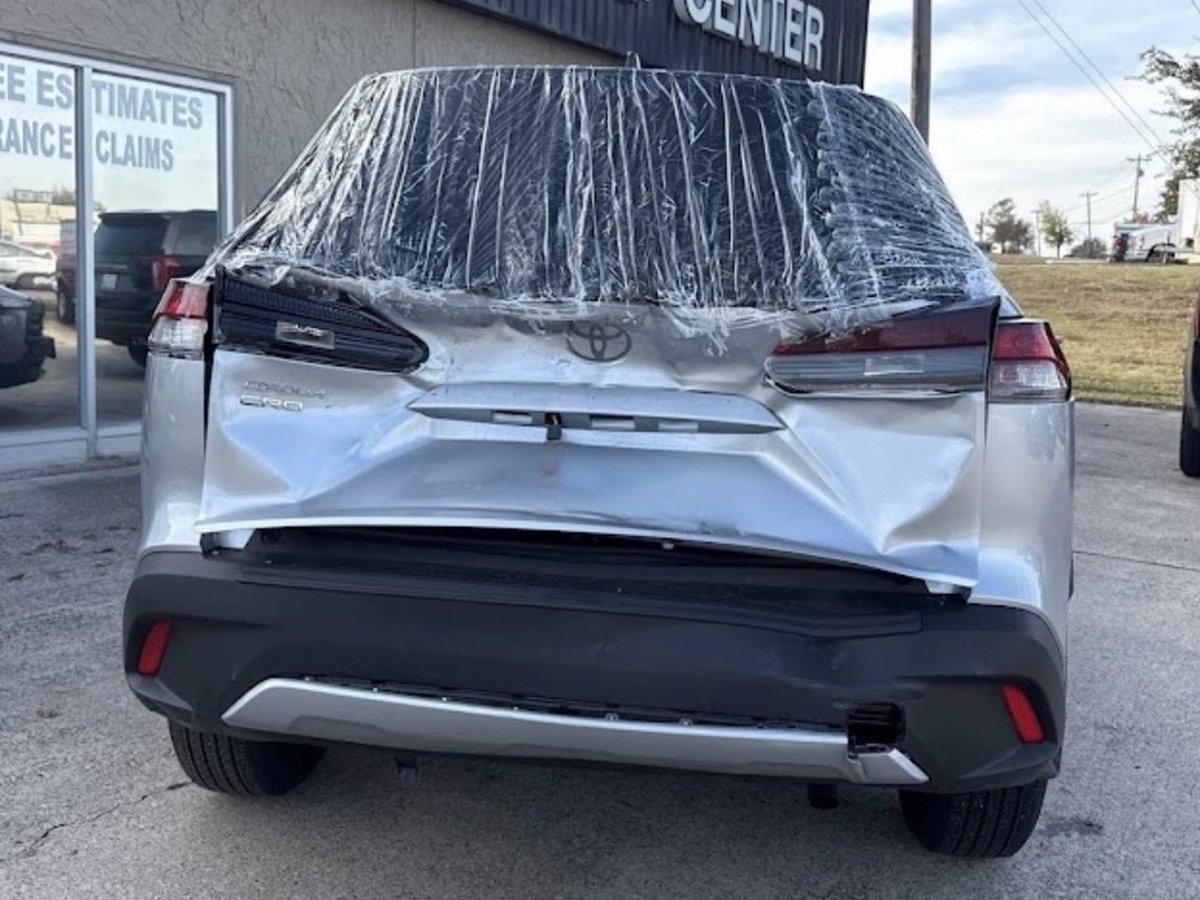
Pictured: a customer’s Toyota Corolla Cross — crushed tailgate and rear panel rebuilt on our Lewisville floor, exactly the class of hidden-structure damage this guide describes. Drag the slider.
 Before
After
Before
After
Rear-End Collision — Tailgate & Rear Panel
The cover showed a dent; the teardown found the structure — documented, supplemented, and rebuilt to spec
Rear-Ended In Texas
FREQUENTLY ASKED QUESTIONS
Free · No Obligation
GET A REAL NUMBER — NO POLICY NEEDED
Tell us what you drive and what happened. We’ll come back with a written estimate — so you can make the file-or-skip call with the real number in hand.
Prefer to talk now? Call (972) 219-0864 · or text us photos