VOLKSWAGEN BODY SHOP LEWISVILLE, TX
Jetta, Tiguan, Taos, Atlas, GTI, Golf R, and the ID electric family — the people’s car with premium bones. A Volkswagen rides on the Group’s MQB toolkit — the same modular platform that debuted on an Audi A3 — and even its paint codes are shared across the Group: the identical formula answers to one name on an Audi and another on a VW. The trap is the price tag: shops and adjusters treat a Tiguan like a commodity crossover, when underneath it’s engineered to Group standards. We repair to those standards — procedures first, IQ.DRIVE recalibrated through our calibration specialists, the L-codes matched exactly. Free loaner, written lifetime warranty, direct billing.
 Before
After
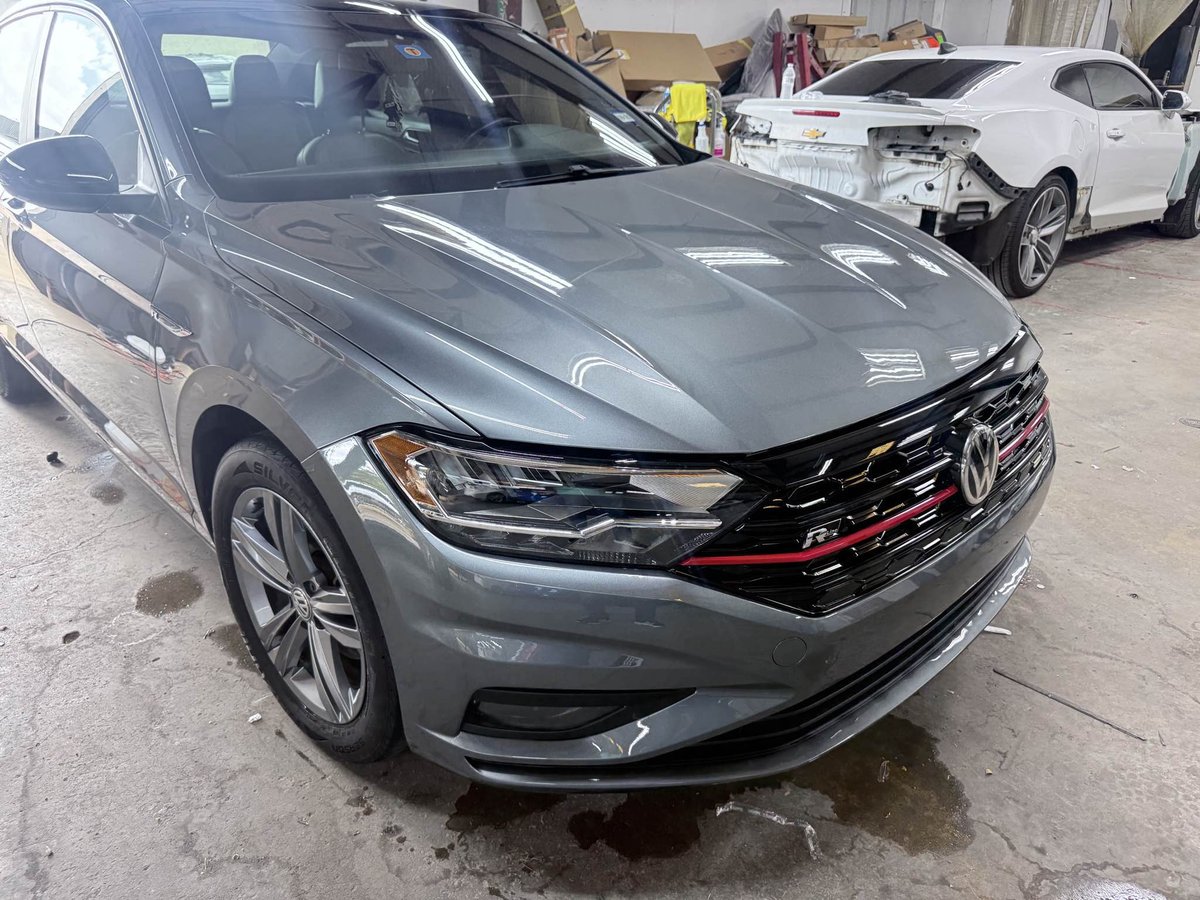
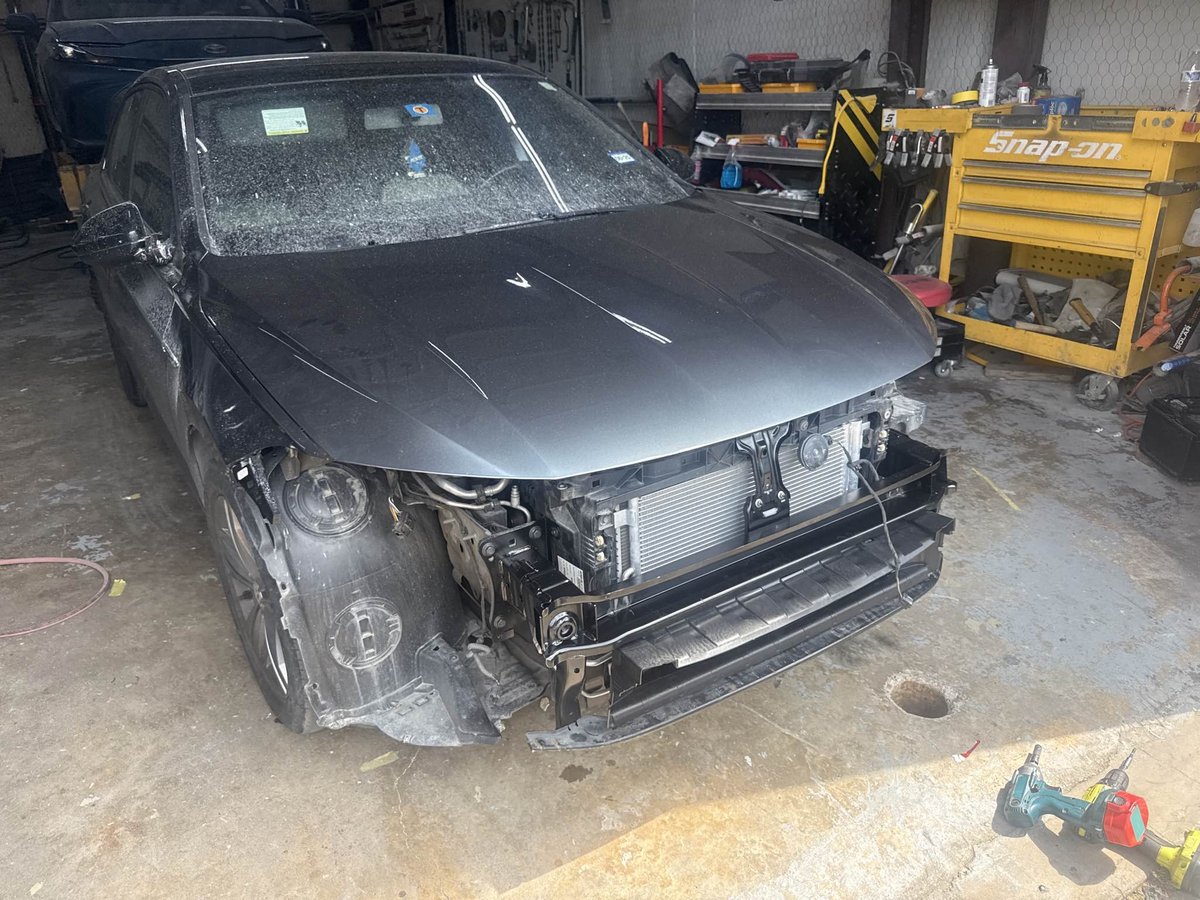
Drag the line — a customer’s Jetta R-Line, torn down to rebuilt at our Lewisville shop.
Before
After
Drag the line — a customer’s Jetta R-Line, torn down to rebuilt at our Lewisville shop.
DG Collision Center repairs Volkswagens to the standard the engineering deserves — Group standard, not commodity standard. Nearly every gas Volkswagen on a DFW road rides on MQB, the Group’s Modular Transverse Toolkit: a platform that debuted in 2012 on the third-generation Audi A3, has underpinned more than 32 million vehicles, and stretches from the Golf all the way to the seven-seat Atlas — which means the car’s construction, procedures, and tolerances are shared with premium platform-mates even though its price isn’t. The kinship runs down to the paint: the Group’s L-prefix code system (L for “Lack,” German for paint) is shared across its brands — LY9B is Ibis White on an Audi and Oryx White on a Volkswagen, and the formula is identical. The repair trap is the badge: adjusters and volume shops treat a Tiguan like a generic crossover, shortchanging the procedures the structure actually requires — so we run the same discipline here that our Audi hub documents, on the family car that shares its bones. The electronics earn the same respect: IQ.DRIVE has come standard on automatic-transmission Volkswagens since the 2024 model year — Front Assist emergency braking, Lane Assist, adaptive cruise, and crucially an Active Blind Spot Monitor and Rear Traffic Alert, which put radar in the rear corners — so the everyday DFW rear-ender is a sensor job on both ends of the car, decoded from your build and recalibrated through our calibration specialists. The ID.4 — built in Chattanooga, Tennessee until Volkswagen ended its U.S. production in 2026 — and the ID. Buzz get full high-voltage protocol; the Atlas and Atlas Cross Sport still come out of Chattanooga; and the GTI and Golf R bring enthusiast owners, documented modifications, and Lapiz Blue — code LD5K. Genuine parts argued in writing under Texas Insurance Code §1952.301; free loaner, no day limit; direct billing — your out-of-pocket is typically your deductible, once.
- The bones are Group bones — MQB debuted on an Audi A3 and carries 32 million vehicles, Golf to Atlas. A Volkswagen deserves platform-grade procedures, not commodity-crossover shortcuts.
- The paint codes are literally shared — the Group’s L-codes cross its brands: LY9B is Ibis White on an Audi, Oryx White on a VW, same formula. We match from the code, and the code tells the truth.
- IQ.DRIVE is standard, radar and all — on automatics since the 2024 model year, including blind-spot and rear-traffic radar in the rear corners. A bumper hit at either end is a calibration event.
- The ID family gets EV protocol — high-voltage disable per factory procedure before structural work, battery-adjacent damage documented, verified before delivery.
- The trap is the price tag — the most common bad VW repair isn’t malice, it’s a shop pricing the badge instead of the engineering. We price the engineering.
- Genuine parts have legal backup — Texas Insurance Code §1952.301 bars insurers from dictating parts by brand, type, or condition. We make that argument for you, in writing.
The People’s Car With Premium Bones
Here’s the open secret of the Volkswagen Group: the engineering doesn’t know what the badge costs. Nearly every gas Volkswagen in a DFW driveway — Jetta, Golf, Taos, Tiguan, all the way up to the seven-seat Atlas — rides on MQB, the Group’s Modular Transverse Toolkit: a platform strategy that took four years and a fortune to develop, debuted in 2012 on the third-generation Audi A3, and has since underpinned more than 32 million vehicles across the Group’s brands. Your Tiguan’s structural logic, its joining methods, its tolerances — they come from the same toolkit as cars wearing far more expensive badges. And that creates the specific trap this page exists to name: a Volkswagen priced like a commodity gets repaired like a commodity. Adjusters write it like a generic crossover; volume shops fix it like one. But the structure doesn’t care what the monthly payment was — it requires the Group-grade procedures it was built with, and that’s the standard we run here: the same discipline our Audi hub documents, applied to the family car that shares its bones.
The kinship isn’t a metaphor — it goes down to the paint code. The Group runs one L-prefix paint system across its brands (the L stands for “Lack,” German for paint), and the same code means the same formula wherever it appears: LY9B is Ibis White on an Audi and Oryx White on a Volkswagen — two names, one identical mix. That’s why we match from the code plate, never the marketing name, and prove every mix on a sprayout card before it touches a panel — with Lapiz Blue, code LD5K, the GTI and Golf R signature, getting the extra respect an enthusiast’s chosen color deserves. The electronics follow the same read-the-car rule with an unusually generous baseline: IQ.DRIVE has come standard on automatic-transmission Volkswagens since the 2024 model year — Front Assist emergency braking and pedestrian monitoring, Lane Assist, adaptive cruise with stop-and-go, Travel Assist, Emergency Assist, and critically an Active Blind Spot Monitor with Rear Traffic Alert, which means radar lives in the rear corners of even a base Jetta. The everyday DFW claim — the stop-and-go rear-ender on 35E or the tollway — is a sensor job at either end of this brand’s newer cars, so we decode what your build actually carries, remove and reinstall the hardware correctly, and calibrate through our specialists with printed verification.
The lineup’s edges each get their own respect. The ID.4 — the electric crossover Volkswagen built in Chattanooga, Tennessee until ending its U.S. production in 2026 — and the ID. Buzz, the bus reborn, carry real high-voltage systems: factory disable procedure before structural work, battery-adjacent damage inspected and documented, everything re-verified at delivery — and the American-built ID.4s already on DFW roads aren’t going anywhere, which makes documented, procedure-correct repair part of protecting what they’re worth. The Atlas and Atlas Cross Sport still come out of Chattanooga — MQB stretched to its seven-seat maximum, a Texas-sized family hauler with American roots. And the GTI and Golf R bring the brand’s enthusiast heart: modified cars documented as found at blueprint, panel gaps set tight, and owners who will absolutely notice if the blend edge sits wrong. And every car pictured on this page is a customer’s Volkswagen: the Jetta R-Line in the before/after was torn down to the radiator support at our shop, rebuilt to Group standard, and delivered with its calibration file.
The Lineup
EVERY VOLKSWAGEN, AND ITS QUIRKS
Commuter sedans to seven-seat haulers to the electric bus — each with its own repair personality.
Jetta & GLI
DFW’s value commuter — tollway miles, apartment parking, first-car duty. Its classic claim is the stop-and-go rear-ender, and on IQ.DRIVE-era cars that’s a radar event at both bumpers. Decoded, repaired, calibrated.
Tiguan
The volume Volkswagen — school runs, office decks, 35E stop-and-go — and the one most often shortchanged by commodity-crossover estimates. It rides on the Group toolkit; we repair it like it does.
Taos
The city-sized entry — tight parking, urban door swings, first-owner insurance claims. Compact footprint, full sensor reality, and the same Group-standard procedures as its bigger siblings.
Atlas & Atlas Cross Sport
MQB stretched to seven seats and built in Chattanooga, Tennessee — the Texas-sized family Volkswagen. Liftgate claims, running-board strikes, third-row family logistics our free loaner actually solves.
Golf GTI & Golf R
The enthusiast’s Volkswagen — often in Lapiz Blue, often modified, always owned by someone who reads forums. Aftermarket parts documented at blueprint, factory finish standards at delivery, gaps set tight.
ID.4
The electric crossover Volkswagen built in Chattanooga until 2026 — thousands of them now permanent DFW residents. High-voltage protocol before structural work, and documented repair that protects what an American-built EV is worth.
ID. Buzz
The bus reborn — sliding doors, huge glass, and factory two-tone paint that turns a quarter-panel repair into a masked color-break refinish. Mechanisms function-verified, both colors matched from their codes, high voltage handled first.
The MQB Connection
One toolkit, 32 million cars, debuted on an Audi A3 — the reason a Volkswagen deserves better than commodity repair. Same joining methods, same tolerance culture as its premium platform-mates; our Audi hub documents the standard we hold both to.
The Passat Legacy
The sedan that ended its American run but never left DFW driveways — out of warranty, deep in body-shop years, and worth repairing right. Same book, same bench, honest triage when the math gets close.
Volkswagen Paint, By The L-Code
Volkswagen paint carries the Group’s family secret in plain sight: one code system across its brands, where the same formula answers to different names on different badges. The code plate decides everything; the name is just marketing.
Every finish gets the same spectrophotometer-and-sprayout discipline — read the actual panel, prove the mix on a card, blend into the adjacent panel so there’s no edge for the Texas sun to find. On this brand the code plate is the whole story — and it speaks the Group’s language, not the brochure’s.
The Volkswagen Repair, By The Book
Five steps, none optional — and on a Volkswagen, the first one is where the commodity trap gets refused:
1 — The Factory Procedures Come First
Every repair starts in the published factory collision procedures for your exact model and year — Group-grade documents for a Group-grade structure, regardless of what the badge cost. Where the book says section, we section; where it says replace, we replace; and on the ID family, the high-voltage protocol leads before any structural or welding work.
2 — Blueprint The Actual Car
Full disassembly, every hidden finding photographed and itemized into one documented supplement — plus the Volkswagen-specific decode: which IQ.DRIVE hardware the build carries, GTI and Golf R modifications documented as found, gas or ID-family electric. The supplement process pays for what’s found and documented — and the claim should price the engineering, not the badge.
3 — The Finish Discipline
Spectrophotometer reads, sprayout cards, and wide blends into adjacent panels — matched from the Group’s L-code system where the code, not the color name, tells the truth. Lapiz Blue gets the enthusiast’s-color respect, the ID. Buzz’s two-tone gets both codes matched and the break line taped to factory position, and every refinished panel gets checked in daylight.
4 — Genuine Parts, Argued In Writing
On structural, safety, and sensor-bearing components we push genuine parts and put the argument to the adjuster in writing — the commodity trap lives exactly here, in estimates that spec bargain parts for a Group-engineered structure. Texas Insurance Code §1952.301 bars insurers from limiting coverage by the brand, type, kind, age, vendor, supplier, or condition of parts — that fight is ours to have, not yours.
5 — Calibration, And The Group-Standard Check
Pre- and post-repair scans on every job; the IQ.DRIVE cameras and radar your build carries — front and rear — recalibrated in-house and verified; mechanisms and seals function-checked; and the delivery inspection run to the standard the platform deserves: panel fit, finish, and function to Group tolerances, documented in a file that prices the car’s engineering honestly the next time anyone asks.
Real Results
THE FRONT-END REBUILD, BUMPER TO HEADLIGHTS
Drag the slider. A customer’s Jetta R-Line — front end torn down to the radiator support, rebuilt, and returned to spec. No caveat on this one: it’s exactly the badge this page is about, Group-standard procedures and calibration file included.
Before
After
Front-End Rebuild — Bumper To Headlights
Pictured: a customer’s Jetta R-Line — torn down to the radiator support, rebuilt to Group standard, calibrated, and delivered
Volkswagen Hit? Hailed On? Send Photos.
Text a few photos with your year, model, and trim — IQ.DRIVE hardware, GTI and R details, and the ID family’s high voltage all change the plan, and the L-code on your door jamb changes the refinish. We’ll answer with a realistic range, usually within minutes during shop hours.
Common Questions
VOLKSWAGEN REPAIR FAQ
Free · No Obligation
START YOUR VOLKSWAGEN REPAIR
Tell us which Volkswagen you drive — year, model, and trim; GTI and R details, IQ.DRIVE hardware, and the ID family’s high voltage all price the plan — and what happened. We’ll call back with the real number and next steps.
Prefer to talk now? Call (972) 219-0864 · or text us photos
Volkswagen, VW, Jetta, GLI, Golf, GTI, Golf R, Taos, Tiguan, Atlas, ID.4, ID. Buzz, IQ.DRIVE, and 4MOTION are trademarks of Volkswagen AG or Volkswagen Group of America, Inc. DG Collision Center is an independent repair facility and is not affiliated with, sponsored by, or endorsed by Volkswagen AG, Volkswagen Group of America, Inc., or their dealers. References are for factual identification only.