CAN YOU KEEP THE INSURANCE CHECK WITHOUT REPAIRING?
In Texas, usually yes — if you own the car outright, a first-party payout from an honest claim is yours and no law forces the repair. Financed or leased? The lienholder is on the check and can require repairs. The catch nobody mentions: the check reflects the first estimate — usually the smallest number in the claim — and unrepaired damage follows the car into every future claim.
Own the car outright? Generally yes — Texas has no repair mandate on an honestly filed partial-loss claim. Financed or leased, the check usually names the lienholder too, and the lender can require repairs before releasing money. The catches: the check reflects the first and smallest estimate (supplements only exist once a shop tears down), and unrepaired damage follows the car to trade-in time.
In Texas, if you own your car outright you can generally keep a first-party insurance claim check and skip the repair — there is no repair mandate on an honestly-filed partial-loss claim. If the car is financed or leased, the check typically names the lienholder too, and the lender can require repairs before releasing the money. The catch: the check reflects the first estimate — usually the smallest number in the claim — because supplements for hidden damage only get documented and paid once a shop tears the vehicle down. Unrepaired damage also follows the car: carriers can deduct it from future settlements or exclude the panels, and on a total loss, keeping the car means a salvage-value deduction plus Texas salvage-title steps.
- Own it outright: the money is yours — cash it, repair later, or don’t. Legal on an honest claim.
- Financed or leased: two-party check — the lender controls it and can require repairs (leases effectively always do).
- The real catch: no repair means no supplements — you lock in the first estimate and leave the hidden-damage money unclaimed.
- Later costs: prior-damage deductions on future claims, possible panel exclusions, lower trade-in, history-report flags.
- Total loss is different: keep the car and the insurer deducts salvage value — then Texas salvage-title steps apply.
The Short Answer, Then The Fine Print
The check arrives, the dent doesn’t bother you that much, and the question writes itself: do I actually have to spend this on the repair? In Texas, for a first-party claim on a car you own outright, the answer is generally no — the payout compensates you for a loss you already suffered, and once the claim was filed honestly, the money is yours. Cash it, bank it, fix the car next year, or never.
But that clean answer hides three big forks. Whether a lienholder is on the check decides who really controls the money. Whether the loss was partial or total decides which set of Texas rules you’re in. And whether you understand how supplements work decides whether keeping the check is a shrewd move or quietly the most expensive version of the claim — because the number printed on that first check is almost never the number the claim would have paid if the car had gone through a shop.
This guide walks all three forks, written from the estimate bay at DG Collision Center in Lewisville — where we see the gap between first checks and final repair costs every single week. Related money reads: our Texas deductible guide and our hail claims & insurance rates guide.
If You Own The Car Outright, The Money Is Yours
A first-party physical-damage claim works like this: the insurer owes you the value of the loss, not a repair. Once the adjuster writes the estimate and subtracts your deductible, the payment settles the insurer’s obligation — and nothing in Texas law requires an outright owner to spend a partial-loss payout on repairs. There’s no inspection appointment, no receipts to mail in, no repair police. The Texas Department of Insurance’s claim guidance treats the payment as the end of the transaction.
People keep checks for rational reasons: the damage is cosmetic on an aging car, the money matters more this month, or the vehicle is headed for trade-in soon anyway. We’re a body shop and we’ll still say it plainly — sometimes keeping the check is the right call. A ten-year-old commuter with a scuffed bumper cover and 180,000 miles doesn’t always justify a cosmetic repair, and pretending otherwise would be exactly the kind of pressure this guide exists to cut through.
What you should do either way is know both numbers first: what the insurer paid, and what the damage actually costs to fix properly. Those are routinely different by thousands of dollars, for reasons the next-but-one section explains — and the difference is money you’re choosing to leave unclaimed, not money you’re cleverly pocketing.
Financed Or Leased? The Lender Controls The Check
If there’s a loan on the car, look at the payee line: physical-damage checks on financed vehicles are typically issued to you and the lienholder together, because your loan contract obligates you to keep the collateral insured and maintained. Neither of you can cash it alone. The full leased-and-financed playbook — endorsement mechanics, lease turn-in standards, GAP — is in our leased-or-financed guide. In practice the lender either endorses the check over to the repair shop, or requires proof of completed repairs — photos, an invoice, sometimes an inspection — before releasing funds to you.
That’s not the insurer being difficult; it’s the loan agreement you signed. The bank’s security interest is the car, and a car wearing $6,000 of unrepaired damage is worth less than the collateral they priced. Some lenders will release small checks to reliable borrowers without ceremony — policies vary — but the leverage is theirs, and the bigger the check, the more process you should expect.
Leases close the door entirely. A leased car belongs to the leasing company; you’re contractually required to return it repaired to standard, with repairs typically done to manufacturer specification. Skip the repair and the same damage comes back as an excess wear-and-tear charge at turn-in — often priced higher than the repair would have cost, and now paid out of your pocket after the claim money is long gone.
Holding A Check And Not Sure It’s Enough?
Bring it in with the adjuster’s estimate — or just text photos of the damage. We’ll tell you what the repair actually costs and whether the claim is leaving supplement money on the table. Free, no pressure either way.
The Catch: You’re Keeping The Smallest Number In The Claim
Here’s the part the “free money” framing always skips. That first check is written off the initial estimate — frequently from photos alone — and an initial estimate can only price what’s visible. Modern vehicles hide most of their damage: absorbers and brackets behind bumper covers, intrusion beams inside doors, sensor mounts behind grilles. The insurance system knows this, which is why it has a whole second mechanism — the supplement — for paying what teardown reveals.
Supplements only exist when someone tears the car down and documents what they find. That someone is a repair shop. Cash the check and skip the shop, and the supplement mechanism simply never activates — the insurer’s obligation quietly settles at the photo-estimate number. Here’s how the same claim plays out down each path:
often written from photos
bumper off, trim off, lift inspection
shop bills carrier directly
post-repair scan, calibration, warranty
Why the first insurance estimate is rarely the final number — and how the supplement process works step by step — is a big enough topic that it has its own guide: Is the insurance estimate the final number? The one-line version: the first check is an opening position, and repairs are what force the claim to its true value.
What Unrepaired Damage Costs You Later
Future claims get haircut first. Your claim file — estimate, photos, payment — lives with the carrier and in the industry CLUE database. If the same panel takes damage again (a real possibility in a hail market like DFW), the adjuster compares photos and settles only the new damage. Pre-existing, already-paid-for damage gets deducted or the panel gets excluded. People who cashed a hail check in April routinely discover in June that the second storm’s claim is worth far less than their neighbor’s.
Coverage itself can tighten. Some carriers inspect vehicles before writing or renewing comprehensive coverage, and visible unrepaired damage can get noted as excluded pre-existing condition — particularly when you switch companies chasing a better rate.
Resale takes the biggest quiet hit. Dealers price visible damage aggressively — usually at more than the repair would have cost you — and the claim may appear on vehicle-history reports even though the repair never happened. And if the damage is more than cosmetic, there’s a safety layer: a “door ding” that disturbed a side-impact sensor, or a bumper hit that cracked an absorber, means the car’s protection systems aren’t what the next crash assumes. That’s the part we genuinely care about as repairers — the repair procedures exist because the structure underneath is what protects you, not the paint.
Real Results
WHAT THE SUPPLEMENT PATH LOOKS LIKE
Drag the slider. Side-impact damage like this Civic’s is exactly where photo estimates run short — door intrusion beams and quarter-panel structure hide behind sheet metal. Repairing through the shop collected the full claim value; the owner paid only the deductible.
 Before
After
Before
After
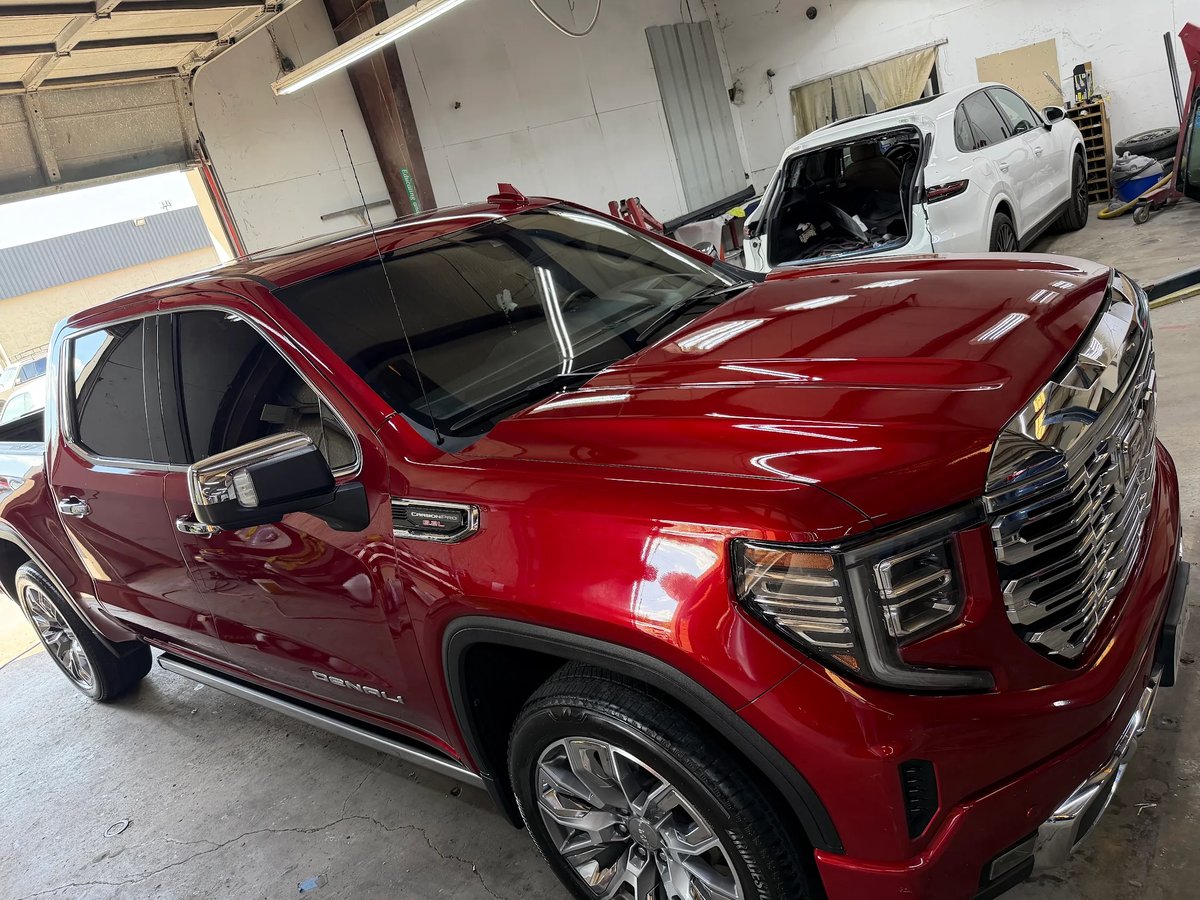
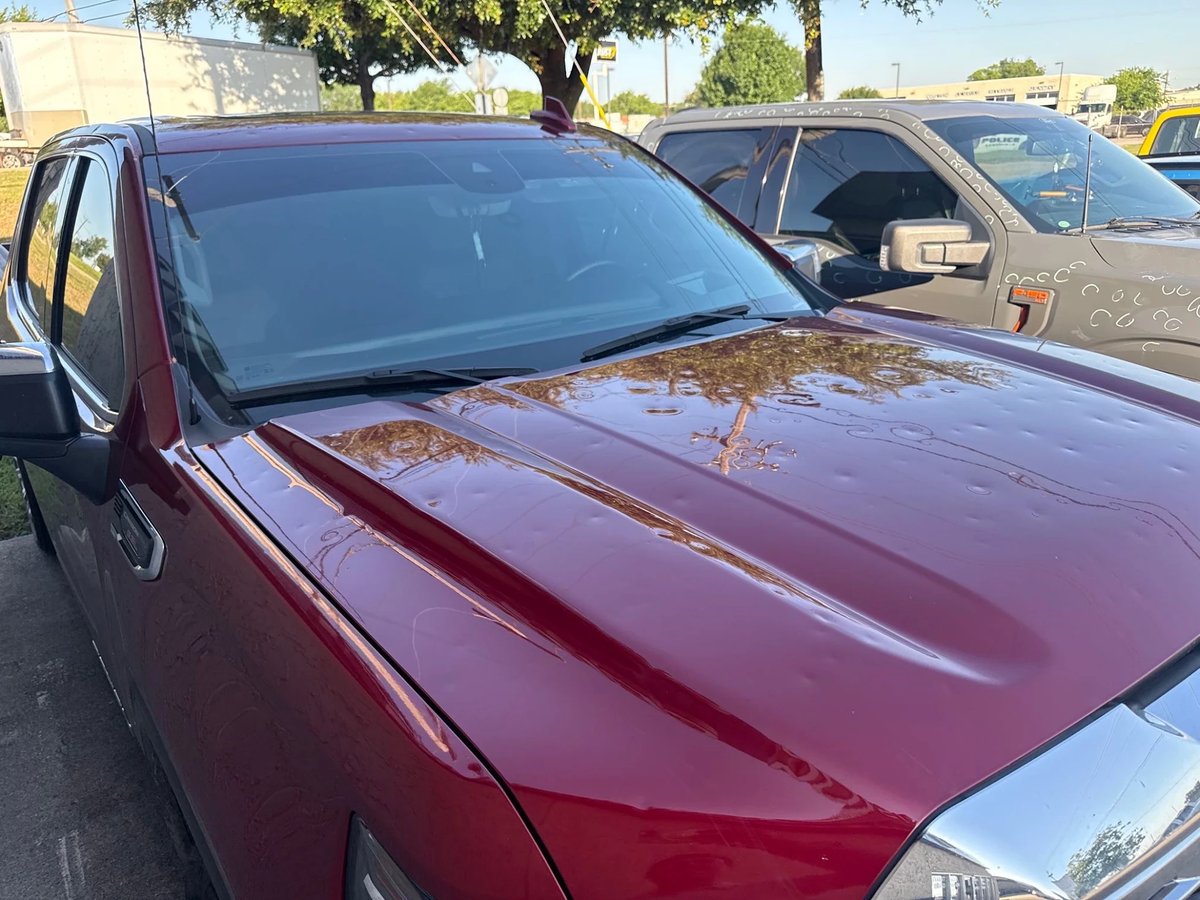
Hail Claim — The Check Vs. The Truck
Pictured: a customer’s GMC Sierra 1500 Denali — the size of hail claim that tempts people to keep the check; this owner fixed the truck
Total-Loss Checks Play By Different Rules
Everything above assumes a partial loss — damage worth less than the car. When the estimate crosses into total-loss territory, the structure of the payment changes. The insurer now owes the vehicle’s actual cash value, and per the Texas Office of Public Insurance Counsel, the settlement pays the lienholder first; you receive whatever remains above the loan balance. There’s no keeping a total-loss check while quietly keeping the car on the road as if nothing happened.
Texas does offer a middle path: owner-retained salvage. You keep the vehicle, and the insurer deducts what it would have recovered selling the car as salvage from your settlement. But the car now carries salvage-title consequences — OPIC’s consumer guidance is blunt that a salvage-titled car is worth less and can be harder to sell and insure, and Texas law requires specific title-and-inspection steps before it legally drives again.
Whether hail or collision damage actually totals your car — and how to dispute a lowball ACV before accepting any of this — is covered in our Texas total-loss guide. If your check is a total-loss settlement, read that one before cashing anything.
Where Keeping The Check Ends And Fraud Begins
Let’s draw the legal line cleanly, because the internet blurs it. Keeping an honestly-obtained payout is legal. You reported real damage truthfully, the insurer valued it, you were paid. What you do with your own settlement money afterward is your business — that’s not fraud, and no Texas statute makes it fraud.
Insurance fraud, under Texas Penal Code §35.02, is about deception for insurance money. The keep-the-check version to never touch: presenting the same unrepaired damage as new on a future claim. Hail hits in April, you cash the check; hail hits again in June and you file for the same dents plus the new ones. The April photos are in your file. That second claim isn’t clever — it’s a documented double-dip, and carriers’ fraud units are built to catch exactly this pattern after major DFW storms.
Same honesty rule at resale: selling a car with known unrepaired damage is fine; concealing it from the buyer isn’t. The through-line of this whole guide — and of our deductible guide’s legal framework — is that Texas gives honest people a lot of freedom with claim money, and reserves its penalties for the lie, not the choice.
Decided To Repair After All?
Bring the check and the adjuster’s estimate. We tear down, document what the photos missed, bill your carrier direct for the supplements, and hand you a free loaner while we work. You pay your deductible — the claim pays the rest.
Cash It Or Fix It? Decide In Five Steps
The whole guide, compressed into the sequence we’d run on our own car:
Step 1 — Read The Check: Who’s On It?
If the check names only you, the decision is yours. If it names you and a lienholder or leasing company, the lender controls the money: expect endorsement requirements and, on most loan and lease contracts, a repair requirement before they release funds.
Step 2 — Get A Real Shop Estimate Before You Decide
The check reflects the insurer’s first estimate. A free shop estimate — written by someone who knows what hides behind that panel — tells you the true gap between the check in your hand and the actual repair cost. You can’t weigh keep-vs-repair without both numbers.
Step 3 — Price The Consequences, Not Just The Cash
Unrepaired damage gets deducted from future claim settlements, can get panels excluded from coverage, lowers trade-in value, and may hide bent structure or disturbed sensors behind a cosmetic dent. If the car is one you plan to keep or sell, those costs usually outweigh the cash.
Step 4 — If You Repair: Let The Shop Unlock The Full Claim Value
Repairing converts the first estimate into the real number — the shop documents hidden damage at teardown, bills the carrier directly through supplements, and you pay only your deductible. Texas Insurance Code §1952.301 makes the shop your choice, not your insurer’s.
Step 5 — If You Keep The Money: Document Everything
Keep the estimate, the photos, and the payment record. Never claim the same damage again on a future claim — that crosses from legally keeping a payout into insurance fraud — and disclose the unrepaired damage honestly when you sell or trade the vehicle.
Standard honesty footnote: policies and loan contracts vary, and this is general information from a repair shop — not legal or financial advice for your situation. Your lender’s payoff department and your carrier can give you binding answers on the check itself. What we can give you free is the other number: what the damage actually costs to repair properly.
Common Questions
KEEPING THE CLAIM CHECK FAQ
Ten questions we hear from customers standing at the counter with a check in hand.
About The Author
Shah Jiwani — Owner, DG Collision Center
Shah has 30+ years of hands-on DFW collision-repair experience. He joined DG Collision in the 1990s, earned equity over time, and took over as owner in 2005. He is I-CAR Gold Class Certified, PPG Certified Refinish, and Sherwin-Williams Automotive Certified. Every guide on this site is written or reviewed based on what we actually see in the shop — not aggregated from other blogs.
Read Shah’s full bio & credentials →Free · No Obligation
KNOW BOTH NUMBERS BEFORE YOU CASH IT
Tell us what you drive and what the adjuster wrote. We’ll come back with the real repair number — then the keep-or-fix decision is actually informed.
Prefer to talk now? Call (972) 219-0864 · or text us photos