WHO PAYS FOR YOUR RENTAL CAR WHILE YOURS IS IN THE SHOP?
One of three payers. If the other driver caused the crash, their liability insurance owes for your rental — TDI says so flatly, and Texas law treats loss of use as part of your damages. If you carry rental reimbursement coverage, your own policy pays a set amount per day up to a cap. And at DG Collision there’s a third answer the other two can’t match: a free loaner from our 50+ vehicle fleet for the length of the repair — and no, picking your own shop doesn’t cut off your rental coverage.
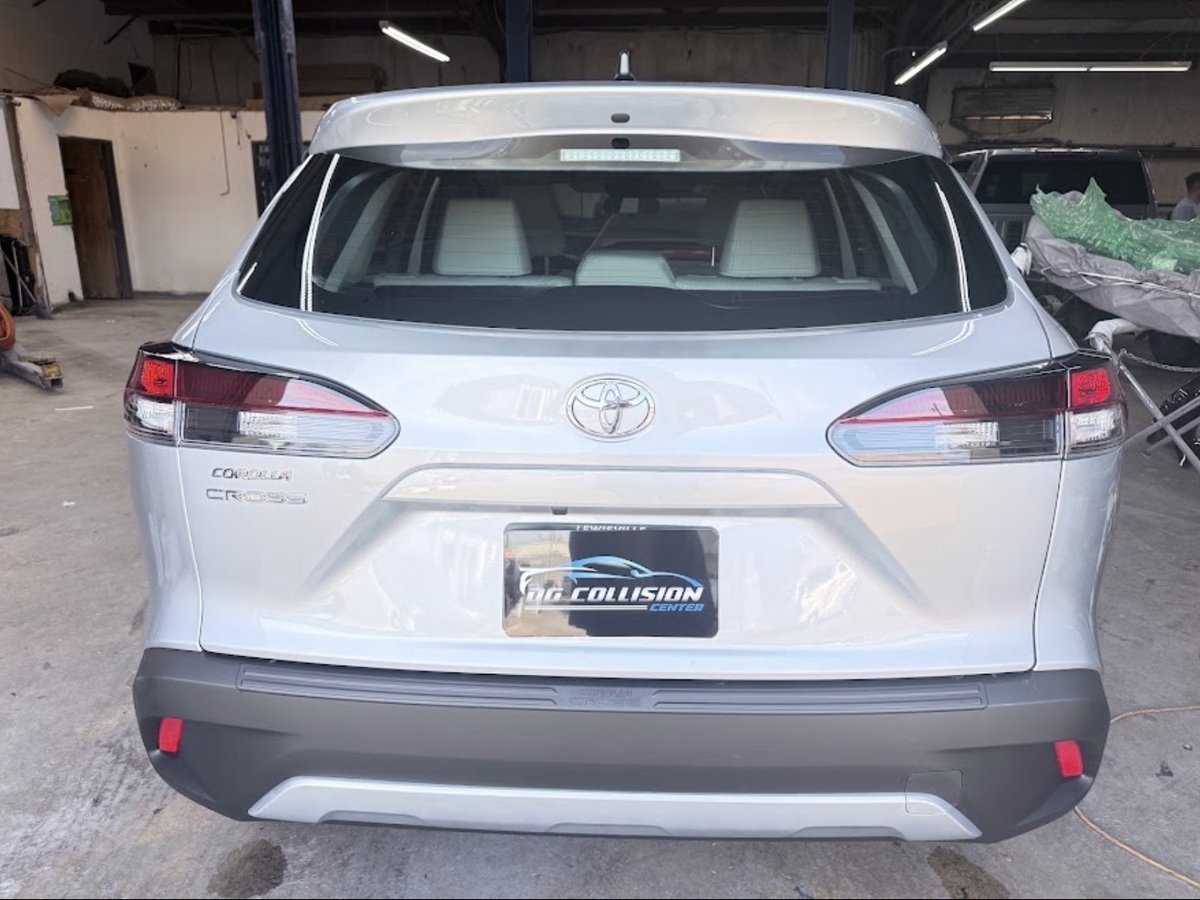
Not your fault: the at-fault driver’s liability insurance owes rental costs for the time reasonably needed to repair — and Texas’s J&D Towing decision makes loss of use recoverable even on a total loss, even if you never actually rent. Your own rental-reimbursement coverage is the metered fallback. Or skip the meter entirely: DG’s 50+ loaner fleet is free for the length of the repair.
Three ways a rental gets paid in Texas. Not your fault: the at-fault driver’s liability insurance pays for a rental for the time reasonably needed to repair your car — that’s TDI’s own description, and the Texas Supreme Court’s J&D Towing decision confirms loss of use is recoverable even when the car is a total loss, and even if you never actually rent (measured as reasonable rental value). Any fault situation: rental reimbursement coverage on your own policy pays a set daily amount up to policy limits, with your carrier bound by Texas prompt-payment deadlines. Either way, DG Collision’s answer beats both: a free loaner from our 50+ fleet for the duration of the repair — no daily cap, no reimbursement paperwork. The trap to know: the at-fault carrier typically won’t authorize a rental until it accepts liability, and that investigation gap is exactly what loaner fleets and your own coverage exist to bridge.
- Their fault: their liability carrier owes rental / loss-of-use for the reasonable repair period — keep receipts.
- No rental needed to claim: Texas measures loss of use by reasonable rental value even if you borrowed a car and rented nothing.
- Your own coverage: pays a set daily amount to a cap (typical policies run $30–$50/day) — check your declarations page.
- The DG answer: free loaner from a 50+ vehicle fleet for the length of the repair — no cap anxiety, no gap period.
Follow The Money
THE THREE WAYS A RENTAL GETS PAID
Most drivers only discover which of these applies to them after the crash, standing in a rental office doing deductible math. The next three sections walk each payer in order — what the law actually entitles you to, what your own policy fine print does, and why we run a loaner fleet at all. If you’re still at the “whose insurance even pays for this repair” stage, start one level up with our not-at-fault claim guide and come back — the rental answer follows the repair answer.
Loss Of Use, By Law
WHAT THE AT-FAULT SIDE ACTUALLY OWES
TDI’s consumer guide puts it in one sentence: “If your accident was caused by another driver, the other driver’s insurance company will pay for you to rent a car” — and you can keep it “for the time the company believes is reasonable for your car to be repaired.” The legal machinery underneath is called loss of use: in Texas, being deprived of your car is a real element of damages the at-fault driver (and in practice their liability carrier) owes on top of the repair itself. The Texas Supreme Court locked the modern rule in place in J&D Towing v. American Alternative Insurance (2016): loss-of-use damages are recoverable even when the vehicle is a total loss, not just when it’s repairable. And under long-standing Texas law the court reaffirmed there, you don’t have to actually rent anything — the measure is reasonable rental value for the period you were without the car, even if you borrowed your brother’s truck and spent nothing.
The honest limits: the period has to be reasonable — you can’t run a rental for months on a two-week repair and expect the tab to be honored — and the claim is only as strong as its paperwork, so keep every receipt and every repair-status email. The bigger trap is timing. Their carrier generally authorizes nothing until it finishes investigating and accepts liability, and no Texas deadline forces that acceptance onto a clock — the prompt-payment statute binds your own insurer, not theirs. That investigation window — days if fault is obvious, weeks if it’s contested — is the gap period, and it’s exactly where our loaner fleet or your own rental coverage carries you. If their carrier later accepts, your out-of-pocket rental and even your borrowed-car inconvenience belong in the demand, right alongside the deductible recovery covered in our deductible-back guide.
NEED THE CAR FIXED — AND SOMETHING TO DRIVE MEANWHILE?
Free written estimate, free loaner from our 50+ fleet, and direct billing to whichever carrier is paying.
The Fine Print On Your Policy
RENTAL REIMBURSEMENT COVERAGE, DECODED
Rental reimbursement is the inexpensive add-on most drivers can’t remember whether they bought. TDI describes it simply: it “pays for you to rent a car if yours is stolen or being repaired after an accident,” and some policies now cover taxis or ride-hailing instead. The structure is always a set amount per day up to your policy’s dollar or day limits — typical policies run $30–$50 a day for around 30 days, though your declarations page is the only version that counts. Because it’s your own coverage, fault doesn’t matter and there’s no liability investigation to wait out — and Texas prompt-payment law puts your carrier on a real clock: acknowledge within 15 days, accept or reject within 15 business days of having what it needs, pay within 5 business days of accepting (Tex. Ins. Code ch. 542 — first-party claims only).
The failure mode is the cap. A straightforward repair fits inside 30 days; add a parts backorder or a supplement negotiation and the calendar keeps moving after the coverage stops. What actually drives repair timelines — parts, teardown findings, insurer approval loops — is its own subject, covered honestly in our repair-timeline guide; the short version is that the slow step is usually approval paperwork, not bodywork. If a crash that wasn’t your fault burns past your own cap, the overage goes into the loss-of-use claim against the at-fault carrier. And if you’re reading this before you need it: adding rental reimbursement costs little, and pairs well with the UM/UIM check we recommend in our uninsured-driver guide — the two gaps drivers discover at the same bad moment.
The Third Answer
WHY WE KEEP A 50+ VEHICLE LOANER FLEET
Everything above is a workaround for the same problem: repairs take time, and the payment machinery moves slower than your life does. Our answer is structural — DG Collision maintains a fleet of 50+ loaner vehicles, free to customers for the duration of the repair. Not a discounted rental partnership, not a daily-capped reimbursement you chase afterward: a car you drive away in when you drop yours off. The gap period while an adjuster investigates? Covered. The repair that outruns a 30-day rental cap on a parts delay? Covered. The driver with liability-only coverage and no rental add-on at all? Covered the same as everyone else.
We built the fleet because the rental question was quietly deciding where people could afford to get repaired — drivers were choosing shops (and rushing repairs) around daily rental math instead of repair quality. Removing that pressure changes the conversation: the repair takes the time it takes to be done right, the carriers sort out their side on their own clock, and you’re not watching either meter. Ask for a loaner when you book the estimate — it’s part of every repair here, alongside the lifetime warranty and the deductible help we’re known for.
The Playbook
GET YOUR WHEELS COVERED IN 5 STEPS
01. Check your declarations page
Two lines matter: rental reimbursement (daily amount and cap) and UM/UIM. Know both before you need them — it takes thirty seconds and decides your options later.
02. Identify the paying carrier
Other driver at fault: their liability insurance owes rental or loss-of-use once it accepts the claim. Otherwise: your rental coverage, or a shop loaner. Fault decides the door.
03. Bridge the gap deliberately
Their carrier pays nothing until liability is accepted. Use a shop loaner or your own coverage for the investigation window — and keep receipts if you rent out of pocket.
04. Keep every receipt and status email
Loss-of-use claims are won on paper: rental invoices, repair-status updates, parts-delay notices. Reasonable time is measured against the documented repair, not the calendar alone.
05. Claim the overage where it belongs
Not your fault and the rental ran past your own cap? The difference goes into your demand to the at-fault carrier, alongside your deductible — reasonable rental value counts even for days you didn’t rent.
From Our Shop Floor
THE REPAIR BEHIND DELIVERY DAY
Drag the slider — the rear-end rebuild on the same Toyota Corolla Cross pictured on delivery day in the hero above.
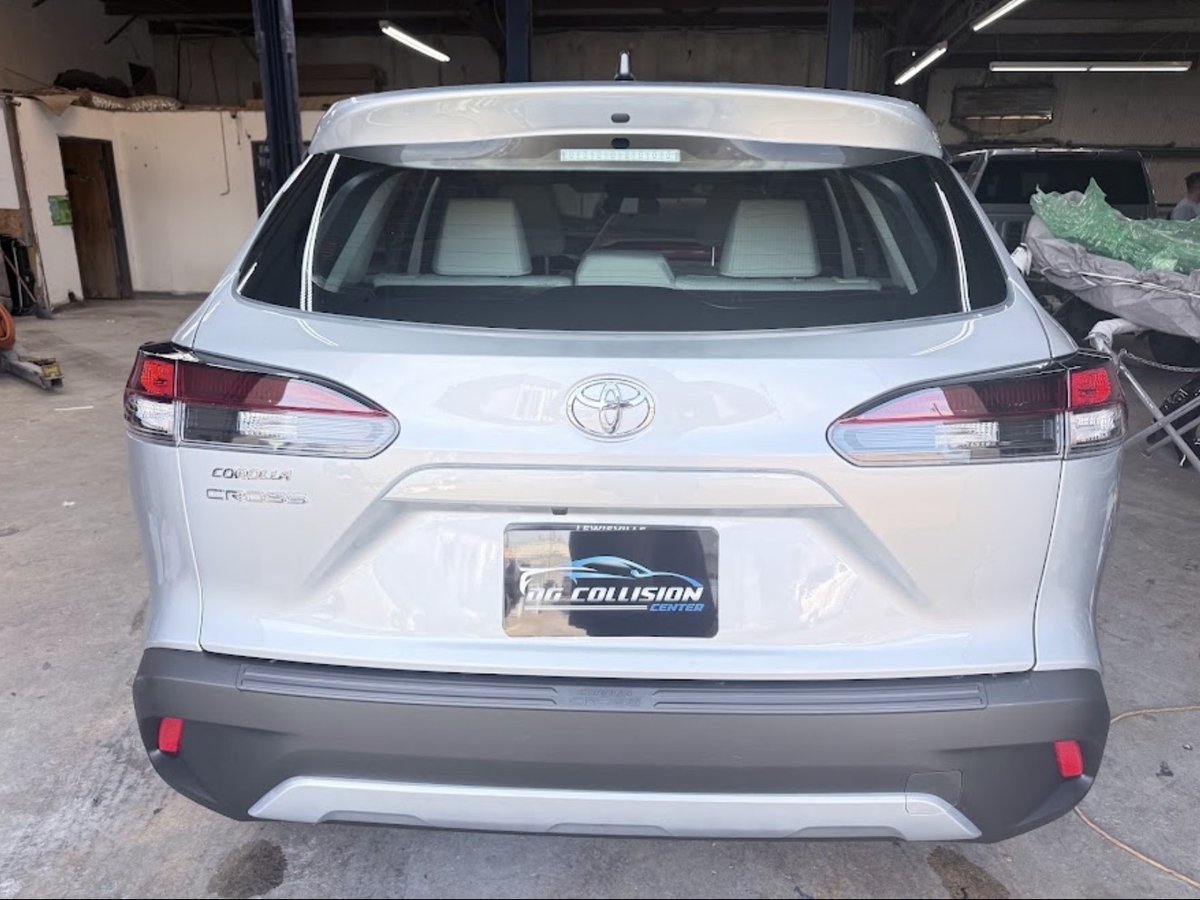
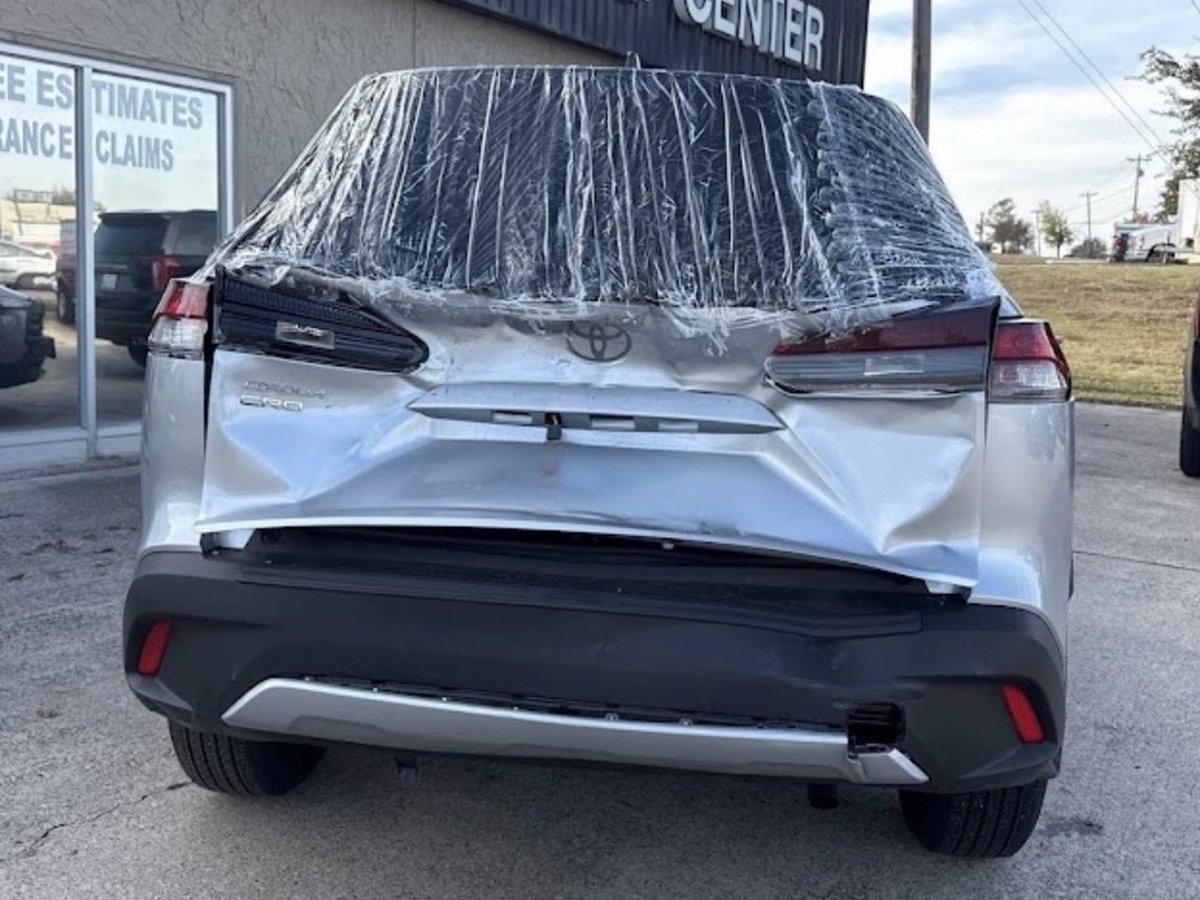 Before
After
Before
After
Rear-End Rebuild — Tailgate & Rear Panel
Pictured: Toyota Corolla Cross — the crushed-tailgate repair completed and delivered; the hero photo above is the same car going home
Rental Coverage Questions