CRASHED DRIVING FOR UBER OR LYFT? THE APP DECIDES WHO PAYS
Short version: at the moment of impact, what the app was doing — off, waiting for a request, en route, or on a trip — selects which insurance policy exists for your car. On-trip and en-route crashes get the platform’s $1 million liability layer plus contingent coverage for your vehicle with a $2,500 deductible. Waiting-for-a-ping crashes fall into the gap most drivers discover too late. And Texas law expressly lets your personal policy exclude everything the moment you log on (Ins. Code §1954.151). Here’s the whole map — verified against the statute and both platforms’ published policies.
Rideshare claims run on app time. App off: your personal policy. App on and waiting: contingent liability only — 50/100/25 (§1954.052) — and nothing for your own car. En route or carrying passengers: a $1 million liability layer (§1954.053) plus contingent collision with a $2,500 deductible on both Uber and Lyft. The quiet trap: §1954.151 lets personal policies exclude app-on driving — the rideshare endorsement is the fix.
Rideshare claims in Texas run on app time. App off: your personal policy, normal rules. App on, waiting for a request: the platform provides contingent liability only — $50,000 per person / $100,000 per incident for injuries, $25,000 property damage (Ins. Code §1954.052) — and nothing for your own car. En route or carrying a passenger: a $1 million liability layer (§1954.053), plus contingent comprehensive and collision for your vehicle with a $2,500 deductible — but only if you carry comp and collision on your personal policy; that’s what “contingent” means. The gap that catches working drivers: §1954.151 expressly permits personal auto insurers to exclude every coverage — liability through collision — while you’re logged on, and the waiting period is where that exclusion has nothing behind it. The fix is a rideshare endorsement from your own carrier. At the scene, after safety: screenshot the app — the trip screen is the evidence that decides which policy you’re in. Figures verified August 2026; platform terms change.
- App off = your policy. Waiting = the gap. En route / on trip = $1M layer + contingent comp/collision, $2,500 deductible.
- “Contingent” is a condition: drop comp/collision from your personal policy and the platform owes your car nothing.
- §1954.151 lets your insurer exclude app-on losses — the rideshare endorsement is the one-call fix.
- Screenshot the app at the scene — period evidence ends coverage arguments before they start.
Why It’s Different
YOUR CAR IS YOUR PAYCHECK — AND THE CLAIM RUNS ON APP TIME
DFW runs on rideshare miles — the DFW Airport queue, the Las Colinas office towers, the Friday-night entertainment districts — and we repair the cars that run them; high-mileage and rideshare vehicles are a fixture of our Irving work in particular. A rideshare crash differs from a regular one in exactly one structural way: in a regular crash you know whose insurance you’re dealing with before you look at the damage. In a rideshare crash, which policy exists is decided by what the app was doing at the moment of impact — four different periods, three different coverage stacks, one second deciding which one you’re in.
Which is why the single most valuable move at the scene — after everyone’s safe, and alongside the universal steps in our after-an-accident guide — is a screenshot of your app: the trip screen, the waiting screen, whatever it shows. The platforms keep their own logs, but your timestamped screenshot ends period arguments before an adjuster can start one. It’s the rideshare equivalent of photographing the other driver’s plate. (Renting your car out on Turo rather than driving it? That world runs on entirely different rules — contractual reimbursement, not insurance — covered in our Turo host guide.)
The Coverage Map
FOUR PERIODS — WHAT EXISTS FOR YOUR CAR
Texas wrote the period structure into Insurance Code Chapter 1954 in 2016. The liability side is statute; the coverage for your own vehicle is platform policy — an important difference the table below keeps separate.
Verified August 2026 against Ins. Code Ch. 1954 and Uber’s and Lyft’s published insurance pages. Platform terms change between checks — confirm yours before relying on them.
Period 1
THE WAITING-FOR-A-PING GAP
Look at the second row of that table again, because it’s where working drivers get hurt financially. While you’re logged on waiting for a request, the statute requires the platform to carry liability coverage — protection for the people and property you might damage — and nothing else. No Texas law requires Uber or Lyft to repair your car in any period; the contingent comprehensive and collision they do offer in later periods is platform policy, not statute. In the waiting period, even that isn’t offered.
Meanwhile, the statute is equally blunt in the other direction. §1954.151 expressly authorizes personal auto insurers to exclude coverage — liability, PIP, uninsured motorist, medical payments, comprehensive, and collision — for anything that happens while you’re “logged on to a transportation network company’s digital network.” The platforms are required to warn you about exactly this: §1954.101 makes them disclose “that the driver’s personal automobile insurance policy may not provide coverage, depending on the policy’s terms, while the driver is logged on.” Put the two halves together and a waiting-period crash can total a paid-off car with no policy anywhere owing a cent for it. If that’s where you’re sitting right now, our paying-out-of-pocket guide covers the honest cash options — and the next two sections cover how drivers keep it from happening.
The $2,500 Line
THE PLATFORM DEDUCTIBLE — AND WHAT “CONTINGENT” COSTS
When the platform’s vehicle coverage does apply, both companies publish the same number. Uber: a $2,500 deductible, on coverage that “protects your car, no matter who’s at fault, if you maintain comprehensive and collision coverage on your own vehicle.” Lyft: “If a driver obtains comprehensive and collision on their personal auto policy, Lyft then maintains contingent comprehensive & collision coverage up to the actual cash value of the car ($2,500 deductible).” Read the condition both sentences carry: contingent means the platform’s coverage for your car exists only if your own comp and collision exist. Drop them from your personal policy to save premium and you haven’t trimmed your coverage — you’ve deleted the platform’s too.
Two more honest notes on that number. First, $2,500 is a working driver’s week, and it applies per incident — on our deductible assistance program, collision-claim help is case-by-case: bring us the claim and we’ll tell you straight what we can do on yours. Second, none of this applies when the crash is the other driver’s fault — then their liability coverage pays for your repair with no deductible at all, same as any crash (our not-my-fault guide walks that path). The period mechanics above are for the crashes where nobody else’s policy is stepping up.
Closing the Gap
THE RIDESHARE ENDORSEMENT — ONE CALL TO YOUR CARRIER
The gap has a fix, and it’s not exotic: most major carriers writing Texas personal auto now sell a rideshare (TNC) endorsement that extends your personal coverage into app-on driving — precisely the territory §1954.151 lets an unendorsed policy exclude, with the waiting period as the main event. We’re a body shop; we don’t sell insurance and take nothing from anyone who does. Our interest is narrower: we meet the uncovered version of this story in person, standing next to a car that earns its owner’s living, and it’s a bad conversation every time.
So the plain advice: if you drive for a platform on a personal policy and you’ve never said the words “rideshare endorsement” to your carrier, make that call before your next shift. Ask two questions — does my policy exclude TNC driving, and what does the endorsement cost me — and get the answer in writing. While you’re at it, disclose that you drive rideshare if you haven’t: an undisclosed exclusion discovered mid-claim is the worst possible time to learn your policy’s terms.
The Claim, Start to Finish
FIVE STEPS FROM IMPACT TO BACK ON THE ROAD
Secure The Scene — Then Screenshot The App
Safety first, passengers checked, 911 if anyone’s hurt. Then capture the app screen exactly as it stands — trip, waiting, or en-route. That screenshot is the period evidence the whole claim routes on.
Report It Twice
Report the crash to the platform through the app, and notify your personal carrier promptly — notifying isn’t the same as filing a damage claim, and with anyone else involved you want your carrier hearing it from you first.
Know Which Policy You’re Talking To
On-trip claim? You’re dealing with the platform’s carrier and the $2,500 deductible. Other driver at fault? Their liability pays, no deductible. Waiting period? Your own comp/collision — endorsement willing. Don’t let a claim get routed into the wrong lane.
Choose Your Shop — On Every Version Of The Claim
On personal-policy claims, Texas Insurance Code §1952.301 puts the choice of shop and parts with you. And whoever’s carrier is paying, nobody but you decides who touches the car — tell them “DG Collision Center in Lewisville” and we handle the billing from there.
Repair To A Working Car’s Standard — Fast
Teardown-first documentation, supplements filed the day hidden damage appears, calibration verified, and a finish that passes a platform’s condition standard — because for a rideshare car, every day in the shop is unbilled hours. The free loaner has no day limit, so a parts delay never becomes your problem twice.
Real Results
REAR-END DAMAGE BEFORE & AFTER
Drag the slider — a real rear-end rebuild from our Lewisville floor.
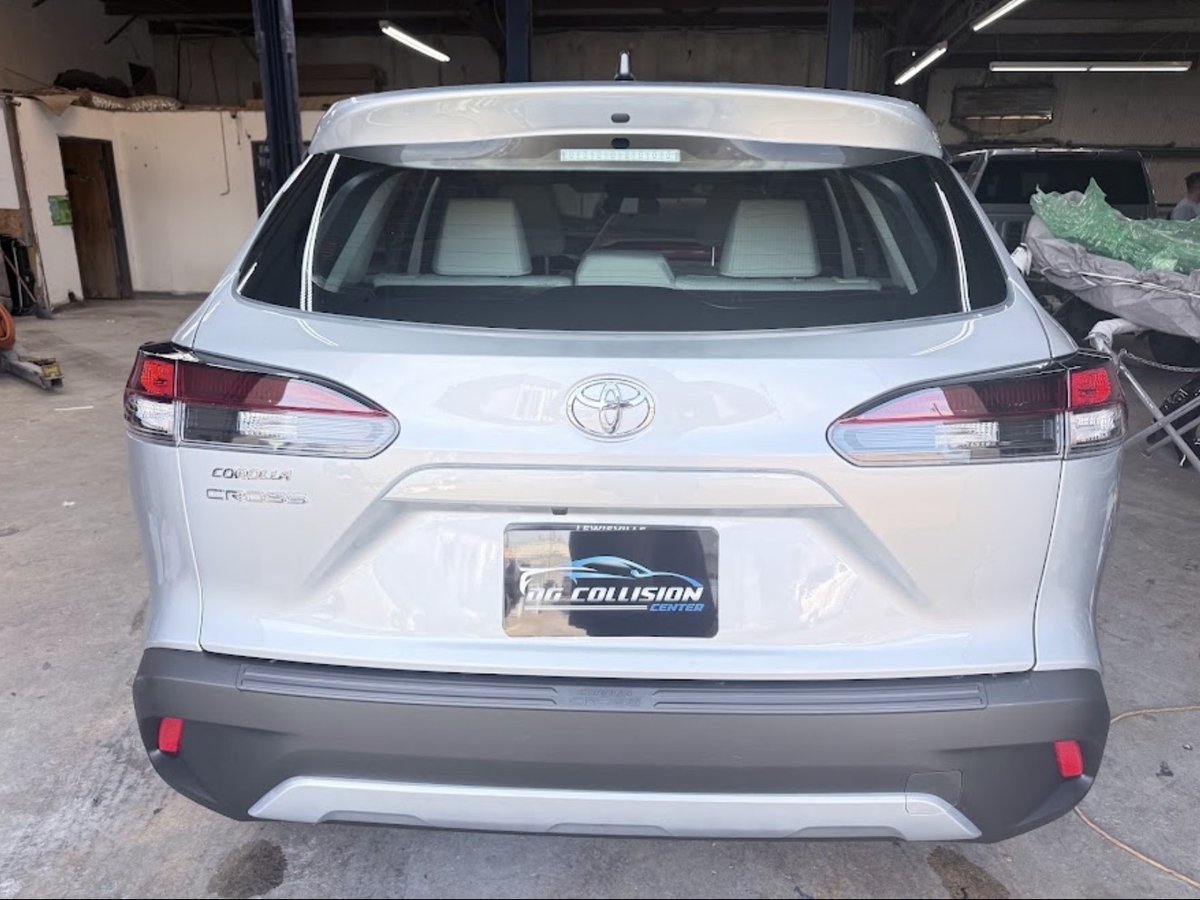
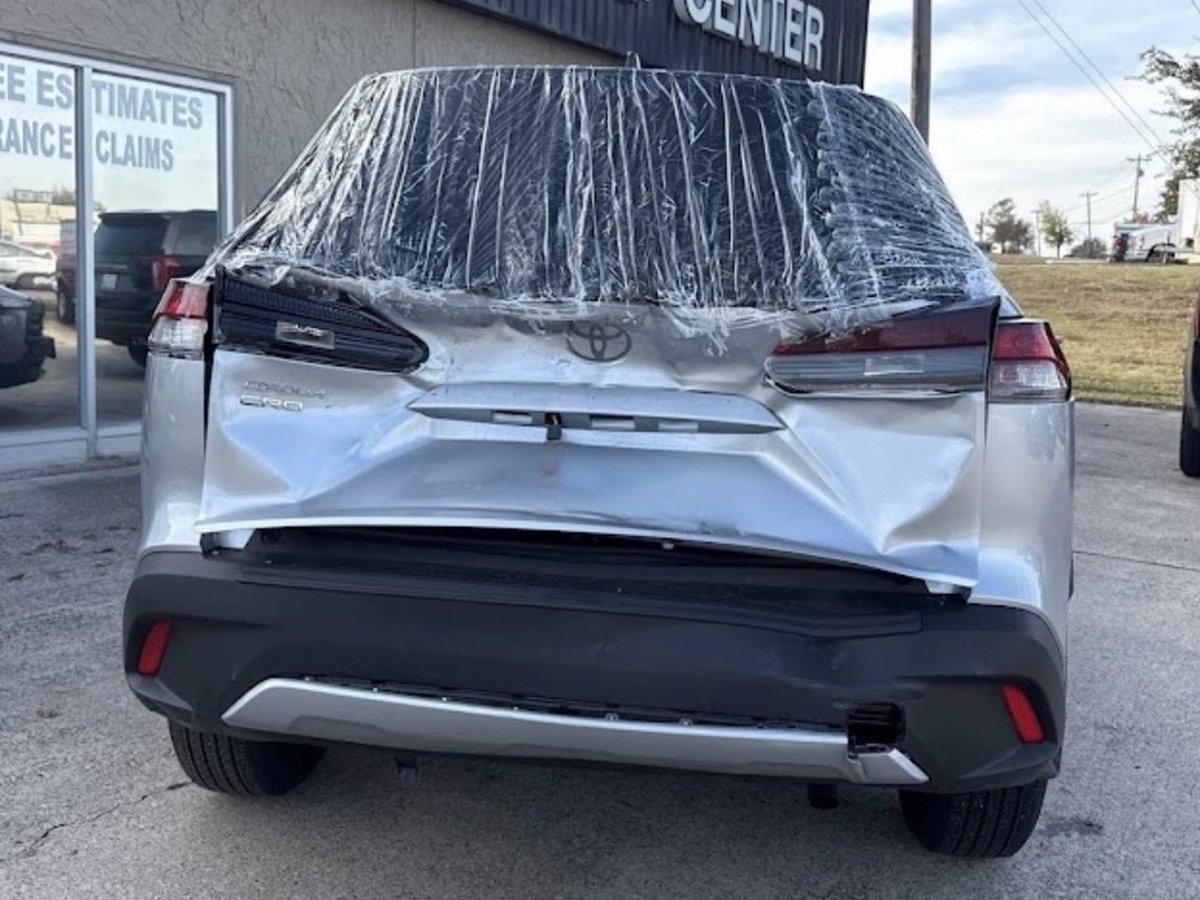 BeforeAfter
Rear-End Rebuild
Pictured: Toyota Corolla Cross — crushed tailgate and rear panel rebuilt to spec; the same rebuild we run on stop-and-go rear-enders, rideshare or not
Common Questions
RIDESHARE DRIVER FAQ
Uber® and Lyft® are trademarks of Uber Technologies, Inc. and Lyft, Inc., used here to identify the platforms drivers work with. DG Collision Center is an independent repair facility and is not affiliated with, endorsed by, or contracted to either company. Coverage figures were verified August 2026 against Texas Insurance Code Chapter 1954 and the platforms’ published insurance pages; platform terms change — confirm current terms with the platform and your carrier. General information, not legal advice.
Free · No Obligation
GET A REAL NUMBER — NO POLICY NEEDED
Tell us what you drive and what the storm did. We’ll come back with a written estimate — so you can make the file-or-skip call with the real number in hand.
Prefer to talk now? Call (972) 219-0864 · or text us photos