HIT A DEER IN TEXAS? WHAT TO DO — AND WHO PAYS
Short version: a deer strike is normally a comprehensive claim — no fault assigned — and the single most expensive mistake happens before impact: swerving. Swerve into a fence or oncoming traffic and you’ve traded a no-fault comprehensive claim for an at-fault collision claim, plus a far worse crash. Brake hard, stay in your lane, then work the checklist below.
*Towing is free to you: on covered claims the tow is billed to your insurance carrier — Texas comprehensive and collision policies generally cover reasonable towing. No coverage for the tow? Ask about discounted rates through our towing partners.
A deer strike is a comprehensive claim — no fault assigned, and comprehensive claims are generally treated more gently than at-fault collisions. The trap is the swerve: dodge the animal and hit a fence or another car instead, and you’ve converted it into an at-fault collision claim. Brake, don’t swerve — and document the scene either way, because grille damage that “looks fine” rarely is.
Hitting a deer in Texas is normally a comprehensive (other-than-collision) claim: no fault is assigned, and comprehensive claims are generally treated more gently by insurers than at-fault collisions — though no Texas statute outright freezes premiums. The trap is the swerve: if you dodge the animal and hit a fence, a tree, or another car instead, that’s a collision claim — different deductible, fault in play, and usually a much worse wreck. So the safety advice and the insurance advice agree: brake hard, stay in your lane. Afterward: get off the road, don’t approach the animal (injured deer are dangerous), call 911 if it’s blocking traffic or anyone’s hurt, photograph everything — including hair, blood, or dents that prove an animal strike — and notify your carrier. Deer damage runs deeper than it looks: behind the crumpled hood sit the radiator, condenser, lamp mounts, and on newer vehicles the front camera and radar. A teardown-level estimate — not a photo-app guess — is what makes the claim pay once, correctly. Texas Insurance Code §1952.301 makes the shop choice yours.
- Hit the deer = comprehensive (no fault). Swerve and hit something else = collision (fault in play). Brake, don’t swerve.
- Peak danger: October through December — the rut — especially at dusk and dawn on two-lane roads.
- Document the animal evidence (hair, blood, impact pattern) — it’s what proves the comprehensive claim.
- The damage hides: cooling stack, sensors, and lamp mounts live exactly where the deer hits.
The First Five Minutes
BRAKE, DON’T SWERVE — THE RULE THAT SAVES THE CRASH AND THE CLAIM
Every driving instructor says it and every body shop sees why: the swerve is worse than the deer. A braked, in-lane deer strike is survivable for you and repairable for the car — energy scrubbed off, impact on the structure built to take it. A swerve at highway speed trades that for a fence line, a culvert, a tree, or oncoming headlights, and trades your no-fault comprehensive claim for an at-fault collision claim in the same instant. Brake hard, grip straight, let the car do its job.
After the impact: hazards on, get the car to the shoulder if it rolls, and stay away from the animal — an injured deer’s hooves are genuinely dangerous, and it’s not your job to move it. Call 911 if the deer is blocking a lane, if anyone’s hurt, or if the car can’t move. Then take the photos that make the claim easy: the damage from several angles, the roadway, and — this is the one people skip — the evidence of the animal itself: hair caught in the grille, blood, the characteristic mid-height impact pattern. If the deer ran off (they often do), that evidence is what documents a comprehensive claim instead of an unexplained dent. Our after-an-accident guide covers the full first hour; the deer version just adds: don’t touch it, and photograph the fur.
The Insurance Mechanics
WHO PAYS — AND THE SWERVE TRAP IN YOUR POLICY
Animal strikes fall under comprehensive coverage (your policy may call it “other than collision”) — the same bucket as hail, theft, and falling branches. That matters for three reasons. First, no fault is assigned: hitting a deer isn’t treated as your driving error. Second, it’s your comprehensive deductible that applies — often lower than your collision deductible. Third, Texas rules give weather and similar not-at-fault comprehensive claims some protection against nonrenewal (28 TAC §5.7016) — though, stated honestly, no statute outright bans a premium from moving; our comprehensive-claims-and-rates guide covers that nuance with the citations.
Now the trap, spelled out: the deer has to be what you hit. Swerve around it and strike a fence, a mailbox, a tree, or another vehicle, and the claim moves to collision coverage — your collision deductible, fault on your record, and if you clipped someone else, their damage on your liability. Same deer, completely different claim, all decided in half a second — which is why the safety rule and the insurance rule are the same rule. And if your policy is liability-only, there’s no comprehensive coverage to bill: the repair is out of pocket, where our liability-only guide lays out the honest cash options.
When & Where It Happens
OCTOBER THROUGH DECEMBER: THE RUT OWNS THE ROADS
Deer-vehicle collisions cluster hard in October, November, and December — the rut, when deer move the most and pay attention the least — with dusk and dawn as the danger hours year-round. The geography is predictable too: two-lane roads along fence lines, creek crossings, and field edges, exactly the FM-road country that rings north Texas. In our own service area, that’s the estate lanes around Argyle and Lantana and the ranch roads up through Aubrey, Pilot Point, Sanger, and Krum — where a whitetail at the fence line is part of every evening drive from now to New Year’s.
The practical seasonal habits: slow down at dusk on the two-lanes, use high beams when there’s no oncoming traffic and scan the shoulders — eyes reflect — and when you see one deer cross, assume more are coming; they travel in groups, and the second deer is the one that gets hit. None of this makes you invincible in November. It makes you someone who brakes half a second earlier — and half a second is usually the whole difference.
The Claim, Start to Finish
FIVE STEPS FROM IMPACT TO REPAIRED
Secure The Scene
Hazards on, car to the shoulder if it rolls, stay clear of the animal, 911 if it’s blocking traffic or anyone’s hurt. Your safety outranks everything below.
Document The Animal Evidence
Damage from all angles, the road, and the proof it was a deer: hair in the grille, blood, the mid-height impact pattern. If the deer ran, this is your claim’s backbone.
Notify Your Carrier — As A Comprehensive Claim
Report it promptly and say what happened plainly: struck a deer, stayed in lane. That routes it to comprehensive — no fault, your comprehensive deductible.
Choose Your Shop — It’s Your Legal Right
Texas Insurance Code §1952.301: the carrier can’t require their network shop or dictate parts. One sentence — “I’m using DG Collision Center” — and we take the claim from there.
Teardown, Supplements, And The Full Repair
We tow it free (24/7, on repairs we perform), hand you a free loaner, tear down and document the real damage, file supplements the day they’re found, and return the car calibrated and warranted for life.
Real Results
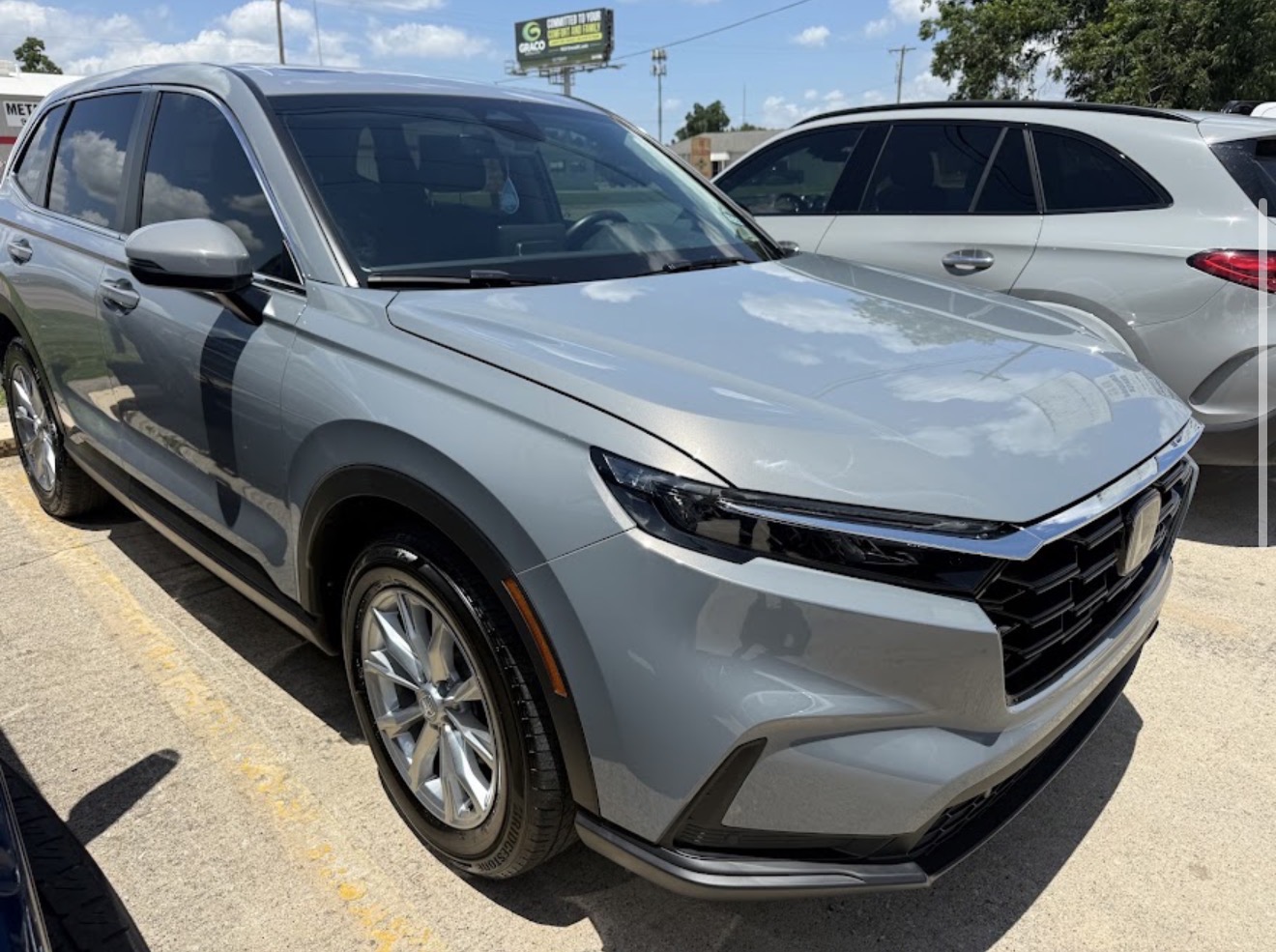
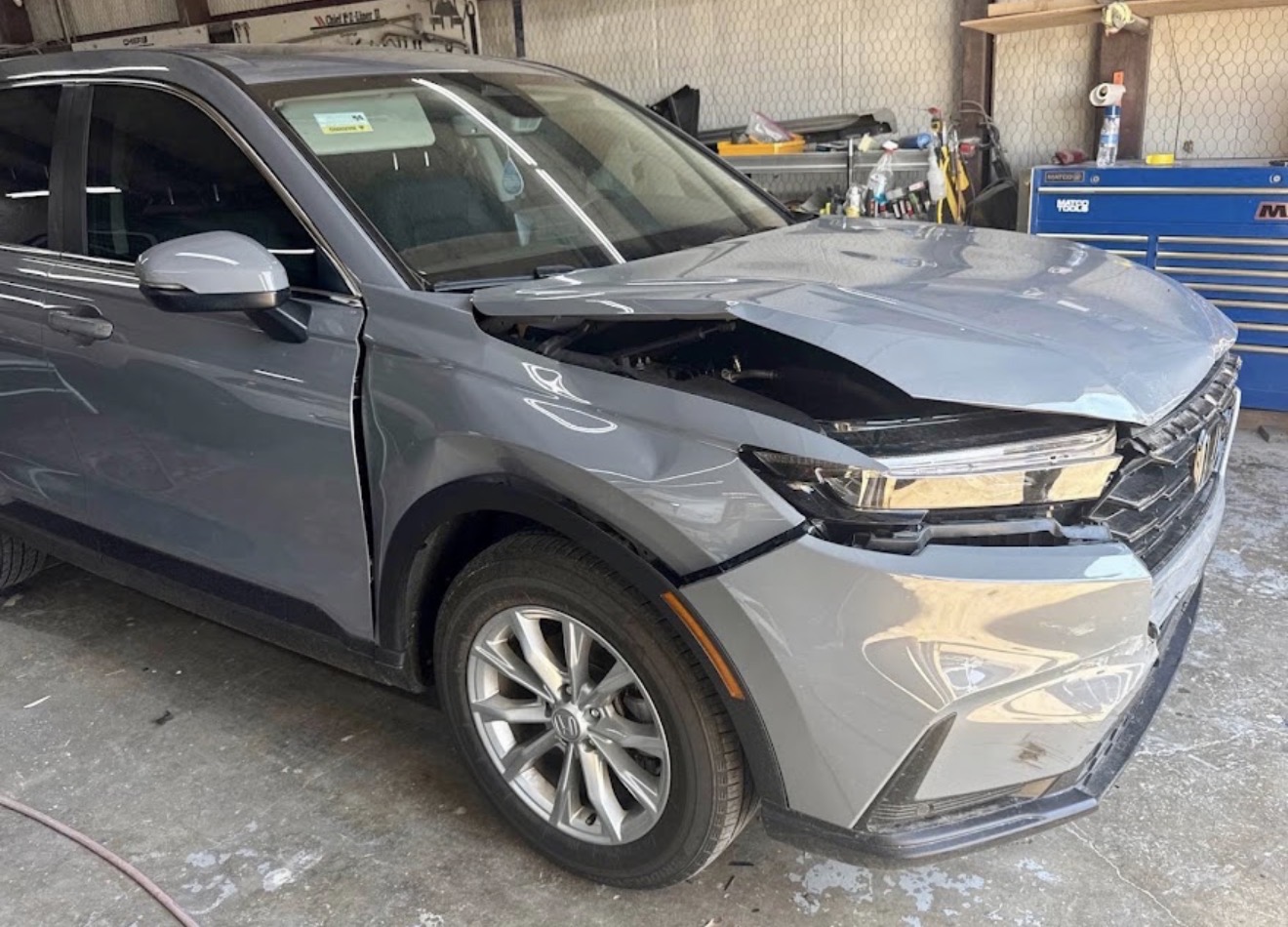
FRONT-END DAMAGE BEFORE & AFTER
Drag the slider — a real front-end rebuild from our Lewisville floor.
 BeforeAfter
Front-End Rebuild — Deer-Strike Depth
Pictured: a customer’s Honda CR-V — hood folded and front clip opened up, the same bumper-to-hood depth a deer strike produces
Common Questions
DEER STRIKE FAQ
Free · No Obligation
GET A REAL NUMBER — NO POLICY NEEDED
Tell us what you drive and what the storm did. We’ll come back with a written estimate — so you can make the file-or-skip call with the real number in hand.
Prefer to talk now? Call (972) 219-0864 · or text us photos