AUGUST 26, 2026 KELLER & NORTH FORT WORTH HAIL: THE VERIFIED REPORT LOG
Yes — there was hail in far north Tarrant County on Wednesday evening, August 26, 2026. National Weather Service storm reports run from 5:45 to 6:22 PM as one cell tracked from Rhome through Haslet, Keller and Watauga toward east Fort Worth. The two verified hail reports: 1.00-inch quarter-size hail at Park Vista Blvd and Keller Haslet Rd at 5:55 PM, and 1 to 1.5-inch hail near Alliance in the Golden Triangle area at 5:59 PM. The wider story was wind — collapsed fences in Sendera Ranch, a partial commercial roof collapse in Watauga, eight-inch limbs down at I-30 and Eastchase.
NWS-verified hail hit far north Tarrant County between about 5:55 and 6:00 PM on Wednesday, August 26, 2026, inside a wind-damage swath that ran from Rhome to east Fort Worth over forty minutes. A trained spotter logged quarter-size hail (1.00″) at Park Vista Blvd and Keller Haslet Rd on the Keller–Fort Worth line at 5:55 PM; emergency management logged 1 to 1.5-inch hail near Alliance in the Golden Triangle area at 5:59 PM — the evening’s largest verified stone. Quarter-size is the threshold that dents hoods and roofs; ping-pong size dents doors and splits trim. The wind did the rest: fences down in Sendera Ranch, a partial commercial roof collapse and power lines over Rufe Snow in Watauga, eight-inch limbs snapped at I-30 and Eastchase. Hail and falling debris are both comprehensive claims — not at fault — and Texas rule 28 TAC §5.7016 bars nonrenewal solely over weather claims. A footnote from our own data: this was only the fourth August day since 2015 with inch-or-larger hail in the four core DFW counties.
- Biggest verified stone: 1.50″ (ping-pong size) near Alliance, Golden Triangle area, 5:59 PM.
- Also verified: Keller / Park Vista Blvd & Keller Haslet Rd 1.00″ (quarter) at 5:55 PM — “dime-size with sporadic quarters,” in the spotter’s words.
- Wind damage logged: Rhome (5:45 PM), Sendera Ranch / Haslet (5:50 PM), Watauga (6:05 PM), east Fort Worth near Pantego (6:22 PM).
- Reports are point samples: hail fell between the two pins too — no report on your street doesn’t mean no hail on your car, and a report near you doesn’t guarantee damage.
- Late discovery is normal: photograph the damage and get a written dent count now, then decide whether to file.
Straight From The NWS
EVERY VERIFIED REPORT FROM AUGUST 26, 2026
The table below is the National Weather Service Fort Worth office’s local storm report log for the evening of August 26, 2026 — a trained spotter, emergency management, an NWS employee, amateur radio and a verified public report, with times in local Central time. We didn’t write these; the NWS did. You can check the raw federal record on the Storm Prediction Center’s report page for August 26, 2026 or through NWS Fort Worth. Late reports sometimes arrive for a day or two after an event; this log reflects the record as of the morning after.
Times converted to Central time from the NWS log. Source: NWS Fort Worth local storm reports, August 26, 2026.
One honest caveat that matters in both directions: these are point observations. A report exists only where a person stood, saw it and submitted it. Hail cores from this kind of storm are typically a few miles wide, so a car parked between Park Vista and the Alliance corridor — the Keller Haslet Road / Golden Triangle stretch of far north Fort Worth — was very likely in the same hail that generated those two reports. The reverse is also true: quarter-size at one address doesn’t guarantee damage at another. The log tells you whether to go look. Your hood tells you the rest.
Coin To Damage Translation
WHAT QUARTER AND PING-PONG-SIZE HAIL ACTUALLY DO TO A CAR
Quarter-size (1.00″) — the Keller report, logged as “dime-size with sporadic quarters” — is the insurance-relevant threshold. Dime-size alone usually leaves nothing on steel; the sporadic quarters mixed in are what dent hoods, roofs and trunk lids, the horizontal panels that take hail square-on. A car under that mix typically shows a scattered count — a dozen to a few dozen shallow dents with intact paint — which is exactly what paintless dent repair was invented for, and exactly the kind of damage that hides until the first low-angle sunset.
Ping-pong size (1.50″) — the Alliance / Golden Triangle report — is a different weight class. Stones that size dent vertical panels too (doors, fenders), split plastic trim and mirror caps, and can push a dent deep enough to stretch the metal. On an aluminum hood — every 2015-and-newer F-150, the swing panels on newer Silverados and Sierras — aluminum work-hardens around each strike, so technique matters far more than it does on steel. The Alliance corridor’s office and distribution lots along I-35W hold thousands of cars outside at 6 PM on a Wednesday; if yours was one of them, it deserves a real inspection, not a glance.
And the wind. Most of this storm’s log is wind damage — and wind is a car problem too. Fence sections, shingles, gutters and the eight-inch limbs snapped near I-30 land on whatever is parked under them, and a limb on a hood is a comprehensive claim exactly like hail: falling objects sit in the same coverage. Wind-driven hail also arrives at an angle, which is why a storm like this can dent a door on one side of a car and leave the other side clean.
Two footnotes from our own DFW hail-season data: both hail reports landed inside the 5-to-11 PM window where six in ten metro hail reports fall — the commute home, again — and August is the quietest hail month in the four core counties: before this storm, only three August days since 2015 had produced inch-or-larger hail there. This was the fourth. The fall second season that follows is real, so don’t put the car cover away.
HEARD IT HIT ON AUGUST 26? GET YOUR DENT COUNT IN WRITING.
A written count under our lights beats months of wondering. Free, documented, no obligation to file — and if the damage doesn’t clear your deductible, we’ll say so.
Where It Hit
KELLER, HASLET & ALLIANCE, WATAUGA: CITY BY CITY
Keller took the first hail report. Park Vista Blvd and Keller Haslet Rd sit on the far northwest edge of the city, where Keller runs into north Fort Worth — and the spotter’s wording matters: dime-size with sporadic quarters. That’s a mixed core, which usually means a scattered dent count on the horizontal panels rather than a hood full of craters. If you live or park anywhere in northwest Keller — the Park Vista and Keller Haslet neighborhoods especially — walk the car in low morning light this week and run a dry microfiber over the hood and roof. Keller’s full hail record — this was its second verified event of 2026 — lives on our Keller hail repair page.
Haslet, Alliance and the Golden Triangle corridor are the headline. Four minutes after Keller, emergency management logged 1 to 1.5-inch hail near Alliance — the largest verified stone of the evening — in the same cell that had just collapsed fences in Sendera Ranch. Ping-pong hail at 6 PM on a Wednesday along the I-35W / Golden Triangle Blvd corridor hits a very specific population of cars: employee lots, distribution yards, apartment parking, the pickup line at the dinner hour. The corridor has its own page now — Haslet & Alliance hail repair, with the full NWS record for the I-35W / 287 corridor — and the nearest collision page is Trophy Club & Roanoke, just up the highway. The Alliance area itself sits well inside our free pickup radius, and this is the part of the swath where a dent count is most likely to clear a deductible.
Watauga and North Richland Hills logged wind, not hail — a partial roof collapse of a commercial business and power lines over the road at Rufe Snow Dr and Chapman Rd at 6:05 PM. Debris of that kind lands on cars. If yours was parked near the Rufe Snow corridor and has a fresh scratch, dent or cracked glass with no obvious explanation, treat it as storm damage: falling objects are comprehensive, and a dated photo now saves the argument later. North Richland Hills drivers on the Rufe Snow–Davis grid were a few minutes downwind of the Keller hail, too.
Rhome and east Fort Worth bracket the storm: wind damage northeast of Rhome in Wise County at 5:45 PM opened the log, and eight-inch limbs snapped near I-30 and Eastchase Parkway at 6:22 PM closed it. No hail was reported at either end — but a forty-minute track from Rhome to Eastchase says the cell crossed a lot of driveways in between that no spotter was standing in.
The Insurance Side
FILING A CLAIM FOR THE AUGUST 26 STORM — EVEN MONTHS LATER
Hail — and a limb on the hood — is a comprehensive claim: no fault, no points, nothing on your driving record. Texas rule 28 TAC §5.7016 specifically bars insurers from refusing to renew your personal auto policy solely because of weather-related claims; hail is named in the rule. A single hail claim by itself typically doesn’t surcharge your premium either — the honest math on discounts and storm-year base rates is in our rates guide.
Finding August 26 damage in October, or next spring, is completely normal — hail dents hide until the first hand-wash, the first low-angle sunset in a parking lot, the trade-in walkaround or the lease-return inspection. Texas policies don’t put a fixed calendar date on comprehensive claims, but they do require “prompt” notice, and the practical rule is simple: the longer you wait, the more room an adjuster has to argue about which storm did it. A dated, written estimate ties your damage to a verified event — this page is the verification. Get the documentation now even if you decide to file later; the step-by-step is in our Texas hail claim guide, and if the count comes in near your deductible, the file-or-pay guide runs that math honestly.
Your deductible: on qualifying hail claims we cover the first $1,000 of it out of our own margin as a repair credit — the estimate and the bill to your insurer stay 100% honest, which is exactly what keeps deductible assistance legal on Texas auto claims. You file the claim; we document, photograph, and handle the adjuster correspondence from there. And the shop choice is yours, not your carrier’s: Tex. Ins. Code §1952.301 says the insurer may not dictate where you repair.
One warning, because it always follows hail: door-knockers and pop-up tents chase every verified storm the same week. If someone offers to “handle your claim” from a folding table, or wants your deductible in cash while promising to inflate the estimate to cover it, that second part is the textbook definition of insurance fraud under Tex. Penal Code §35.02 — and the crew is usually three states away before the repainted panels start peeling. A shop that’s been at the same Lewisville address since 1978 is a different bet. The nine tells, what the clipboard actually says, and the three-business-day right to cancel a tent contract are in our hail scam guide.
Do This This Week
CHECK YOUR CAR FOR AUGUST 26 HAIL IN 5 STEPS
01. Walk the car in raking light
Early morning or an hour before sunset, crouch so light skims the hood, roof and trunk at a low angle. Hail dents that are invisible at noon jump out in raking light. Run a dry microfiber over the panels — your hand catches what your eye misses.
02. Photograph everything, dated
Wide shots of each panel plus close-ups of the worst dents, with your phone’s date stamp intact. Include doors and trim — ping-pong hail and wind-driven stones mark the vertical panels — and any scratch or crack from fallen debris.
03. Get the written dent count first
Free at our shop, under proper PDR lighting. The written estimate tells you whether the damage clears your deductible — the one number that decides whether filing makes sense. No obligation either way, and if it doesn’t clear, we’ll tell you.
04. File as comprehensive, dated August 26, 2026
Use your carrier’s app or claims line, give August 26, 2026 as the date of loss, and reference this storm — it’s in the NWS federal record, so verification is instant. Comprehensive means no fault and no points. You file; we take it from the claim number.
05. Pick your shop — it’s your legal right
Tex. Ins. Code §1952.301: your insurer cannot dictate the shop. Most quarter-to-ping-pong damage is textbook PDR — factory paint intact, the first $1,000 of your deductible covered on qualifying claims, free loaner while we work.
From Our Shop Floor
WHAT HAIL REPAIR LOOKS LIKE DONE RIGHT
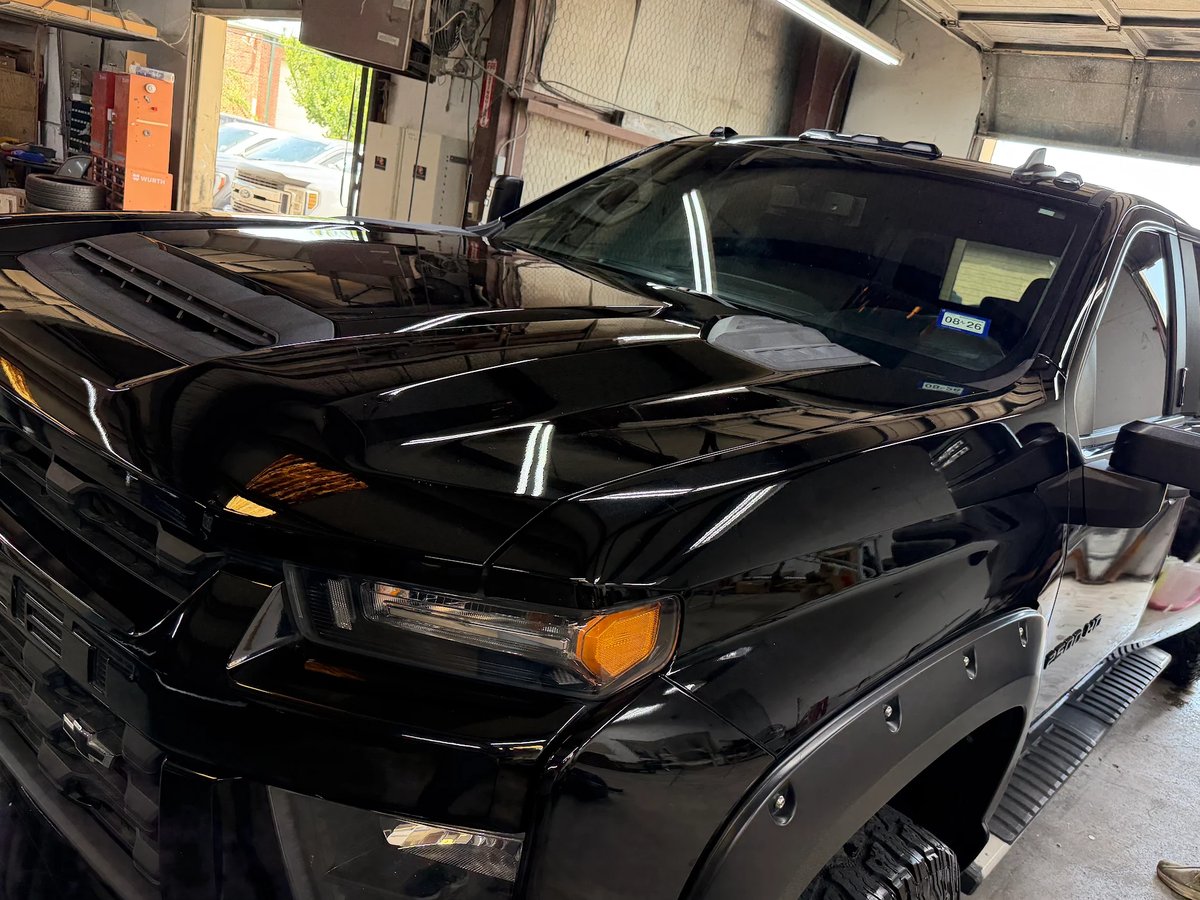
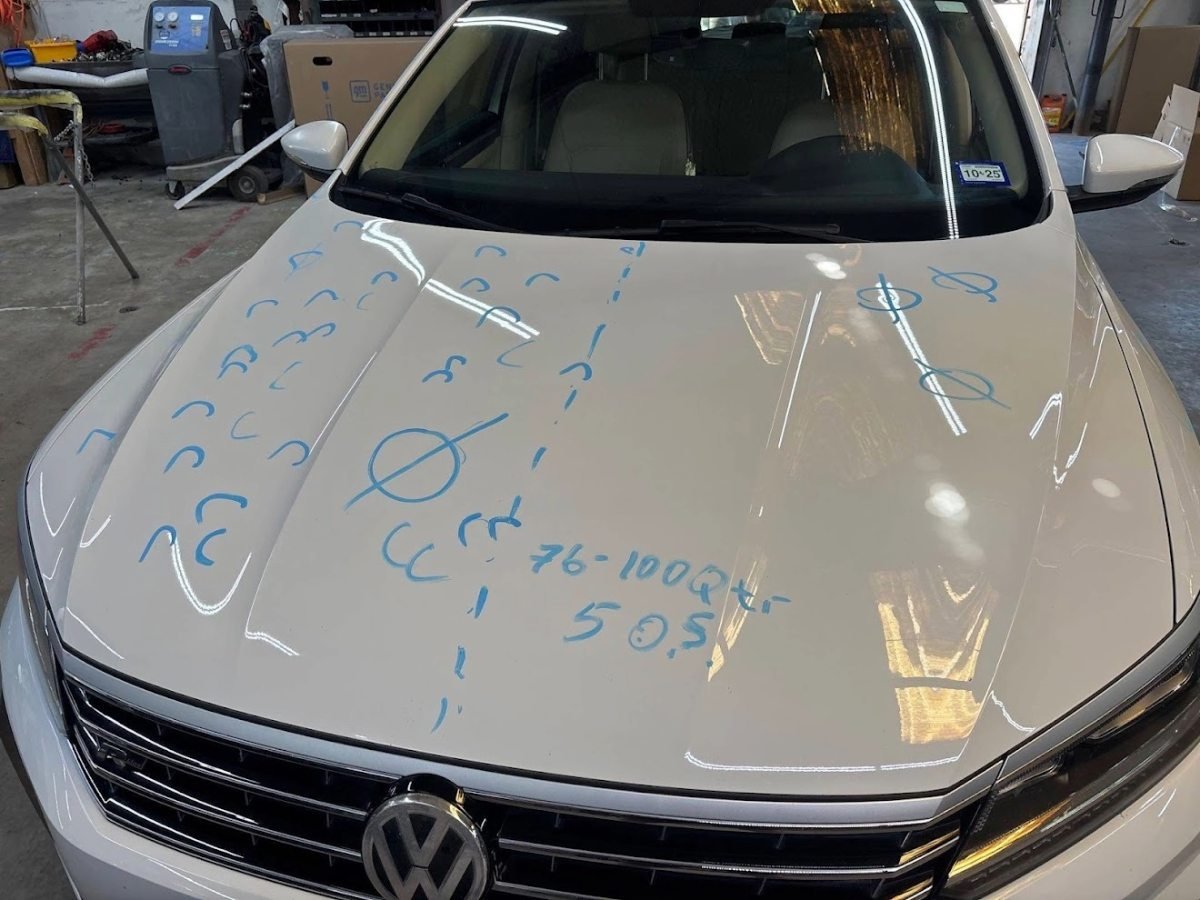
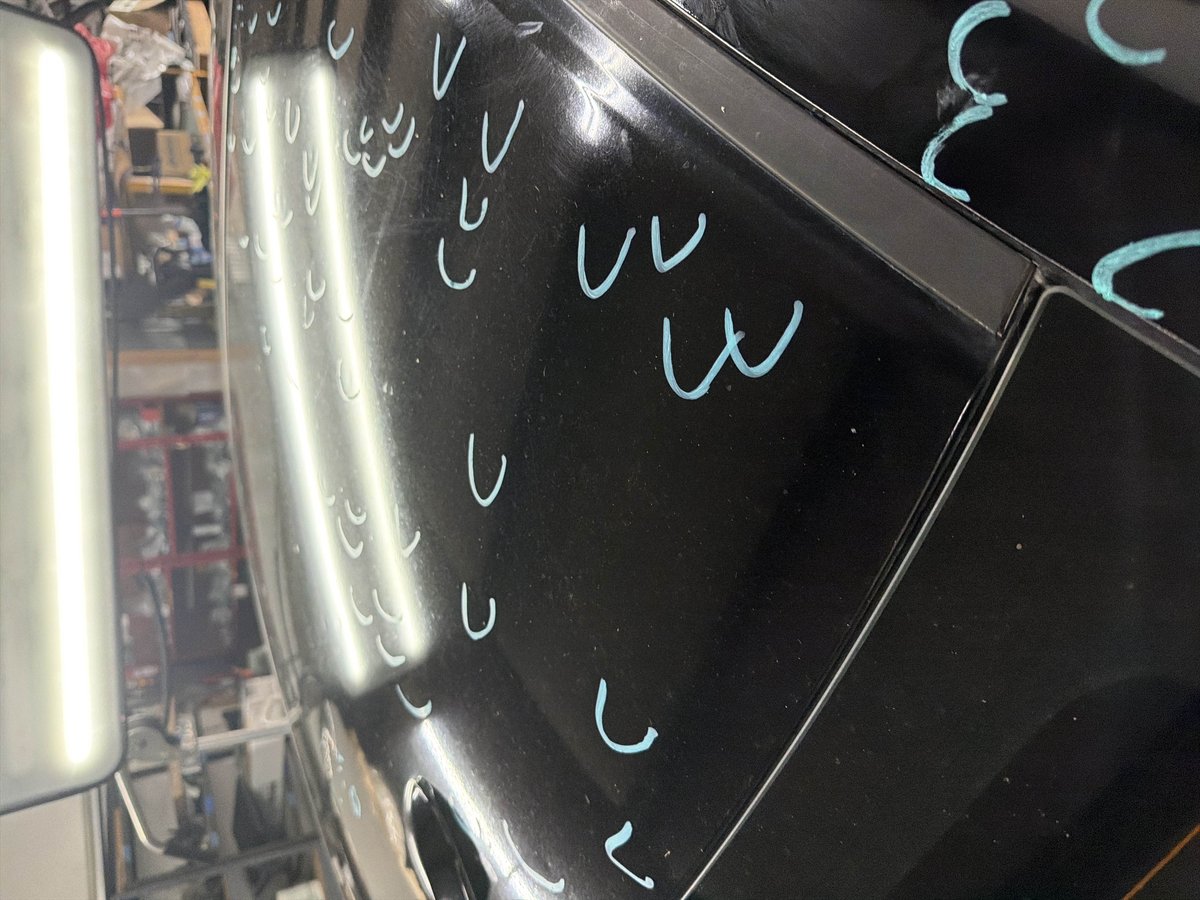
These are real repairs from our Lewisville shop floor — shown so you know what the process produces, not photos from the August 26 storm. Drag the slider.
 Before
After
Before
After
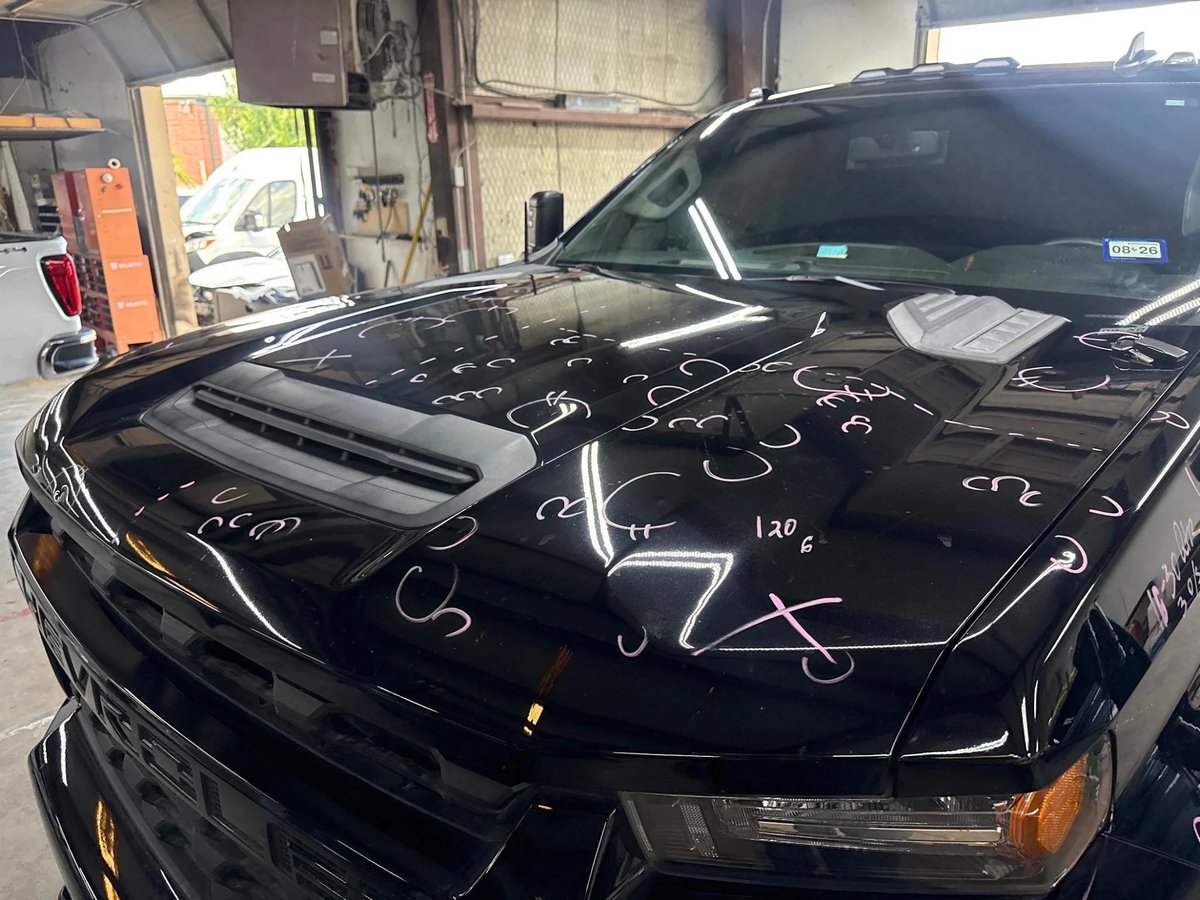
Truck Hood — 120 Dents Counted, Full PDR
Pictured: a customer’s black Chevy 2500HD — every strike marked and counted before the metal was worked, then finished without repaint; the same class of damage ping-pong hail leaves
August 26 Storm Questions